Indonesia’s travel, tourism, and exhibition industries are demonstrating notable resilience, reporting solid sales growth and sustained B2B buyer and consumer demand despite navigating a complex backdrop of economic pressures, evolving market conditions, and localized environmental disruptions.
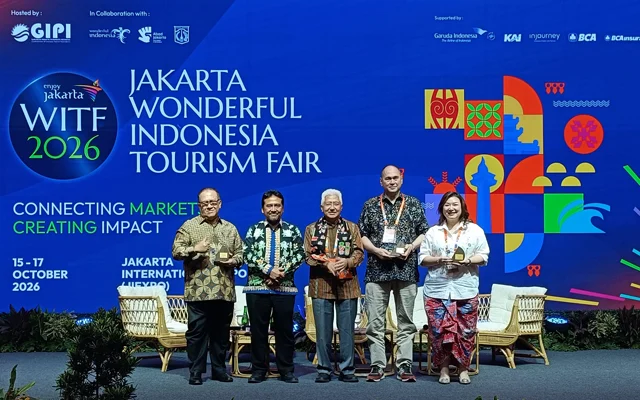
Industry leaders shared these optimistic yet pragmatic assessments during the high-profile Top Leaders’ Forum, held last weekend as part of the Jakarta Wonderful Indonesia Tourism Fair (WITF) 2026. Against a shifting global and domestic landscape, stakeholders gathered to discuss actual sales performance, international buyer interest, and the multi-faceted challenges currently facing Indonesia’s vital tourism and MICE (Meetings, Incentives, Conferences, and Exhibitions) sectors.
The gathering underscored a shared commitment among industry associations to adapt through strategic diversification, targeted niche marketing, and closer collaboration to maintain momentum in the face of ongoing headwinds.
Strong Consumer Demand Defies Economic Pressures
Opening the discussions on travel performance, Pauline Suharno, president of the Association of Indonesian Tours and Travel Agencies (ASTINDO), delivered encouraging news regarding domestic consumer behavior. According to Suharno, the association’s flagship travel fair held in August performed significantly better than initial industry projections had anticipated.
Despite widespread concerns that persistent economic pressures and rising living costs would dampen domestic consumer spending on discretionary items like leisure travel, sales at the August fair surged by an impressive 40 per cent year-on-year. This robust performance signals that consumer appetite for travel remains fundamentally strong within Southeast Asia’s largest economy.
However, Suharno cautioned that sustaining this positive trajectory requires a departure from conventional mass-market strategies. She emphasized that travel agents and tour operators must proactively target specialized niche markets. By offering curated, highly localized experiences and specialized products that standardized online travel platforms (OTAs) cannot easily replicate, traditional operators can carve out a sustainable competitive advantage. This strategic pivot toward experiential and personalized travel is increasingly viewed as essential for capturing high-value consumer segments.
Exhibition Sector Contributes Heavily to the Economy
In the MICE segment, demand continues to be underpinned by favorable macroeconomic fundamentals, including Indonesia’s large population, a growing workforce, and rich natural resources. Hosea Andreas Rungkat, chairman of the Indonesian Exhibition and Convention Companies Association (Asperapi), highlighted the sheer economic magnitude of the sector, estimating its total economic contribution at well over 100 trillion rupiah. This massive figure underscores the exhibition industry’s critical role in driving domestic trade, attracting foreign investment, and supporting broader tourism ecosystems across the archipelago.
Despite these strong long-term fundamentals, Rungkat noted that the sector has experienced a noticeable slowdown in demand as the calendar approaches the end of the year. Furthermore, industry stakeholders are grappling with specific operational hurdles, including high licensing costs for international events and intensifying regional competition, particularly from neighboring Vietnam.
Looking ahead, however, Rungkat remains optimistic that conditions will improve in the coming year. As part of long-term strategic expansion, he also identified the African continent as a high-potential growth market. As exhibition activity rapidly expands across various African nations, Rungkat pointed to emerging opportunities for Indonesian exhibition organizers to foster new avenues for cross-border trade and international partnerships.
Navigating Environmental Disruptions Through Regional Diversity
While economic and operational factors present regular challenges, the tourism sector has also had to contend with localized environmental disruptions. Recent forest and land fires in parts of Sumatra and Kalimantan have directly impacted certain regions, prompting travel cancellations in key destinations such as Batam and Tanjung Puting.
Addressing these seasonal environmental concerns, Hariyadi Sukamdani, chairman of the Indonesian Hotel and Restaurant Association (IHRA), called on hospitality operators and travel planners to adopt a more resilient approach centered on geographical and product diversification. Sukamdani stressed the importance of actively promoting alternative destinations—such as emerging mountain tourism spots—and encouraging travel during off-peak seasonal periods to smooth out revenue streams.
Crucially, Sukamdani sought to contextualize the impact of the fires, emphasizing that while certain localities face temporary setbacks, the vast majority of the Indonesian archipelago remains unaffected and continues to operate completely normally. "The impact of forest fires on tourism is real, but it is not the same across Indonesia," he noted, urging travelers and industry partners to maintain a balanced perspective on the country’s vast and varied tourism landscape.
International Buyers Sustain Confidence in Indonesia’s Potential
Reinforcing confidence from international markets, Budi Tirtawisata, vice-chairman for marketing and promotion at the Confederation of Indonesian Tourism Associations (CITA) and chairman of the WITF 2026 steering committee, reported that international buyers continue to hold strong faith in Indonesia’s overarching market potential. Despite the compounding challenges of economic volatility, regulatory hurdles, and environmental factors, global interest in the destination remains remarkably resilient.
Tirtawisata stressed that navigating these multifaceted challenges requires a cohesive, industry-wide strategy rather than isolated responses. "We are facing challenges, but we need to address them together through an integrated effort," he stated during the forum, calling for closer synergy between government bodies, private sector operators, and local communities.
This enduring international interest was vividly demonstrated on the exhibition floor at WITF 2026, where specialized segments generated substantial commercial engagement. Operators focusing on experiential travel, particularly village tourism and adventure expeditions, reported robust networking outcomes. Among them, Sobek Bali Adventure noted a high volume of commercial activity, registering approximately 80 scheduled business appointments over the course of the event. These figures reflect a broader global shift toward authentic, community-based, and adventurous travel experiences—areas where Indonesia is uniquely positioned to excel.