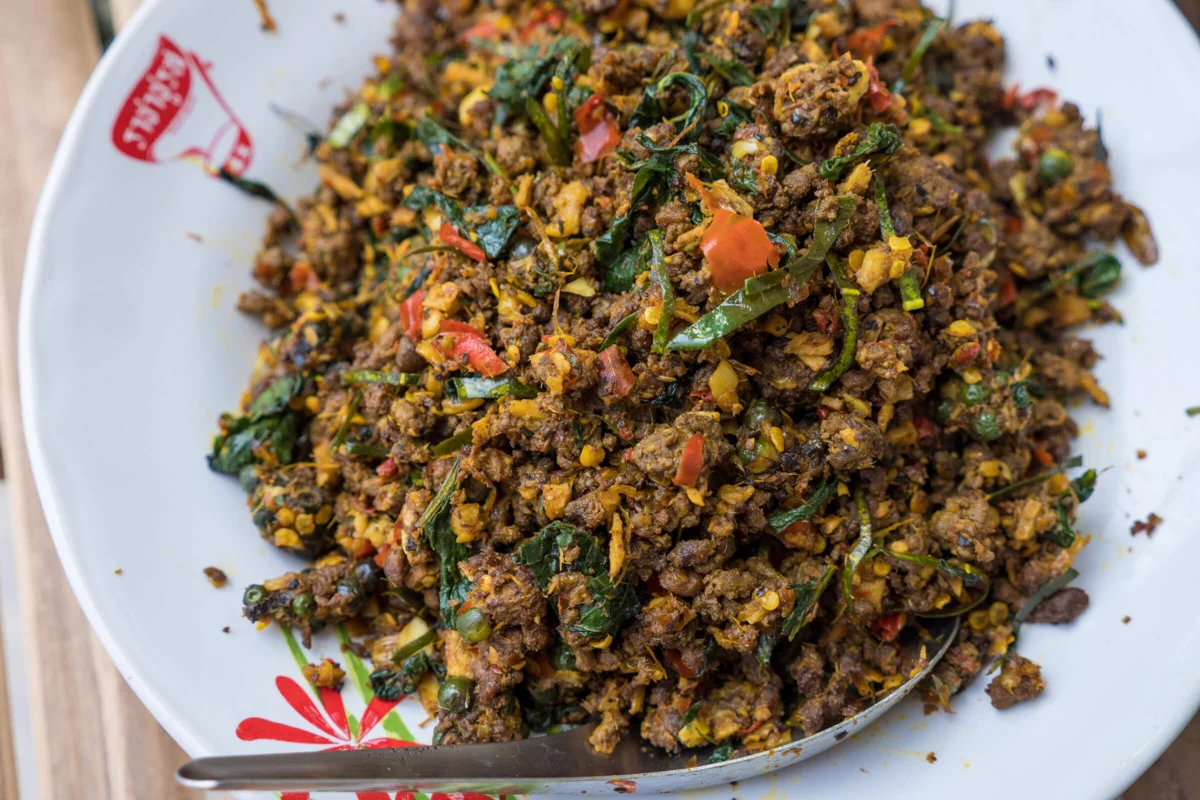
In the vibrant culinary landscape of Thailand, few dishes rival the intense, aromatic punch of a traditional spicy chili stir fry, known locally as pad ped. Recently shared by food enthusiast and chronicler of Thai cuisine Mark Wiens, a cherished family recipe passed down by his mother-in-law offers a masterclass in balancing fiery heat, complex herbs, and deep regional flavors. Originating from the southern province of Songkhla, this particular iteration showcases the bold flavor profile that defines true Southern Thai cooking, promising an unforgettable experience for dedicated lovers of spicy cuisine.

The term pad ped translates directly to stir-fried and spicy. True to its name, the dish relies on a foundational base of aromatic curry paste aggressively tossed with protein and fresh chilies. While the preparation can be adjusted for those who prefer a milder palate, the recipe remains a staple for individuals who measure the quality of a meal by the intensity of its spice. In this specific household tradition, the featured protein is wild water duck, locally called nok bet nam, sourced directly from specialized jungle ingredient stalls in Bangkok. However, the versatility of the dish allows home cooks to easily substitute wild game with minced beef, chicken, or lamb without sacrificing the integrity of the flavor profile.

Preparing a traditional wild duck dish from scratch involves meticulous technique, beginning at the market where the fowl is acquired largely intact with only the primary feathers removed. To eliminate any remaining feather stubs, the traditional method requires lightly scorching the skin directly over an open flame for a matter of seconds. For modern kitchens utilizing pre-minced proteins such as beef or chicken, this preliminary step is bypassed entirely. When working with whole game birds, the meat is carefully excised from the bone structure. Smaller, more delicate bones, such as those from the ribcage, are often chopped finely alongside the meat to add texture and depth to the coarse grind.

Using a traditional cleaver, the meat is hand-minced over several minutes until it achieves a medium grind. This manual preparation yields a far superior texture compared to commercially processed alternatives. Once minced, the meat undergoes a dry stir-frying process in a wok over medium heat without oil until fully cooked, after which excess moisture and rendered fats are drained away to leave a concentrated, dry protein base.

The soul of pad ped lies in its meticulous blend of spices and herbs. While pre-ground alternatives are acceptable, the recipe advocates for dry-roasting whole cumin and coriander seeds in a medium-hot pan for approximately thirty seconds. These toasted seeds are subsequently pulverized into a fine powder using a traditional mortar and pestle or a food processor. To introduce fresh, sharp heat, a generous portion of twenty Thai bird’s-eye chilies is combined with an entire head of garlic, pounded into a coarse paste that joins the underlying heat of the curry paste.

Further elevating the aromatic profile is the inclusion of young galangal. Unlike older galangal roots typically boiled in soups like tom yum and discarded, young galangal is tender enough to be finely minced and consumed entirely, imparting a subtle, citrusy warmth to the dish. Another essential component is tree basil, known in Thai as bai yeera. This distinctive herb offers a complex flavor profile combining sweet, peppery notes with a distinct hint of clove. When tree basil is unavailable, cooks may substitute alternative robust, peppery basil varieties. Optional additions, such as coarsely chopped green peppercorns, provide an extra layer of herbal heat.

Curry paste serves as the ultimate anchor for any authentic pad ped. Wiens’s mother-in-law relies on a traditional southern Thai curry paste, though standard regional red curry pastes serve as viable alternatives. For maximum authenticity, homemade pastes created from fresh aromatics are recommended, though commercially prepared varieties in tubs or cans offer a convenient substitute for home kitchens.

Bringing the components together requires precise timing and a hot wok. The cooking process commences by heating two tablespoons of oil over medium heat, followed by a brief thirty-second sauté of the pounded chili and garlic mixture. The curry paste is then incorporated and stir-fried for an additional two minutes, with occasional splashes of water added to prevent scorching if the mixture dries out.

The pre-cooked minced meat is introduced next, tossed continuously over medium-high heat for approximately three minutes to allow remaining moisture to evaporate. Minced galangal, along with the freshly ground cumin and coriander, follows for a brief one-minute sauté before the chopped tree basil and green peppercorns are folded into the meat. Seasoning is adjusted at this stage; while the curry paste typically provides sufficient saltiness, fish sauce can be added to taste.

The final flourish involves ultra-thin ribbons of kaffir lime leaves. Approximately fifteen leaves are stacked and finely shaved before being sprinkled over the stir fry. Folded gently into the mixture for thirty seconds before removing the pan from the heat, the lime leaves release an intensely fragrant citrus aroma that completes the dish. Served immediately alongside steaming hot white or brown rice, this southern Thai specialty delivers an extraordinary concentration of flavors per square millimeter, cementing its status as one of the most dynamic culinary traditions in Thai cuisine.