The International Ecotourism Society (TIES) has released the findings of its comprehensive global survey, capturing the perspectives of nearly a thousand tourism professionals spanning every continent. Designed to gauge the current pulse, trajectory, and pressing concerns of the ecotourism sector today, the survey gathered vital data from voices embedded in the heart of the global travel industry.
Following a call to action issued in the previous edition of the TIES newsletter, the organization received 971 viable responses. While the geographic reach of the survey was broad, encompassing respondents from 91 distinct nations, the United States accounted for the largest individual share of submissions. However, the true strength of the data lies in its remarkable international diversity. TIES organizers were notably heartened to receive detailed feedback from regions as diverse as Sudan, the Palestinian territories, Israel, Venezuela, Bhutan, Montenegro, Bosnia and Herzegovina, Nepal, Côte d’Ivoire, and Iran, alongside eighty other countries representing every corner of the globe.
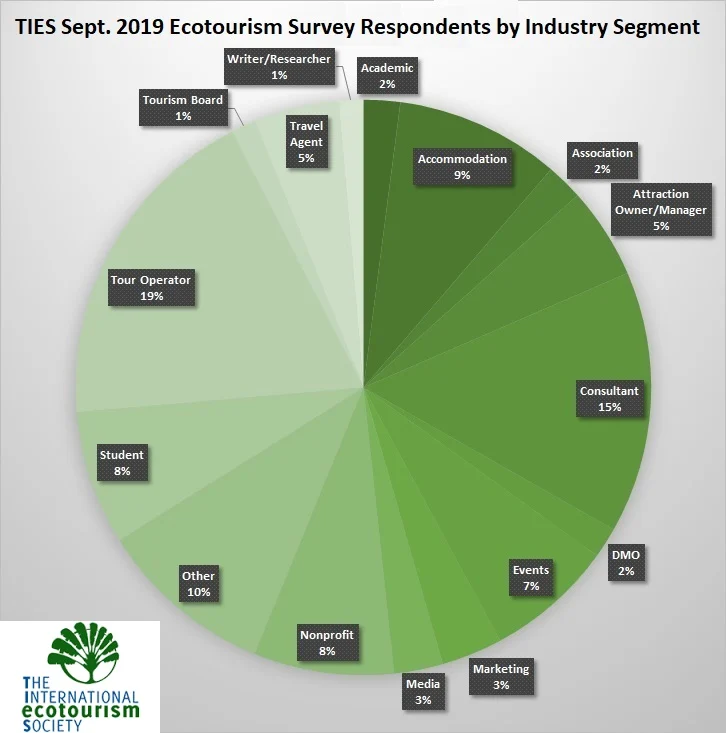
To understand who was speaking on behalf of the industry, the survey asked participants to self-classify their primary professional sectors. Ninety percent of respondents were able to categorize their work using the predefined choices provided by TIES. The remaining participants offered constructive feedback, pointing out the interconnected nature of modern travel and suggesting that future surveys account for professionals operating across multiple industry segments.
An analysis of the respondent demographics revealed a heavy concentration of tour operators and industry consultants. Interestingly, academic researchers—who traditionally hold a larger percentage of overall TIES memberships—were underrepresented in the response pool compared to their commercial counterparts. Despite this minor demographic imbalance, TIES leadership considers the final pool of respondents to be an exceptionally strong and representative cross-section of active tourism practitioners, yielding critical data that will guide the organization’s strategic initiatives in the coming years.
One of the most resounding findings of the survey is the near-universal consensus regarding the rapid and continuous expansion of the ecotourism market. When asked about the current growth trajectory of the sector, respondents were virtually unanimous in their optimism. Out of the 971 viable responses collected, a staggering 967 participants reported that they see ecotourism growing rapidly. Only four respondents—representing less than half a percent of the total sample—indicated that they perceived a slowdown in the industry. The rest viewed the market as expanding at a swift, highly accelerated pace.

This overwhelming sentiment aligns closely with broader macroeconomic trends and independent studies conducted by other major global organizations. For instance, recent large-scale surveys published by travel industry giants such as Booking.com have similarly underscored a massive, sustained surge in consumer demand for sustainable travel options. The alignment between TIES’ professional membership survey and broader consumer-facing data reinforces the reality that sustainability is no longer a niche market within tourism, but a foundational driver of modern travel behavior.
Beyond market growth, the survey provided crucial insights into the operational needs and linguistic preferences of the global ecotourism community. A significant portion of respondents emphasized the necessity for TIES to broaden its linguistic reach, specifically recommending the introduction of robust Spanish-language content alongside the organization’s traditional English offerings. A majority of participants noted that ecotourism development within Spanish-speaking nations is exceptionally robust, making linguistic expansion both timely and vital.
In addition to Spanish, respondents highlighted French and Mandarin as critical languages for future engagement. The recommendation regarding Mandarin is particularly striking given that TIES received only four responses from mainland China, demonstrating a widespread recognition of China’s emerging role in the future of sustainable and global travel. Furthermore, participants proposed thirty-nine other languages for potential future support. In response to this clear mandate, TIES has established a firm organizational goal to roll out comprehensive Spanish-language support across its website and published articles, viewing this foundational step as a gateway to implementing multilingual support for other regions in the years ahead.
While the overarching tone of the survey was celebratory of growth, respondents were candid and deeply analytical regarding the formidable challenges currently facing the ecotourism sector. When prompted about the hurdles threatening sustainable travel, participants pointed to a wide array of systemic issues. Many highlighted the corrosive impacts of corporate greed, unmitigated overdevelopment, a general lack of consumer and industry knowledge, and a widespread deficiency in ecological awareness.
External pressures such as accelerating climate change, complex regulatory environments, difficulties in acquiring necessary operating permits, and perennial struggles with securing adequate financing were also brought to the forefront. Furthermore, respondents frequently cited the twin pressures of overtourism in fragile ecosystems and the ongoing difficulty ordinary travelers face in attempting to book genuinely fair and ethical ecotourism experiences. TIES has announced that it will soon publish detailed reports outlining the active measures the organization and its international partners are undertaking to combat these severe, multifaceted challenges.
Perhaps the most surprising revelations of the survey emerged when participants were asked where TIES should direct its core support and initiative efforts moving forward. Rather than prioritizing traditional advocacy or high-level lobbying, respondents placed an overwhelming emphasis on foundational dissemination of knowledge. Forty-one percent of respondents requested that TIES focus its primary energy and resources on education. Another eighteen percent urged the organization to center its work on direct conservation efforts, addressing climate change, and forging meaningful conservation partnerships.
Additionally, fourteen percent of respondents advocated for a focus on ecodestinations, suggesting that TIES compile and detail national ecotourism offerings categorized by individual countries. Eleven percent called for an increased focus on publications, while nine percent recommended bolstering social media outreach. In stark contrast to what leadership initially anticipated, very few respondents requested that the organization prioritize institutional policy work, partnerships with the United Nations, or narrow campaigns focused specifically on the ecotraveler. Intriguingly, only six respondents out of the entire group suggested that TIES make increasing its own membership a primary focus.
In light of these clear directives, TIES has already initiated discussions with several strategic partners operating within the global education sector. The organization plans to release comprehensive details regarding its revamped educational initiatives and strategic roadmap in the coming months.
Ultimately, despite the complex array of environmental, regulatory, and operational hurdles highlighted by the data, the respondents demonstrated an enduring resilience and an optimistic outlook. The overwhelming consensus from the global tourism community is that ecotourism possesses the structural capacity, the market demand, and the ideological commitment required to overcome contemporary challenges, continually paving the way toward a better, more responsible way to experience and explore the world.
The International Ecotourism Society 2019
http://www.ecotourism.org