For travelers accustomed to predictable itineraries and sanitized tropical getaways, arriving in the Azores offers an immediate, uncompromising reality check. Thrust far out into the expanse of the North Atlantic, this rugged Portuguese archipelago is notoriously difficult to reach. Surrounded by volatile weather systems that can shift from calm to chaotic at a moment’s notice, the journey often begins well before touching down on volcanic soil.
For one group of travelers—including a writer accompanied by her husband and three friends working for a European airline—reaching the island of São Miguel turned into a multi-day test of patience and aviation endurance. Facing severe wind gusts and sudden storm bursts, their flight was forced to abort landing attempts multiple times over a two-day period. Approaching the runway so closely that a passenger could practically swipe a hand across the tarmac, the aircraft repeatedly veered back up into the clouds before the pilots had no choice but to turn back to Lisbon, over two hours away.
While the general passengers on board understandably panicked during the repeated failed touchdowns, the airline professionals treated the turbulent ascents and aborted landings as business as usual. Over the course of the following day, the group had to fly back to the Azores two more times before finally breaking through the weather barrier. Though the ordeal delayed their arrival by a couple of days, the dramatic approaches provided a thrilling, high-altitude introduction to the fierce character of the islands.
Stepping directly out of the plane onto the tarmac delivered the first true sensory awakening: a heady, humid cocktail of salt spray and emerald volcanic vegetation. The air was thick with the essence of an island chain awash in geysers, waterfalls, crashing waves, rivers, lakes, hot springs, and an overwhelming abundance of water.
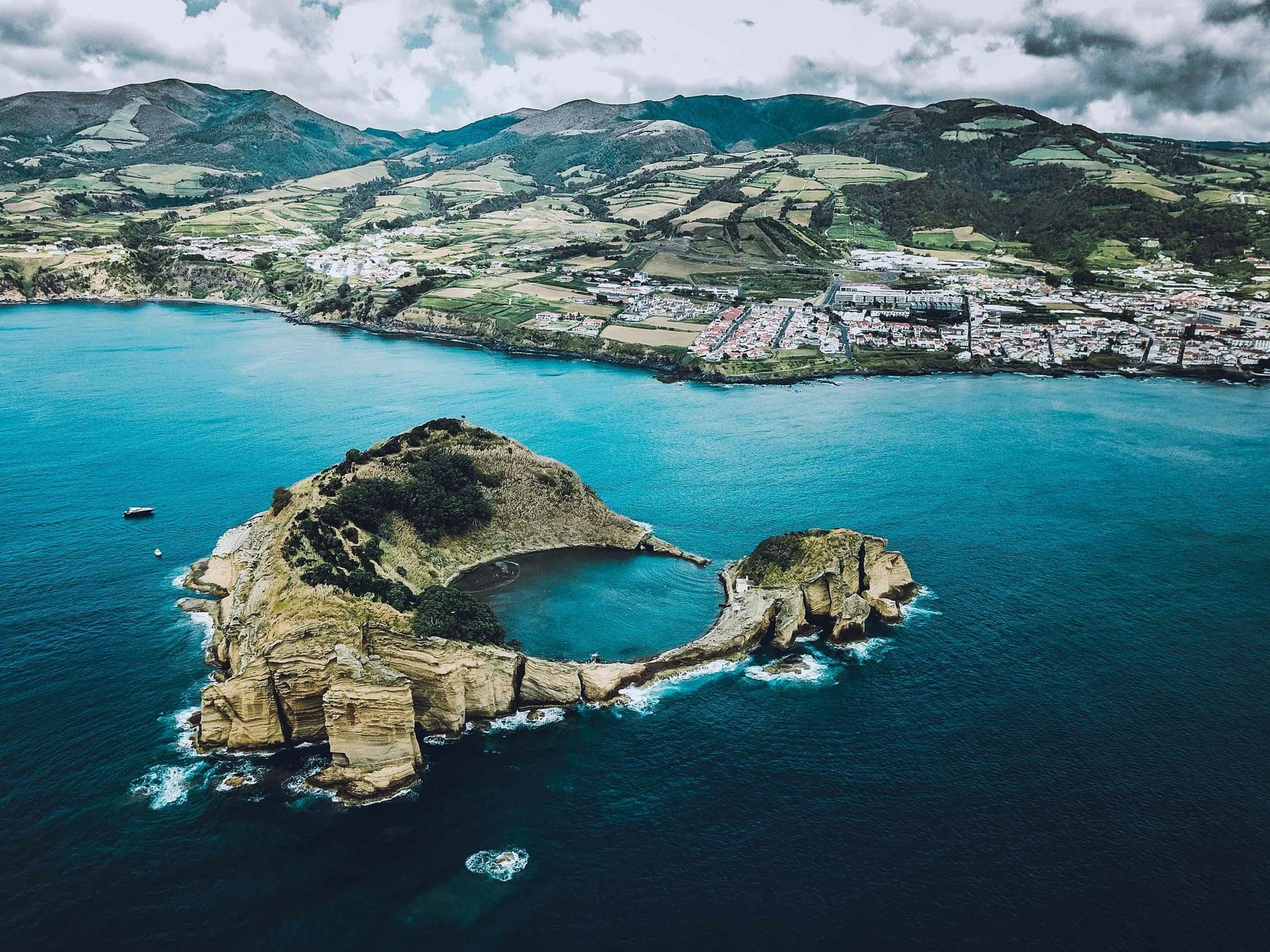
The sensation was elemental and atemporal, evoking comparisons to a prehistoric setting where encountering a wandering dinosaur would not feel entirely out of place. Visiting in mid-February brought damp, cool air rather than freezing temperatures, allowing travelers to navigate the terrain comfortably in hiking shorts, t-shirts, and windbreakers. While summer weather is generally more reliable, the climate remains constantly changeable year-round. Choosing to travel during the off-season offers a strategic advantage for those looking to avoid larger crowds, even if it means rolling the dice with the elements.
Not Your Package Vacation
Most people hear the phrase "island vacation" and immediately conjure mental images of white sand beaches, lukewarm turquoise shallows, and a five-star resort experience centered around holding a cocktail. For travelers seeking that specific brand of leisure, the advice is simple: stay on the plane and fly to the Bahamas instead.
The Azores represent the exact antithesis of the standard resort holiday. Instead of pampering vacationers, the islands baptize them in the cold, chaotic energy of the deep ocean. This is a vertical, dripping, basalt-enclosed fortress where water acts as both the primary architect and the dominant antagonist. This landscape was not designed for tanning; it is an environment meant to be experienced through motion, exposure, and raw engagement with nature.
The Mouth of the Earth
Distances on the islands are manageable, making Ponta Delgada on São Miguel an accessible and polite initial base camp close to the airport. The city offers a charming taste of civilization defined by whitewashed walls, black volcanic stone accents, and a traditional local farmer’s market. It functions as a tidy Portuguese colonial dream that continually feels on the verge of being swallowed by the dramatic mountain peaks rising directly behind it.
Despite its European elegance, the air in Ponta Delgada remains thick with the salt of the Atlantic—a persistent reminder from the port city that the untamed wilderness lies only a fifteen-minute drive away. While the city is well worth exploring for a night or two, it does not need to anchor a longer itinerary.
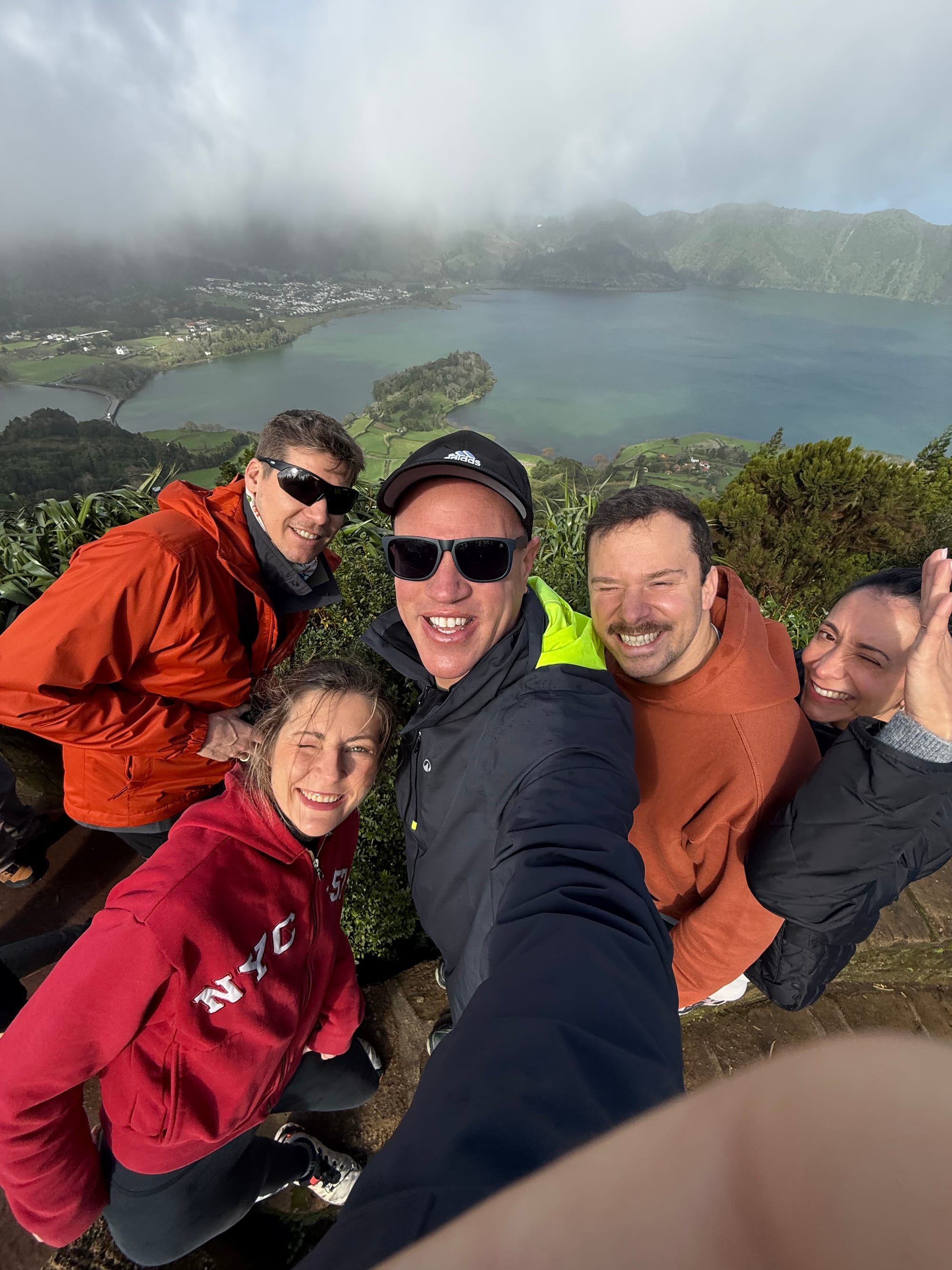
Venturing away from the urban center reveals the island’s true geological scale within an hour’s drive. Reaching the rim of Sete Cidades rewards travelers with a view down into high-mountain twin lakes, frequently enshrouded in mist that moves with such speed it resembles a time-lapse recording. Traveling further inland leads to the Reserva Natural Lagoa do Fogo, or "Fire Lake," another high-altitude crater lake that carries the weight of a prehistoric myth. As the wind whips across the caldera, the landscape reveals itself not merely as a body of water, but as the resting mouth of a sleeping volcanic giant.
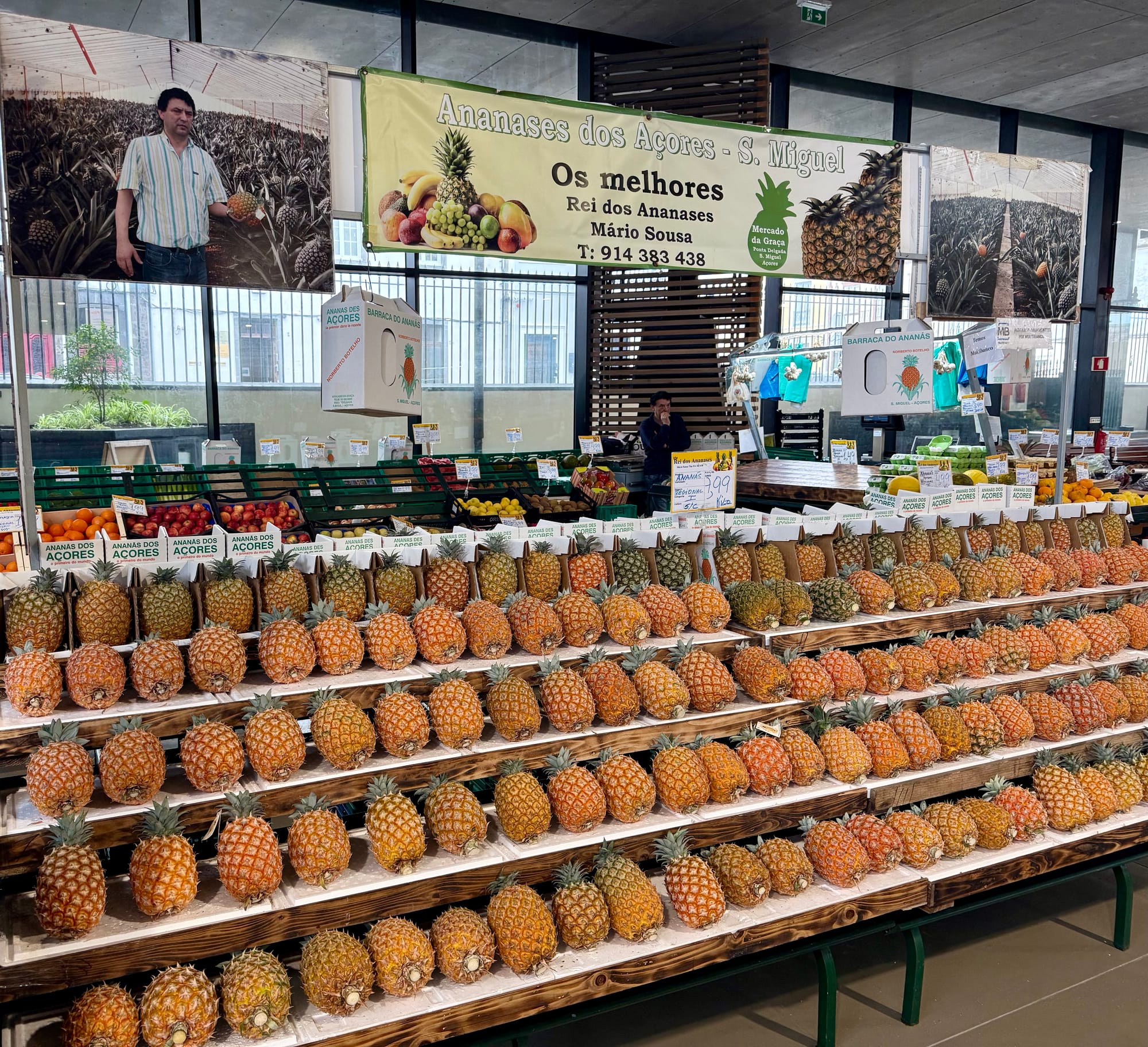
Culinary exploration on São Miguel often leads visitors back to familiar comforts. One group found themselves returning three times to the Restaurante Associação Agrícola de São Miguel, a farmer’s cooperative highlighting beef, cheeses, wines, and other products sourced directly from the island’s small-batch agricultural producers. Naturally, fresh fish options are abundant across the island, alongside a thriving local pineapple industry. Pineapple iterations—ranging from jams and chocolates to cookies and cocktails—serve as popular local treats and thoughtful gifts to bring home, offering a well-deserved reward following long hikes.
Your Town is On Fire
The most surreal geological spectacles reveal themselves in the town of Furnas, where a vacation inevitably includes a heavy dose of malodorous sulfur. Here, geysers serve as the actual town square rather than being sequestered as distant tourist attractions. Walking along paths and past fountains where other municipalities might plant petunias or erect historical plaques, visitors encounter boiling sulfurous water chugging out of warning-labelled fountains.
The potent, rotten-egg scent of hydrogen sulfide replaces the charming floral perfumes typically associated with local markets. While glorious to witness firsthand, Furnas functions more as an intense destination to visit for the day rather than an ideal location to base an extended stay.
Your All-Inclusive Rust-Stained Resort
Days spent exploring the rugged interior often conclude at Parque Terra Nostra, an expansive complex combining a botanical garden, hotel, hot springs, mud baths, and culinary offerings. The undeniable centerpiece of the park is a massive, circular pool filled with thick, opaque, orange-brown water. While the water’s appearance resembles the byproduct of an industrial accident, bathers quickly learn to spend as much time in it as possible.
The high iron content in the thermal mud can create wardrobe hazards for the unprepared. One traveler who opted for a pristine, resort-ready white bathing suit found herself looking like she had traversed a liquid tunnel of rust after a soak. A crucial piece of advice for newcomers is to leave designer swimwear at home.
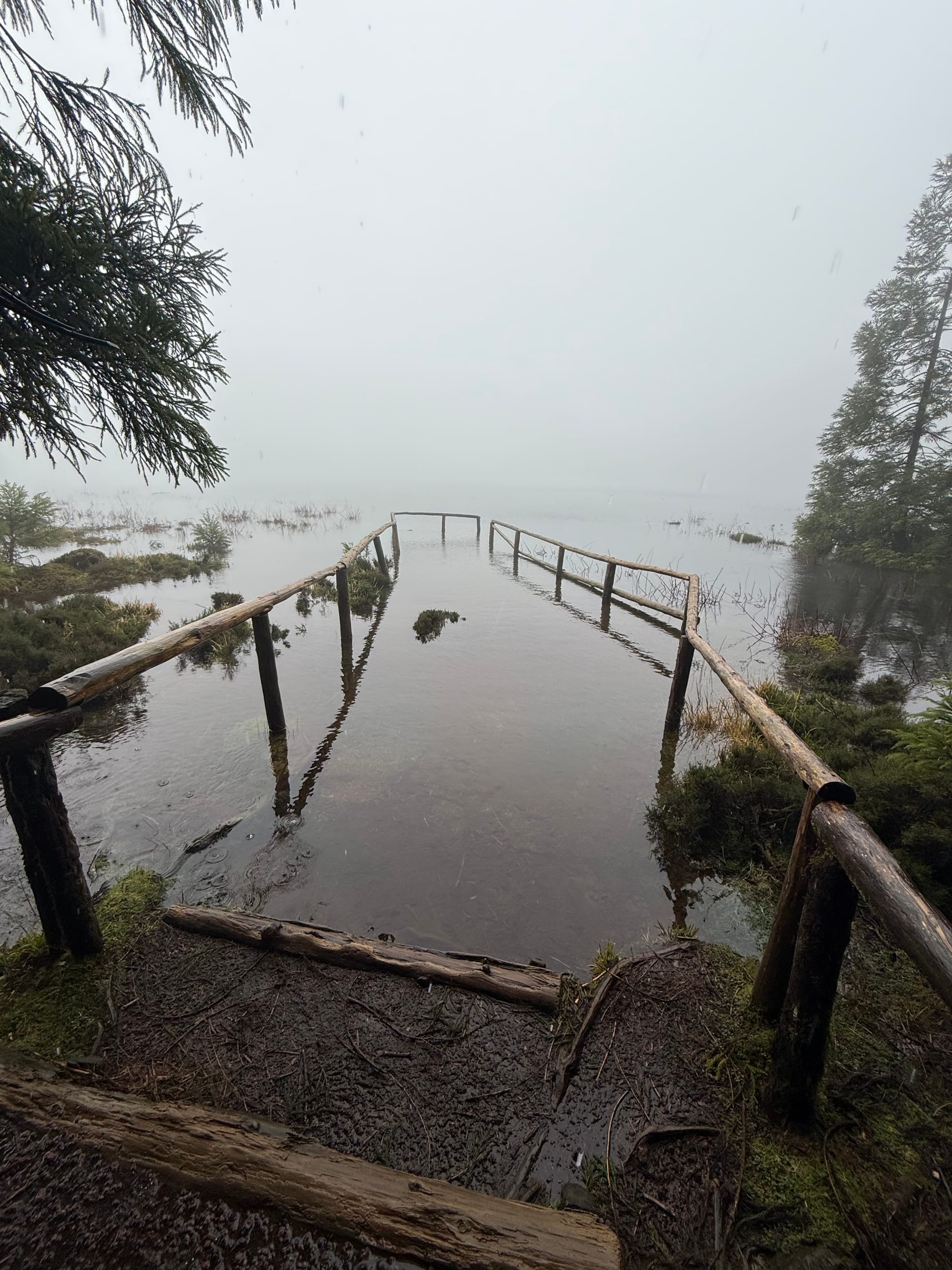
Sliding into the 38-degree Celsius liquid as a gentle rain begins to drizzle from above delivers a profound sense of watery bliss. Caught between the warmth of the spring and the chill of the air, visitors experience a sharp reminder of what it means to feel fully alive. While the park is restricted to hotel guests during the evening hours, it opens to the general public by day, allowing visitors to float in the primordial broth as steam rises into the dark sky and the island drips around them.
Hiking Through the Veins of the Island
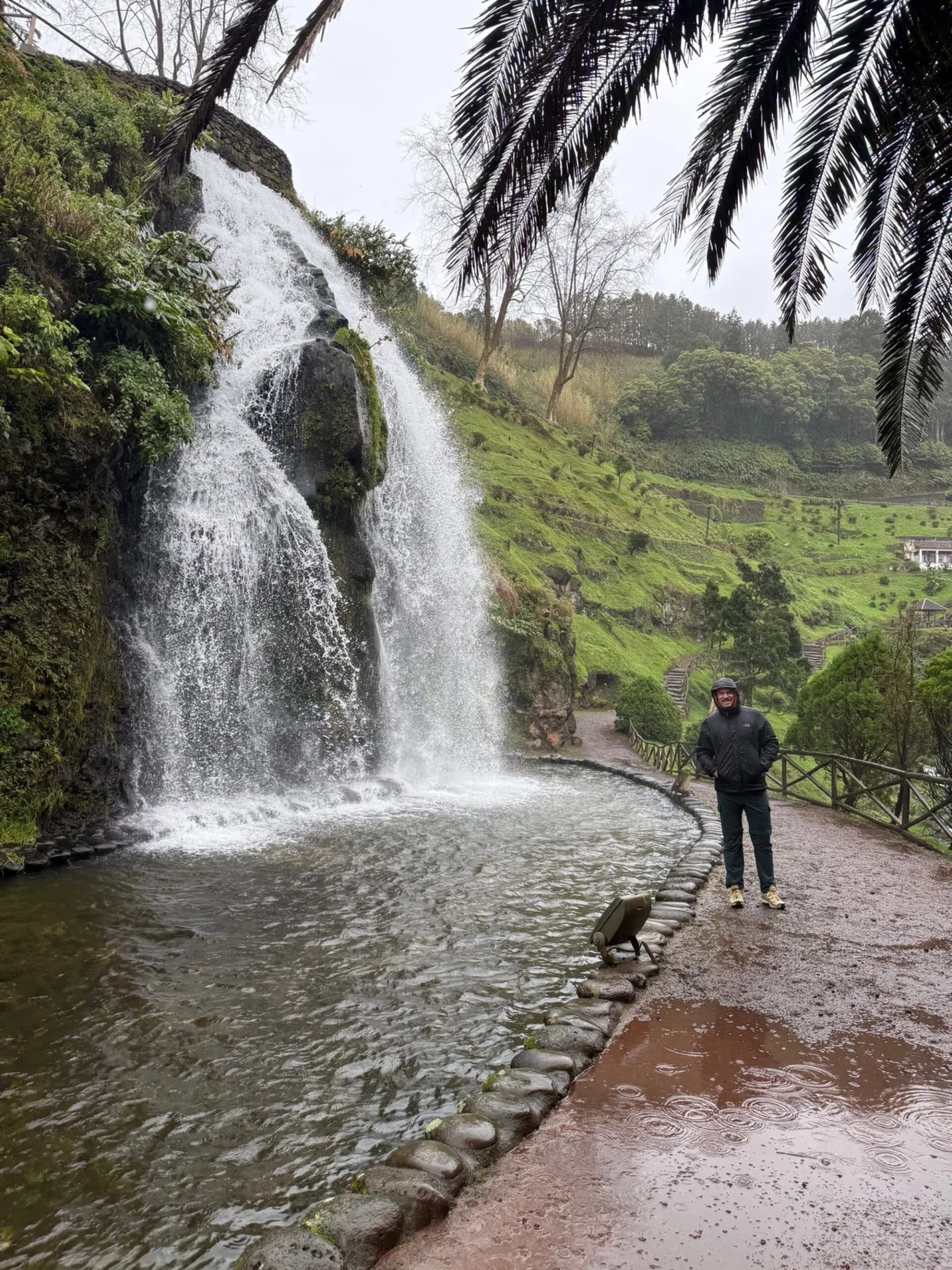
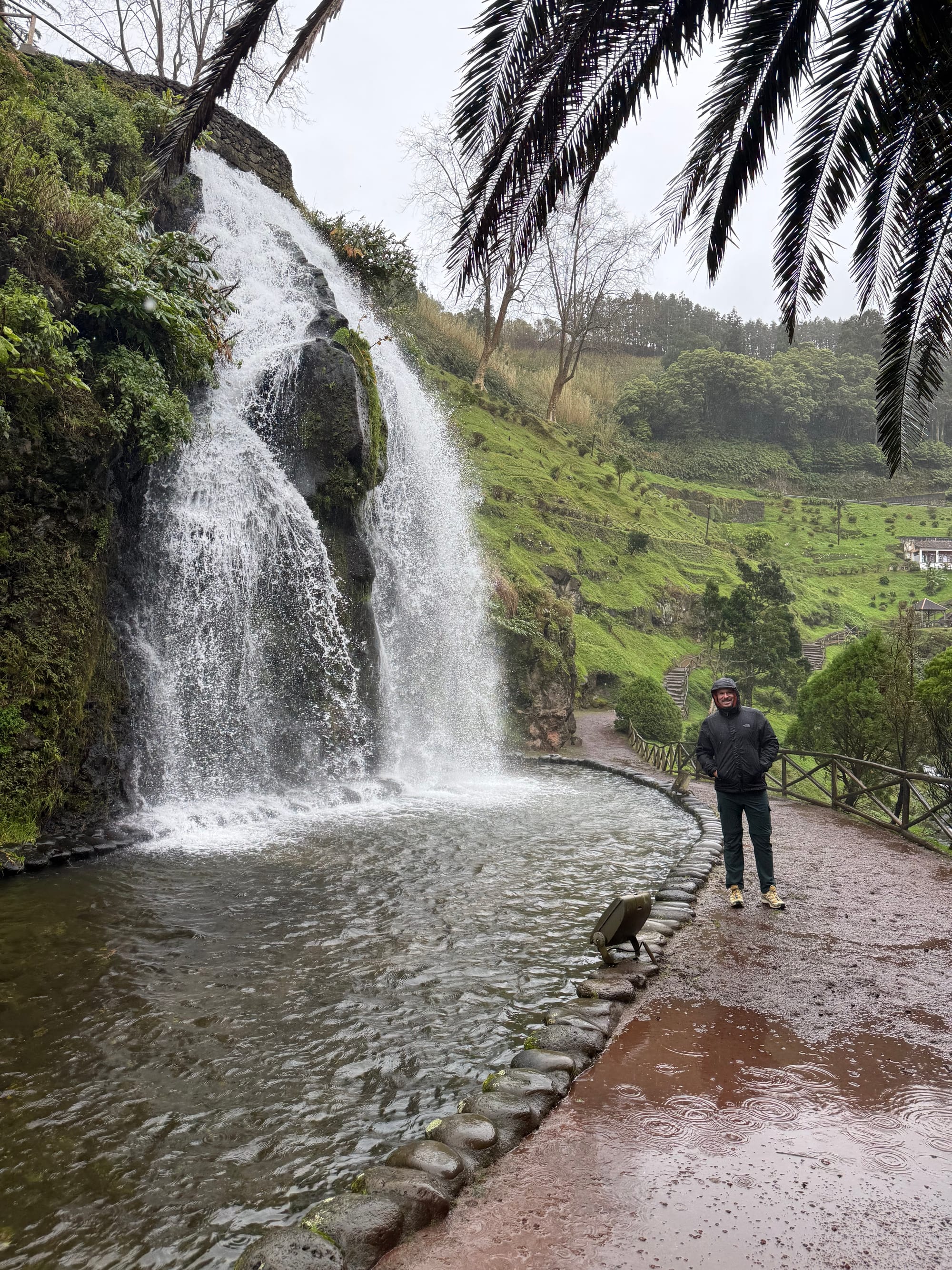
If the interior of the islands is defined by subterranean heat, trekking toward waterfalls like the Cascata Salto do Cabrito is an exercise in total immersion. This is not a hike that leads to water; it is a hike conducted directly through it.
The trail winds past the Faja do Redondo Dam, a crumbling concrete structure blanketed in moss that exudes a delightfully post-apocalyptic atmosphere. Much of the route requires navigating rickety metal catwalks suspended directly over rushing water or moving through narrow valleys where the humidity reaches staggering heights. Surrounded by water from above and below, and accompanied by the massive industrial pipes lining the path, hikers realize by the time they reach the roaring waterfall at the end that they have functionally spent the last few miles underwater.
Further along the coast, towns like Ribeira Grande—noted as an emerging co-working and co-living hub—showcase the raw power of the Atlantic. The ocean smashes into the shore with such force that the local natural swimming pools are periodically closed due to dangerous waves and storm damage. When calmer weather prevails, the pools serve as central gathering spots for locals, assuming swimmers do not require a lifeguard rescue.
Nearby, standing atop high cliffs allows observers to watch waves the size of small houses disintegrate against black lava rock. Coastal villages like Agua de Pau absorb a constant barrage of sea spray as oceanic waves crash against the shore like physical explosions.
The Thalassophile’s Fever Dream
By the conclusion of the journey, the underlying motivation driving other travelers to brave the elements becomes entirely clear. The salt crust forming on the skin after just a few minutes near coastal blowholes underscores the tactile, immersive nature of the environment. The Azores are fundamentally an outdoor adventure destination rather than a traditional resort getaway.
Comprising nine small, accessible islands mostly reached via flights from Lisbon into Ponta Delgada or Terceira, the archipelago is designed to engage rather than simply relax. For travelers who prefer a landscape that leaves them cold and awestruck over one that keeps them warm and bored, the Azores offer an uncompromising sensory reset rooted entirely in direct contact with the natural world.