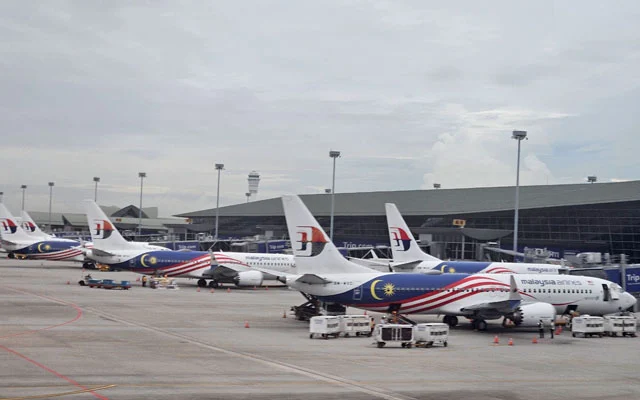
Malaysia Airports and Malaysia Aviation Group (MAG) are significantly strengthening their strategic cooperation on aviation decarbonisation, concentrating their joint efforts on sustainable aviation fuel, renewable energy expansion, ground electrification, and comprehensive resource efficiency across the country’s aviation sector. The collaborative momentum was visibly underscored as the two key aviation organisations jointly hosted Aviation Sustainability Day 2026 at the Sama-Sama Hotel, located at KL International Airport (KLIA). The high-profile event brought together a broad spectrum of crucial stakeholders, including government agencies, industry regulators, and various representatives from across the commercial aviation ecosystem, to deliberate on pressing challenges and solutions regarding emissions reduction, sophisticated waste management protocols, and the vital infrastructure requirements needed to support a greener future for Malaysian aviation.
The concerted push comes as Malaysia Airports aggressively pursues ambitious internal climate targets designed to curb its environmental footprint. Specifically, the airport operator aims to achieve a substantial 45 per cent reduction in emissions derived directly from its own operations and purchased electricity at KLIA by the year 2030, using 2025 levels as the baseline. In addition to the primary gateway, the company has set a target of a 30 per cent reduction across its other assessed airports within the exact same timeframe. Looking further ahead, the airport operator is steadfastly targeting complete net-zero emissions from these direct operational sources across its entire nationwide airport network by 2040. Beyond operational boundaries, the organisation’s long-term sustainability vision extends significantly further, incorporating plans to tackle and mitigate material value-chain emissions by 2050, aligning local airport management with global net-zero trajectories.
Complementing the airport operator’s infrastructure-focused goals, Malaysia Aviation Group has rolled out its comprehensive Mid-Term Sustainability Roadmap for the 2026-2035 period, establishing rigorous benchmarks for its airline operations. Under this structured framework, MAG targets notable reductions in its emissions intensity, aiming for a decrease of 30 to 35 per cent by 2030, which is then slated to deepen to a 40 to 45 per cent reduction by 2035. Alongside flight operations, the aviation group is committed to lowering its building energy intensity by 20 per cent and achieving an impressive 55 per cent waste diversion rate by the close of the decade, reflecting a holistic approach to environmental stewardship that spans both corporate facilities and airborne fleets.
This aggressive sustainability agenda has already yielded tangible milestones and industry-first recognitions for the national carrier group. MAG recently distinguished itself by becoming the pioneering airline group in South-east Asia to successfully receive formal certification under the Sustainable Procurement module of the International Air Transport Association’s Integrated Sustainability Program. This certification validates the group’s commitment to embedding environmental, social, and governance principles deeply into its supply chain management. Furthermore, demonstrating proactive leadership in carbon offsetting and reduction, MAG made history as the first entity in Malaysia to retire CORSIA-eligible emissions units, successfully retiring a notable 80,100 units to meet its initial Phase 1 compliance obligations under the Carbon Offsetting and Reduction Scheme for International Civil Aviation.
The deep alignment between Malaysia Airports and MAG serves as a critical pillar supporting Malaysia’s broader Aviation Decarbonisation Blueprint and the overarching national net-zero emissions target set for 2050. By coordinating their strategic paths, both organisations are actively seeking to harmonize their capital infrastructure investments and operational priorities, ensuring that airport facilities and airline fleets evolve in tandem to handle the demands of sustainable technologies such as alternative fuel hydrants, electric ground support equipment, and modernized terminal energy systems. Industry observers note that such synchronized planning is essential to prevent operational bottlenecks and to maximize the economic efficiency of the massive capital expenditures required for a successful green transition.
Highlighting the imperative for mutual dependence in achieving these national environmental goals, Malaysia Airports managing director Mohd Izani Ghani emphasized that the green transition cannot be accomplished in isolation. In his address regarding the enhanced partnership, he noted that their respective decarbonisation journeys cannot progress independently, and that the industry must ensure that investments and operational priorities complement one another so that meaningful progress can be achieved together. Echoing this sentiment, MAG president and group CEO Captain Nasaruddin A Bakar stressed the urgency of moving from strategic planning to execution, stating that the next critical step is to turn these shared priorities into concrete action through stronger partnerships and coordinated implementation across the entire aviation ecosystem.