ALMATY — In 1952, the visionary architect Le Corbusier famously declared tapestry to be "the ‘mural’ of modern times," characterizing it as the ideal artistic medium for the internationally mobile nomad navigating an era of revolutionary speed, time, and motion. His coinage of the term "muralnomads" referred not merely to the inherently portable nature of these textiles, but also served as a profound metaphor for the nomadic inheritance of their creation. In the eyes of scholars, these woven works mirror the migration, displacement, and intrinsic complexity of modernism itself.
This conceptual framework forms the beating heart of "Threads of Heritage," a sweeping retrospective exhibition by octogenarian Kazakhstani artist Batima Zaurbekova. Currently on view at the Abylkhan Kasteyev National Museum of Arts, the exhibition gathers more than 80 tapestries, paintings, and preparatory sketches. It presents a rare, comprehensive opportunity to evaluate Zaurbekova’s monumental career not only within historical lineages, but also as a deeply personal expression of postcolonial utopianism, spatial mobility, and progressive artistic vision.
A Rich Historical Tapestry of Central Asia
Kazakhstan’s celebrated textile heritage has long served as a mirror for the Central Asian steppe nation’s historic identity as a critical crossroads of trading empires, migratory routes, and vibrant cultural transmission. The archaeological record boasts extraordinary artifacts from this tradition, most notably the Pazyryk rug. Dating back to the fifth century B.C., it remains the world’s oldest known hand-knotted pile carpet, having been miraculously preserved within a royal tomb of the Pazyryk culture—an Iron Age nomadic society that flourished across the Altai Mountain region encompassing modern-day Siberia, Kazakhstan, Mongolia, and China.
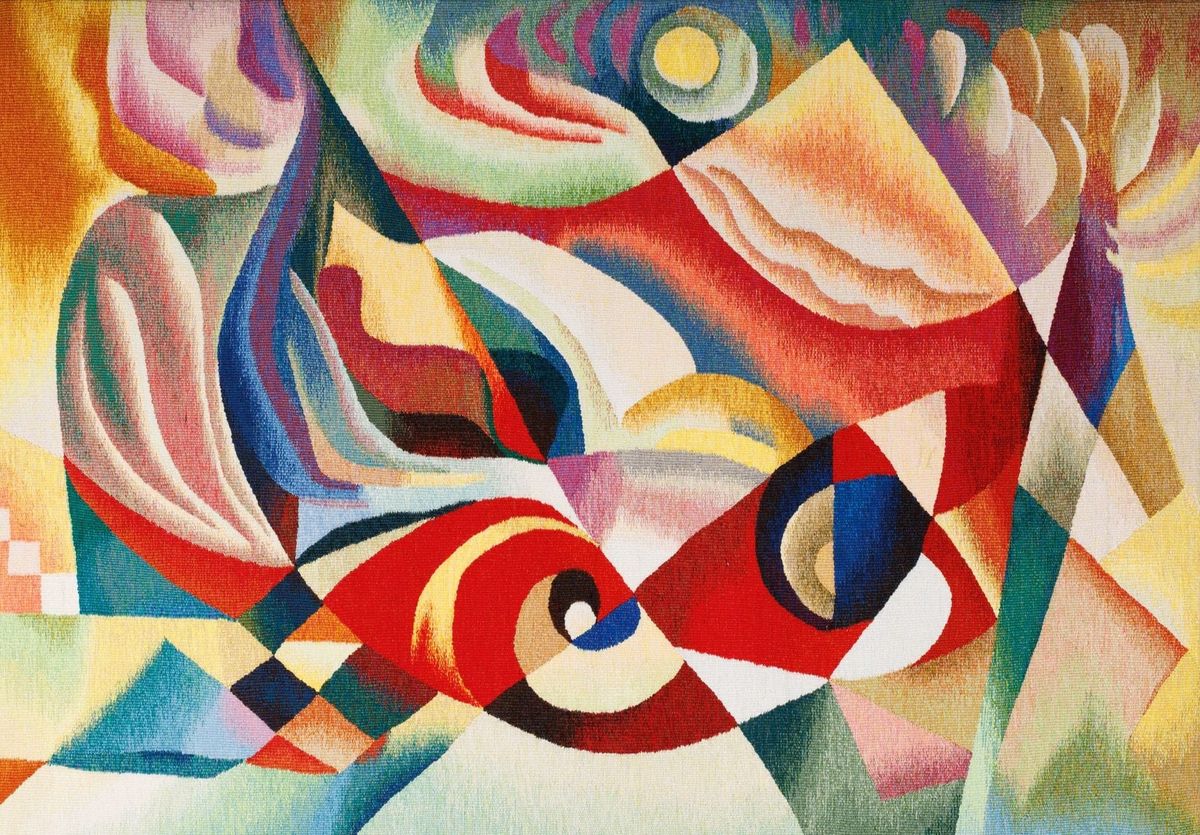
For centuries, tapestries and heavy wall hangings have functioned as traditional, indispensable fixtures in Central Asian nomadic architecture. These intricate textiles acted as what Le Corbusier poetically termed "woolen walls," seamlessly transforming functional yurts into warm, sophisticated homes.
The modern institutionalization of this craft took root during the eras of Imperial Russian and Soviet development, which gave rise to Almaty’s premier tapestry institution: the Kovroschitsa Artel. Founded by Nikolai Tsivchinskiy—an artist born in Saint Petersburg in 1905 who studied and worked in Ukraine producing tapestries at the Kyiv Experimental School before relocating to Almaty in 1937 to escape Stalinist repression—the school laid crucial technical foundations. Another monumental figure in the evolution of Kazakh tapestry is Kurasbek Tynybekov. Born in 1947, Tynybekov also studied in Ukraine before returning to teach at the Almaty Art College in the early 1970s, where he directly mentored a young Zaurbekova.
Breaking Grounds in a Patriarchal Era
Emerging as the first female artist within Kazakhstan’s burgeoning school of tapestry art during the 1960s and 1970s, Zaurbekova’s achievements are all the more remarkable when measured against the persistent patriarchal norms of the era, which endured despite legal guarantees of women’s equality under the Soviet constitution.
Born in 1946 in the rural village of Furmanovka within the Zhambul region of the Kazakh Soviet Socialist Republic, Zaurbekova hailed from an artisanal family. Her mother was an accomplished carpet weaver, while her uncle worked as a skilled jeweler. Though she harbored a deep childhood passion for music, Zaurbekova ultimately chose to study painting—a path her mother viewed as offering a more reputable and secure professional standing. She successfully graduated from the Alma-Ata Art School in 1969 and subsequently earned a specialized degree in applied arts from the Abai Kazakh National Pedagogical University.
In person, Zaurbekova remains a vivacious, outspoken figure with an insatiable appetite for artistic exploration. Reflecting on her career, she readily confesses that France exerted the most profound influence on her artistic sensibilities. "In 1982 I had a tour of Rome, Florence, Venice… Everywhere it was an open-air museum. I went to France for an exhibition, and I must admit I was very successful; they even asked me to stay. But those were Soviet times and I had to return to my country… I found inspiration everywhere. The more you see, the more sophisticated your work becomes," she recalls.
Demonstrating an extraordinary work ethic, Zaurbekova participated in virtually every exhibition she was invited to join, frequently logging 16-to-18-hour workdays to meet rigorous deadlines. Her international footprint expanded significantly over the decades, with solo exhibitions in Paris in 1989 and 1991, Almaty in 1995, Milan in 1998, and Lugano in 1999. Furthermore, her deep affinity for Turkey led her to live in the country between 1997 and 2000, during which time she mounted nine exhibitions across Ankara, Istanbul, and other major Turkish cities.
Dialogues with Modernism and Tradition
In curating the exhibition, Russian curator Alina Fedorovich has meticulously positioned Zaurbekova’s oeuvre alongside icons of Western modernism and anthropological thought, drawing conceptual parallels to Claude Lévi-Strauss’s logic of mythological art and Sonia Delaunay’s dynamic geometric abstractions.
While these international art-historical dialogues enrich the viewing experience, a minor missed opportunity lies in the relative scarcity of contextual explication regarding indigenous Kazakh cultural motifs and the vibrant milieu of Zaurbekova’s local contemporaries. This interplay is immediately apparent in the exhibition’s opening section. Here, early works by Zaurbekova are installed on freestanding temporary walls, positioned directly amidst the museum’s permanent displays of traditional ornamental furniture, historical tapestries, musical instruments, and hunting paraphernalia.
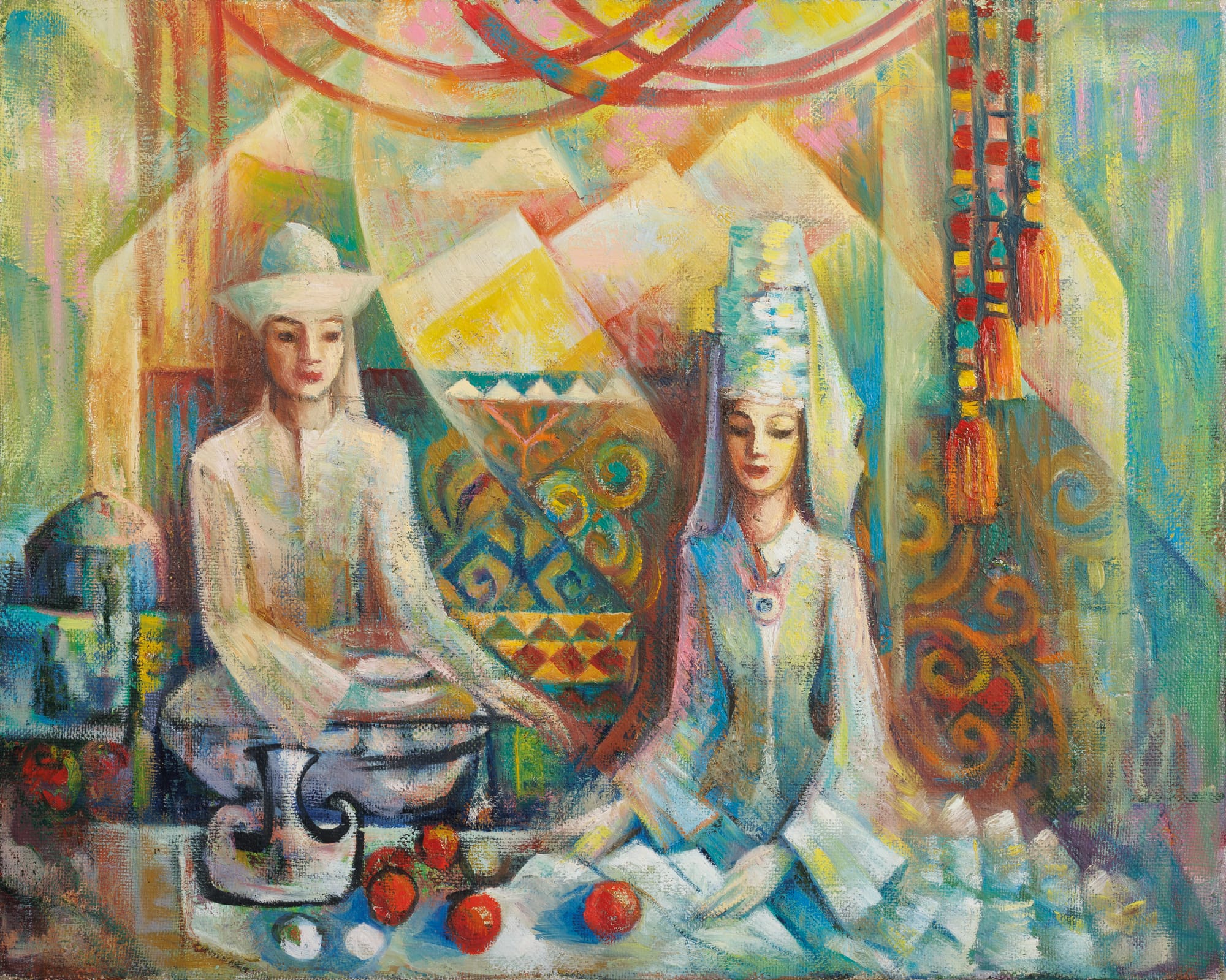
The visual friction between these ethnographic artifacts and Zaurbekova’s avant-garde creations is striking, though it is only cursorily addressed by wall text linking her philosophy to that of Swiss constructivist Sophie Taeuber-Arp. When viewed against classical palettes and traditional designs, Zaurbekova’s fearless experimentation with figuration and abstraction—evident in works such as In the Yurt (1985)—is palpably expressive and bold. Even in these formative pieces, her deceptively unfettered designs retain the spontaneous energy of freehand painting, anchored by a rigorous technical finesse and absolute confidence in complex, luminous color transitions.
Ecological Visions and Monumental Scale
During the 1970s, Kazakhstan underwent a period of rapid, disorienting industrialization and urbanization. This era was compounded by severe environmental catastrophes, including the devastating collapse of the Aral Sea, ongoing Soviet nuclear weapons testing at the Semipalatinsk test site in the northeast, and the widespread ecological degradation wrought by Nikita Khrushchev’s disastrous Virgin Lands campaign.
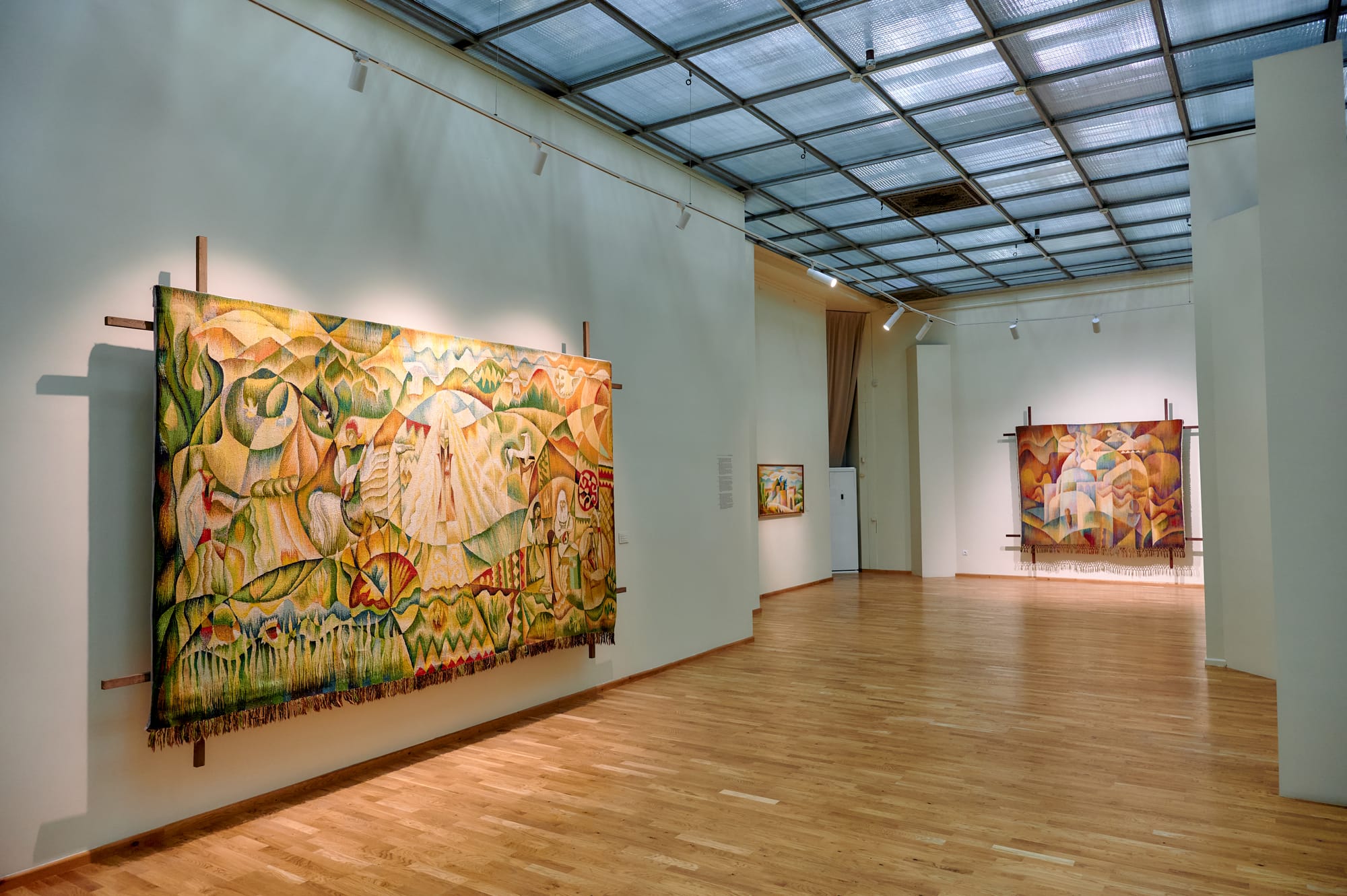
Against this backdrop of irreversible, existential transformation, a quixotic quest for ecological, social, and cultural harmony forms the philosophical undercurrent of Zaurbekova’s monumental tapestries featured in the exhibition’s second section. Large-scale compositions such as Vastness (1975), Kazakhstan (1977), and Mother Earth (1984) showcase an extraordinary ability to integrate human figures, towering mountains, lush trees, and flowing water into semi-abstract compositions. In these works, intangible elements like wind, air, and light are rendered with tangible color, shape, and physical solidity.
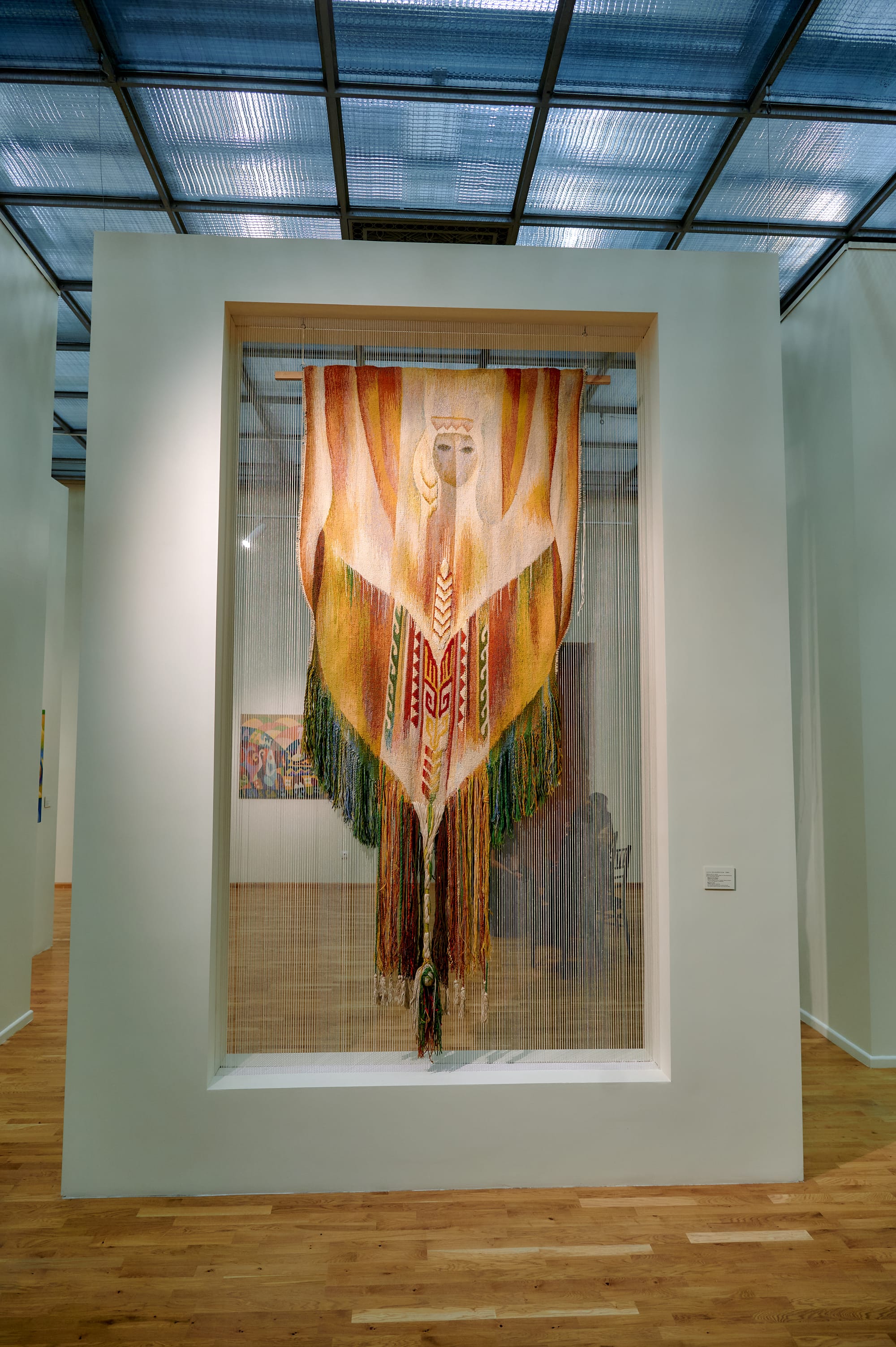
Mother Earth, which Zaurbekova cites as perhaps her most technically demanding endeavor, highlights her virtuosic dexterity through wave-shaped flourishes that seamlessly merge motifs of fertile land, agriculture, and womanhood. Meanwhile, the exhibition’s undisputed centerpiece, Vastness, presents a majestic, prelapsarian vision of the world. Centered around a stylized yurt and a solitary female figure, the composition radiates outward through vibrant waves of musicians, flora, and fauna.
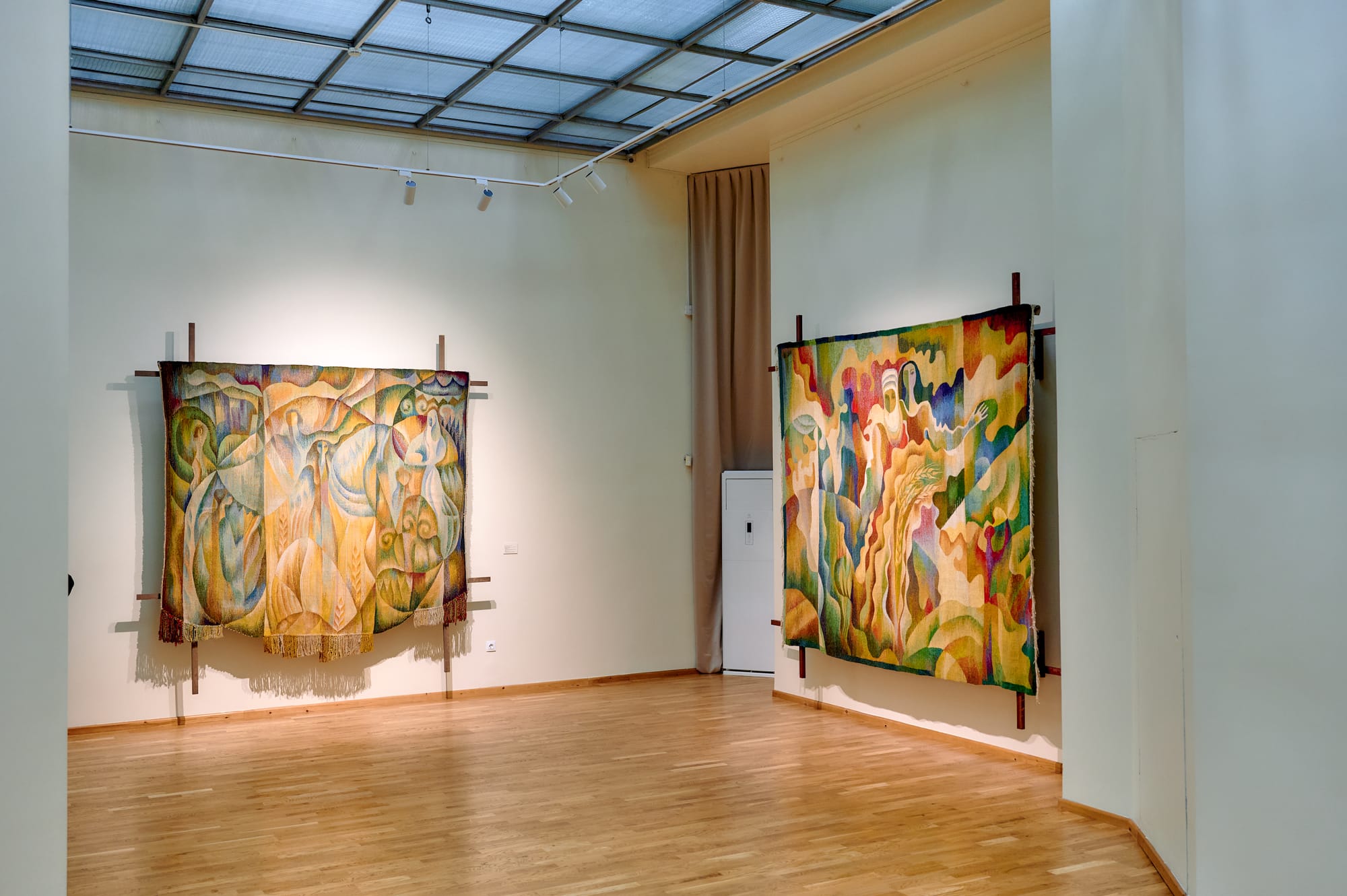
The sheer technical complexity of Vastness is staggering. Measuring 207 by 361 centimeters, Zaurbekova estimates the tapestry required approximately six months to complete. Its kaleidoscopic color gradations are executed with microscopic precision—rendering even the delicate cheekbones of tiny figures with intimacy—while successfully unifying disparate landscape elements into a harmonious, symphoniesque palette. Zaurbekova notes that selecting precise thread colors was frequently the most grueling phase of the process, particularly when executing highly gradated planes of color.
Navigating Independence and Post-Soviet Dynamism
Zaurbekova’s intensely productive creative streak through the late 1970s and 1980s was met with substantial professional acclaim. In 1977, the state commissioned her alongside three fellow artists to create a massive 100-square-meter tapestry for the landmark Kazakhstan Hotel. This monumental achievement, titled Rainbow, required two years to produce and was immortalized in Melody, a 1977 documentary short dedicated to Zaurbekova produced by Kazakhfilm.
The collapse of the Soviet Union and Kazakhstan’s subsequent declaration of independence in 1991 ushered in a turbulent era. Seeking respite from the exhaustion of these profound socio-political shifts, Zaurbekova temporarily relocated to Turkey. The immediate post-Soviet years proved exceptionally difficult for Kazakhstani artists, as state support plummeted and the Ministry of Culture abruptly halted public art commissions.
Nevertheless, newfound international mobility fostered greater cross-cultural exchange and stimulated domestic public interest in contemporary arts. A significant catalyst during this transitional period was the Soros Foundation, which opened the Soros Center for Contemporary Art in Almaty in 1997. Despite facing criticisms regarding a perceived neoliberal agenda, the center served as a crucial, independent platform for local artists before closing its doors a decade later.
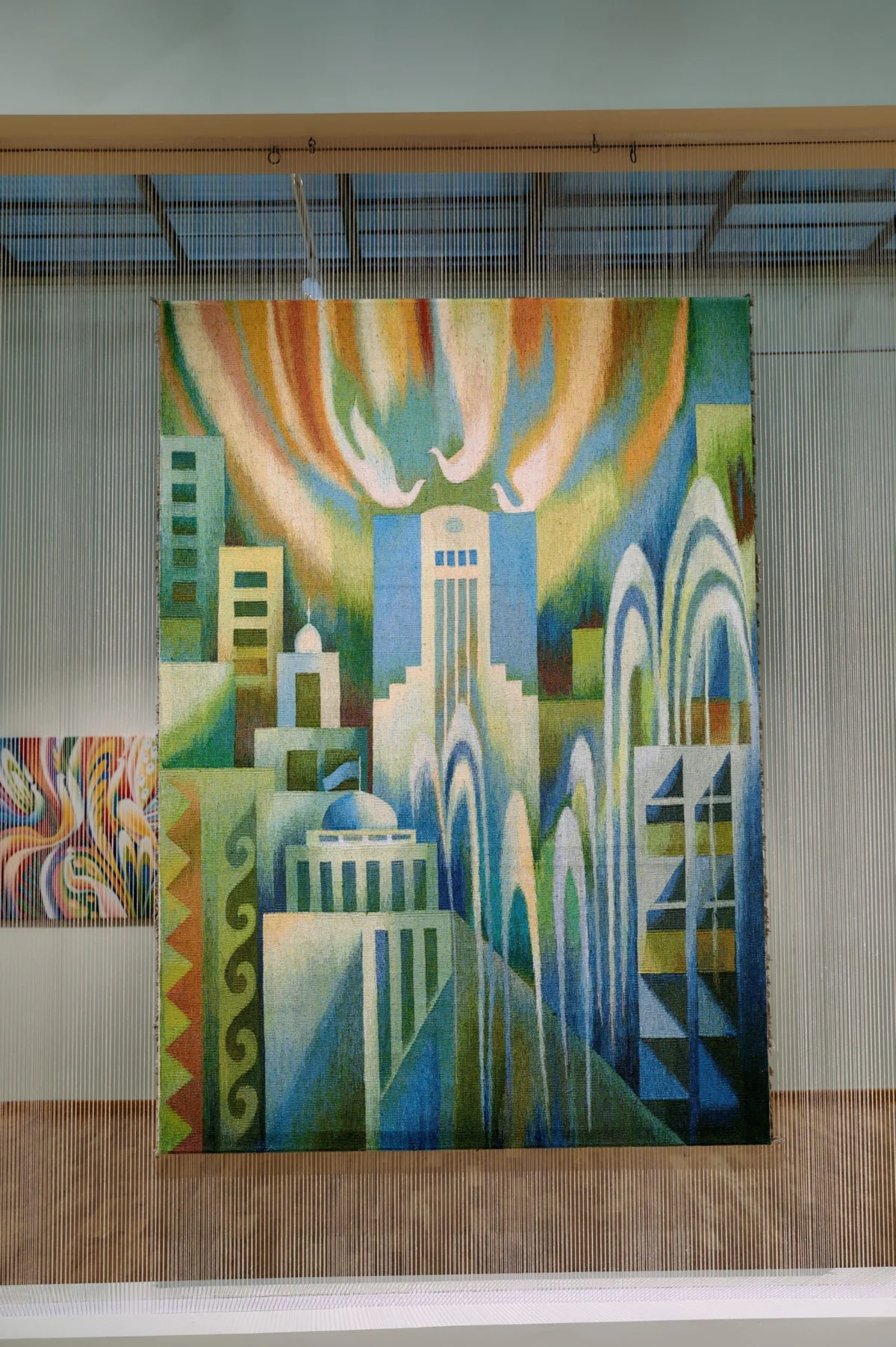
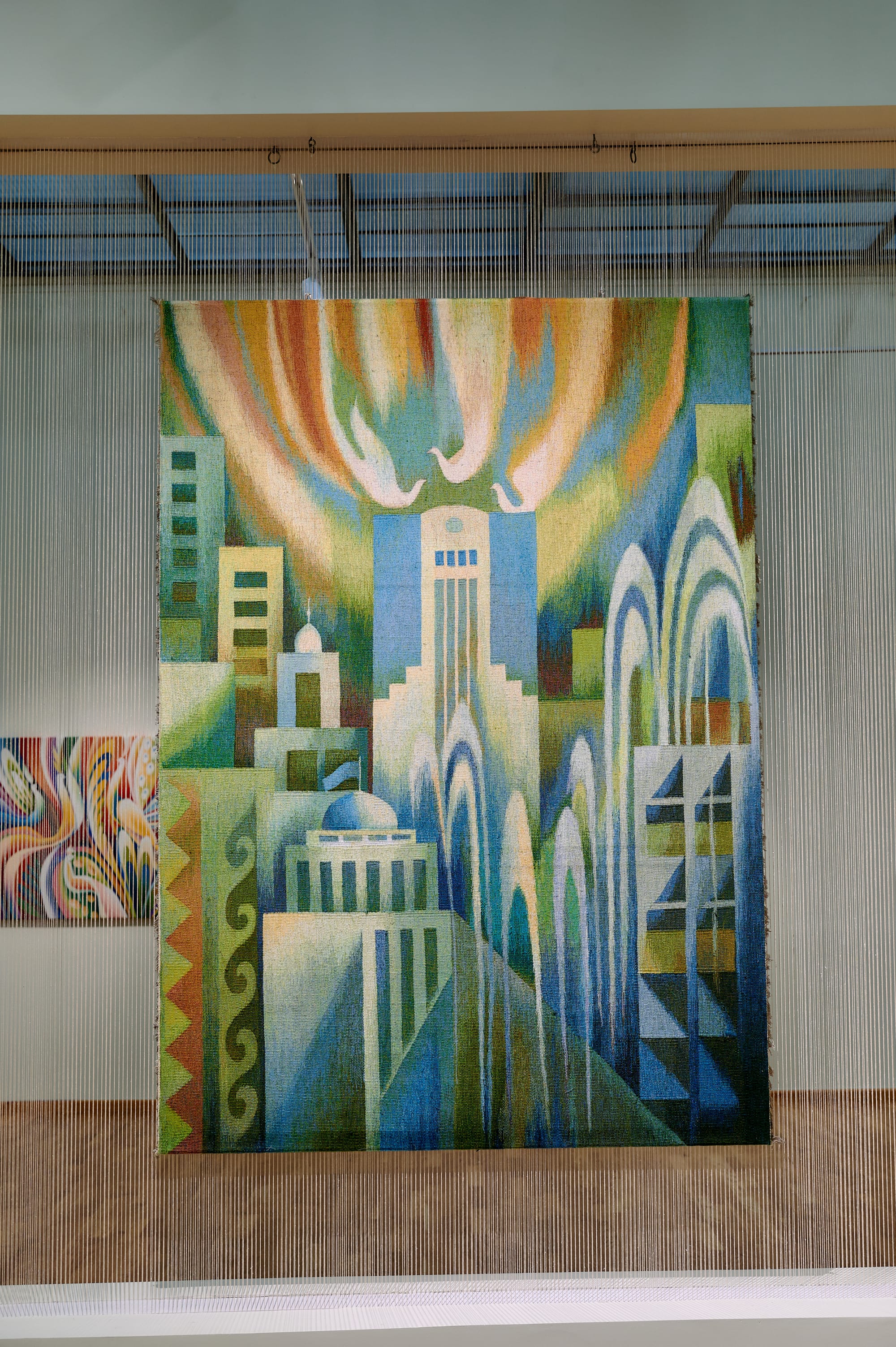
The material realities and psychological shifts of Kazakhstan’s early independence found direct expression in Zaurbekova’s evolving explorations of space, time, and motion. Throughout the 2000s, she produced a series of vibrant oil paintings and tapestries capturing Almaty and Astana during their most dynamic periods of post-Soviet economic expansion. In these works, towering skyscrapers pulse with muscular, radiant prisms of color, appearing to arch sunward like vigorous, blooming shoots.
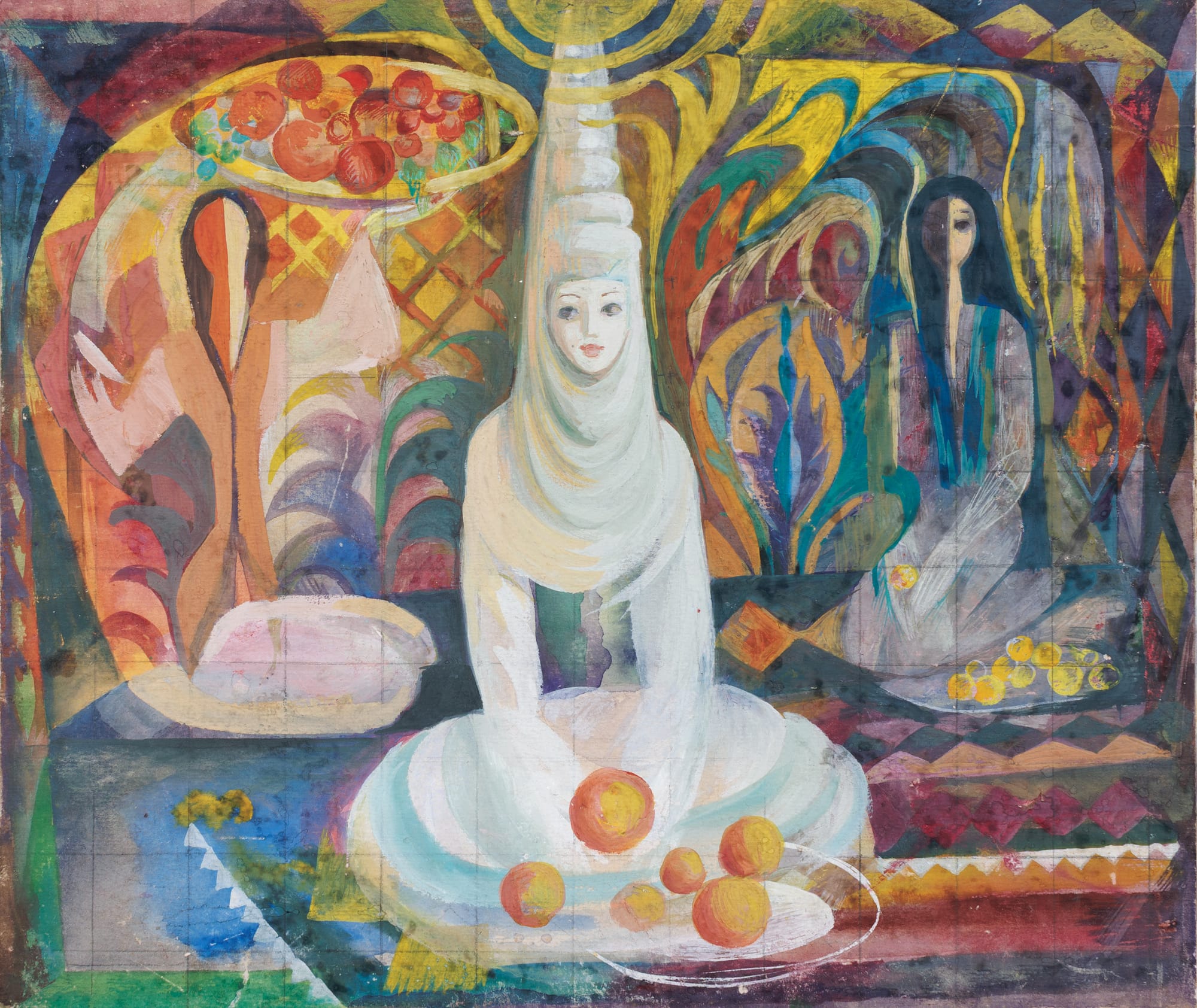
One of the exhibition’s most delightful features is the inclusion of Zaurbekova’s iterative reworkings of specific motifs across multiple decades. In the accompanying catalog, curators have thoughtfully paired canvases such as her Still Life series from 1978, 1989, 2004, and 2006. Visiting these sequential works feels akin to reuniting with an old friend over the span of many years—witnessing the accumulation of life’s wrinkles and adventures, yet always being greeted with unwavering joie de vivre and a welcoming platter of fresh oranges.
Today, Zaurbekova stands firmly as one of Kazakhstan’s most illustrious cultural figures. Recognized as an Honored Worker of Culture of the Republic of Kazakhstan, she is also a recipient of the Order of Otan, one of the nation’s highest civilian honors. Celebrating her 80th birthday just days before the opening, her retrospective arrives on the cusp of a transformative era for contemporary art in Kazakhstan. This burgeoning new chapter is most visibly heralded by the 2025 inaugurations of both the Almaty Museum of Art and the Tselinny Center of Contemporary Culture. Underwritten by visionary Kazakhstani entrepreneurs, these ambitious projects form part of a bold strategy to firmly anchor Almaty within global networks of contemporary art and creative capital. As these institutions take shape, the "muralnomads" of Central Asia are once again embarking upon a brave new world.
"Threads of Heritage" remains on view at the Abylkhan Kasteyev National Museum of Arts in Almaty through November 8, 2026.