London — What makes a good listener when tuning into evanescent events unfolding thousands of miles away, and what is truly at stake in the acts of hearing or ignoring distant violence? These were the pressing questions at the heart of "Repercussions," a curated event series at London’s Barbican that explored the profound intersections of sound, politics, and aural injustices. Centered around the groundbreaking work of artist Lawrence Abu Hamdan, alongside a poignant commissioned performance by sound designer Rana Eid and musician Matthew Herbert, the program challenged audiences to rethink the neutrality of silence and the pervasive acoustic signatures of modern geopolitics.
The exhibition and performance series, which ran from September 23 to 26, 2026, brought together immersive video installations and live performance-lectures that demanded rigorous intellectual and sensory engagement from viewers. Through meticulous research and harrowing audio-visual documentation, the participating artists forced audiences to confront how military dominance, territorial displacement, and colonial histories are written not just in policy or physical destruction, but directly into the atmosphere and the daily soundscapes of vulnerable populations.
Tuning Into Endangered Landscapes and Sonic Occupation
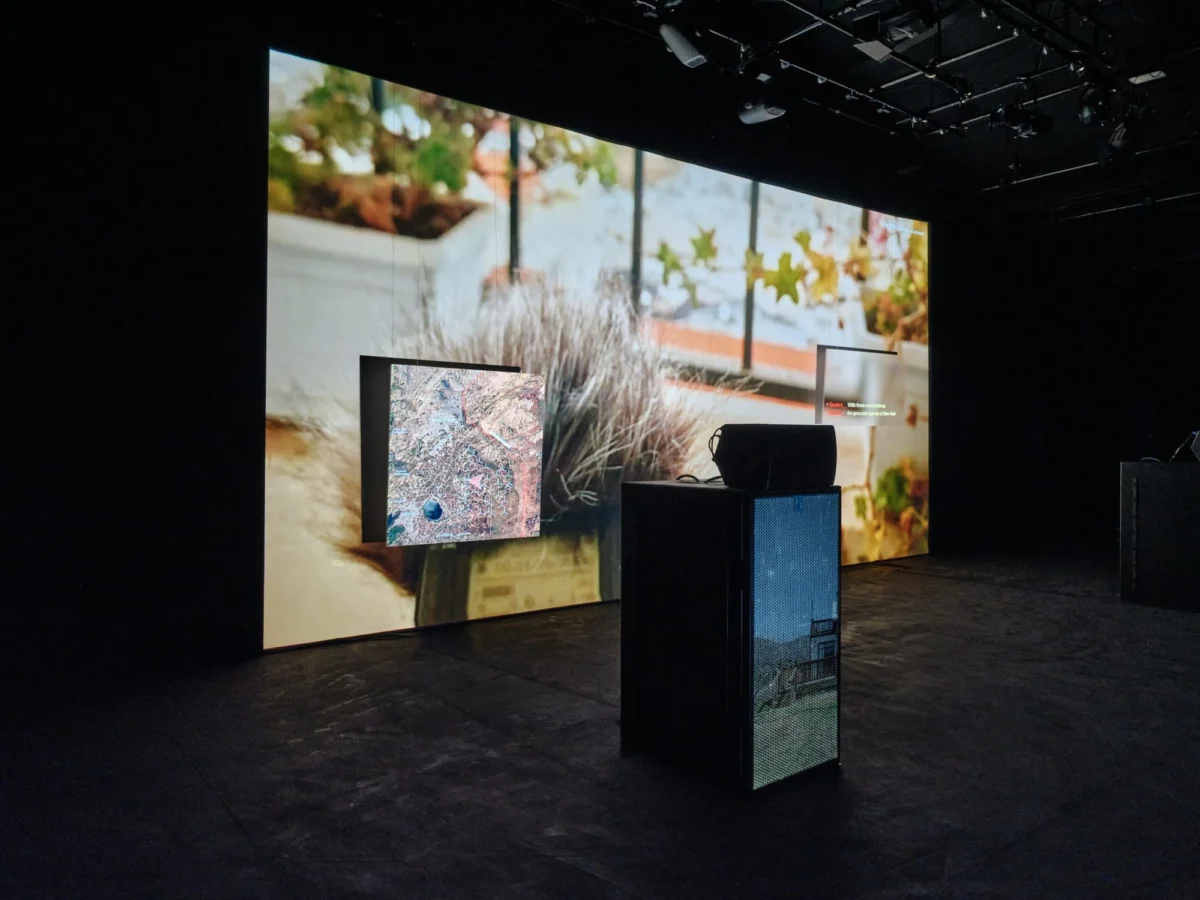
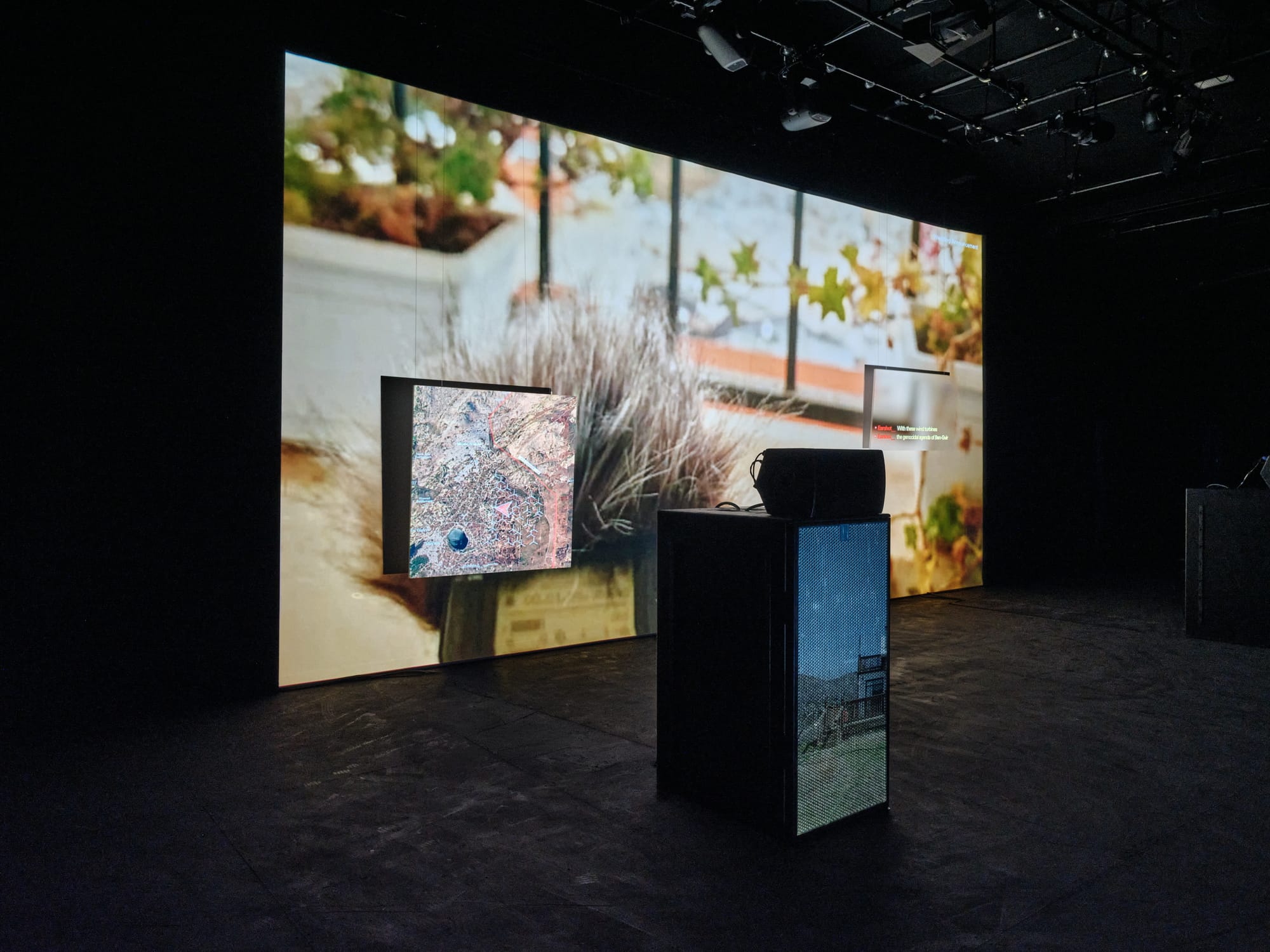
Lawrence Abu Hamdan’s contributions to the series—specifically his video installation Zifzafa: A Livestream Audio Essay (2025) and his live performance-lecture Air Pressure (2022)—served as anchors for the broader exploration of acoustic violence. Zifzafa presents a virtual simulation of the Israeli-occupied Syrian Golan Heights, accompanied by narration unfolding in a live chat box. The work investigates the potentially near-deafening fallout surrounding the construction of a massive industrial wind farm on the Golan plateau by the Israeli energy company Energix.
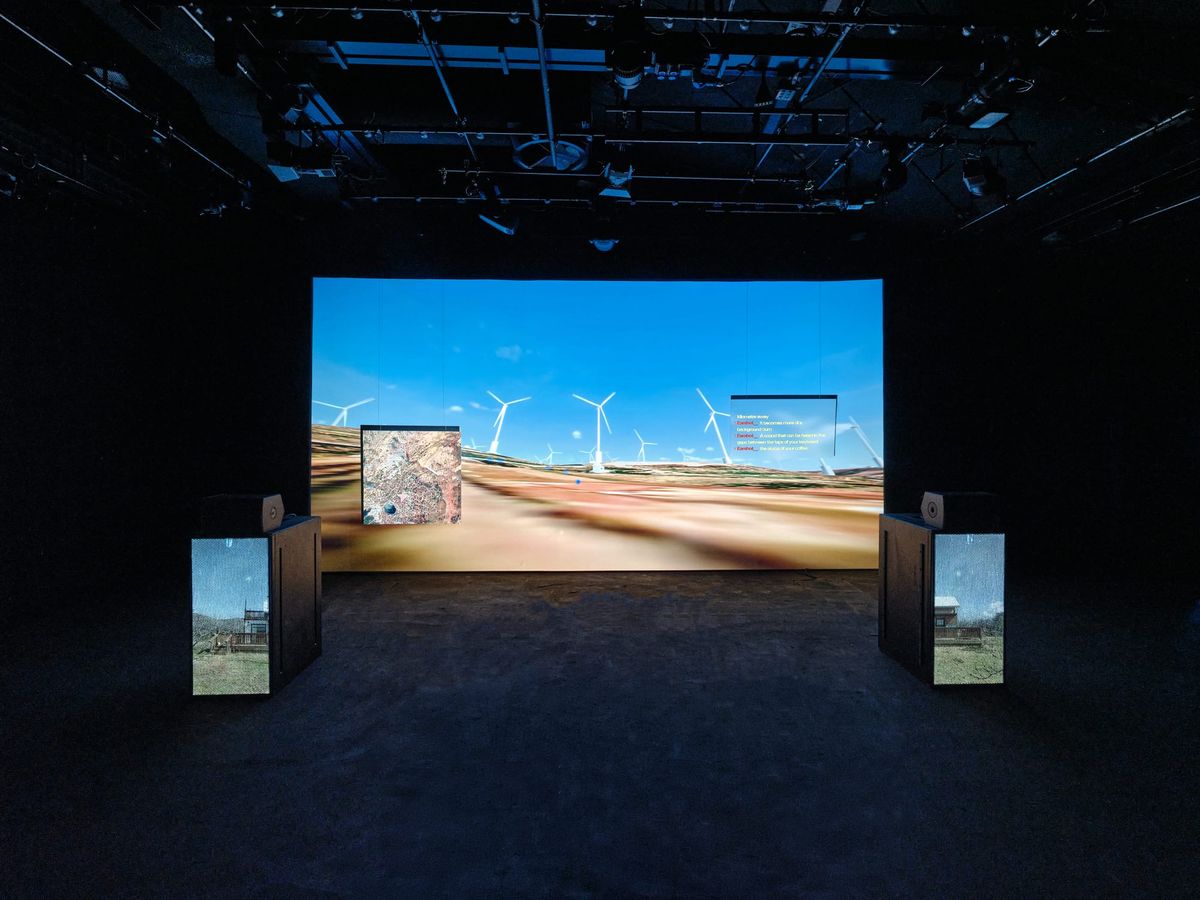
As the virtual flyby transports viewers across the contested landscape, authentic audio clips of Jawlani village life and local animal activity double as a vital, fragile archive of an endangered soundscape. The installation exposes the complex friction underlying the protest against the wind turbines. While an Israeli environmentalist group known as the Keepers of the Golan joined Jawlani activists in opposing the project, their motivations diverged sharply. For the environmentalists, the primary goal was to preserve the pristine tranquility of the natural land. For the indigenous Jawlani community, however, the struggle was about protecting deep ties to their homeland and working to restore the lively raucousness that was forcibly muted when an estimated 140,000 residents were displaced following the onset of the Israeli occupation in 1967.
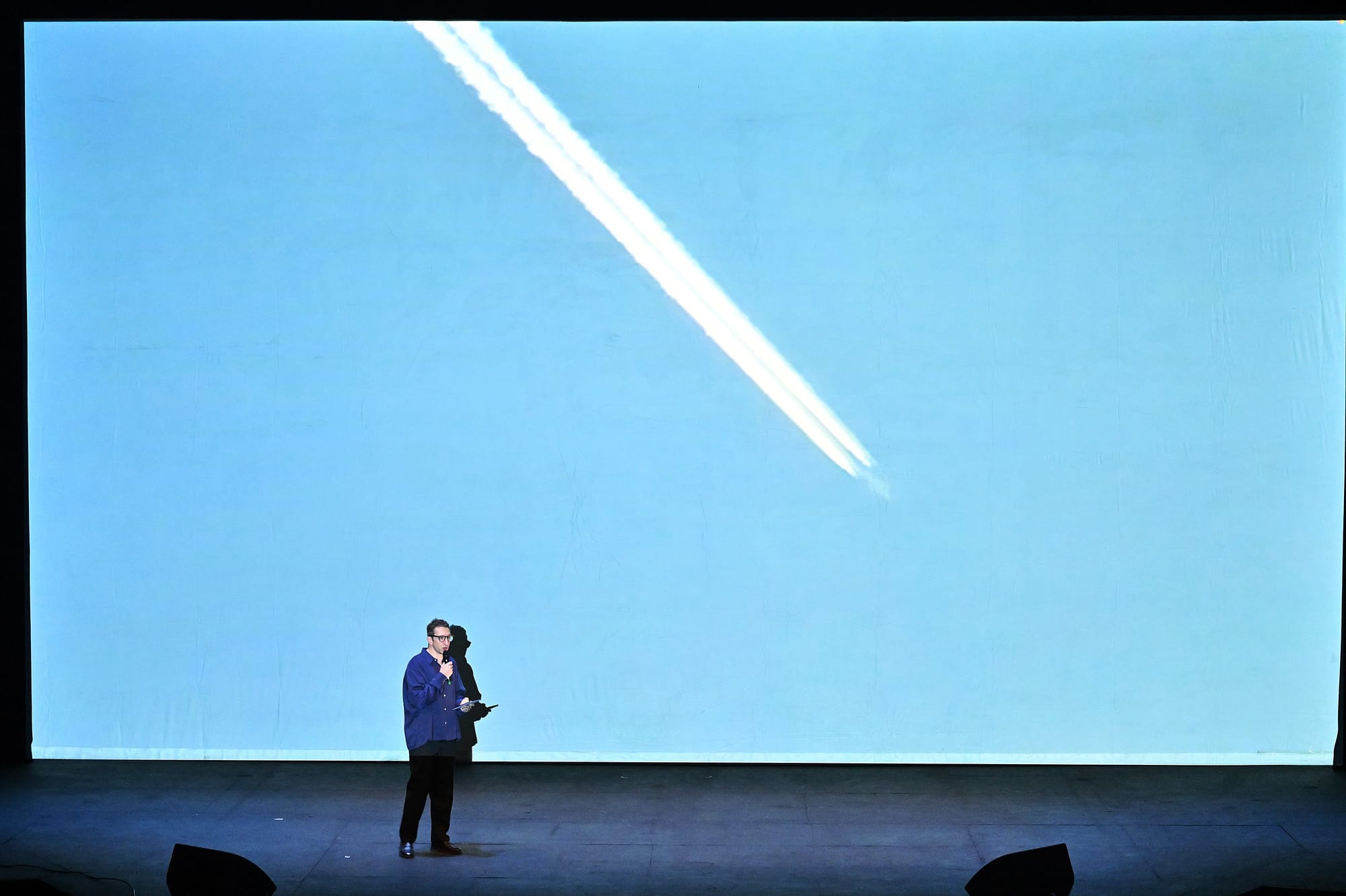
Shifting the geographical focus southward, Air Pressure turned its critical lens toward Lebanon during the country’s rapid political and economic unraveling between 2020 and 2021. Backed by stark social media footage and rigorous investigative reporting, Abu Hamdan detailed the lived experiences of residents navigating a grim daily reality. In this context, the relentless din of Israeli Defense Forces (IDF) aircraft trespassing through Lebanese airspace became the structural score of everyday life, dictating the rhythms, fears, and psychological endurance of the civilian population.
The Weaponization of Silence and Global Complicity
Among the most transformative and unsettling realizations to emerge from Abu Hamdan’s presentations is that silence is never neutral. For citizens in stable nations, the quiet firmament overhead is often maintained because the physical and psychological price of that peace is being borne entirely elsewhere.
In Air Pressure, the artist outlined the complex geopolitical and economic networks underwriting modern air warfare. He detailed how 20 nations have purchased and financially supported American arms manufacturer Lockheed Martin’s F-35 fighter jets, with all participating foreign governments legally bound to the U.S. corporation for ongoing software updates and vital maintenance. The notable exception to this arrangement is Israel, which operates its own customized software. This autonomy is granted because Israel possesses the most real-world combat experience deploying the jets, thereby providing invaluable tactical feedback to the manufacturer. Without making a direct noise, the 19 other allied countries quietly benefit from this feedback loop, their relative domestic serenity subsidized by distant devastation.
Abu Hamdan further interrogated the paradox of quietude toward the end of his monologue, reflecting on how the Lebanese skies abruptly fell silent in May 2021 as the IDF shifted its focus to launch devastating airstrikes on the Gaza Strip during an intense 11-day military offensive. "In silence, we hear what they are most capable of," he observed, encapsulating how the deliberate absence of sound can carry a more terrifying resonance than active bombardment.
Tracing Colonial Specters Through Sound
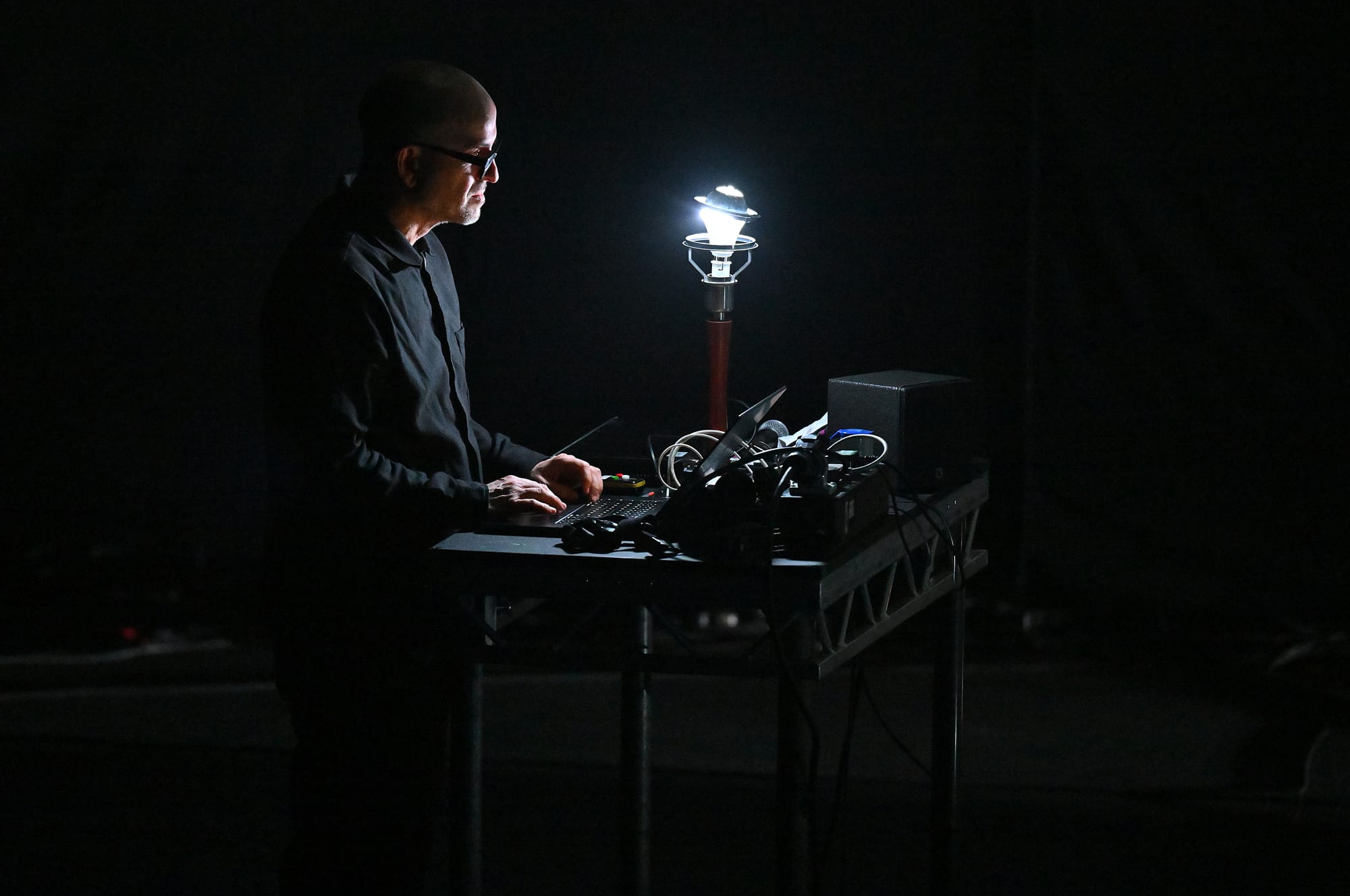
Directly questioning who underwrites the relative safety and comfort of contemporary British life, Rana Eid and Matthew Herbert followed Abu Hamdan’s Air Pressure with their commissioned performance piece, Sykes-Picot (2026). The performance traced the lingering specters of Mark Sykes and François Georges-Picot—the British and French diplomats, respectively, whose infamous 1916 secret agreement carved up the collapsing Ottoman Empire between their two nations and Russia. That imperial pact guaranteed Western control over regional oil extraction and export routes while seeding deeply entrenched conflicts that continue to afflict West Asia today.
The creation of Sykes-Picot was marked by profound tragedy. Eid and Herbert had originally intended to incorporate historical audio clips originating from the lifetimes of Sykes and Georges-Picot. However, the professional archivist collaborating with them on the project was killed by an IDF airstrike in Lebanon in April, and the physical archive they relied upon was destroyed in the attack.
Pivoting in the face of this irreparable loss, the artists instead recorded the actual places where Sykes and Georges-Picot had lived and worked. Evoking the unsettling familiarity of a commercial "peaceful nature sounds" playlist, the recording featured the gentle trickling of raindrops falling through a Lebanese cedar planted on the sprawling Sledmere Estate—the historic Sykes family seat in Yorkshire. This juxtaposition of tranquil English estate horticulture with the grim fate of their murdered collaborator brought the family’s historical affluence into sharp, disturbing contrast, serving as a visceral and sickening filler for a human lacuna.
Embracing Discomfort and Critical Listening
As these performances and video installations progressed at the Barbican, it became manifestly clear that audience comfort and aesthetic pleasure were secondary to a much harder demand: the cultivation of deep, active discomfort.
Air Pressure incorporated strategically extended pauses that forced listeners to momentarily halt their breathing, leaving the auditorium hanging in a state of suspended tension where viewers questioned whether the performance had concluded or if applause was appropriate. Meanwhile, the accompanying video projections were deliberately shaky and repetitive, the sound design frequently overbearing, and Abu Hamdan’s spoken delivery intentionally muffled. Similarly, in Zifzafa, the virtual camera sweep across the Golan landscape was disorienting, and the persistent, low-frequency drone of the wind turbines bordered on grating.
It would be easy for spectators to consume what Abu Hamdan’s investigative art practice reveals about the aural mechanisms of modern warfare, absorb the data, and walk away with an affirmed sense of their own moral standing. Instead, the works consistently invited audiences to sit with their own unease, to question what political channels have been quietly dialed up or down in their own societies, and to consider what crucial truths might still be lingering just out of earshot.
Chloe Chu is an art writer and editor based in London.