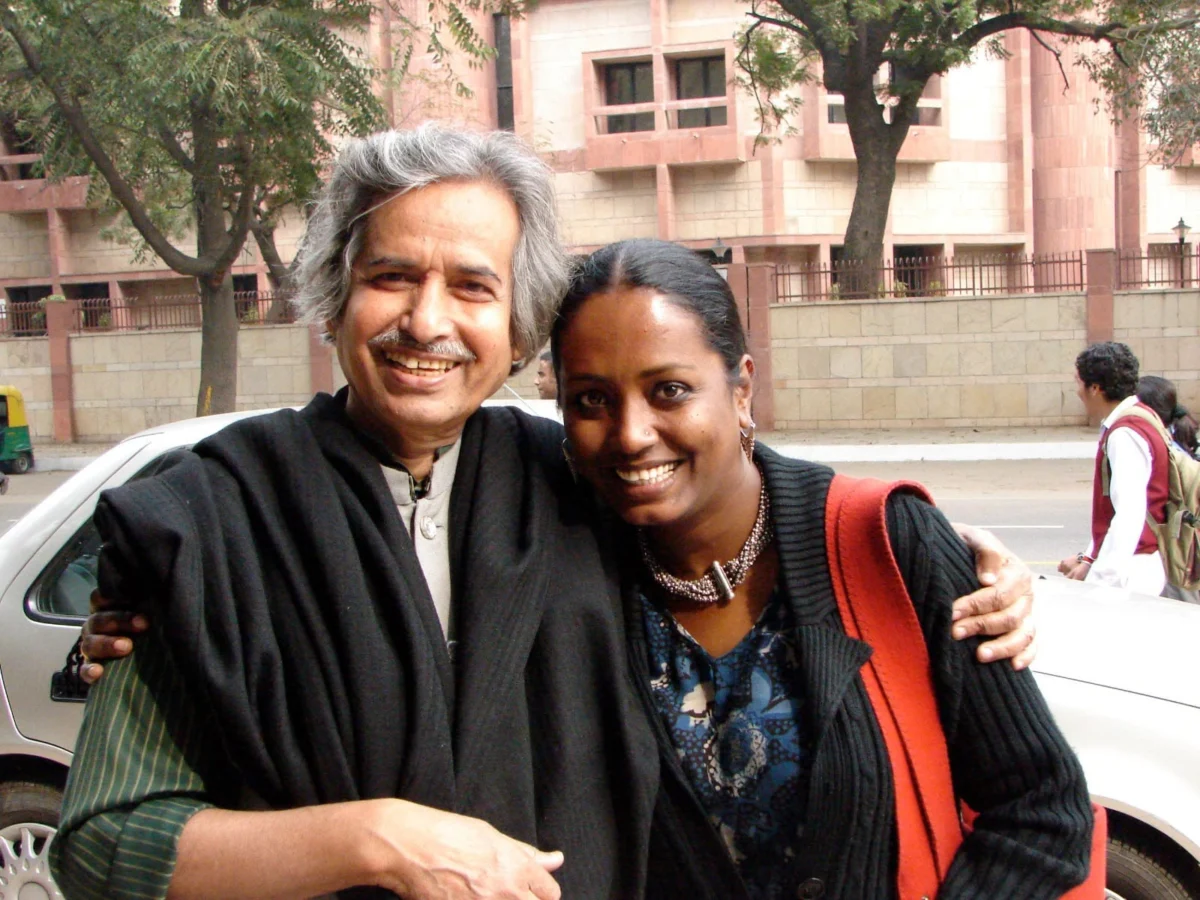
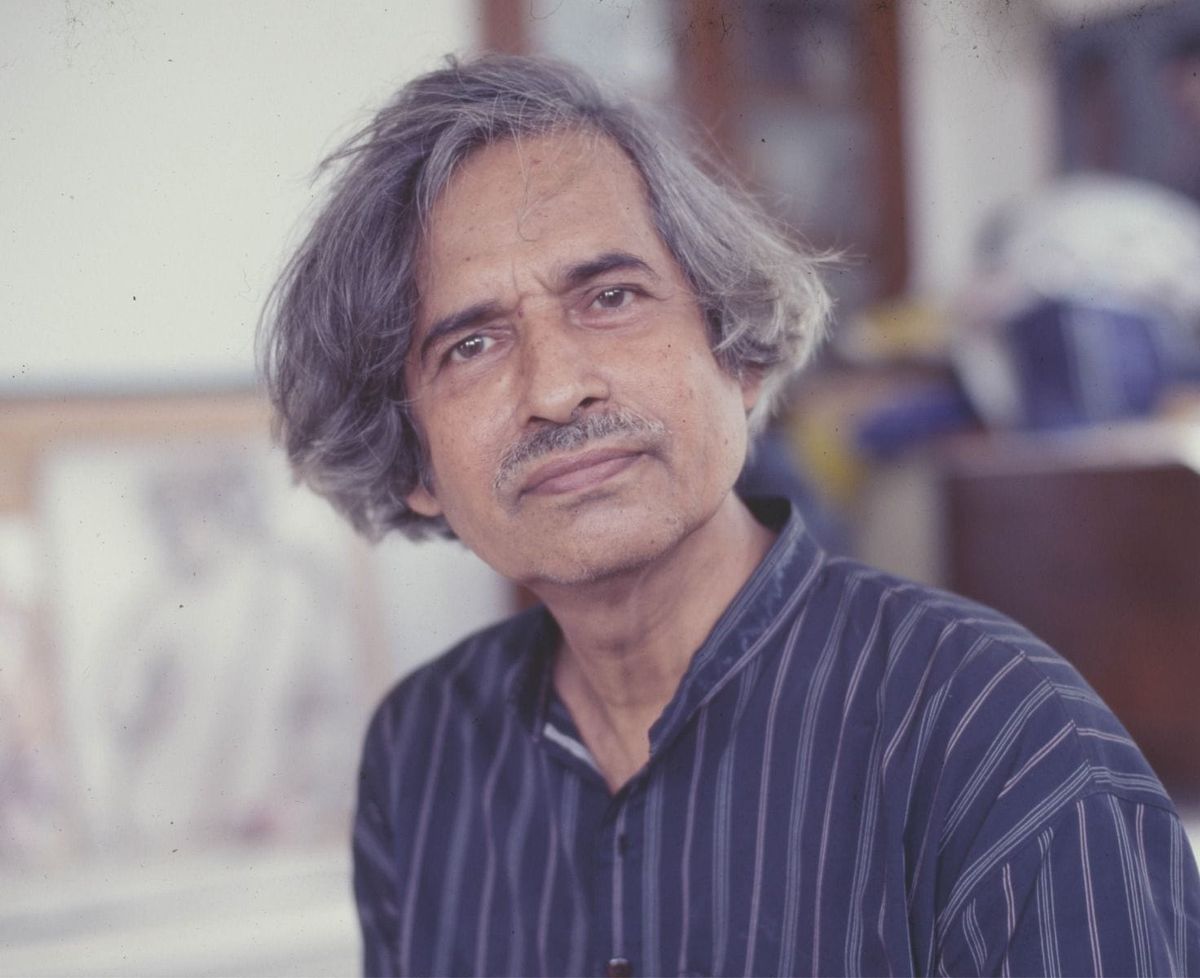
Jogen Chowdhury, a towering figure in Indian modern art whose distinctive ink-and-pastel works defined the visual landscape of the nation for more than half a century, passed away in Kolkata on October 25 following a protracted battle with blood cancer. He was 87 years old.
Chowdhury’s death marks the closing chapter of a remarkable life dedicated not only to the canvas, but to nurturing generations of artists, preserving national cultural heritage, and advocating for the institutional welfare of creatives across India. As a painter, printmaker, teacher, museum keeper, and parliamentarian, Chowdhury left an indelible imprint on the cultural history of South Asia.
Born in 1939 in Faridpur—a region located in what was then undivided Bengal and is now part of Bangladesh—Chowdhury’s earliest exposure to aesthetics was deeply rooted in domestic and folk traditions. From his earliest childhood days, he was surrounded by art; his mother frequently practiced alpana, the traditional Bengali folk art of decorating floors and walls with intricate, rhythmic line work. This early immersion in indigenous line-making would lay the subconscious foundation for his lifelong obsession with contour, texture, and pattern.
The tranquility of his early life, however, was shattered by the monumental geopolitical upheaval of the 1947 Partition of India. Like millions of other families, Chowdhury’s family was displaced, uprooting their lives and migrating across the newly drawn borders to settle in Kolkata. The psychological scars, sense of displacement, and profound economic precarity of those post-Partition years would subtly permeate Chowdhury’s artistic consciousness, informing his mature explorations of human vulnerability, alienation, and survival.
Determined to pursue a professional path in the visual arts, Chowdhury enrolled in the Government College of Arts and Craft in Kolkata, graduating in 1960. His formal education provided him with a rigorous technical foundation, but his artistic horizons expanded exponentially in the mid-1960s. In 1965, he was awarded a prestigious two-year government scholarship that enabled him to travel to Paris, where he studied at the École Nationale Supérieure des Beaux-Arts.
Immersed in the vibrant post-war European art scene, Chowdhury absorbed the lessons of Western modernism, yet he resolutely turned inward to his own cultural roots and psychological preoccupations. Upon returning to India, he forged a completely idiosyncratic visual vocabulary. Eschewing the vibrant, bombastic palettes of some of his contemporaries, Chowdhury developed a signature technique defined by intricate crosshatching, tactile surfaces, and gangly, amoeboid, and distorted human figures. Working primarily in ink, pastel, and watercolor, his works possessed a haunting intimacy, frequently returning to enduring themes of political power, moral decay, human frailty, and physical displacement.
Over the decades, Chowdhury’s works achieved widespread international acclaim. He exhibited extensively across India as well as in major global cultural hubs, including Seoul, Amsterdam, Singapore, New York, and London. His hauntingly tactile portraits and figurative compositions became prized possessions of major institutions and discerning private collections worldwide, cementing his status as a pillar of modern South Asian art.
Yet, Chowdhury’s profound impact on the Indian art ecosystem extended far beyond his personal studio practice and exhibition record. He was deeply committed to institutional building and arts administration. From 1972 to 1987, he served as the keeper of art at Rashtrapati Bhavan, the official residence of the president of India, where he oversaw and cared for the nation’s presidential art collection with immense dedication.
In 1987, Chowdhury transitioned into formal academia, joining Visva-Bharati University in West Bengal as a professor of painting at Kala Bhavana—the renowned institution founded by Nobel laureate Rabindranath Tagore in Santiniketan. As an educator, Chowdhury was revered for his gentle mentorship, critical rigor, and unwavering support for young artists-in-training. Continuing his commitment to grassroots artistic communities, he helped found the Santiniketan Society of Visual Art and Design in 2003, a vital nonprofit organization established to support emerging talents through workshops, artist residencies, and independent art fairs.
Chowdhury’s dedication to the arts eventually spilled over into the public sphere of national governance. From 2014 to 2020, he served as a member of the Rajya Sabha, the upper house of the Indian parliament, representing the Trinamool Congress. During his tenure as a parliamentarian, he utilized his platform to advocate persistently for institutional support, funding, and better infrastructural frameworks for young and marginalized artists across the country, bridging the often-wide gap between creative practitioners and state policymakers.
Following news of his passing, tributes poured in from across the cultural spectrum, with fellow artists, students, and institutional leaders reflecting on his monumental legacy. Among them was the celebrated contemporary artist Mithu Sen, who shared her reflections on her former teacher with ArtAsiaPacific, highlighting the profound moral and political undercurrents that sustained his life’s work.
"He exposed moral decay and corruption with rare tenderness and a mischievous sense of humor," Sen observed. "His work could be fierce without being loud, critical without becoming preachy, and deeply disturbing without losing its humanity. He did not merely depict the violence, contradictions, and vulnerabilities of human crises; he made us confront them."
With the passing of Jogen Chowdhury, the Indian art world loses not only a master draftsman and a defining voice of modernism, but a tireless educator, institutional architect, and moral conscience who fundamentally transformed how the nation perceives the fragile complexities of the human condition.