Located approximately two kilometers from the administrative center of Y Tý Commune, Choản Thèn has managed to preserve much of its traditional character against the backdrop of a rapidly modernizing world. Its vernacular architecture—most notably its thick-walled earthen houses—stands resiliently among rugged mountain terrain, while cascading terraced fields trace the contours of the surrounding slopes. In the Hà Nhì language, the name "Choản Thèn" translates to a village with a circular shape, a layout that reflects both historical defense strategies and communal cohesion.
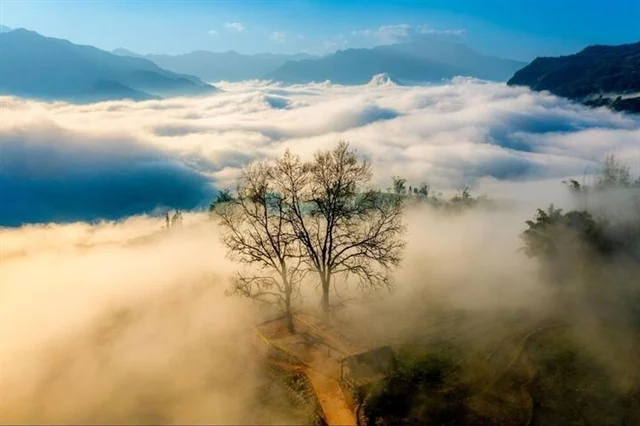
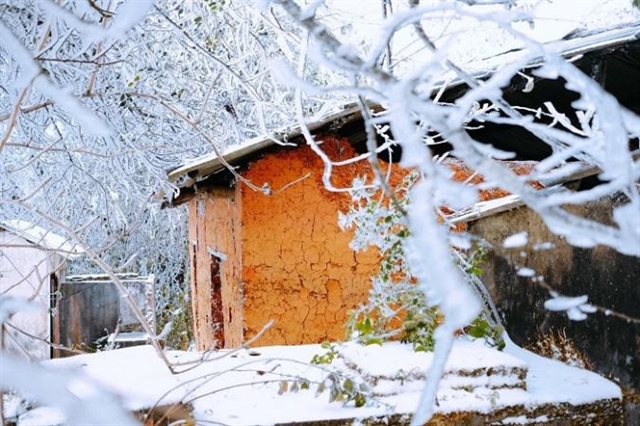
The village’s geographical elevation makes it a premier destination for witnessing natural phenomena, particularly from September through April. During these cooler months, favorable weather patterns frequently trap low-lying clouds over the valleys, transforming the landscape into a celestial sea of white vapor. From elevated vantage points, the traditional rooftops and segmented rice fields intermittently pierce through the shifting mist, creating the ethereal scenery that has elevated Choản Thèn’s profile among domestic and international visitors alike. Yet, as local authorities and residents are quick to point out, the sea of clouds is merely the surface attraction of a much deeper cultural ecosystem.
Life Among the Clouds and Centuries of Tradition
At the heart of Choản Thèn’s enduring appeal is the Hà Nhì ethnic community, whose members have meticulously safeguarded their ancestral customs, architecture, and social structures. The village’s distinctive earthen houses remain one of its most striking architectural achievements. Constructed to withstand the harsh, freezing winters of the high mountains, these dwellings typically feature a square or rectangular footprint with massive, thick walls made from a mixture of red earth and gravel, traditionally topped with heavy thatched roofs. Designed with functionality in mind, most houses feature a single central entrance complemented by one or two small, arched windows that minimize heat loss while offering ventilation.
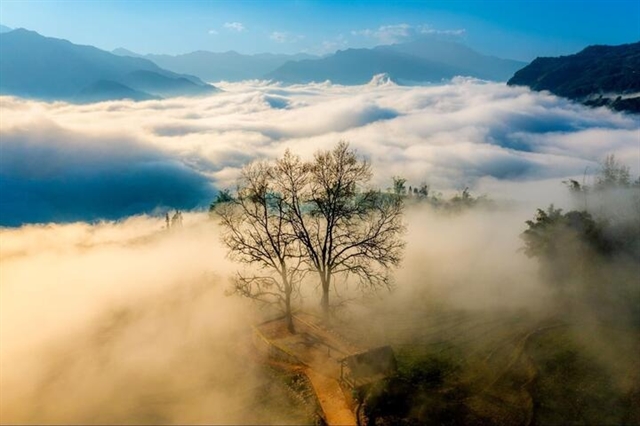
These earthy, muted tones are softened by the natural flora cultivated by residents. Peach trees and vibrant seasonal flowers are frequently planted within private courtyards and along rustic wooden fences, injecting bursts of color into the village landscape as spring approaches.
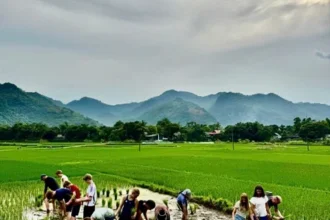
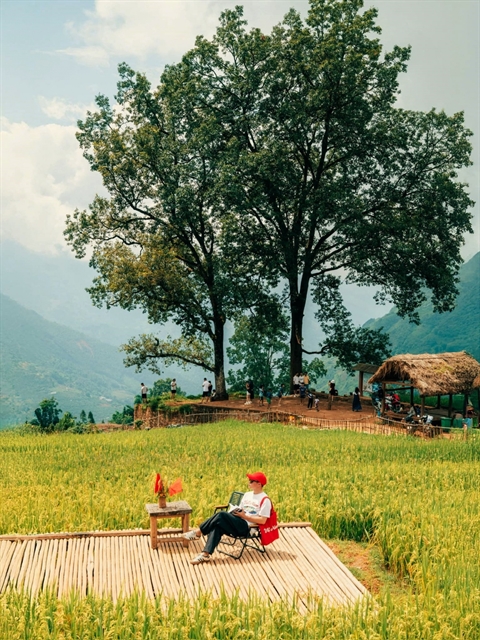
Furthermore, the visual tapestry of Choản Thèn evolves dramatically with the passing seasons. In May and June, the local agricultural cycle enters the flooding season, when mountain rains and irrigation transform the cascading terraced fields into vast, shimmering mirrors that reflect the open sky and surrounding peaks. As summer progresses into August and early September, the landscape shifts dramatically as the ripening rice crops paint the terraces in rich shades of gold just ahead of the autumn harvest. When winter and early spring arrive, the return of dense mountain fogs and sub-zero temperatures cloaks the village in mystery, ensuring that visitors encounter a profoundly different visual experience depending on the time of year they choose to make the journey.
Beyond the physical landscape, the cultural traditions of the Hà Nhì people remain vibrant and active components of daily life. Traditional attire, distinctive local cuisine, intricate bamboo tray weaving, artisanal rice wine-making, and delicate brocade embroidery continue to be practiced within households. Crucially, intangible cultural heritage—such as the performance of traditional folk songs and dances, alongside the mastery of the distinctive hó tớ musical instrument—is actively transmitted from the older generation to the youth.
Adding to the village’s unique landmarks are two monumental chestnut trees, affectionately known by locals as the "happiness trees." Standing approximately 30 meters tall, their massive canopies and intertwining branches form a natural canopy that has become a beloved gathering point for the community. Adjacent to these trees lies an open public space designated as Choản Thèn Park. Serving as the primary communal hub for local residents, the park offers sweeping panoramic views of the terraced valleys, distant mountain ranges, and the sprawling Y Tý Valley below.
The park also functions as the ceremonial heart of the village, hosting major Hà Nhì cultural festivals throughout the lunar year. Among these are the Gá Mà Thú, or Sacred Village Festival, celebrated during the first lunar month, and the Khô Giả Già, or Abundant Harvest Festival, held in the sixth lunar month. During these sacred occasions, community members perform ancient rituals, engage in traditional folk games, and participate in communal feasts, providing visitors with a rare, unfiltered window into indigenous customs preserved in their original setting.
The Emerging Economy of Community-Based Tourism
In recent years, tourism has begun to weave itself into the economic fabric of Choản Thèn, offering residents a new, supplementary source of livelihood. Following targeted training courses organized by local authorities focusing on hospitality services, public sanitation, and environmental protection, villagers have adopted heightened standards for preserving their community’s aesthetic and ecological integrity. Measures have been implemented to reduce the presence of free-roaming livestock and poultry within residential alleys, animal shelters have been systematically relocated away from living quarters, and organized waste collection systems have been established to handle refuse responsibly.
Capitalizing on these improvements, several households have proactively renovated their traditional properties to welcome overnight guests. Alongside the designated Choản Thèn Community-Based Tourism House, a growing number of local families now offer homestay accommodations. While these ventures currently generate modest supplemental earnings averaging around VNĐ15 million, equivalent to roughly $575, per household each month, the financial impact has been meaningful enough to shift local perceptions. Residents increasingly view tourism not as a disruption, but as a viable economic engine that reinforces the value of their heritage.
For the community, the influx of travelers provides a practical, self-sustaining incentive to maintain the very characteristics that set Choản Thèn apart from mainstream destinations. Traditional architecture, indigenous attire, culinary arts, handmade crafts, folk festivals, and community games are no longer viewed merely as relics of the past, but as dynamic components of an authentic tourism product that directly benefits local families.
Nguyễn Văn Tài, Chairman of the Y Tý Commune People’s Committee, emphasized that local administration is firmly committed to guiding this development along a sustainable trajectory, with community-based tourism serving as the core strategy. The local government is actively encouraging residents to manage homestays independently, protect their ancestral earthen architecture, and continue celebrating the cultural heritage of the Hà Nhì, Mông, and Dao ethnic groups. Furthermore, municipal plans include upgrading regional transport infrastructure, expanding targeted tourism promotion through cultural festivals, and attracting responsible, environmentally conscious investment into the highlands.
Navigating the Challenges of Preservation and Growth
Despite the economic promise, Choản Thèn faces the quintessential dilemma confronting many remote highland destinations: how to embrace visitor growth without eroding the fragile cultural and natural integrity that draws travelers there in the first place. The village’s largely untouched environment remains its greatest asset, yet rapid regional development, unmonitored construction, and commercial pressures loom as potential threats if left unchecked.
Local leaders and residents maintain that a community-centered approach offers the most reliable safeguard against these pressures. By keeping local residents at the forefront of tourism management and ensuring that the village’s authentic architecture, natural landscapes, and Hà Nhì traditions form the foundation of every visitor’s experience, the community can retain control over its narrative. Travelers seeking a deeper connection are encouraged to stay in authentic earthen homes, trek through working agricultural terraces, sample indigenous foods, and engage respectfully with local festivals rather than consuming the destination superficially.
Furthermore, tourism planners view Choản Thèn as an essential anchor within a broader network of attractions across Y Tý Commune. By linking the village with neighboring scenic spots, authorities aim to curate extended travel itineraries that seamlessly blend cloud hunting, landscape photography, village trekking, and immersive cultural exchanges. As officials note, Choản Thèn does not require large-scale commercial amusement projects or urban modernization to thrive; its enduring appeal rests entirely in its weathered earthen walls, dramatic mountain vistas, and the quiet, resilient daily life of the Hà Nhì people.
For travelers journeying to this remote frontier, accessing Choản Thèn requires navigating roughly 370 kilometers from Hà Nội, depending on the chosen route. The overland journey takes motorists and passengers across winding mountain passes that reveal the rugged, dramatic terrain of the northwestern highlands, though visitors can also take trains or coaches to Lào Cai City before ascending into the mountains. Once arrived, visitors can explore the weekly Y Tý market held every Saturday to purchase local agricultural goods and observe the vibrant commercial interactions of the region’s diverse ethnic communities.
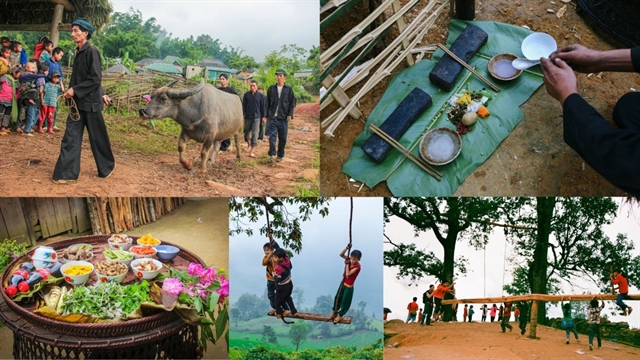
Culinary traditions in the area reflect the harsh climate and resourceful spirit of the highlands. Hà Nhì cuisine features dishes such as thắng cố, a traditional savory stew prepared from horse meat and offal infused with local spices like cardamom, mắc khén pepper, ginger, and lemongrass. Other regional specialties include charcoal-grilled black chicken, stir-fried forest bamboo shoots, and traditional black bánh chưng, a variation of Việt Nam’s classic square sticky rice cake. To accompany these meals, corn wine and a traditional fermented glutinous rice drink—brewed through a lengthy local process and served during festive occasions, guest receptions, and Lunar New Year celebrations—remain fixtures of local hospitality.