Thailand has officially brought an end to its popular 60-day visa-free scheme, concluding a two-year window that briefly offered some of the most flexible entry terms for long-stay travelers worldwide. Under official changes enacted in mid-September 2026, nationals from nearly 65 countries and territories now receive a standard 30-day visa exemption upon arrival, while land border entries without a visa have been strictly capped at two per calendar year.
The policy shift, which follows a Cabinet vote in May 2026 and subsequent ministerial announcements published in the Royal Gazette, effectively closes an era where digital nomads, retirees, and slow travelers could manage extended stays in the country simply by stacking tourist entries and taking advantage of generous rolling windows.

For nearly two years following a policy revision in July 2024, travelers from 93 countries could enter Thailand visa-free for 60 days, extend that stay for an additional 30 days at a local immigration office, and remain in the country for three consecutive months without ever visiting an embassy. Government officials, however, noted that the broad framework had increasingly been utilized by individuals engaging in long-term quasi-residency rather than standard tourism.
Announced by Tourism and Sports Minister Surasak Phancharoenworakul, the decision to roll back the 60-day allowance was driven by growing security and economic concerns. Immigration authorities pointed to unauthorized foreign workers, front businesses utilizing Thai nationals as nominal owners, and operational ties to regional online scam networks as key factors behind the reassessment. Officials emphasized that the overarching objective of the revised policy is to attract quality tourists rather than merely maximize raw entry figures, noting that average visitor stays traditionally hover around nine days.

The practical impact of the new regulations is immediate for long-stay visitors who relied on back-to-back tourist entries. Under the current 30-day exemption framework, travelers can secure a maximum stay of 60 days by combining the initial entry with a single 30-day extension, cutting the previous 90-day window down significantly. Furthermore, the newly introduced land border restriction limits visa-exempt crossings to two per calendar year, dismantling the traditional border-run model historically used by transient foreign residents to reset their stay durations via neighboring countries like Laos, Cambodia, or Malaysia.
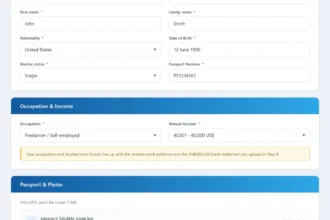
The policy adjustments have prompted long-stay communities to evaluate alternative legal pathways for residing in Thailand. Among remote workers and digital nomads, the Destination Thailand Visa has emerged as the primary long-term solution. Introduced by the Ministry of Foreign Affairs in July 2024, the multi-year visa provides a five-year validity period with permitted stays of up to 180 days per entry, which can be extended once for an additional 180 days. While the visa offers a practical structure for remote professionals earning income outside of Thailand, applicants must navigate tightened documentation requirements, including proof of permanent residence in their home country and a certified criminal record.
For older expatriates, the traditional Non-Immigrant O-A retirement visa remains a reliable option for individuals aged 50 and above. The framework requires applicants to demonstrate financial self-sufficiency through specified bank deposits or monthly income thresholds, alongside mandatory health insurance coverage that has faced rigorous enforcement during annual renewals at local immigration offices. High-earning professionals and investors continue to utilize the 10-year Long-Resident Resident Visa administered by the Board of Investment, which offers streamlined reporting and tax incentives for qualifying applicants who meet strict global income and asset criteria.
Meanwhile, alternative routes such as education visas for language study and the commercial Thailand Privilege card program offer varying degrees of long-term stability, though each carries specific compliance obligations or significant financial outlays. Immigration authorities have indicated that routine checks on foreign nationals will remain stringent, reinforcing the message that the period of managing long-term stays through casual tourist exemptions has officially drawn to a close.