As immigration authorities have ramped up scrutiny throughout recent months, understanding the precise parameters of the visa has become crucial for successful applications. The Destination Thailand Visa was originally launched to accommodate individuals wishing to live in Thailand legally while working for overseas entities, as well as those engaging in approved Thai soft-power activities such as Muay Thai training, culinary arts courses, or medical treatments. Despite its broad appeal and relatively low financial barriers compared to similar programs across the region, navigating the application process requires careful preparation to avoid common rejection pitfalls.
Under current operational guidelines, the application procedure is anchored by the official Thai e-Visa portal, shifting embassies away from physical walk-in applications and standardizing digital document uploads. A significant regulatory shift enacted by the Ministry of Foreign Affairs mandates that applicants must apply through the Royal Thai Embassy or consulate located in their country of citizenship or permanent residence. This policy effectively curtails the previous practice of utilizing neighboring countries as convenient border-run or tourist application hubs, requiring prospective digital nomads to secure proper documentation before departing their home regions.
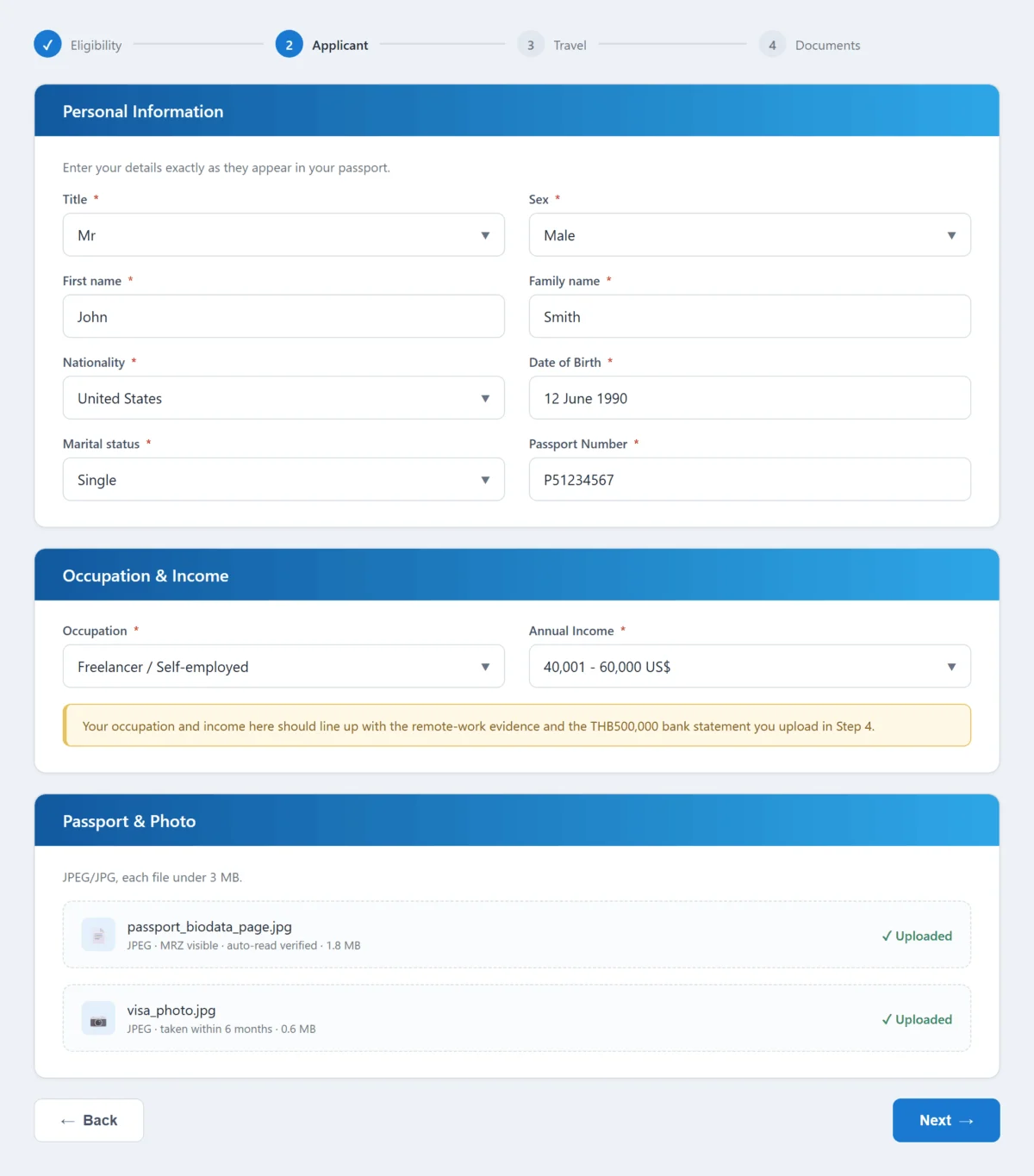
In addition to residency verification, recent updates to the application criteria require a formal criminal record clearance certificate alongside proof of financial stability. Applicants must demonstrate a seasoned balance of at least 500,000 Thai Baht or its foreign currency equivalent. Financial scrutiny has intensified significantly at several regional embassies, with immigration officers closely examining bank statements to ensure funds have been stably maintained over an extended period rather than deposited just prior to submission. Large, sudden transfers continue to trigger immediate red flags and subsequent visa denials.
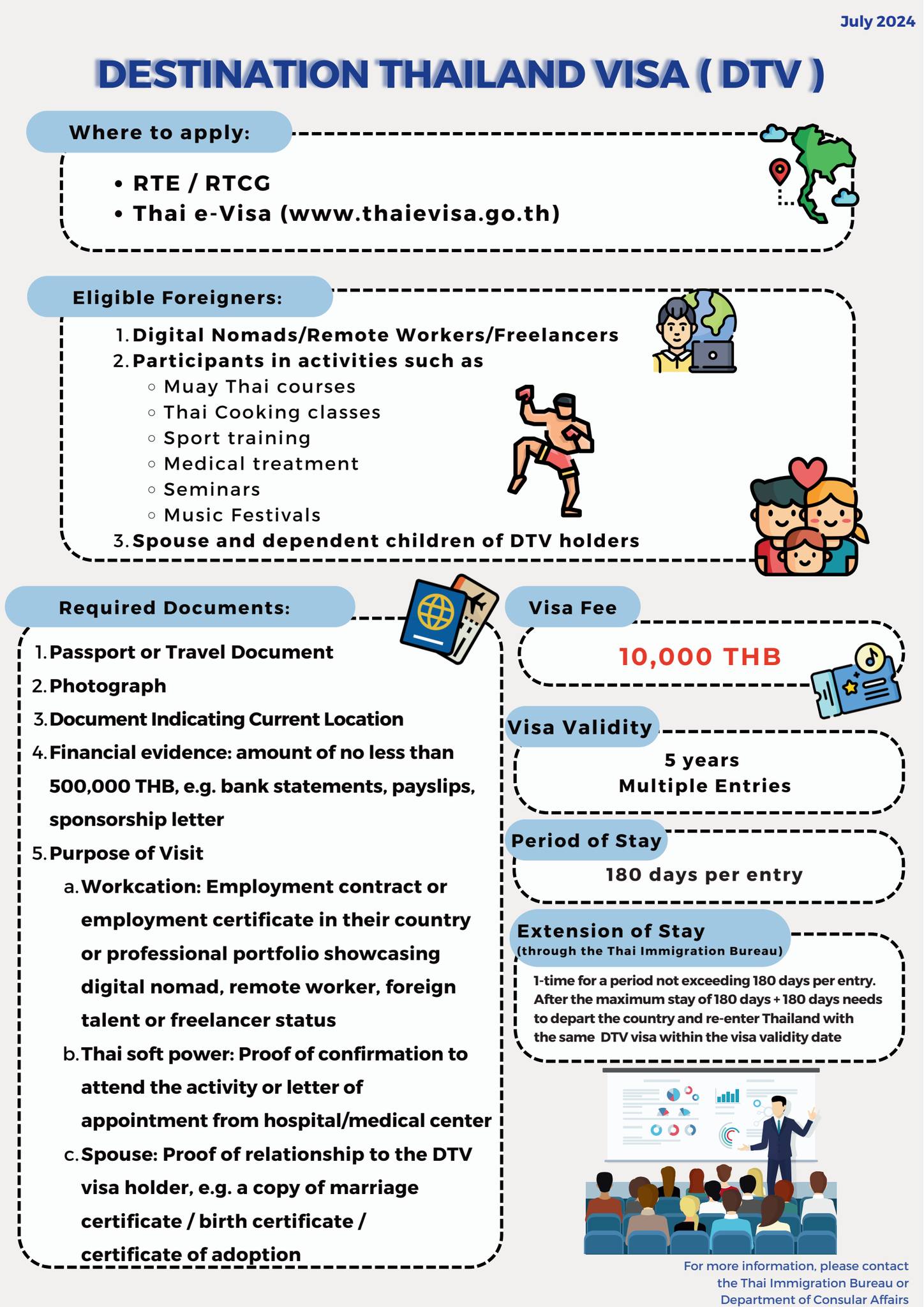
The application framework separates candidates into distinct tracks based on their primary purpose of visit. Workcation applicants must supply robust evidence of ongoing professional activity, including comprehensive employment certificates, detailed client contracts, active business portfolios, and verified tax records. Self-employed freelancers face heightened document standards, as generic statements regarding online employment are routinely rejected in favor of verifiable income patterns. Conversely, applicants pursuing soft-power activities must secure formal enrollment documentation from recognized, accredited institutions authorized to issue letters for DTV purposes, while general language schools and short-term programs frequently fall short of current institutional criteria.
Once approved, the DTV grants a multi-year framework structured around 180-day initial entry limits. Holders can maintain their continuous legal presence in the country through specific administrative channels. Before an initial 180-day period expires, participants can secure a single-day extension through a local Thai immigration office for an administrative fee, pushing the continuous stay to 360 days. Alternatively, travelers can exit and re-enter Thailand to reset their allotment, though completing a full 360-day cycle necessitates crossing the border for at least a day before a new entry sequence can commence.

While the visa offers remarkable flexibility, staying long-term carries important administrative and tax obligations. DTV holders remain subject to standard statutory requirements, including mandatory 90-day reporting at local immigration offices to verify residential addresses. Furthermore, spending more than 180 days within a single calendar year inside Thailand can trigger local tax residency status, exposing foreign-earned income to domestic revenue policies if funds are remitted into the country. Consequently, long-term participants must carefully balance their duration of stay against international tax planning considerations.
Administrative execution times and processing protocols vary considerably across individual diplomatic missions, contributing to shifting applicant experiences worldwide. While certain consulates process complete applications within a matter of days, others require extensive review periods, often demanding supplemental paperwork and multi-stage verifications. To mitigate processing friction, immigration advisors recommend preparing comprehensive document packages well in advance, ensuring all foreign-language documents carry proper certified translations and matching the exact criteria outlined by the specific embassy handling the submission.