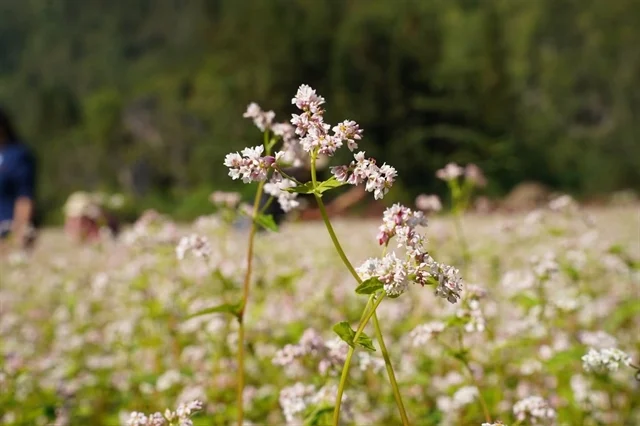
The grey limestone mountains of the Đồng Văn Karst Plateau take on a remarkably softer look each autumn, when delicate buckwheat flowers spread across the rugged hillsides in sweeping shades of white, pale pink, and deep purple.
For travelers and journalists returning to this remote corner of Tuyên Quang Province, the striking sight of these blossoms contrasting against the bare, weathered rock never loses its profound appeal. Winding mountain roads and quiet, isolated highland villages are suddenly enveloped by flora that offers a gentler aesthetic to a landscape historically shaped and dominated by unyielding stone. Beyond the visual transformation, the seasonal bloom serves as an annual invitation to discover the resilient people, deeply rooted traditions, and unique cultural identity that make this northern highland region so distinctive.
The annual flowering season typically spans from late October through early December, undergoing a natural chromatic transition as the weeks progress. The blossoms begin as a soft pale pink before deepening into rich, vibrant purples as the season advances toward its conclusion. Over generations, the plant has evolved far beyond a mere seasonal aesthetic to become a living symbol of the plateau, where buckwheat has long played a vital role in local subsistence and daily survival.
According to enduring local folklore passed down through the generations, highland residents once faced severe shortages when their maize and rice stores ran critically low before the arrival of the next harvest. Following an unfamiliar, pleasant fragrance deep through treacherous mountain crevices, they discovered a resilient plant featuring distinct triangular leaves and nourishing, edible seeds. This fortuitous discovery carried families through periods of intense hardship and scarcity. Today, local communities continue to cultivate buckwheat not only for its visual appeal to tourists, but out of practical necessity and tradition—using the seeds to bake dense local cakes, brew potent traditional alcohol, and incorporate the plant into indigenous herbal remedies.
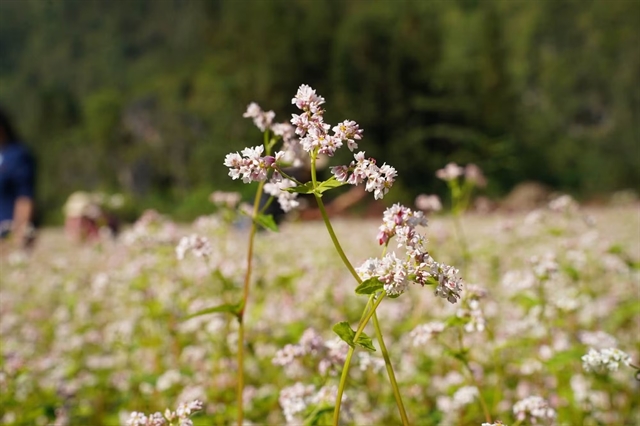
Sủng Là usually serves as the primary gateway and first stopping point for visitors ascending into the heart of the plateau. During the peak of the flowering season, waves of purple blossoms completely blanket the surrounding hillsides. However, the village offers much more than a scenic backdrop for landscape photography. Visitors frequently stop to inspect the historic earthen-walled house that famously served as a primary filming location for the acclaimed Vietnamese cinematic work Chuyện của Pao (Pao’s Story), or to immerse themselves in the vibrant atmosphere of a traditional weekend market where local Mông families gather from miles around to trade and socialize.
Just a short drive further across the winding highland passes lies Phố Bảng, a settlement defined by a remarkably quieter, more contemplative atmosphere. Frequently described by travelers as a sleepy town, it rests peacefully among enclosed valleys of pink flowers and continuous buckwheat fields that line the narrow dirt roads. The historic architecture of Phố Bảng features weathered façades and heavy walls covered in thick layers of green moss, lending the entire community a deeply subdued, timeless character. Travelers often linger here for hours, absorbing the tranquil pace of daily life before continuing their journey further north toward the borderlands.
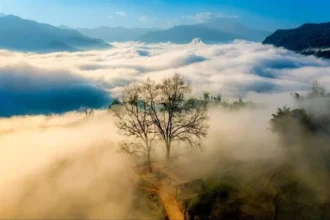
Lũng Cú, widely recognized as the northernmost point of the nation and home to the iconic national flag tower, offers an entirely different perspective on the expansive karst plateau. Here, vast buckwheat fields spread dramatically across steep slopes, leading the eye upward toward the towering flagpole while contrasting sharply against the jagged, grey limestone peaks looming in the background. From elevated vantage points, the sheer scale of the rugged terrain combined with vast swathes of pink and purple flora stretching into the misty distance creates an unforgettable panoramic vista.
To ensure a vibrant and extended experience for visitors, the Lũng Cú Commune administration dedicated significant agricultural efforts to the 2026 season, planting approximately 70 hectares of buckwheat distributed across 16 distinct villages. This comprehensive planting strategy includes 18.2 hectares concentrated in key tourism zones such as Thèn Pả, Lô Lô Chải, Sán Trá, Ma Lé, and Má Lủng. To maximize the viewing window for tourists and prevent the blossoms from withering all at once, local residents systematically sow the seeds in staggered, successive stages, effectively prolonging the peak blooming season across the mountainous terrain.
Each participating locality maintains its own unique visual character and cultural charm. In Thèn Pả, sweeping flower fields blend seamlessly with traditional Mông settlements and rustic wooden houses nestled securely at the foot of the looming mountains. Meanwhile, in Lô Lô Chải, the delicate blossoms add vibrant splashes of autumn color against the austere backdrop of traditional earthen-walled houses and hand-stacked stone fences, offering a direct window into the authentic everyday life of the Lô Lô ethnic minority community. Further afield, the expansive fields found in Sán Trá, Ma Lé, and Má Lủng open up dramatically wider, unobstructed views of the surrounding valleys and towering mountain chains.
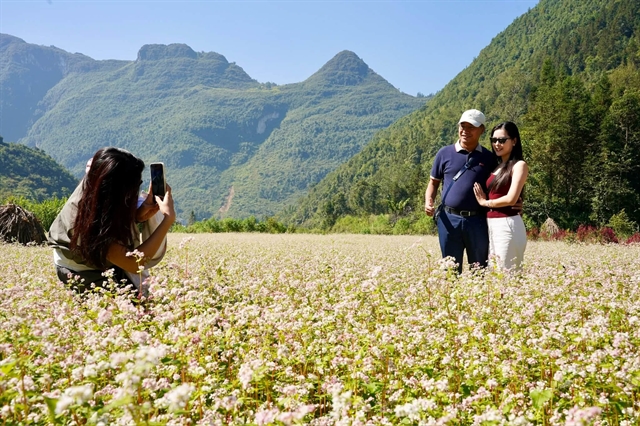
After completing the steep climb up the stone steps leading to the Lũng Cú Flag Tower, visitors can descend to explore the interconnected villages below, wander freely along narrow earthen paths flanked by blooming flowers, and sample freshly prepared regional delicacies sold by local vendors.
Further along the route in Lùng Tảo, the sprawling fields are best appreciated from the summit of Ma Lé Mountain, where the high vantage point affords a breathtaking, sweeping view of the flower-covered slopes cascading down toward the valley floor, framed by distant limestone crests. Continuing along National Highway 4C, the scenic village of Pháo Cáo consistently attracts travelers with its distinctive yellow earthen-walled houses, children playing freely in the crisp autumn sunshine, and modest buckwheat fields that integrate naturally into the rustic village landscape.
The geographical drama of the region reaches its peak along the legendary Mã Pí Lèng Pass, widely celebrated as one of Việt Nam’s four great mountain passes. The narrow highway clings precariously between sheer vertical cliffs and vertiginous, deep valleys, with the striking emerald-green waters of the Nho Quế River winding silently far below. Endless chains of grey limestone peaks stretch away toward the north and northeast, forming an intensely rugged landscape that transforms dramatically with every sharp turn of the road.
At several designated viewpoints along the pass, travelers routinely pull over to catch their breath and absorb the overwhelming scale of the geography. From this elevated perspective, the Nho Quế River weaves between the towering mountain walls like a brilliant green ribbon, while patches of pink and purple buckwheat flowers clinging to the lower slopes inject sudden, vibrant bursts of color into the otherwise stark and imposing terrain.
To celebrate and promote this natural phenomenon, local authorities have scheduled the 12th annual Buckwheat Flower Festival for 2026. Carrying the thematic title Âm vang miền đá (Echoes of the Rocky Plateau), the festival is officially set to open on October 25 within Đồng Văn Commune and will run continuously through the end of December.
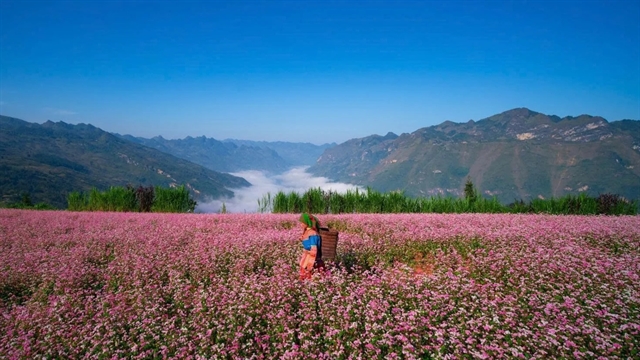
The annual festival is designed to actively promote the breathtaking natural landscape and preserve the rich cultural traditions of the diverse ethnic communities residing within the Đồng Văn Karst Plateau UNESCO Global Geopark. Throughout the duration of the event, visitors are offered hands-on opportunities to observe and learn traditional artisanal skills, including complex flax weaving, natural indigo dyeing, and intricate brocade embroidery. Attendees can also watch demonstrations of traditional buckwheat cake preparation and gain insight into the ingenious, centuries-old indigenous practice of cultivating essential crops directly within small pockets of soil nestled inside rocky mountain hollows.
For travelers journeying through the highlands, exploring the local cuisine is considered an essential component of understanding the region, particularly given the crisp, chilly weather that accompanies the autumn flower season.
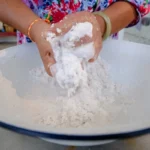
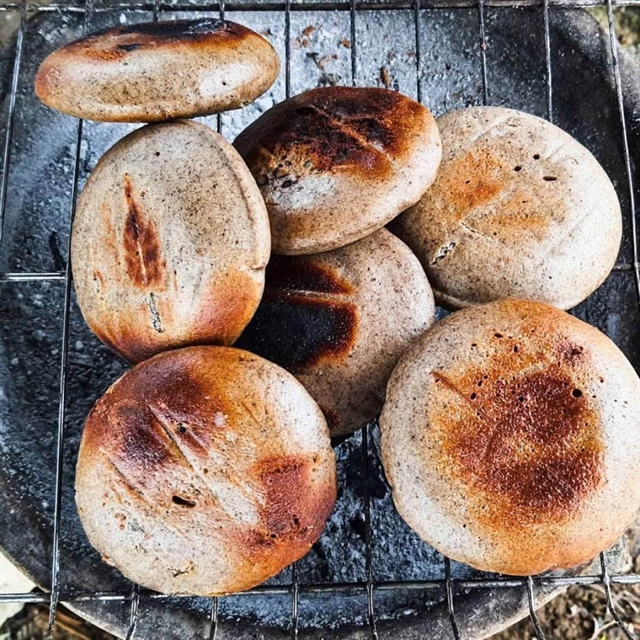
Buckwheat cake, locally prepared by grinding harvested seeds into a fine flour and shaping the mixture into small, flat rounds, is sold widely across village markets for around VNĐ10,000 per piece. Its mild, nutty flavor is traditionally paired with thắng cố, a rich and hearty traditional horse meat stew cooked with numerous forest herbs and spices. The robust, gamey taste of the stew provides a powerful and satisfying complement to the much more delicate, understated flavor of the buckwheat cake.
Another highly specialized regional dish is cháo ấu tẩu, a nutrient-dense porridge prepared using the toxic aconite tuber found in the high mountains. Because the tuber is naturally poisonous in its raw state, local cooks must carefully and meticulously process the ingredient through prolonged, slow cooking with ordinary rice. Served piping hot in bowls topped with a raw egg, freshly cracked black pepper, chili, and aromatic fresh herbs, the porridge is prized for its thick, creamy texture and warming properties, with the sharp spices successfully balancing the tuber’s characteristic bitterness.
Perhaps the most unexpected culinary offering encountered by visitors is rau nướng, or grilled river moss. Closely associated with the culinary traditions of the Tày ethnic group, grilled moss is an authentic component of everyday local home cooking rather than a commercial delicacy manufactured exclusively for tourists. Trying the dish provides an intimate and unfiltered glimpse into the resourcefulness and unique food traditions of the highland communities.
Navigating the plateau during the autumn and winter months requires careful preparation, as ambient temperatures at these high elevations drop significantly lower than those in the lowlands. Essential gear for travelers includes warm clothing, windbreakers, woolen hats, and sturdy scarves. Additionally, comfortable walking shoes equipped with reliable rubber grip treads are highly recommended for safely traversing steep mountain paths and uneven village stone steps.
Entrance fees to privately owned or community-managed buckwheat flower fields generally range from VNĐ10,000 to VNĐ20,000 per person, depending on the specific location and facilities provided. Visitors are strongly urged to respect the agricultural livelihood of local farmers by avoiding trampling, leaning on, or picking the flowers while taking photographs.
Furthermore, navigating the winding, sheer mountain roads can present significant challenges for drivers unfamiliar with high-altitude highland terrain. Opting to travel in an organized group or hiring an experienced local guide can greatly enhance safety on the road while offering a much deeper, more authentic understanding of the plateau’s geography and culture.