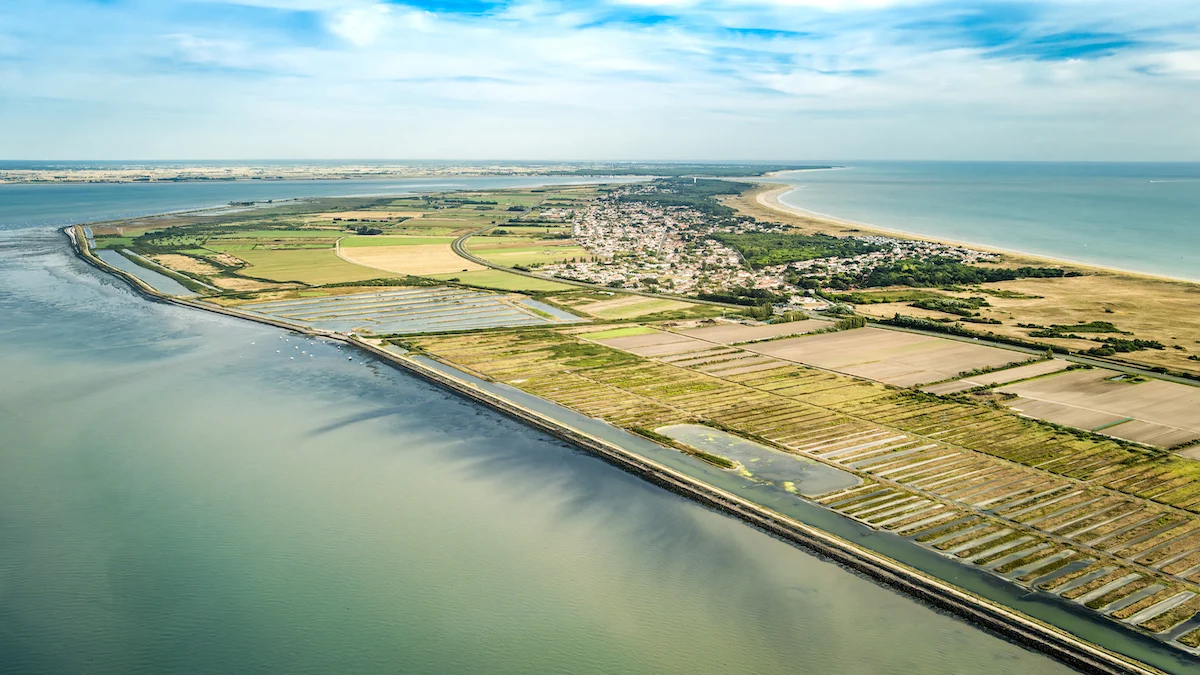
Twice a day, coming and going with the rhythm of the tides, a remarkable 2.5-mile strip of asphalt known as le Passage du Gois emerges from beneath the crashing waves of the Atlantic Ocean. This engineering marvel of nature serves as a dramatic causeway, connecting the western coast of mainland France to a petite island situated just south of the vibrant city of Nantes. Spanning an area not even half the square mileage of Nantucket, the island of Noirmoutier-en-l’Île is an idyllic maritime retreat that the French know intimately, yet international travelers often overlook. While global jet-setters frequently flock to the glitz, glamour, and bustling promenades of Biarritz or St. Tropez, Noirmoutier offers an entirely different kind of allure. Is there truly anything more exclusive than an island guarded by nature’s own bouncers, keeping casual visitors at bay until the ocean recedes at low tide?
Noirmoutier belongs to a rare category of quietly decadent destinations that possess an abundance of local bounty while maintaining an absolute absence of pretense. Here, master chefs craft world-class, three-Michelin-starred meals utilizing seafood freshly pulled from the local fish auction located just across the street, accompanied by vibrant vegetables and aromatic herbs gathered straight from organic kitchen gardens. A prime example of this hyper-local culinary philosophy is La Marine, a renowned establishment helmed by chef Alexandre Couillon. It is an institution that needs little introduction among serious gastronomes, with reservations opening for future seasons well in advance.
Travelers who are already familiar with the windswept and dramatic landscapes of Scotland’s Isle of Skye might easily recognize this distinct recipe for remote, understated luxury. However, rather than featuring craggy cliffs and emerald-green glens, the topography of Noirmoutier bears a striking resemblance to a peaceful slice of coastal California. On this unique island, fragrant pine forests seamlessly meet rolling sand dunes, historic salt marshes yield a celebrated variety of hand-harvested sea salt, and well-heeled locals cast aside their formal footwear. Instead, they navigate their days entirely barefoot and surf-bound, embracing a lifestyle defined by simplicity and a deep connection to the natural environment.

As the afternoon sun begins to dip toward the horizon, daily life naturally gravitates toward the local tradition of happy hour, which on Noirmoutier is synonymous with oyster hour. This is particularly true within La Guérinière, a charming commune boasting a rich, multi-generational history deeply rooted in oyster farming. Brothers Mathieu and Aurélien Gendron, who serve as the co-managers of Les Petits Bassets, recently breathed new life into a former oyster hut nestled quietly within the local marshes. They transformed the historic structure into a seasonal tasting cabin known as Le Bouclard. Here, visitors are invited to feast on exceptional oysters harvested fresh from April through October, and adventurous guests can even embark on an informative tour of the active oyster farm led by the brothers’ father, Alain.
Those fortunate enough to time their spring visit to the island around the month of May may experience one of the most exclusive culinary events in Europe: the brief but glorious harvest of "La Bonnotte" potatoes. Widely celebrated as the world’s most expensive potato, these exceptional tubers have famously fetched staggering sums, reaching up to $600 per kilo at specialized auctions. Growing entirely within a rapid three-month window, the potatoes yield a remarkably delicate flavor profile accented by subtle hints of lemon and the surrounding sea salt.
Longtime readers of luxury publications may already recognize the name Bois de la Chaise, a location typically associated with contemporary coastal retreats and exquisite manors put up for sale. This protected, lush pine forest situated along Noirmoutier’s picturesque northeast coast serves as the setting for multimillion-euro real estate holdings, many of which function as cherished second homes for affluent families hailing from Paris or nearby Nantes. French aristocrats originally constructed grand, sweeping villas here during the 19th century, and much of that historic Belle Époque architecture remains wonderfully preserved today. These classic structures mingle effortlessly with more modern architectural marvels that feature exclusive, private access to the water.
Plage des Dames stands out as a particularly stunning stretch of coastline, featuring historic white wooden beach huts that are gently sheltered by the sweeping branches of ancient oaks. Notably, paparazzi rarely venture into these secluded corners of the island. Instead, families are free to relax in profound peace and quiet, comforted by the knowledge that Noirmoutier’s best-kept secrets have managed to remain largely untouched.

As summer temperatures continue to climb steadily across the more crowded destinations in the South of France, an increasing number of discerning travelers are beginning to look northward toward the department of Vendée. This coastal region encompasses Noirmoutier, the exceptionally laid-back and camper-friendly Île d’Yeu, and approximately 155 miles of windswept, dramatic coastline. Given the impressive amount of sunshine the area receives year-round, it has proudly earned the cheery moniker of Côte de Lumière, or the Coast of Light. Yet this bright and welcoming nickname exists in fascinating contrast to the region’s formidable maritime reputation, as the department also plays host to the world’s most grueling sailing competition. The Vendée Globe—a nonstop, single-handed, round-the-world yacht race that tests the absolute limits of human endurance—officially sets off from the port of Les Sables d’Olonne every four years.
For outdoor enthusiasts, the seaside town of St. Gilles Croix de Vie is widely recognized by kitesurfers as a sublime launch site characterized by optimal wind and wave conditions. Meanwhile, dedicated foodies flock to the town for an entirely different reason: its legendary sardines. St. Gilles Croix de Vie holds the official distinction of being a Site Remarquable du Goût, making it universally acknowledged as the undisputed French capital of sardines. The municipality enthusiastically embraces this culinary heritage through its annual spring sardine festival, as well as a dedicated museum, shop, and tasting room located at L’atelier de la Sardine. Visitors can also follow a dedicated 1.5-mile walking trail marked distinctively with blue sardines, which guides pedestrians past 14 historical and significant local sites tied directly to the history of the tiny fish.
Lest anyone assume that the local sardines might let all this municipal attention inflate their status, the agriculturally rich department of Vendée is also a place that celebrates a diverse array of traditional gatherings. From vibrant flower festivals and artisanal chocolate festivals to local astronomy celebrations, it seems that nearly every aspect of local culture and agriculture receives its own dedicated festival. Furthermore, the natural environment is deeply respected and meticulously preserved across the entire region.
This profound reverence for the natural world is perhaps nowhere more evident than within the inland marshland area poetically dubbed "Green Venice." This destination presents a magical maze of tranquil canals shaded by drooping willows and towering alders, evoking the atmosphere of grand architectural transepts inside a cathedral. When driving across the area’s small, rustic bridges, travelers can frequently catch a glimpse of a lone flat-bottomed barge, known locally as a yole, gliding silently along a canal. The vessel sways gently as its boatman propels it forward by poking the shallow water with a long wooden paddle called a pigouille, standing upright with the grace and posture of a Venetian gondolier. In the end, this unique corner of France feels like a harmonious blend of multiple worlds—evoking a touch of Italy, a hint of California, and a generous spirit of understated French charm.