The history of modern commercial cruising is punctuated by occasional maritime mishaps, but industry analysts are noting a distinct shift in public and market reaction following a string of high-profile incidents over the past several years. When the Carnival Splendor suffered an engine room fire in November 2010—prompting media descriptions of a "Pop Tart Cruise" due to the reliance on cold provisions airlifted to the stranded vessel—the event was largely met with public curiosity. At the time, it had little to no lasting impact on overall cruise bookings or ticket prices.
Just over a year later, the Costa Concordia disaster in January 2012 was greeted with widespread shock. Bookings and ticket prices dropped sharply in the immediate aftermath. While those metrics have since recovered, public consciousness of the event—and of its infamous commander, Captain Francesco Schettino—remains stubbornly persistent. Now, following the harrowing engine fire and subsequent power failure aboard the Carnival Triumph in February 2013, which quickly earned the moniker of the "Cruise from Hell," industry observers sense that public patience has worn thin. The prevailing sentiment among consumers and analysts alike appears to be one of profound fatigue, encapsulated by the growing feeling that enough is enough.
To be sure, with more than 10,000 annual cruise sailings taking place across the globe every single year, minor operational hurdles and unexpected incidents are bound to occur. These range from routine pier bumps to encounters with unpredictable open-ocean phenomena such as rogue waves. Furthermore, with the industry expanding at a robust seven percent compounded annual growth rate, the sheer volume of sailings ensures that the statistical likelihood of disruptive events will continue to multiply. Nevertheless, when a major cruise operator elects to dust off a pre-Concordia advertising campaign themed around the competitive choice of "Land vs. Sea" to run during the subsequent year’s critical wave season, even seasoned observers are left to question the company’s strategic judgment and public relations timing.
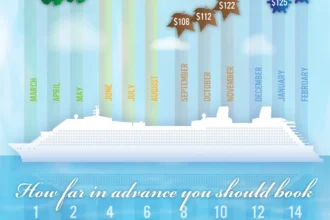
Human memory, of course, can be remarkably short, and the mainstream media inevitably moves on to fresh news cycles. History shows that Carnival Corporation successfully weathered the storm after its very first cruise vessel, the Mardi Gras, ran aground on a sandbar during its inaugural voyage back in 1972. Industry experts also caution that travelers should not expect an immediate, drastic drop in ticket prices across the board. Following the Costa Concordia tragedy, prices for close-in sailings—those booked one to three months in advance of departure—did not bottom out until five months later, in June 2012.
The immediate financial impact on a cruise operator’s bottom line can be quantified by tallying canceled voyages. In the case of the Carnival Triumph, this involves accounting for the 14 canceled sailings originally scheduled between February 11 and April 13, 2013, alongside the ill-fated February 7 voyage. According to data compiled by Cruise Pulse, the direct revenue loss from these cancellations totals an estimated $20.8 million. However, historical precedent suggests that corporate guidance may understate the true scope of disruption. When the Carnival Splendor was forced out of service, it remained offline for a total of 101 days. Measured against that benchmark, the initial Triumph guidance of 71 days offline appears overly aggressive. Analysts believe the Triumph will likely be forced to cancel an additional seven cruises extending up to the May 5 sailing, which would add another $9.8 million to the total tally of lost ticket revenue.
Unfortunately for the cruise line, the financial story may not end with direct ticket cancellations. On the critical margin where incoming cash from ticket sales intersects with ongoing corporate overhead and operating expenses, the fallout from the Triumph incident will continue to be felt. This friction comes at a particularly inopportune time for the broader cruise industry, which is already navigating economic headwinds, including a slowing European economy and the persistent specter of rising inflation driving up costs for fuel and victualing.
When prospective vacationers hear stranded Triumph passengers voicing profound distress—with accounts quoting travelers saying that credits, refunds, and nominal compensation checks were secondary, and that they would have paid Carnival any sum of money simply to be let off the ship—industry stakeholders are inevitably forced to ask whether this time will be fundamentally different from past crises.
Repeat customers, cruise enthusiasts, and bargain-hunters will likely continue to book trips as long as deep discounts are offered. Experience demonstrates that when ticket prices drop low enough, even the most vivid memories begin to fade. Yet no amount of corporate public relations spin can easily turn this wave of negative publicity into a positive development for the wider cruising sector.
Sustaining the industry’s long-term trajectory requires continuous effort on multiple fronts: attracting top-tier maritime and hospitality talent to work aboard modern vessels, successfully penetrating the vast and largely untapped "never before cruised" demographic, and maintaining the confidence of investors who are drawn to the sector by promises of exponential passenger growth. To achieve these goals, incidents of this magnitude simply cannot continue to occur. With tens of thousands of sailings scheduled in the coming years, maintaining an operational success rate where the vast majority of millions of cruisers leave their vacations happy and eager to share positive experiences is absolute paramount. In the interim, market analysts and industry watchers will continue to closely monitor ticket revenue metrics and broader pricing trends to gauge the true staying power of the fallout.