
Airbus spent most of the past decade watching its largest twinjet play second fiddle to an aircraft that had not yet carried a single paying passenger. The Airbus A350-1000 entered commercial service with launch operator Qatar Airways in 2018, yet for years it lived in the shadow of the venerable Boeing 777-300ER and, later, the highly anticipated Boeing 777X, which American manufacturer Boeing originally promised to deliver by 2020.

With that long-delayed delivery timeline now pushed toward 2027—marking a lag of roughly seven years behind schedule—the widebody market has finally begun to shift decisively. By mid-year, official Airbus data indicated that the A350-1000 had accumulated 367 total orders alongside 114 deliveries, representing a significantly healthier commercial standing than its sluggish early sales figures ever suggested.
The pivotal question facing the aviation industry is why demand has accelerated so sharply now, rather than when the aircraft first debuted, and whether this newfound momentum will endure. Major international carriers including Air Canada, Riyadh Air, Philippine Airlines, and even industry heavyweight Emirates have all been drawn toward the type. Meanwhile, Airbus is actively studying a potential stretched variant that could challenge Boeing’s largest jet head-on. Understanding this market transformation requires examining why the A350-1000 initially struggled, how Boeing’s chronic delays fundamentally rewrote airline procurement logic, and what strategies Airbus might deploy with its sudden leverage.

The A350-1000 Faced An Uphill Battle From The Start
When Airbus first introduced the A350-1000, it launched a highly capable aircraft into a market where many legacy airlines were already deeply entrenched in existing fleet strategies. The Boeing 777-300ER had served as the undisputed benchmark for large, long-range twinjets for years. Carriers searching for high-capacity aircraft exceeding 350 seats on demanding intercontinental routes saw little financial or operational reason to switch platforms.
While the A350-1000 offered superior fuel efficiency and a modern composite airframe, it entered service with a modest order book and lacked an obvious must-have customer beyond its launch operator. Furthermore, commercial airlines historically tend to favor evolutionary choices over revolutionary designs, and the larger A350 initially appeared to the conservative market as a familiar design stretch rather than a transformative leap forward.

Boeing’s pitch for the upcoming 777X made the purchasing decision even harder for prospective buyers. Promising greater capacity and innovative folding wingtips designed to fit standard airport gates, the 777X was marketed as the natural heir to the 777-300ER. Consequently, numerous global carriers decided to simply wait out the development cycle.
Emirates, for instance, originally planned to rely almost exclusively on the 777X for its long-term widebody fleet renewal, maintaining a massive commitment of 205 aircraft on order. An airline locked into such a profound commitment had minimal commercial incentive to acquire the Airbus alternative, regardless of its operating efficiency. However, as the projected delivery date for the 777X continued to slide year after year, the A350-1000 was left to prove itself strictly on its own technical and financial merits.

Those operational merits were genuine, but they were accompanied by lingering market anxieties regarding the performance and maintenance intervals of the Rolls-Royce Trent engines. Consequently, sales remained subdued while Airbus continued steady production of the airframe. The compounding delays ultimately forced the global aviation market to question how much further Boeing’s schedule could slip, and what downstream consequences that would create for Airbus.
Boeing’s 777X Delays Changed The Competition
The 777X program’s multi-year delay fundamentally altered the competitive landscape of the widebody sector. For airlines operating aging fleets of Boeing 777-300ERs, this prolonged delivery gap was far from abstract. Every consecutive year of delay translates directly into older airframes, higher exposure to volatile fuel prices, and heavier maintenance expenditures. Furthermore, Boeing incurred a heavy reputational cost; a flagship program that slips year after year provides rival manufacturers with a powerful, standing sales argument during fleet evaluation talks.

This timing advantage directly reshaped the competitive balance. Airbus capitalized on the vacuum by maintaining steady production and aggressive sales campaigns. By mid-November, A350-1000 orders for the calendar year had climbed substantially following updated manufacturer tallies, leaving the total backlog in a commanding position.
Financial institutions and aircraft lessors closely monitor this commercial momentum. Lenders and lessors rely on detailed appraisal overviews to evaluate how specific aircraft hold their residual value over time. An operational jet ready for immediate delivery is significantly easier to finance and value than a clean-sheet program still awaiting regulatory certification. In this light, the rising order tally for the A350-1000 serves not merely as a commercial sales milestone, but as a clear industry statement regarding perceived program risk and reliability.

Airlines Are Turning To The A350-1000
Air Canada provides one of the clearest illustrations of this strategic shift. The carrier finalized a firm order for eight A350-1000s, complete with purchase rights for an additional eight aircraft, designed to replace its aging fleet of Boeing 777-300ERs. Securing delivery slots stretching into the second half of the decade demonstrated how congested the order queue for large twinjets had become. For an airline facing the retirement of long-serving flagships, a firm and reliable delivery timeline ultimately mattered far more than raw capacity figures on paper.
Riyadh Air and Philippine Airlines also committed to the type recently, while carriers such as Etihad Airways have shown genuine enthusiasm for the airframe. Even Emirates, which had previously voiced public frustrations regarding the reliability of the Trent XWB-97 engines, engaged in advanced talks for a substantial fleet of A350-1000s to bridge its capacity gaps. This marked a remarkable strategic pivot for an airline that had historically anchored its entire long-term growth strategy around the delayed 777X. A broader industry trend emerged: carriers that once viewed the A350-1000 as a niche alternative began treating it as a reliable tool to secure guaranteed capacity on a predictable schedule.

The underlying specifications of the aircraft help explain this resurgence. Range capability remains a standout advantage. The standard A350-1000 boasts a range of roughly 8,700 nautical miles, compared to the 777-9’s rated range of approximately 7,285 nautical miles, providing an operational edge on thin, ultra-long-haul routes where airlines demand large passenger capacity without incurring severe payload restrictions.
Airbus has pushed these operational boundaries even further with the ultra-long-range variant. Qantas subjected the Airbus A350-1000ULR to a marathon test flight spanning roughly 12,460 miles, serving as a direct demonstration for the carrier’s non-stop Sydney-to-London routes under the banner of Project Sunrise. Airbus widebody program outlines describe the A350-1000ULR as central to this mission, backed by firm orders and a planned maximum range exceeding 9,700 nautical miles. With Boeing offering no directly comparable aircraft ready for immediate flight testing, Qantas found a decisive rationale to partner with Airbus.

Rolls-Royce Still Has To Address The Engine Concerns
Despite its strong market performance, the A350-1000 program continues to navigate valid operational scrutiny, primarily centered around its powerplants. Industry leaders, including Emirates President Sir Tim Clark, have frequently criticized the Rolls-Royce Trent XWB-97 engines for demanding intensive maintenance cycles, a challenge that is acutely exacerbated by punishing operating conditions in hot desert climates.
In response, Airbus and Rolls-Royce have outlined comprehensive durability packages for the powerplant family. Manufacturers indicate that ongoing engineering adjustments target a significant increase in time-on-wing performance. Planned technical modifications include redesigned hot-section components, updated high-pressure turbine seal segments, and specialized combustor and temperature-profile adjustments. These targeted improvements are critical for addressing operator concerns regarding maintenance intervals, even as airlines weigh these engineering fixes against immediate capacity needs.
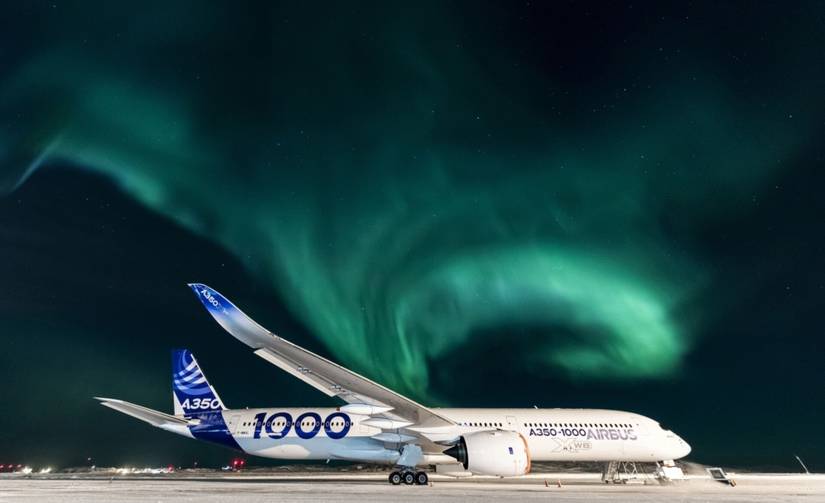
Even with these engine maintenance debates, the sheer unavailability of competing Boeing hardware has frequently tipped the scale. Delivery certainty and fleet continuity have consistently outweighed technical criticism as airline executives look to protect their capacity growth through the end of the decade.
The A350-2000 Could Turn Airbus’ Momentum Into A Lasting Advantage
This sustained market momentum has naturally encouraged Airbus to evaluate potential expansions of the A350 family. Company leadership has actively studied a stretched derivative, informally designated as the A350-2000, designed to bridge the capacity gap between the existing A350-1000 and Boeing’s largest widebodies. Whether this concept transitions into a formal industrial launch will depend less on engineering feasibility and more on long-term market demand forecasts, alongside Airbus’ ability to smoothly integrate another variant into its already bustling production lines.
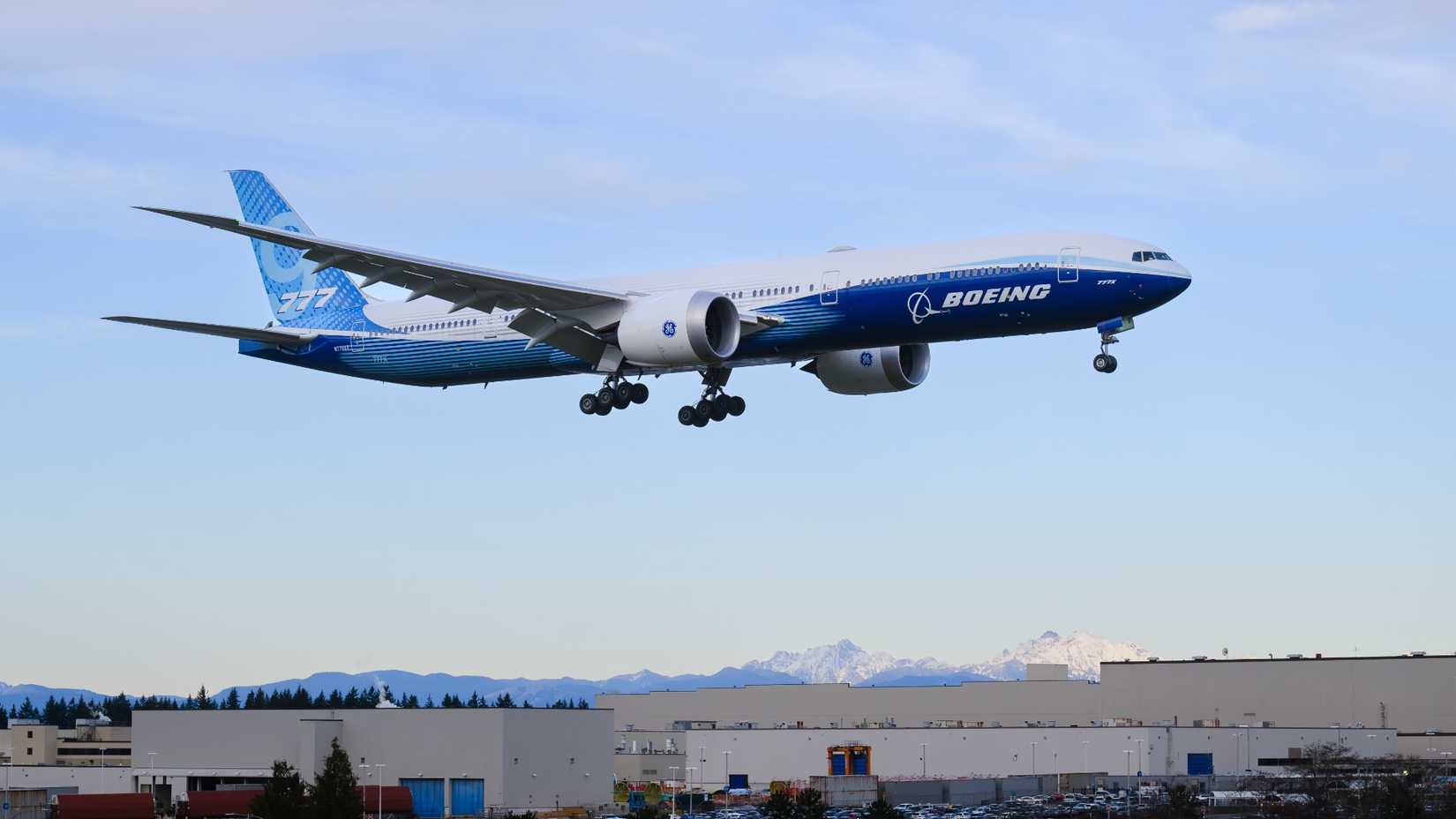
The trajectory of the widebody sector over the coming years will determine whether Airbus has secured a permanent structural advantage. If Boeing successfully introduces the 777-9 while airlines continue absorbing A350-1000 deliveries deep into the future, Airbus’ current dominance will prove to be much more than a temporary windfall driven by rival delays. Securing large twinjet customers today locks in decades of crew training, maintenance commonality, and spare parts support, cementing a lasting foothold in premier global fleets.