When design enthusiasts and hospitality professionals think of advanced bathroom technology, the name TOTO is rarely far from the conversation. Best known for pioneering sophisticated Japanese shower toilet technology, the brand has firmly established itself as a global leader in the bathroom fixtures category. Yet, behind its signature WASHLET lies something altogether more fundamental, and perhaps less appreciated at first glance: ceramic.
While the electronic features, heated seats, and advanced cleansing functions often capture the headlines, Hotel Designs takes a closer look at the material, craftsmanship, and engineering precision behind the distinctive white form that supports the entire system. Far from being a mere backdrop or housing for modern mechanics, the ceramic bowl is a masterclass in material science, where centuries-old traditions meet cutting-edge manufacturing.
From Natural Clay to Engineered Silhouette
For all its contemporary associations with high-tech sanitary engineering, the WASHLET journey actually begins with clay—a simple, natural material that is shaped, refined, and ultimately transformed by fire into something remarkably enduring. The ceramic bowl beneath the seat is crafted from the very same family of materials used to create everyday tableware, but it is engineered for a profoundly different and much more demanding purpose.
Through a process of precision moulding, an organic, pebble-like silhouette takes shape. This defines the sleek, minimalist white form that sits beneath the WASHLET technology. Achieving this consistent, flawless finish begins long before a mould is even filled, stretching all the way back to the sourcing of the raw ingredients.
TOTO goes to great lengths to ensure the integrity of its materials, sourcing them locally wherever possible while selectively procuring specific components internationally when required to meet its exacting standards. This rigorous level of care extends directly to transport logistics. Materials are typically shipped in specialized food-grade containers specifically chosen to prevent any risk of contamination.
This meticulous attention to detail proved especially critical during the severe global container shortages that followed the Covid-19 pandemic. When food-grade containers were frequently unavailable, TOTO adapted without compromising its standards by utilizing standard shipping containers lined with protective sheeting. This created an immaculate internal environment, ensuring that impurities never came into contact with the sensitive raw materials.
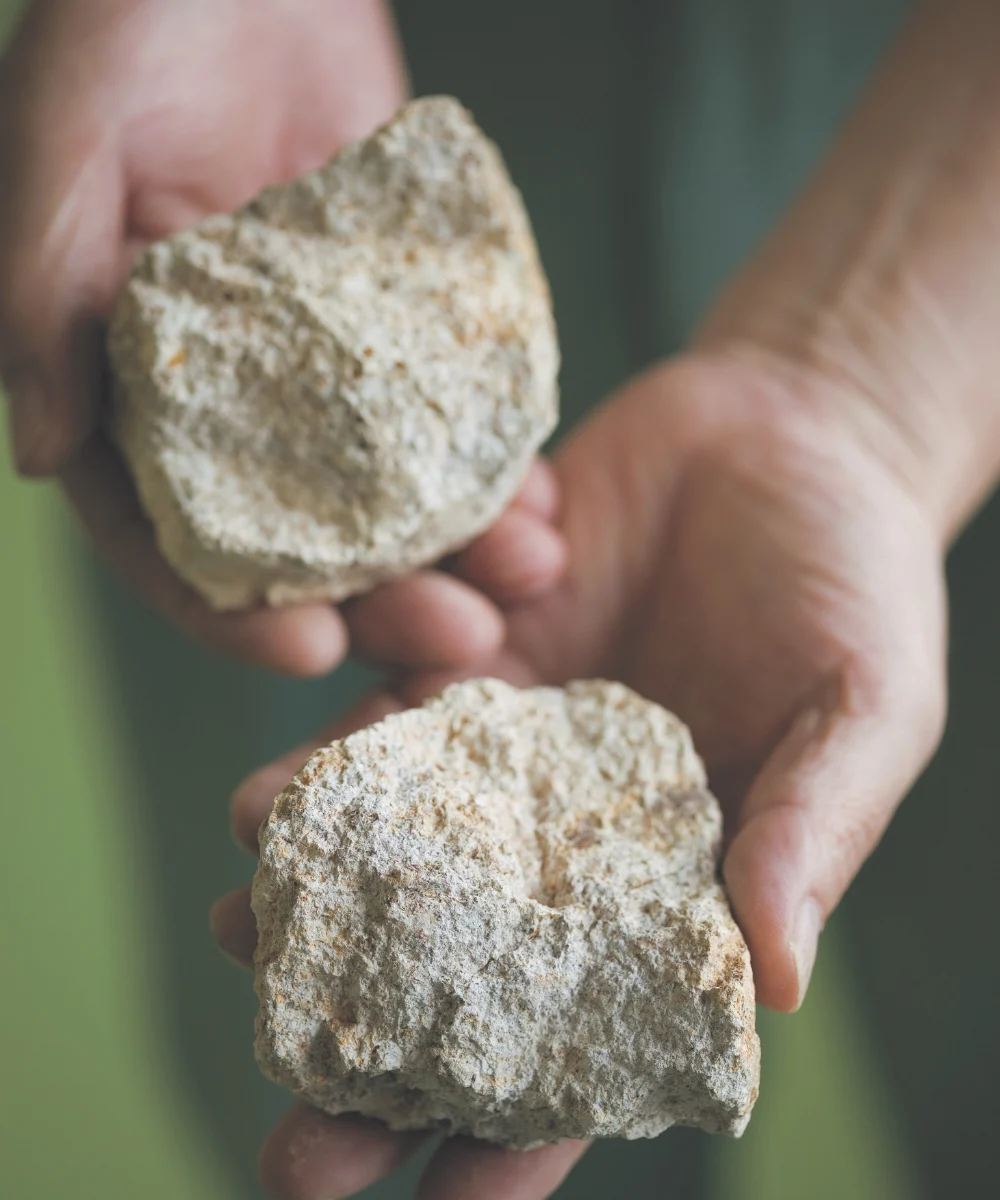
The physical production process itself relies on a complex blend of more than 20 natural raw materials. Ingredients such as clay, feldspar, and pottery stone are combined with precise amounts of water and finely milled until they transform into a liquid clay, known in the industry as slurry. This slurry is then carefully poured into moulds to form the initial shape of the bowl.
The Human Element in High-Tech Manufacturing
What emerges from the mould already bears a striking resemblance to a finished ceramic fixture, but at this crucial stage, the piece remains soft, unfinished, and deliberately oversized. During the subsequent drying and firing stages, TOTO’s sanitary ceramics undergo a significant physical transformation, shrinking by approximately 13%. This means that designers and engineers must accurately anticipate the final proportions long before the piece ever reaches the extreme heat of the kiln.
This phase of production is where a highly controlled, high-tech manufacturing process intersects directly with the trained hand of the traditional craftsperson. Depending on the specific design of the model, sections of the ceramic are manually joined, surfaces are painstakingly smoothed, and curves are carefully refined in preparation for the glazing stage. While automation undeniably plays an essential role in modern production volumes, the material itself still demands human judgement, tactile precision, and seasoned skill.
The Science of CEFIONTECT
The glazing process is what ultimately gives the ceramic its characteristic, brilliant white finish, while also seamlessly incorporating one of the brand’s most celebrated innovations directly into the material itself. As Tomoyasu Ichiki, Director of TOTO’s Research Institute, explained when discussing the evolution of these components: “Just like the base material for sanitary ware, glaze was traditionally made from natural raw materials.”
To elevate this traditional craft, TOTO developed CEFIONTECT, its proprietary ultra-smooth ceramic glaze specifically engineered to make it considerably more difficult for dirt, waste, and bacteria to adhere to the bowl. The creation of this technology involved extensive, painstaking experimentation with various glaze compositions, successfully bridging the gap between traditional ceramic knowledge and modern material science.
Satoshi Horiuchi, Executive Vice President of TOTO Sanitechno Co., Ltd., reflected on the intensive research and development behind the innovation: “I created dozens of ‘recipes’ for glaze ingredients and tested them for anti-stain properties.”
The ultimate breakthrough came from a counter-intuitive approach: rather than relying on the conventional single-layer finish standard in the industry, the team developed a method of applying two distinct layers of glaze.
Firing these dual layers together presented a formidable manufacturing challenge. “আমরা এটিকে মাত্র একবার পোড়াই,” (We only fire it once,) Ichiki noted, describing what makes the production cycle so distinctive. Inside the kiln, at blistering temperatures reaching approximately 1,200°C, the two separate glazes must retain their individual chemical and physical properties rather than simply melting together into a uniform mixture. This requires an extraordinary level of precision in controlling both the chemical composition of the glazes and the exact environmental conditions inside the firing chamber.
Performance in Hospitality Interiors
The resulting surface is a highly refined, glass-rich finish that is fully integrated into the ceramic structure itself. At a microscopic level, any surface irregularities are drastically smaller than those found on conventional, mass-market ceramics. Furthermore, CEFIONTECT is hydrophilic, meaning it actively encourages water to spread thinly and evenly across the surface, helping waste particles to wash away effortlessly with every flush.
For hospitality interiors and commercial spaces, this level of performance translates into tangible, everyday advantages. A bathroom finish chosen primarily for its clean, seamless, and luxurious aesthetic must also be rugged enough to withstand repeated, heavy use and rigorous regular housekeeping while retaining its pristine quality over the years.
Once the firing process is complete, every single piece of ceramic undergoes rigorous inspections. Technicians check for precise dimensions, uniform colour, and flawless finishes, alongside comprehensive evaluations for microscopic structural flaws that might remain invisible to the naked eye. Only after passing these strict quality gates is the ceramic deemed ready to be paired with the advanced electronic shower toilet components.
Ultimately, what appears to the end-user as a seamless, effortless white form is the culmination of careful material selection, skilled physical handling, and tightly controlled production engineering. Its apparent simplicity belies the true complexity of its creation. Every single stage—from the careful composition of the raw clay to the complex formulation of the double-layer glaze—contributes directly to the exceptional quality, durability, and performance of the finished product.
Within TOTO’s WASHLET shower toilet, ceramic proves to be far more than a passive backdrop for the technology housed above it. It plays an equally vital role in the product’s longevity and daily performance, demonstrating a successful harmony where natural materials, traditional craftsmanship, and advanced manufacturing converge into a single, thoughtfully considered form.