The Eternal City has a new destination for design, culture, and hospitality with the grand opening of Experimental Roma. Located on the legendary Via Veneto—a street permanently etched into global memory as the epicenter of 1950s and 1960s Italian glamour—the new hotel offers a vibrant, sensual, and cinematic interpretation of contemporary Dolce Vita.
Conceived by the Experimental Group, the property brings its signature hospitality flair to Italy for the first time. To articulate this vision, the group turned to interior architect Rodolphe Parente, whose design approach bridges French aesthetic sensibilities with the multifaceted, dramatic character of Rome. Rather than relying on tired tropes or postcard nostalgia, Experimental Roma is structured as a living tribute, utilizing space, materials, and light to capture the paradoxical spirit of a city where ancient ruins and pulsating modernity endlessly converse.
A Vision Rooted in Rome’s Cinematic Legacy
For Rodolphe Parente, the project represents a long-awaited dialogue with a city he had long dreamed of working in. Rome, in his view, is far more than a collection of historic monuments; it is an extravagant, spectacular, and paradoxical metropolis. It operates simultaneously as a living museum and a dynamic urban center, bearing the layered footprints of multiple civilizations, eras, styles, and human desires.
The choice of Via Veneto as the home for Experimental Roma anchors the hotel directly in cinematic history. This was the legendary thoroughfare where paparazzi once chased movie stars as they emerged from grand hotels, and where iconic actresses in extraordinary gowns stepped out of Alfa Romeo taxis. It remains a street of fantasy, still deeply permeated by the aura of classic Italian cinema—a place where sensuality, elegance, and a distinct undercurrent of spirituality coexist.
Parente notes that his design steering avoided a literal recreation of the past. Instead, he sought to channel the intellectual and aesthetic tensions that define Rome itself. The property embraces both La Grande Bellezza—with its celebrations of aesthetics, solitude, and memory—and the raw, unvarnished perspectives on social tensions and spirituality found in the works of cultural figures like Pier Paolo Pasolini. The result is a space charged with deliberate contrasts: sacred and profane, splendor and decadence, history and contemporary avant-garde.
An Atmosphere of Light, Shadow, and Italian Modernism
Stepping off the bustling pavement of Via Veneto and into the hotel lobby, guests leave the kinetic energy of the city behind, entering an intimate interior where historic heritage seamlessly blends with bold reinvention. Here, traditional Italian opulence is filtered through a distinctly French lens, paying respectful homage to the legacies of legendary Italian masters of design such as Gio Ponti, Carlo Scarpa, and Luigi Caccia Dominioni.
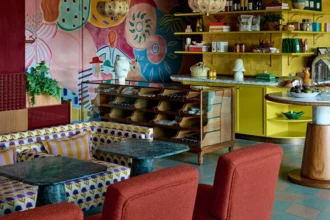
Subtle nods to the 1970s animate the public areas through the clever deployment of chrome tubing, disco-inspired accents, shimmering lurex carpets, a striking sculptural staircase, and a rich array of textured materials. Central to the social experience of the hotel is the Experimental Cocktail Club Roma. Serving a seasonal menu of classic cocktails alongside signature house creations, the bar utilizes vintage spirits and hyper-local Italian ingredients. Throughout the restaurant and surrounding public spaces, enveloping banquettes, quilted drapery, and exposed beams offer a direct visual and tactile nod to the golden age of Italian cinema.
Crowning the property is a rooftop terrace suspended above the urban sprawl. Featuring an expansive bar overlooking the historic rooftops of the Eternal City, a swimming pool, and an open-air terrace, the rooftop functions as an elevated oasis for travelers and locals alike.
The Rooms: Materials, Light, and Desire
Housed within a building that formerly served as a bank, the property now comprises 82 thoughtfully designed guest rooms divided into two principal aesthetic categories.
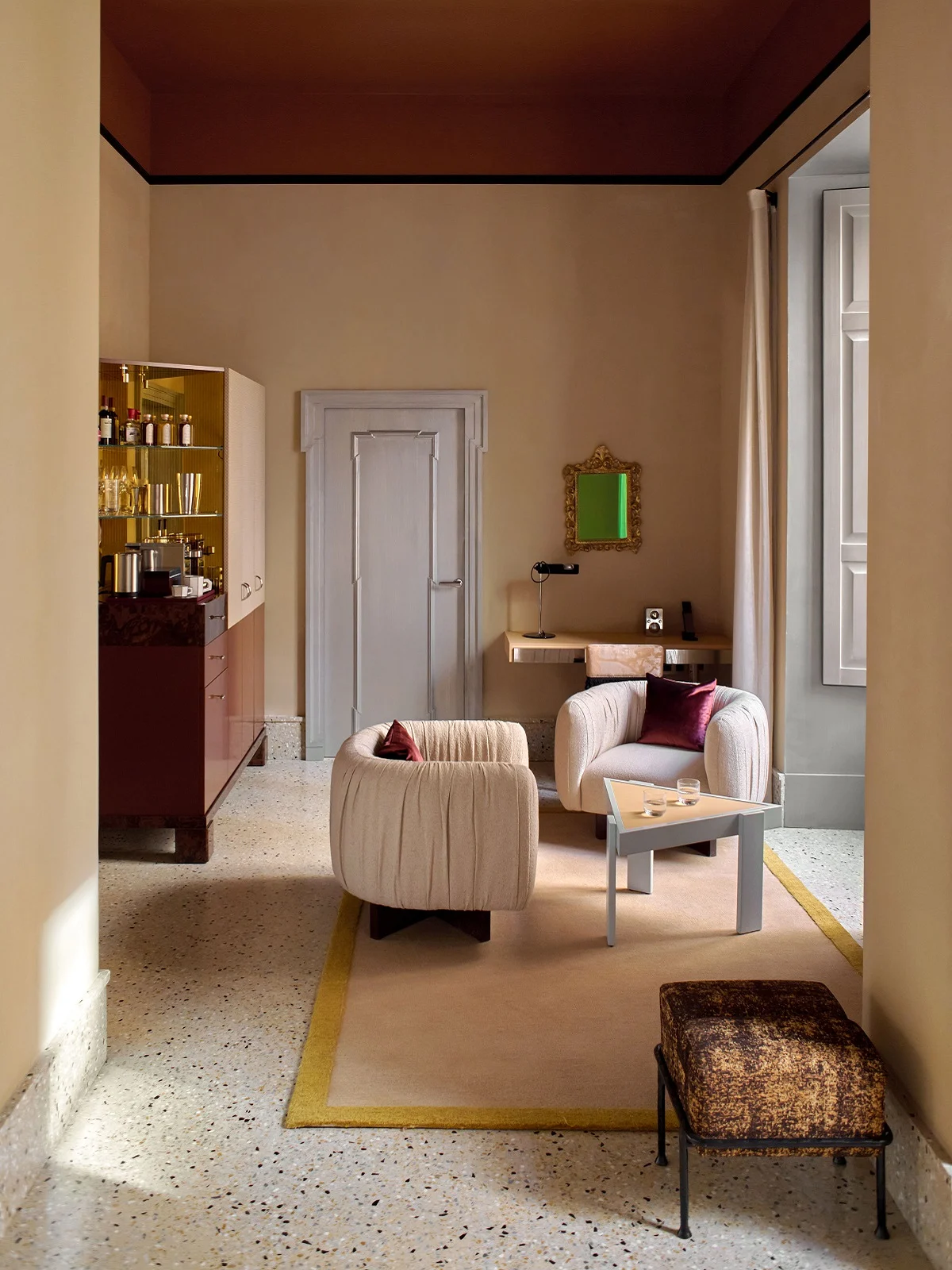
The first category evokes the rich theatricality of a classical Roman bedroom. Bathed in natural light filtered through interior shutters, these spaces feature large blocks of color and dramatic headboards inspired by antique drapery, cultivating a sense of romantic intimacy reminiscent of the Villa Medici. Colorful basins, vibrant decorative details, and a richer, more expressive design language establish a compelling dialogue between ancient Roman baroque influences and the hedonistic design cues of the 1970s.
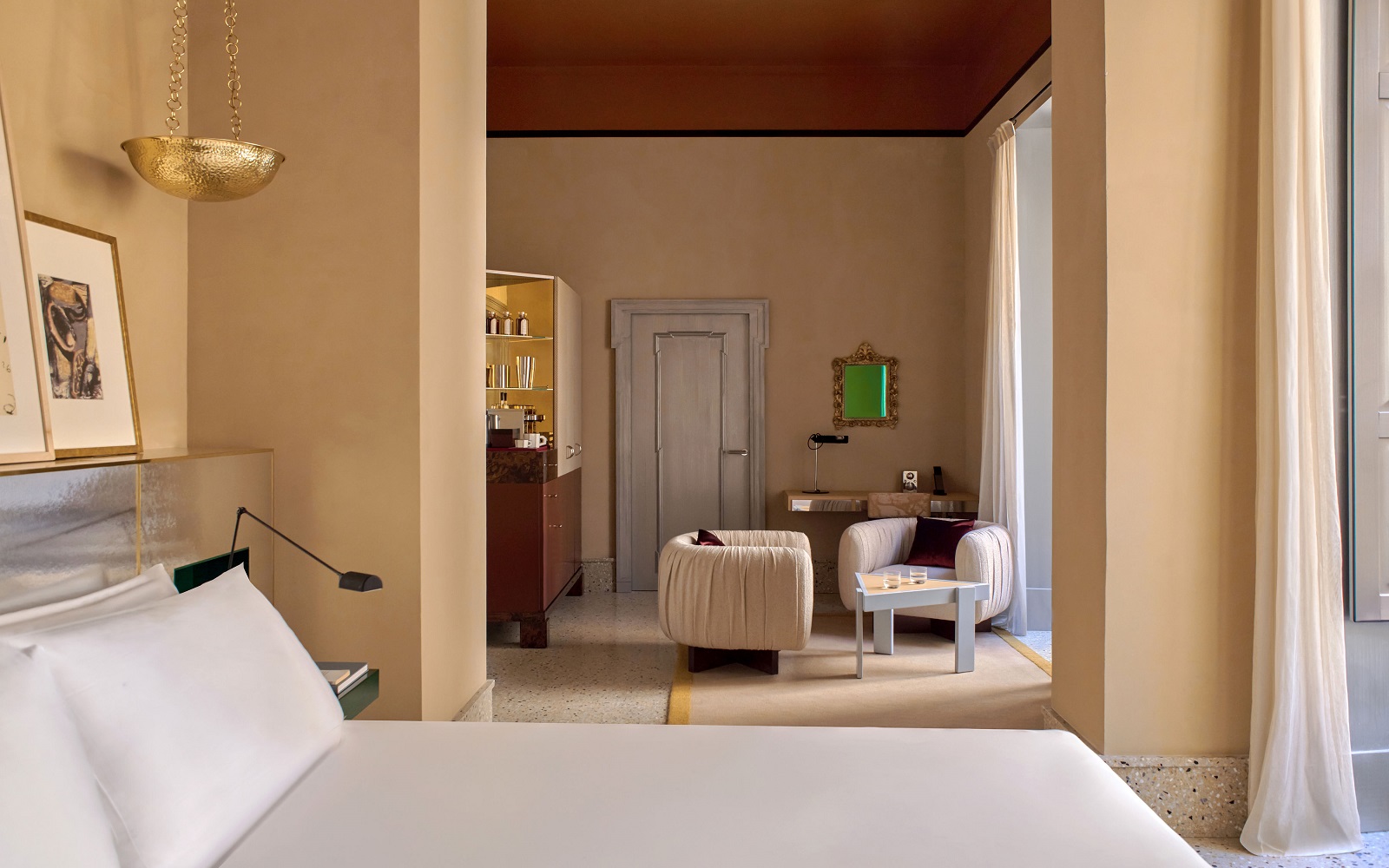
The second category shifts toward a more refined, almost futuristic aesthetic. These rooms utilize mineral patinas, two-tone lacquered ceilings, and ribbed stainless-steel headboards that double as contemporary sculptures, creating an atmosphere that is serene, contemplative, and museum-like. Artworks scattered throughout the rooms draw inspiration from the artistic worlds of Cy Twombly, Christo, Ugo Ferranti, and the Yvon Lambert Gallery, encouraging a slower, more reflective pace of travel.
The bathrooms across all rooms are conceived as striking contrasting boxes, balancing the organic warmth of wood against the cool touch of stone, pairing raw construction materials with bespoke graphic details.
Rome Reflected: A Mirror of Shadows and Light
Experimental Roma ultimately stands as a hotel of inverted perspectives. It is a French interpretation of Italy, and an Italy reinvented anew through carefully curated materials, tactile textures, and shifting plays of light. Noble materials engage in a constant architectural conversation with reimagined industrial elements; polished marble meets folded stainless steel, while deep terracotta tones vibrate dynamically against polished metal surfaces.
In every corner, Rome is reflected—quite literally—as though caught in a continuous mirror. It remains a city of profound shadows and shimmering reflections, an urban landscape that never exhausts itself, continuing to inspire dreams, deep desire, and critical thought. This is the multifaceted, living Rome that Experimental Roma invites its guests to inhabit.