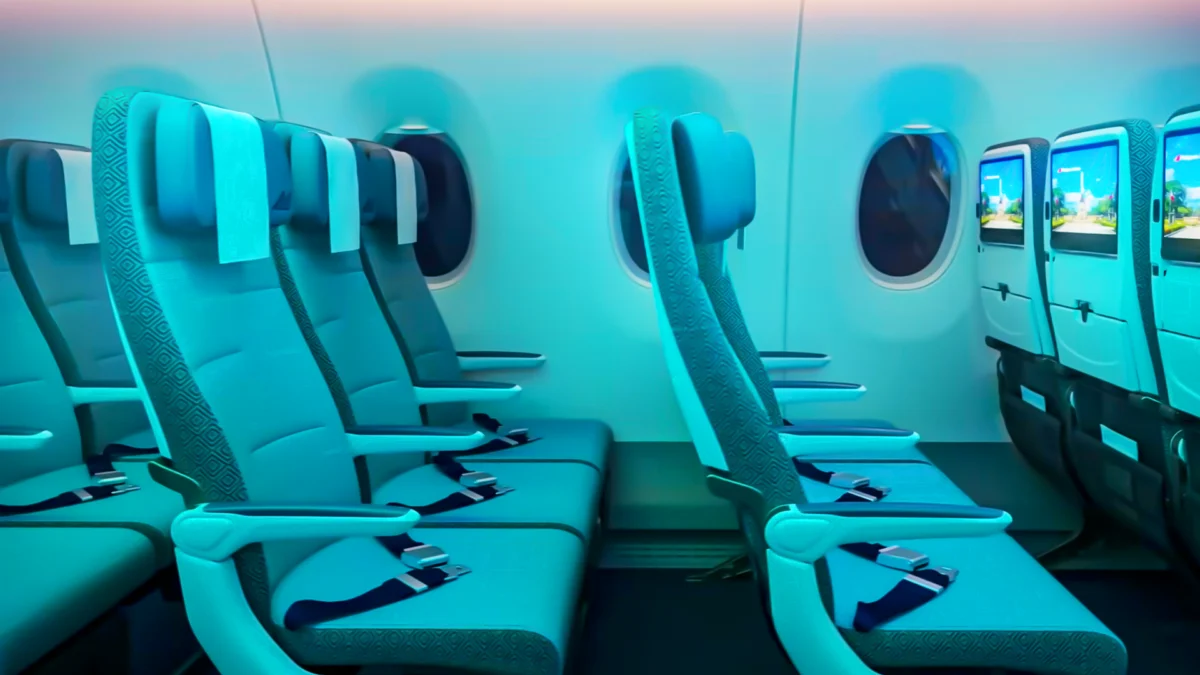
The Airbus A350 has firmly established itself as a cornerstone of modern widebody aviation, celebrated worldwide for its exceptional fuel efficiency, state-of-the-art engineering, and impressive operational range. Initially conceived by the European aerospace manufacturer to challenge and ultimately render obsolete the Boeing 777 family—a thorn in Airbus’ side throughout the 2000s—the A350 program has achieved remarkable commercial success. The A350-900 has become Airbus’ most successful widebody aircraft in history, while the larger A350-1000 has proven to be a formidable competitor to the legendary Boeing 777-300ER in virtually every measurable category.
Yet, despite its widespread acclaim and advanced capabilities, the aircraft faces a subtle yet critical physical constraint: cabin cross-section width. While the A350 is roughly comparable in overall size to the Boeing 777-300ER, its standard economy cabin has traditionally been configured with nine seats per row. In contrast, most major carriers configure competing Boeing 777s with a tighter, 10-abreast economy layout. This minor difference in layout means the A350-1000 typically seats fewer passengers than a standard 777-300ER, occasionally making it a tougher sell for legacy operators looking to maximize passenger capacity during fleet expansion. Furthermore, Boeing’s competing 777-9 features both a wider 10-abreast economy layout and a longer fuselage, rendering it highly attractive to airlines seeking replacements for retired Airbus A380s and Boeing 747s. To overcome this subtle size and capacity disadvantage, Airbus has spent recent years refining the A350 platform.
The A350 NPS (New Production Standard)
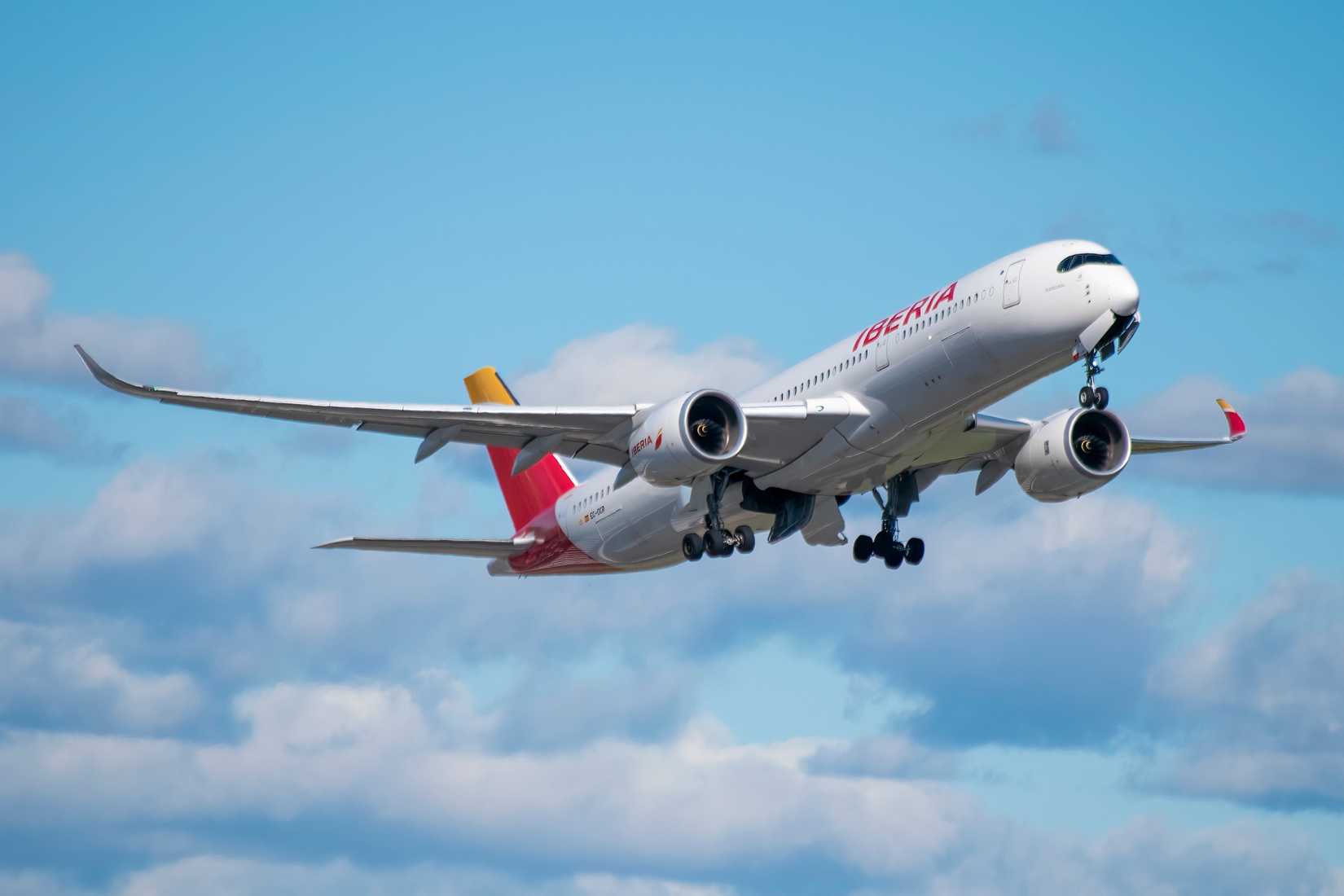
To address these spatial limitations and improve the aircraft’s market positioning, Airbus introduced a series of manufacturing and design upgrades collectively known as the A350 New Production Standard (NPS). On September 29, 2022, the very first A350 NPS—an A350-900 variant—was officially delivered to Spanish flag carrier Iberia, marking a significant milestone in the program’s evolution.
The scope of the A350 NPS improvements was substantial, touching virtually every aspect of the aircraft’s internal and structural architecture. Airbus engineers successfully increased the aircraft’s maximum gross weight while simultaneously reducing its overall empty weight. They also improved field performance and physically relocated the internal bulkheads to carve out more usable floor space across both the -900 and -1000 variants.

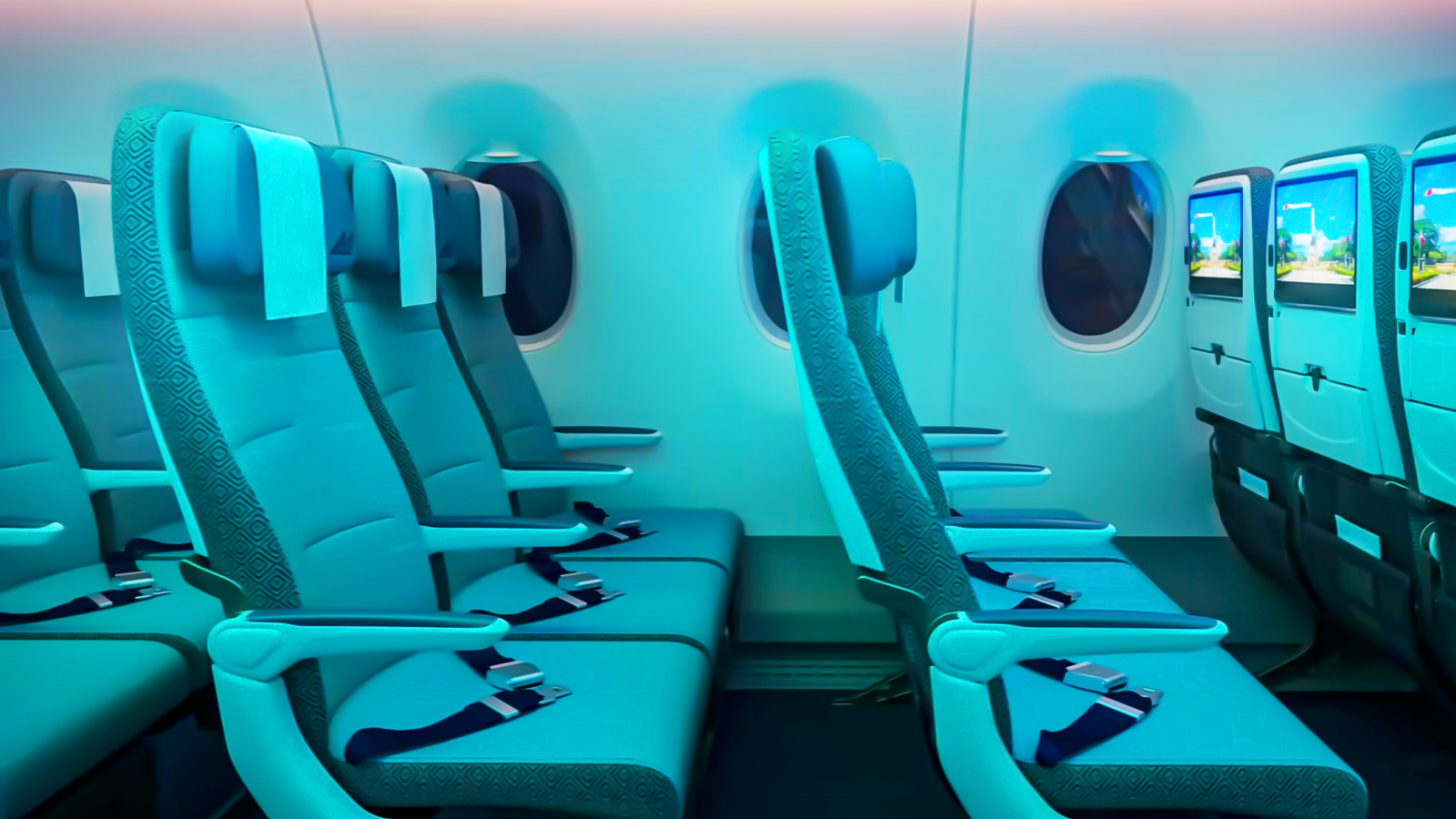
Most importantly for high-density operators, the manufacturer redesigned the aircraft’s interior sidewall panels. By thinning these panels, Airbus added approximately four inches, or 10.2 centimeters, of total interior cabin width. According to Airbus, this extra space is just enough to accommodate a comfortable 10-abreast economy layout, yielding individual seat widths of 17 inches, or 43.2 centimeters.
Prior to these modifications, ultra-low-cost and leisure-focused carriers such as Air Caraïbes and French bee were virtually the only airlines brave enough to install a 10-abreast layout on the A350. For major full-service network carriers, the previous 16.5-inch seat width—equivalent to roughly 41.9 centimeters—was simply deemed too narrow and uncomfortable for long-haul operations. However, the NPS specification theoretically allows for a 10-abreast configuration featuring seat widths comparable to those found on traditional Boeing 777 or Boeing 787 aircraft. By enhancing the aircraft’s seating economics, Airbus hoped to make high-density layouts vastly more appealing to full-service network carriers.
While these interior improvements are ultimately less consequential for the smaller A350-900—an aircraft that has already proven immensely successful in its designated market niche—they hold profound implications for the larger A350-1000. With the NPS modifications, the A350-1000 can theoretically be configured to seat just as many, if not more, passengers than a traditional Boeing 777-300ER. Nevertheless, advertising a nominal seat width of 17 inches on paper does not automatically translate to a luxurious or even universally comfortable passenger experience in the skies.
The Reality of a 10-Abreast A350 Experience
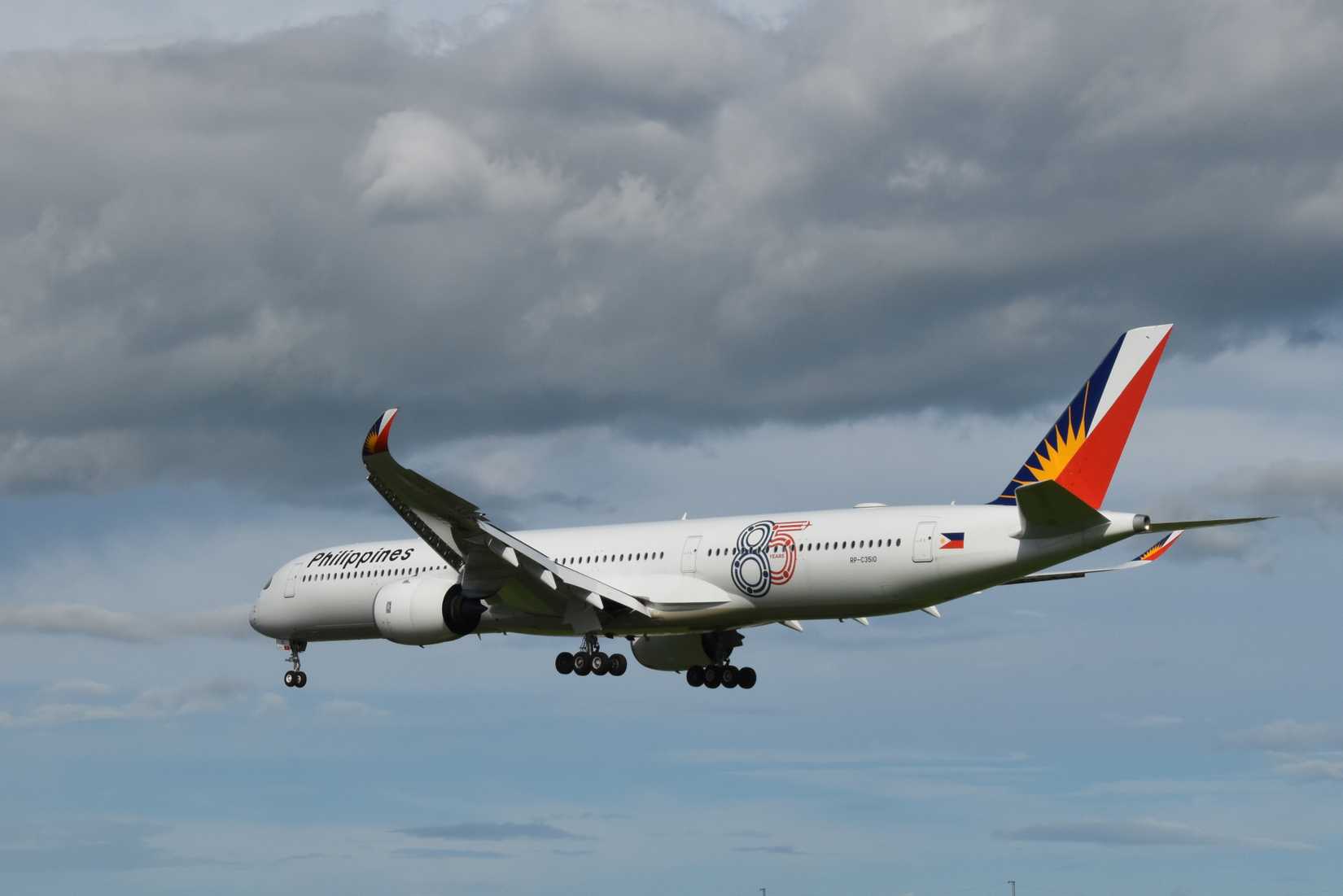
The true test of this high-density engineering came to fruition when airlines began adopting the configuration in regular commercial service. Philippine Airlines took delivery of its very first A350-1000 in December 2025, making it only the third airline globally to implement a 10-abreast economy layout on the A350 family. Philippine Airlines configured these long-haul flagships with 42 seats in business class, 24 seats in premium economy, and 316 seats in economy class, bringing total passenger capacity to an impressive 382 travelers.
This represents a remarkably high passenger count for the A350-1000. When combined with substantial premium cabin offerings and the aircraft’s robust underfloor cargo capabilities, the configuration offers immense revenue potential for the carrier. However, fitting ten seats across the cabin required significant compromises. To achieve the layout, Philippine Airlines had to physically trim the armrests, push the outer seats closer against the newly thinned sidewalls, and noticeably narrow the interior aisles.
Flight reviews and passenger reports have highlighted that the economy cabin on these aircraft feels noticeably tighter and more constricted than its Boeing widebody counterparts. Whether this tighter feel will deter other full-service network carriers from committing to a 10-abreast layout on future A350 orders remains an open question. Notably, no other airline has chosen to replicate this specific high-density layout on the A350 since its introduction.
Boeing, meanwhile, has taken a similar structural approach with the upcoming 777X family, thinning the sidewalls of the 777-9 to allow for slightly wider armrests or more generous aisle space compared to older legacy 777 models. Consequently, the 777-9 is expected to offer a more comfortable passenger experience in a 10-abreast configuration than a similarly dense A350, though it still falls short of the spaciousness found on a traditional nine-abreast A350. Ultimately, an A350-1000 featuring a standard, spacious nine-abreast economy layout remains an extraordinarily compelling product, and while the added width of the NPS standard provides options for carriers seeking maximum density, it has not fundamentally altered broader airline purchasing trends thus far.
The A350-1000 Versus the Boeing 777-9
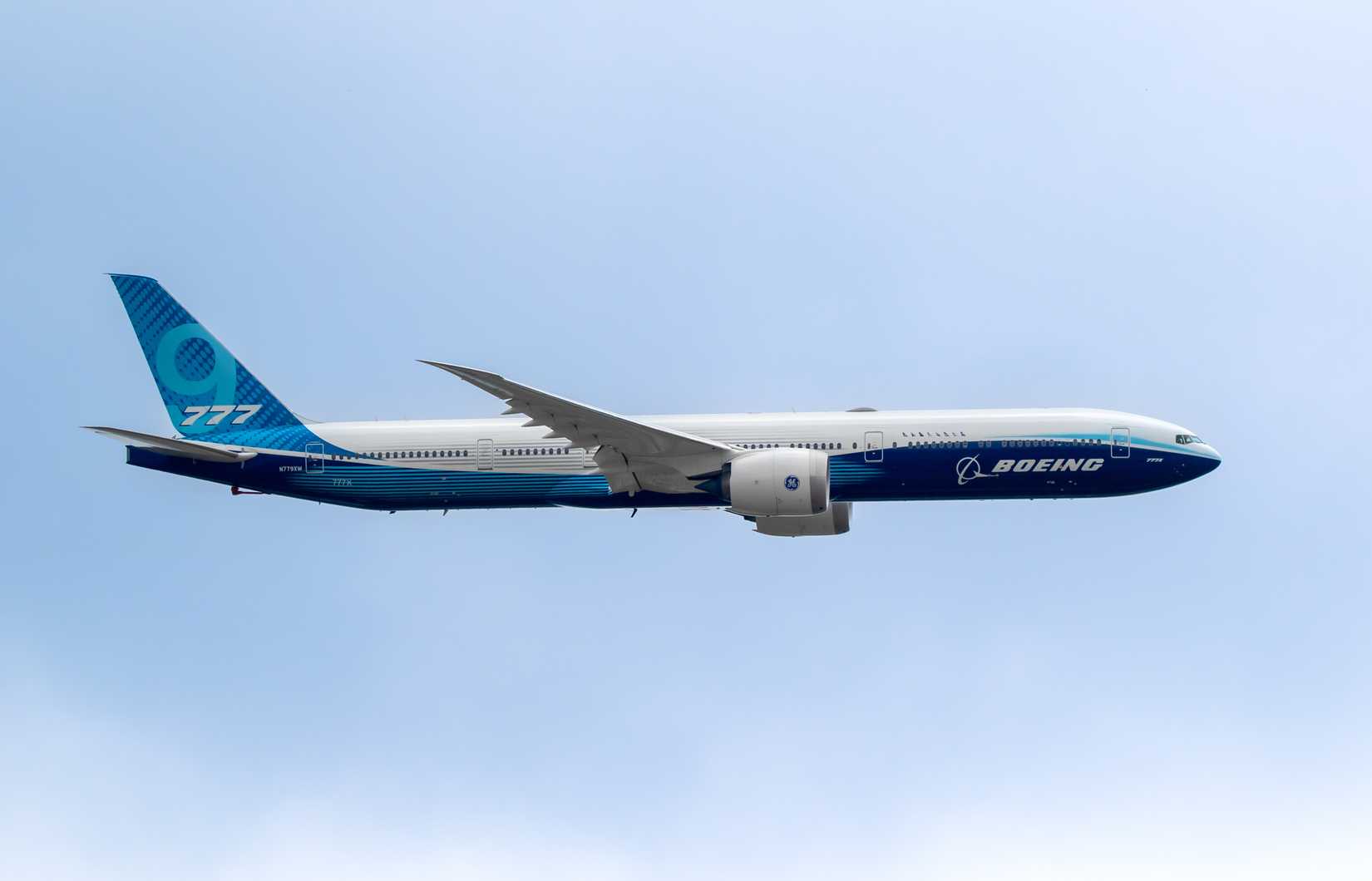
In the ongoing battle for widebody market dominance, the Boeing 777-9 has pulled ahead in gross sales, accumulating over 500 firm orders compared to approximately 373 orders for the Airbus A350-1000. A closer examination of global order books, however, reveals a much more nuanced market dynamic. Of the 12 distinct airline customers that have placed orders for the Boeing 777-9, nine are also customers for the Airbus A350 family. Furthermore, major carriers such as Emirates and Singapore Airlines have committed to the smaller A350-900 while bypassing the A350-1000 in favor of Boeing’s larger flagship. All Nippon Airways stands as the sole 777-9 customer that has not ordered either variant of the A350, suggesting that the global aviation market increasingly views the two competing aircraft families as complementary rather than mutually exclusive.
The A350-1000 boasts a lower trip cost and provides substantial capacity, but airlines prioritizing large, multi-class premium cabins—including dedicated first-class suites—may find its overall passenger capacity falling uncomfortably low when compared directly to the older Boeing 777-300ER. In contrast, the primary competitive advantage of the Boeing 777-9 lies in its expansive floor space, a feature that has become increasingly critical as global demand for premium travel surges. The 777-9 has been selected by several prominent international carriers to serve as their premier flagship, often complete with an ultra-luxurious first-class cabin. Conversely, the A350-1000s currently operating in many of these same airline fleets typically feature smaller business-class footprints and omit first class entirely.
Another notable nuance in the market is customer concentration. Emirates alone holds 235 orders for the Boeing 777-9, while Qatar Airways accounts for another 90 orders. While commercial sales numbers are fundamentally defined by total frame counts regardless of how many individual airlines purchase them, this concentration highlights that direct head-to-head competition between the two aircraft is more subtle than raw figures suggest. Many tier-one carriers have deliberately acquired the 777-9 to operate alongside their existing A350 fleets rather than choosing one manufacturer exclusively.
The Market Position of the A350-1000
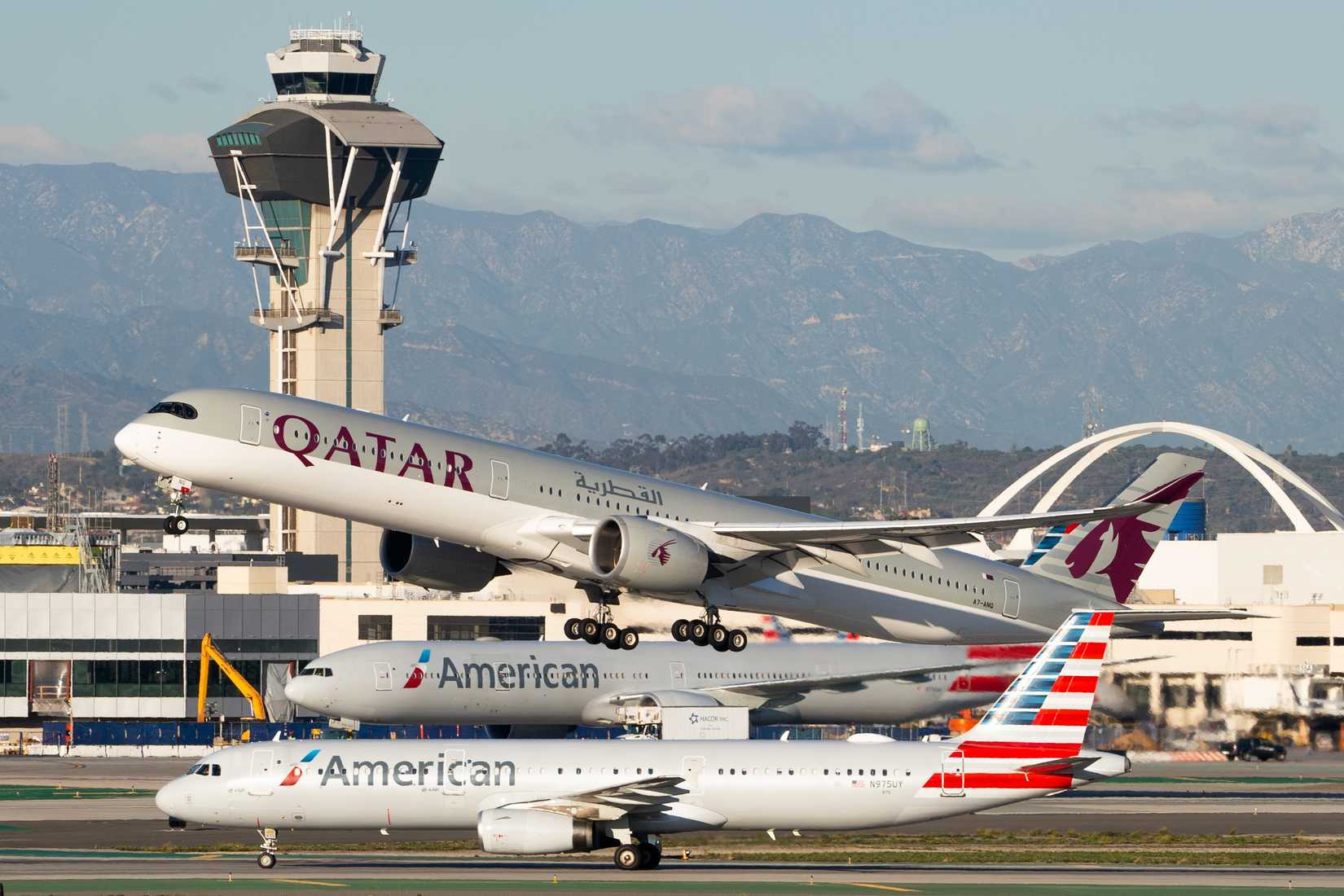
Despite its stellar engineering and technical capabilities, the A350-1000 has accumulated relatively modest sales figures compared to its smaller sibling. In large part, this slower accumulation of orders stems from timing. The aircraft arrived during a market transition period when many existing Boeing 777-300ER fleets were still relatively young, and numerous global airlines had already transitioned their legacy Boeing 747 operations over to the 777-300ER. As a result, the massive replacement wave that would naturally drive overwhelming demand for aircraft of this size has simply been delayed, resulting in a slower order cadence than some analysts initially anticipated.
The Boeing 777-9 was developed with direct, heavy input from launch customers Emirates and Qatar Airways—two carriers experiencing massive, ongoing network expansion. Outside of these key partnerships, sales for the 777-9 have also been relatively modest. Nevertheless, orders for the A350-1000 have noticeably accelerated in recent years as the earliest generations of Boeing 777-300ERs begin to approach retirement age. While the Airbus widebody offers less total floor space, forward-thinking airlines have increasingly recognized it as a capable replacement for older, very large aircraft. Japan Airlines has utilized the type to replace its aging 777-300ERs, Virgin Atlantic has deployed it to succeed its retired Boeing 747-400s, and Qantas has integrated the aircraft into strategic plans alongside its Airbus A380 operations.

Although the 10-abreast economy layout remains a relatively new option for the A350 family, it has not radically transformed airline procurement strategies. Even in its traditional, lower-density configuration, the A350-1000 remains a formidable replacement option for large widebody aircraft, proving itself to be an efficient people-mover and an exceptionally capable ultra-long-haul machine. Yet, because it remains physically smaller than the Boeing 777-9, Airbus leadership continues to study potential avenues to bridge this capacity gap.
A Potential Stretch of the A350-1000
Industry reports indicate that Airbus is actively exploring a potential stretch of the A350-1000, an aircraft variant that would offer passenger capacity directly comparable to the Boeing 777-9. Airbus executives have noted that a formal program decision regarding this stretched concept is anticipated before 2030, alongside ongoing evaluations for a potential stretch of the smaller A220 program.

Several technical and economic questions remain regarding what a stretched A350 would ultimately entail, and the final design choices will carry major implications for development costs and long-term market demand. However, the most critical question facing Airbus is whether its airline customers genuinely want such an aircraft. According to recent manufacturer disclosures, the customer interest is indeed present.
Airbus leadership has consistently expressed that they see tangible market demand for a larger derivative of the A350. Whether the program ultimately receives a formal commercial launch depends heavily on firm customer commitments and manageable development expenditures. From an engineering standpoint, the most significant design dilemma is whether to completely re-engine the aircraft to preserve its ultra-long-range capabilities—given that the current engines on the A350-1000 are largely considered maxed out in terms of thrust—or to retain the existing powerplants and gross weight ratings while accepting a notable penalty in maximum range.
Industry analysts suggest that if Airbus moves forward with a stretched A350, Boeing could respond by introducing an even larger stretched derivative, unofficially dubbed the ‘777-10′, which would further fragment the ultra-large widebody market segment. Such a competitive countermove is entirely plausible, especially considering that Boeing has already actively studied a potential 777-10 concept alongside major operators like Emirates. Crucially, however, both manufacturers’ feasibility studies appear to be driven by specific, proactive requests from key airline customers rather than pure speculation on unproven market voids. Ultimately, the central question for both Airbus and Boeing remains whether profitability lies in developing expensive, stretched variants or in continuing to optimize and sell their existing, highly successful widebody lineups.