For decades, the operational playbook for low-cost carriers in the United States and across the global aviation industry has remained remarkably consistent: sell high-volume, single-class economy seating, leaving premium cabins strictly to full-service legacy airlines. This traditional separation of market segments is now undergoing a dramatic transformation. A wave of domestic budget and low-cost carriers have announced or initiated the rollout of dedicated first-class cabins, fundamentally shifting how low-fare airlines approach onboard product strategy.
The low-cost business model has historically prioritized extreme cost-cutting, maximum seating density, and operational efficiency. Onboard the aircraft, this translated directly into tight pitch configurations and an all-economy layout designed to move maximum passenger volume. While premium seats have always generated significantly higher revenue per square foot, budget airlines typically avoided offering them because the loss of high-density seating space was difficult to monetize effectively with low-fare passengers.
However, the post-COVID-19 market dynamics in the United States have forced a strategic reckoning. Consumer demand for enhanced comfort, personal space, and premium travel experiences has surged dramatically, and legacy airlines have reaped the financial rewards of this shift. Consequently, struggling or evolving low-cost carriers are increasingly introducing premium products to capture high-yielding revenue and remain competitive in a changing macroeconomic environment.
Historically, domestic first class was the exclusive domain of network legacy carriers like American Airlines, Delta Air Lines, and United Airlines, along with historical merger partners and Hawaiian Airlines. Over the years, carriers like AirTran and Alaska Airlines also featured domestic first class, though Alaska gradually evolved into a hybrid carrier, much like Virgin America before its acquisition.
In 2007, Spirit Airlines carved out a unique niche by introducing its "Big Front Seat," which offered passengers a larger recliner experience while maintaining the standard economy service concept. Later, in 2014, JetBlue revolutionized transcontinental travel by introducing Mint, a highly competitive lie-flat business class seat that eventually expanded to other major North American markets. Following corporate consolidations—such as Southwest Airlines acquiring AirTran in 2010 and Alaska Airlines absorbing Virgin America in 2016—passengers seeking premium domestic cabins generally looked to American, Delta, United, Alaska, Hawaiian, or Spirit, alongside JetBlue’s select Mint routes.
That landscape defined the industry leading up to the pandemic, while airlines such as Allegiant Air, Frontier Airlines, Southwest Airlines, and Sun Country Airlines maintained strictly all-economy configurations. Following the pandemic, new entrants like Breeze Airways and Avelo Airlines launched operations with all-economy aircraft. However, by 2022, Breeze shifted course by deploying new Airbus A220 aircraft equipped with first class. Meanwhile, Frontier began selling extra-legroom economy seats featuring blocked middle seats in early 2024, and Southwest introduced its own extra-legroom product in January 2026. Spirit Airlines, once a cornerstone of the ultra-low-cost market, ceased operations in May.
The New Frontier First Class
Frontier Airlines’ introduction of "UpFront Plus" seating in early 2024 caught many industry observers by surprise, as the carrier had previously resisted offering premium seating options. The product closely resembled intra-European business class by providing blocked middle seats and extra space. However, that offering served largely as a temporary stopgap. Frontier subsequently announced plans to introduce a true first class product designed to better capture premium revenue.
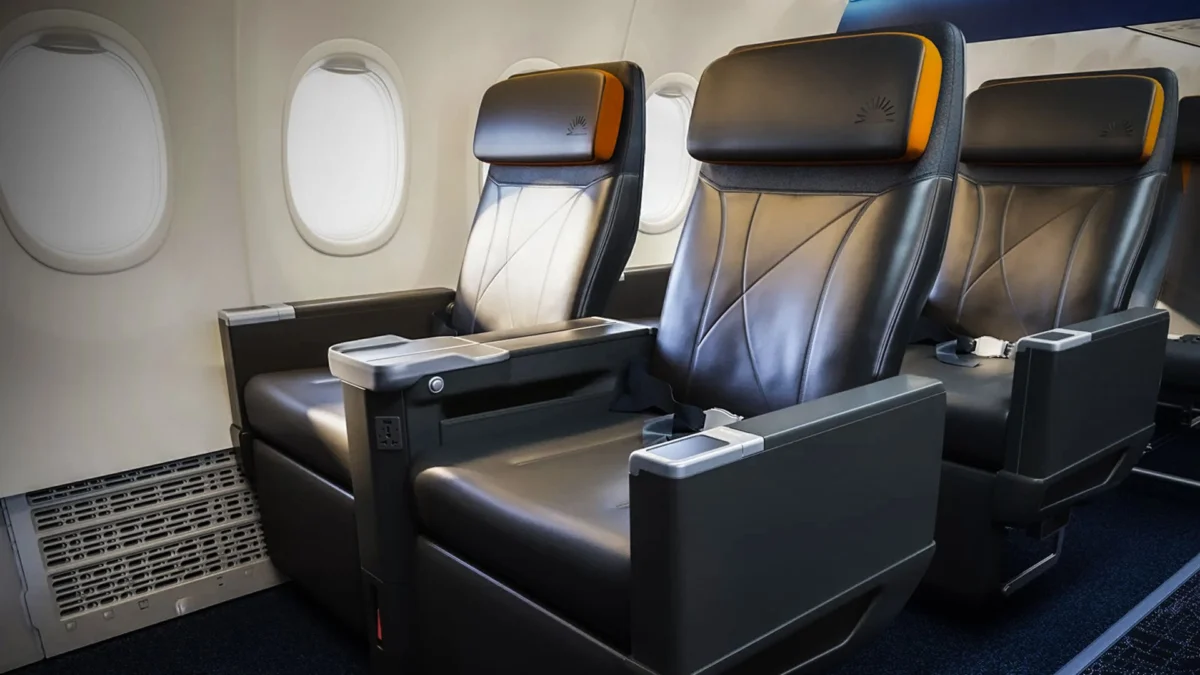
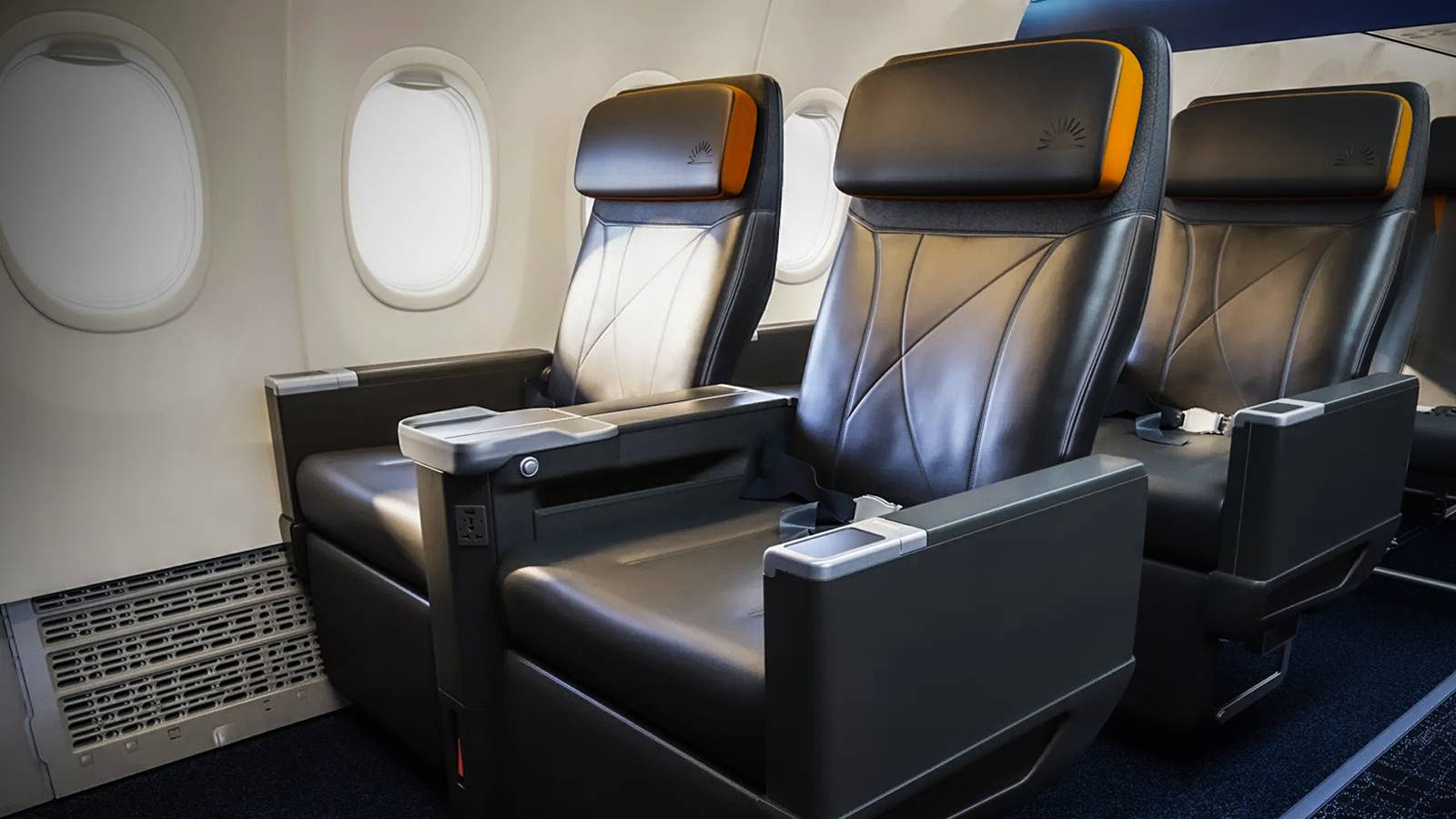
The new first class product is scheduled to launch in 2027. Frontier has selected the Geven Comoda platform for these cabins, featuring a four-abreast configuration with enhanced legroom, mirroring the large recliner seats found on traditional domestic carriers. In addition, the airline plans to install power ports in these seats, though specific connector types remain unconfirmed.
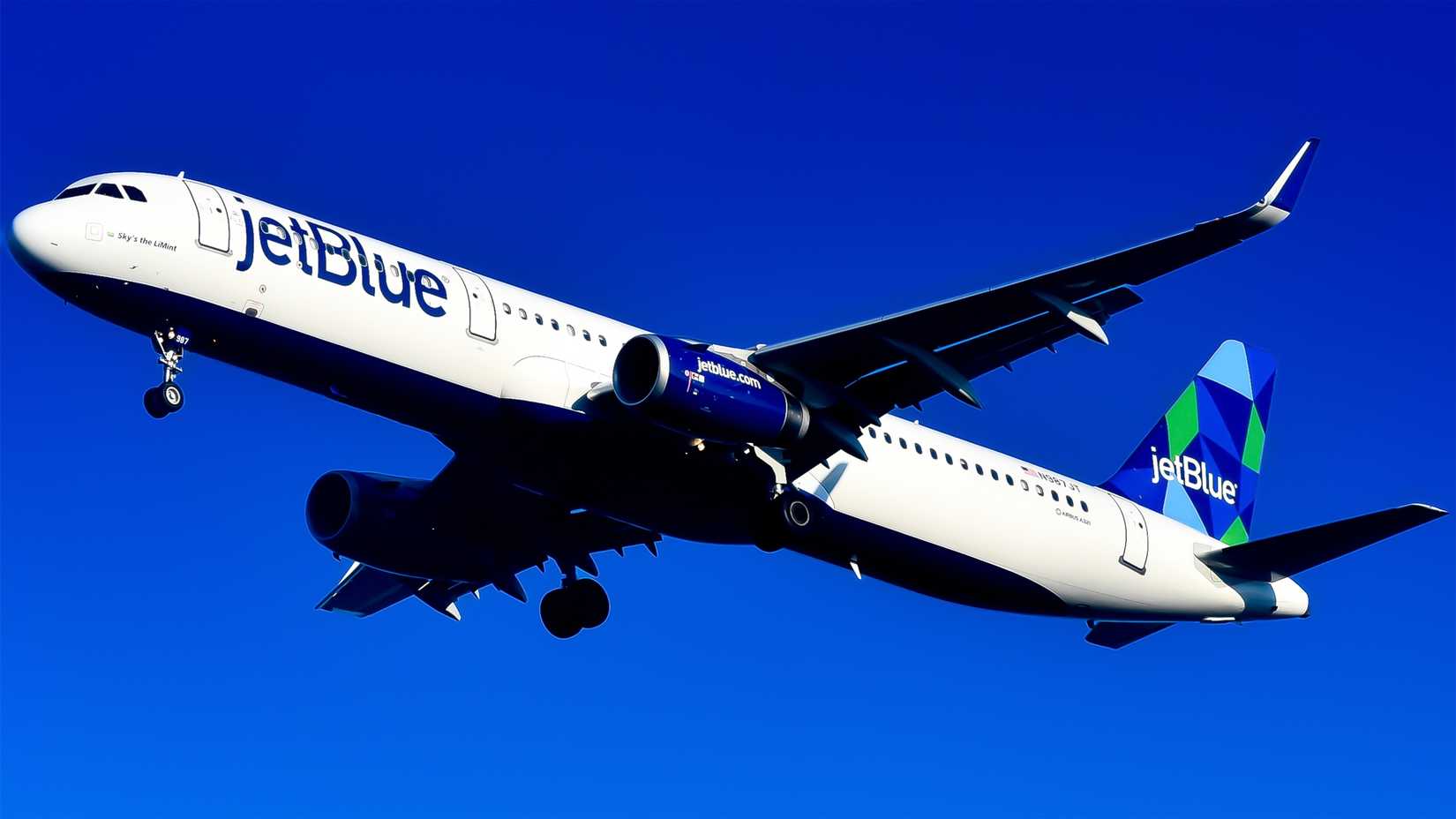
One notable design choice is the absence of manual recline; these seats will instead be pre-reclined to streamline maintenance and cabin flow. From a soft product perspective, first class tickets will include only the upgraded physical seat, meaning complimentary drinks and snacks will not be bundled into the fare. Retrofitting the narrowbody fleet is slated to begin soon, with each aircraft featuring two rows comprising a total of eight first-class seats.
Prior to the official March 2027 launch—when the airline expects to complete the fleet retrofit—Frontier will continue selling these spaces under the UpFront Plus banner. Alongside the seating overhaul, Frontier is installing Starlink WiFi across its aircraft, a technological upgrade that matches the passenger impact of the new first class seats, given that the carrier’s current fleet lacks any form of onboard wireless connectivity.
The New Allegiant Air First Class
Allegiant Air previously experimented with a limited premium offering known as the "Giant Seat" on its Boeing 757-200 fleet between 2014 and 2017, but the product was confined to a small subset of aircraft. More recently, the airline found strong commercial success with extra-legroom options. Building on that momentum, Allegiant formally announced in July 2026 the launch of its new "Allegiant First" cabin, timed for a March 2027 rollout to coincide with Frontier’s timeline.
Tickets for Allegiant First went on sale in August, allowing travelers to book the experience well in advance. While the specific seat manufacturer remains unconfirmed, the airline has outlined key specifications, including a 37-inch seat pitch, five inches of recline, an adjustable headrest, and an extendable calf rest.
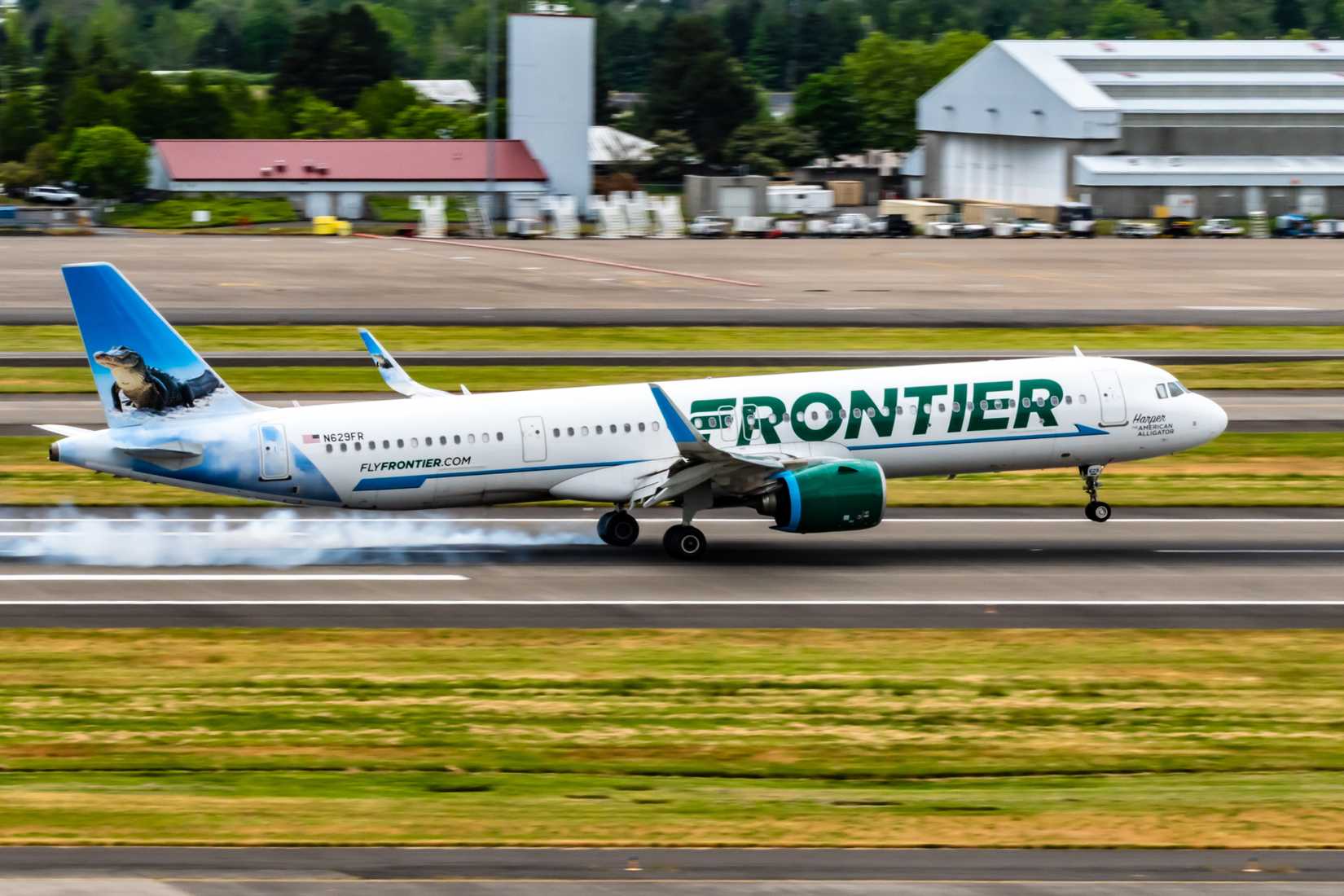
Passengers purchasing Allegiant First will receive complimentary beverages, with Allways Rewards Visa cardholders eligible for additional drink options. The elevated tier also includes priority airport processing, early boarding, and enhanced onboard service. Allegiant plans to install eight of these seats on its Boeing 737 MAX 200 aircraft, debuting the cabin on newly delivered frames as part of an initial subfleet deployment of 23 planes.
Initially, Allegiant will concentrate the product out of Punta Gorda Airport in Southwest Florida. While this limited network deployment means the product will not be universally available across the entire carrier at launch, Allegiant has constructed a competitive offering positioned as a lower-cost alternative to legacy carrier first class.
The Upcoming JetBlue First Class
JetBlue has long maintained a strong premium presence through Mint on select Airbus A321-200s, second-generation Mint suites on a subfleet of Airbus A321neos, and transatlantic operations on Airbus A321LRs. The carrier has also maintained a large inventory of extra-legroom seats under the EvenMore branding.
Despite offering acclaimed business and economy products alongside a strong footprint in major corporate markets, JetBlue historically refrained from offering a standard domestic first class cabin. Following years of industry speculation, JetBlue formally introduced "BlueFirst" in September 2026. The new product complements Mint by catering to domestic routes that do not justify the deployment of full lie-flat suites.
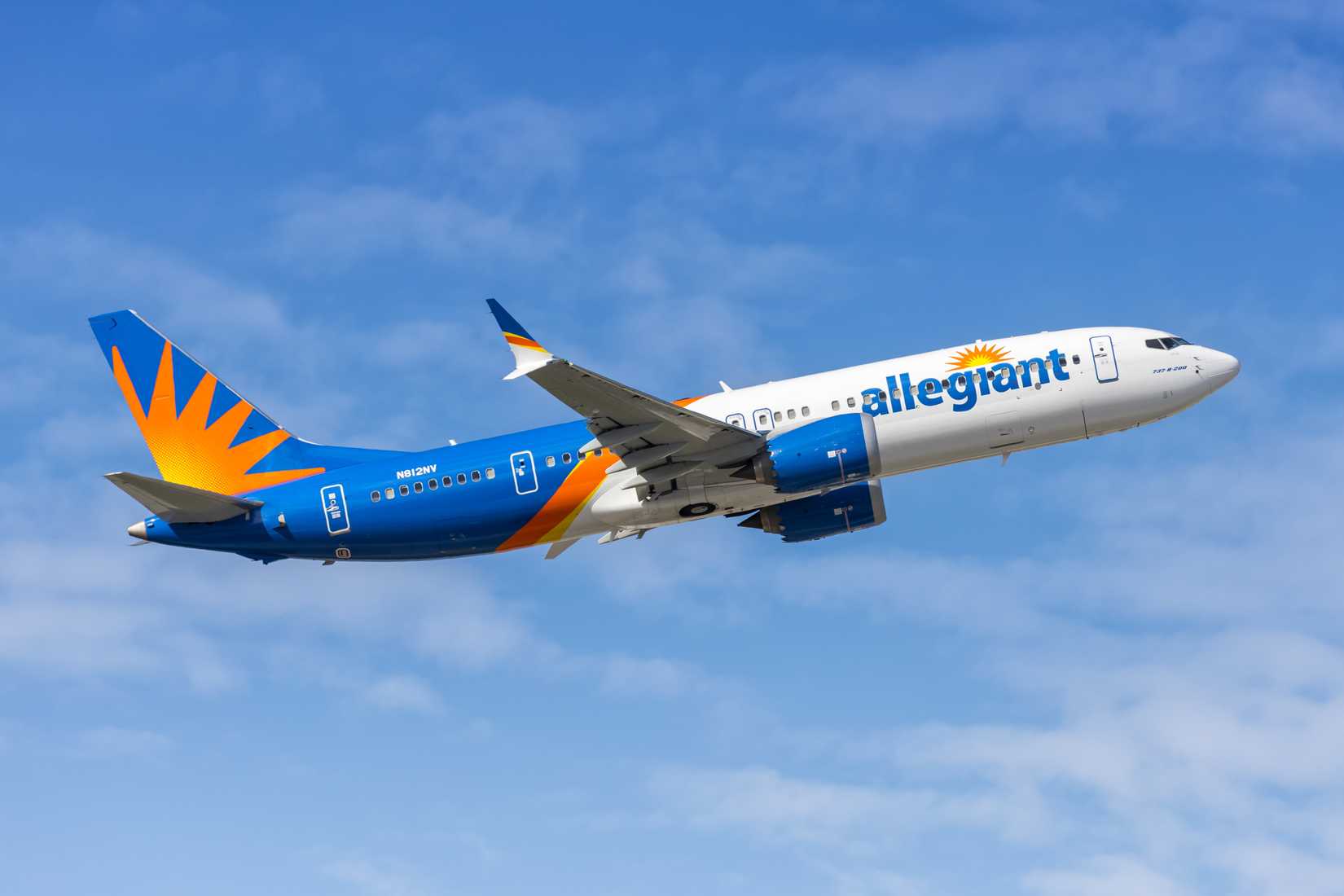
The product is set to debut in December on the route connecting Boston and Fort Lauderdale. JetBlue plans to retrofit its entire non-Mint mainline fleet with BlueFirst, incorporating 12 seats on Airbus A220-300s and A320-200s, and 16 seats on Airbus A321-200s and A321neos. The airline selected the Collins Aerospace MiQ platform, which provides greater pitch, increased recline, in-seat power outlets, and seatback entertainment screens.
Alongside the hardware upgrade, JetBlue is enhancing its meal and beverage offerings. Because the aircraft slated for BlueFirst retrofits lack onboard ovens, hot meals will not be served. While the introduction represents a concerted effort to attract higher-paying travelers, the physical expansion of the premium cabin comes at the expense of economy legroom, keeping overall aircraft passenger capacity neutral.
Why The New Premium Push In The US
Consumer demand for premium travel products has experienced sustained growth across the domestic US market, with legacy carriers capturing a significant portion of this high-yield traffic. Compared to their pre-pandemic financial health, numerous budget carriers have struggled to maintain profitability, with the collapse of Spirit Airlines serving as the most prominent cautionary tale.
Airlines like Frontier, JetBlue, Southwest, and Spirit enjoyed formidable positioning prior to 2020, but shifting market conditions have necessitated strategic adaptation. Premium seats consistently command higher yields than standard economy tickets. With consumer preference for enhanced comfort rising across the board, operating exclusively high-density, all-economy narrowbody aircraft increasingly leaves revenue untapped.
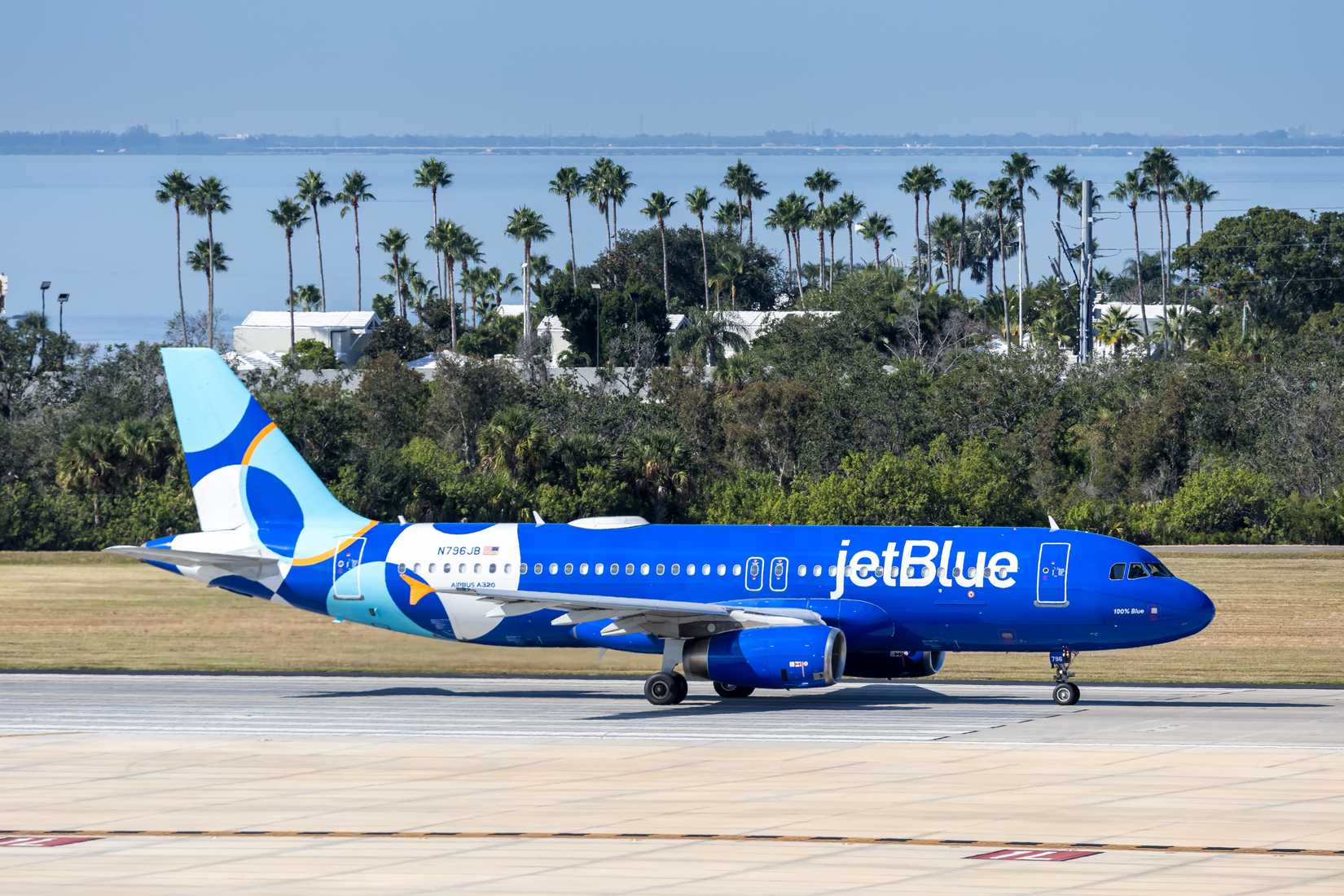
Furthermore, offering a tiered premium product enhances brand relevance among broader consumer demographics and strengthens customer loyalty far more effectively than low-fare models alone. This improved loyalty translates into higher repeat booking rates and increased participation in frequent flyer programs, which have become major profit centers for commercial airlines. Following these latest industry shifts, the only major US carriers that do not currently offer or have not announced plans for a domestic first class cabin are Avelo Airlines and Southwest Airlines.
Avelo remains a smaller, niche operator with an evolving product strategy whose long-term direction remains to be seen. Southwest Airlines, meanwhile, has rolled out extra-legroom seating across its fleet and continues to study the feasibility of a formal first class cabin. For Southwest, industry analysts suggest the adoption of a premium domestic cabin is a matter of when rather than if.