In the vast landscape of Southeast Asian gastronomy, few elements are as fundamental to authentic flavor profiles as freshly squeezed coconut milk. For culinary enthusiasts dedicated to mastering traditional Thai dishes, learning the meticulous process of extracting fresh coconut milk from mature coconuts is widely considered one of the most transformative steps a cook can take. While canned and boxed alternatives offer undeniable convenience for weeknight cooking, culinary purists maintain that taking the time to prepare fresh coconut milk fundamentally changes the outcome of dishes like traditional Thai green curry, elevating the flavor depth, texture, and overall authenticity to professional levels.
Coconut Cream Versus Coconut Milk: Understanding the Extractions
Before embarking on the traditional preparation process, culinary experts emphasize the importance of distinguishing between the two primary extractions derived from mature coconuts: coconut cream and coconut milk. Coconut cream represents the initial, richer, and exceptionally creamy product harvested from the first squeeze of freshly shredded mature coconut meat. Conversely, coconut milk is typically produced during a secondary extraction, which often involves introducing additional water to the remaining coconut shreds or combining the extractions. Traditional Thai recipes frequently utilize both components distinctly, requiring cooks to keep the heavy cream and lighter milk separated until the final stages of cooking to achieve the precise textures expected in classic regional dishes.

Sourcing Mature Coconuts for Authentic Depth
Achieving this level of culinary authenticity requires specific ingredients, most notably mature coconuts featuring thick, nutrient-dense white meat and hard brown shells covered in tough, fibrous hairs. This variety differs significantly from the young, green coconuts commonly marketed for their refreshing drinking water. Mature coconuts deliver a robust depth of flavor that simply cannot be replicated using processed canned goods. For home cooks residing in the United States, Europe, or other regions outside Southeast Asia, mature brown coconuts can typically be sourced at specialized Asian markets or select Latin American supermarkets.

Preparing these mature coconuts requires overcoming the initial hurdle of breaking open the hard shell, a task that demands precision and the correct technique. Culinary traditions advise against using blunt objects like hammers or striking the coconut forcefully against hard surfaces, as these methods often lead to uneven breaks and splintered shells that complicate the subsequent shredding process. Instead, professional techniques favor using the heavy back edge of a strong knife or the backside of a Chinese cleaver to deliver short, quick, horizontal strikes around the middle circumference of the coconut, rotating it systematically until it separates cleanly into two equal halves. While the natural coconut water inside should be drained and can be saved for drinking, it is not utilized in the traditional milk-making process, which relies exclusively on the rich, mature meat.

The Traditional Shredding and Extraction Process
Once the coconut is successfully halved, the extraction process begins with harvesting the white meat using specialized scraping tools. In Thailand, traditional households frequently employ a specialized seated scraping apparatus affectionately known in the local language as a "rabbit scraping coconuts," referencing the rhythmic motion reminiscent of a rabbit’s back legs. This tool provides a safe and efficient method for carving out light, airy shreds of coconut meat directly from the protective half-shell without digging too deeply into the hard, bitter brown outer layer. A standard medium-sized mature coconut typically yields approximately three hundred grams of delicate white coconut shavings.

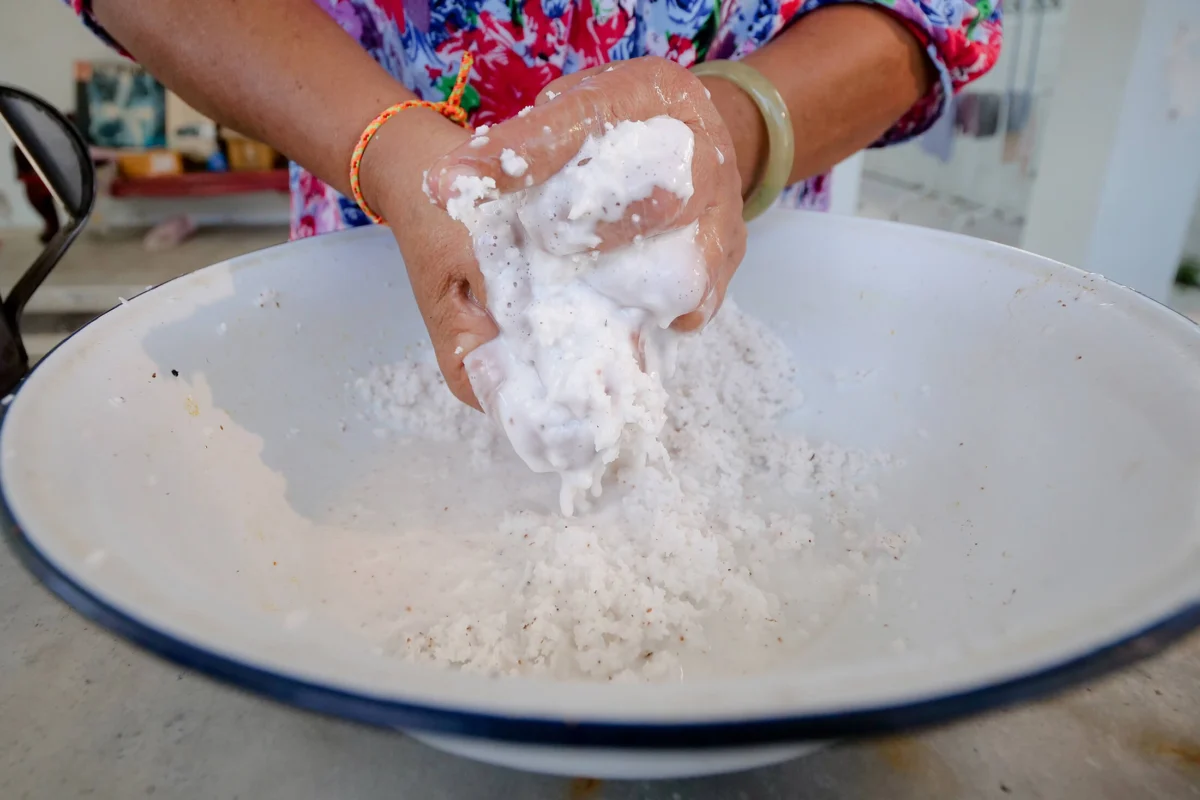
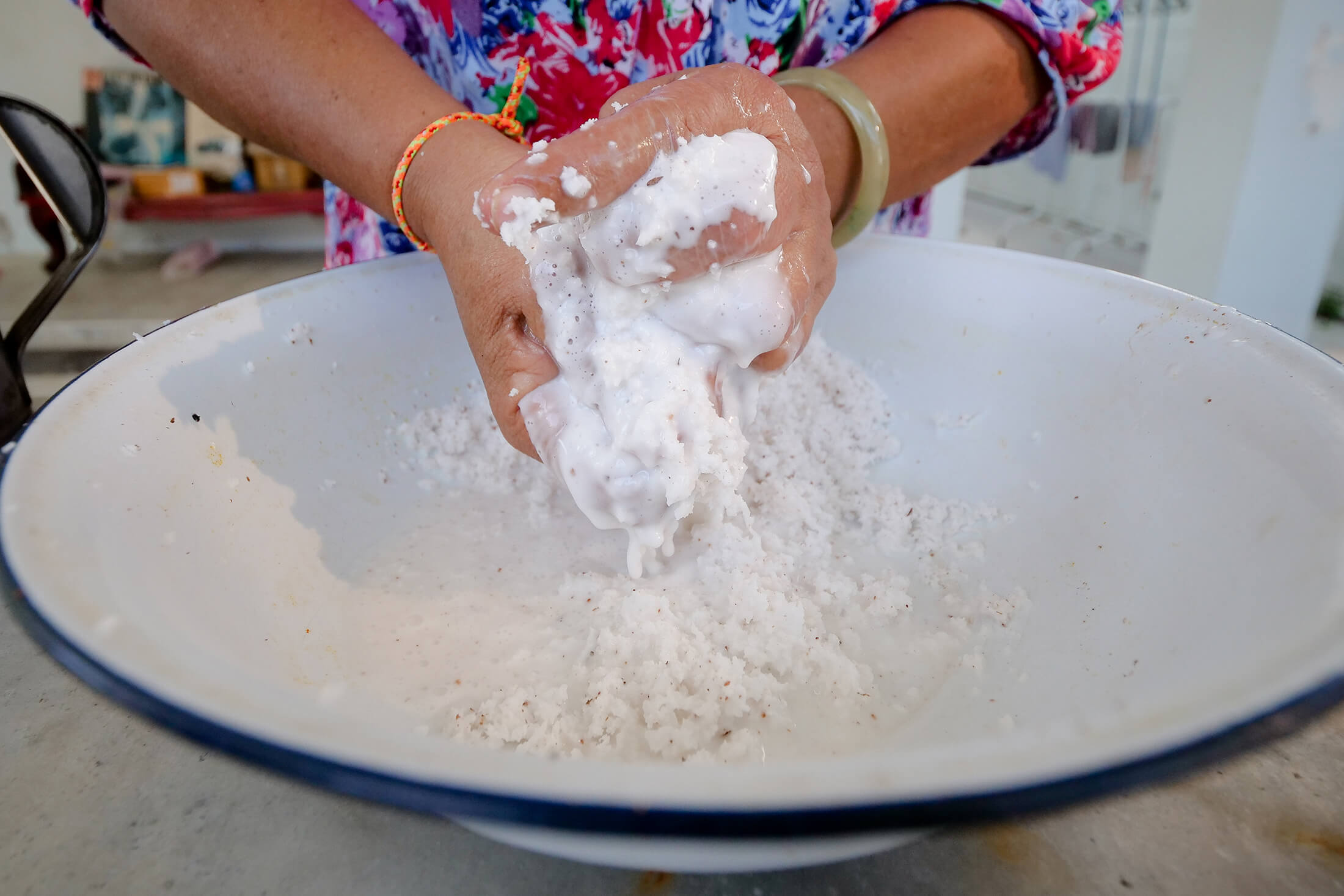
The transformation from solid coconut meat into liquid gold requires a precise series of hand extractions using room temperature water. Cooks typically begin by pouring roughly three hundred milliliters of water over the three hundred grams of fresh coconut shavings inside a large mixing bowl. By thoroughly massaging and squeezing the coconut flesh by hand, the water absorbs the natural fats and oils, turning a milky white color. This mixture is then pressed and strained through a fine screen or cheesecloth into a secondary container to yield the thick, luxurious coconut cream.

To complete the process and produce traditional coconut milk, a secondary extraction is performed. Cooks add another three hundred milliliters of room temperature water to the same batch of squeezed coconut shreds, repeating the manual massage and kneading process for several minutes. Straining this mixture yields a lighter coconut milk. In total, a single mature coconut produces between five hundred and six hundred milliliters of combined coconut milk and cream.

The Culinary Impact on Traditional Thai Recipes
While commercial products remain a practical fallback when time is constrained—with culinary sources specifically recommending boxed brands like Aroy-D when fresh preparation is impossible—the difference in finished Thai dishes is profound. Freshly squeezed coconut milk, when paired with authentic curry pastes, serves as the structural foundation for foundational dishes such as Thai green curry. By investing the time to crack, scrape, and squeeze mature coconuts by hand, home cooks bridge the gap between foreign imitation and genuine regional tradition, capturing the true essence of Thai home cooking.