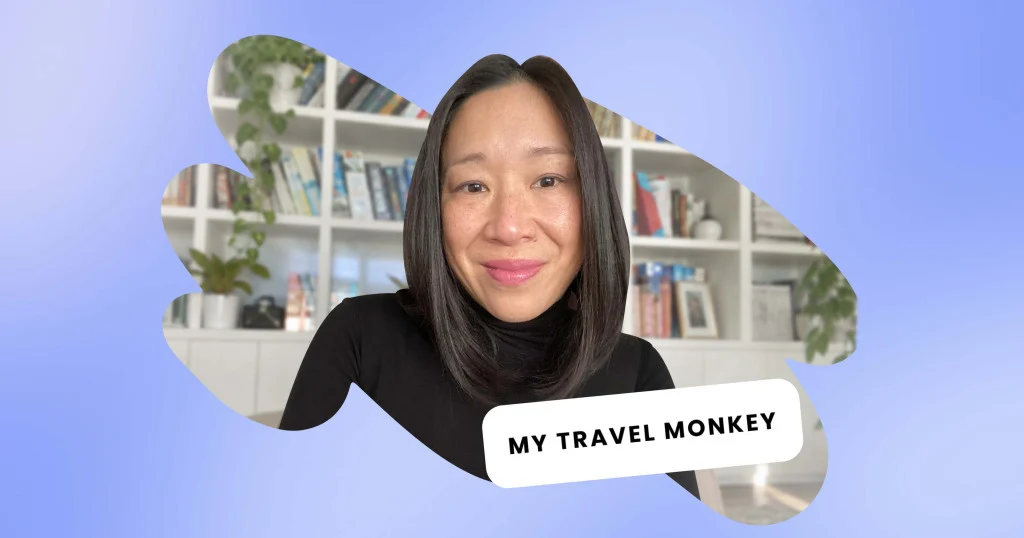
When Ting first launched her travel blog back in 2012, she was already deeply immersed in the world of UK magazine publishing. Working a standard nine-to-five job, she found herself yearning for a creative outlet that her daily editorial duties simply could not satisfy. As a sub-editor, the hands-on writing opportunities were limited, leaving her creatively unfulfilled and increasingly frustrated.
That frustration ultimately catalyzed a life-changing decision. She decided to set up her own digital space to flex her creative writing muscles. At the time, she admits she possessed very little technical know-how. She did not have a social media presence, let alone any practical knowledge of how to build a website, capture professional travel photography, or navigate the complex world of search engine optimization.
Fifteen years later, the landscape of digital publishing has transformed dramatically, and so has Ting. Today, she manages every single facet of her established brand, My Travel Monkey, completely on her own. Looking back on the journey, she reflects on how the demands of running a digital publication have shaped her professional growth, forcing her to continuously learn and adapt as her skills sharpened over a decade and a half.
Initially launched as a dedicated family travel blog, My Travel Monkey has naturally evolved alongside its creator’s life stages. Over the years, Ting expanded her editorial scope to encompass comprehensive area guides, candid hotel reviews, detailed food guides, and independent travel itineraries. Her independent adventures—undertaken solo, with friends, for work, or alongside her husband—provided a wealth of material that she felt would be a waste not to share with her readership.
This flexibility remains one of her favorite aspects of digital publishing. As she looks ahead to a future where her children grow older and eventually stop traveling with the family, she anticipates another organic shift in her content strategy. That ability to pivot and let a website evolve alongside personal milestones represents the true beauty of independent publishing for Ting.
However, that ultimate freedom comes paired with a relentless workload. Because she handles research, writing, photo editing, and site management entirely by herself, the creation of long-form content is a time-intensive endeavor that can easily consume days or even a full week per article. It is a round-the-clock commitment. Friends and family are accustomed to seeing her with a laptop balanced on her knees while watching television during the day, throughout the weekends, and even while traveling.
Despite the heavy administrative and creative burden, Ting remains deeply committed to producing evergreen content. Her site is deliberately structured around practical, enduring information covering destinations she has personally explored—ranging from quick London day trips and essential things to do in Las Vegas to navigating Paris with young children or discovering what to eat in San Sebastian. Her overarching goal is to serve as a comprehensive resource for her audience, developing exhaustive guides that help travelers plan their entire journeys rather than relying solely on fragmented, transient posts. This approach ensures that her articles continue to draw organic readers long after their initial publication date.
Navigating the modern digital publishing environment, however, requires constant vigilance, particularly as search engine mechanics shift. Even in an era dominated by artificial intelligence, Ting views keyword research as an indispensable part of her editorial workflow. She continues to rely on SEO principles to understand what audiences are searching for, ensuring that her articles directly address genuine user intent.
Organic search traffic currently remains the primary driver of visitors to her site, but Ting voices understandable uncertainty regarding the long-term stability of search engine algorithms. The constant fluctuations in the digital traffic landscape have prompted her to diversify her reach. She has recently begun revisiting Pinterest, describing it as a platform that can be highly unpredictable for her, yet worth cultivating as an alternative pathway to her content. Alongside Pinterest, she is actively focused on expanding her email subscriber list while consciously letting other social media channels take a backseat.
When long-term predictability in traffic becomes an elusive luxury, maximizing revenue from existing readers takes on heightened importance. This reality hit close to home last year when Ting was made redundant from her position as content lead at a major UK travel company. Thrust into full-time self-employment as a blogger and freelance writer, she describes the transition as the best professional choice she ever made, though it instantly eliminated the safety net of a traditional stable paycheck.
Over the course of her blogging career, Ting has experimented with nearly every monetization model available. For years, display advertising managed through Raptive served as the primary revenue generator for My Travel Monkey. While commercial inquiries for sponsored posts, guest articles, and link insertions arrive on a regular basis, she has grown increasingly selective. She routinely turns down offers unless she retains absolute editorial control, noting that many prospective partners are unwilling to offer compensation that matches the value of placement on her established blog.
Brand and tourist board partnerships still hold appeal when the right collaboration arises, but such opportunities typically materialize only once or twice a year. In contrast, affiliate marketing has proven to be a remarkably different financial instrument. Providing a reliable stream of passive income, affiliate revenue has delivered a level of consistency and stability that she considers essential, particularly as a parent navigating the unpredictable waters of freelance life. Over time, affiliate earnings have steadily climbed to eclipse her previous top-earning monetization streams.
The challenge, however, lay in monetizing a massive fifteen-year archive of published material. Historically, revisiting old articles to manually insert, update, or optimize affiliate links required an investment of time that Ting simply did not have. Describing herself with characteristic candor as "super lazy" when it comes to tedious administrative tasks, she sought an automated solution to unlock the earning potential of her historical content.
Her search led her to Travelpayouts, where she integrated Drive—an AI-powered content monetization system—from her very first day on the platform. Drawn by the promise of automation, she found the setup process remarkably straightforward, noting that the system handled the heavy lifting without requiring her to touch her historical catalog manually.
Initially, she harbored reservations that automated link injection might clutter her pages and alienate her readership. In practice, however, she found the implementation unobtrusive and seamless. Furthermore, the system integrated smoothly with her existing Raptive display advertising setup without causing technical conflicts or disrupting her current monetization channels.
Operating without a prior baseline because she enabled the tool immediately, Ting has watched her Travelpayouts revenue climb steadily over a four-month period. Earnings have crossed the milestone of one thousand dollars per month, providing a substantial financial buffer on top of her other professional income streams—a development she considers a major victory.
The system itself operates through a combination of automated functions. Link Relevant Keywords scans her published articles, autonomously transforming relevant travel phrases into contextual affiliate links. For instance, a hotel mentioned casually in a review published five years ago becomes instantly bookable for a reader, allowing Ting to earn a commission without having altered a single word of her original sentence. Meanwhile, Targeted Offers analyzes visitor behavior to identify users exhibiting high booking intent, presenting them with tailored offers in a separate window without altering the core body text of the article.
Yet, despite the financial upside of optimizing her digital archive, Ting’s persistence is ultimately driven by factors that transcend metrics and revenue reports. Approaching her work amidst an evolving industry landscape marked by AI disruptions and algorithm shifts, she acknowledges the anxieties shared by many independent publishers. She regularly witnesses or hears disheartening accounts of fellow creators losing their livelihoods to sudden shifts in the digital ecosystem.
Even so, Ting remains resolute in pushing forward. Her motivation is rooted in a fundamental appreciation for the craft itself. At the end of the day, she creates content because she genuinely loves the work, viewing any financial compensation as a welcome and significant bonus.
Looking further toward the horizon, Ting has a clear vision for her long-term future. Having recently explored the valuation of her blog, her ambition is to sustain her publishing momentum over the coming decade, ultimately paving the way for a comfortable retirement under the sun. For now, after fifteen years at the helm of My Travel Monkey, her strategy remains refreshingly uncomplicated: continue producing content she loves while leveraging smart, automated solutions to maximize the value of the digital world she has spent a career building.