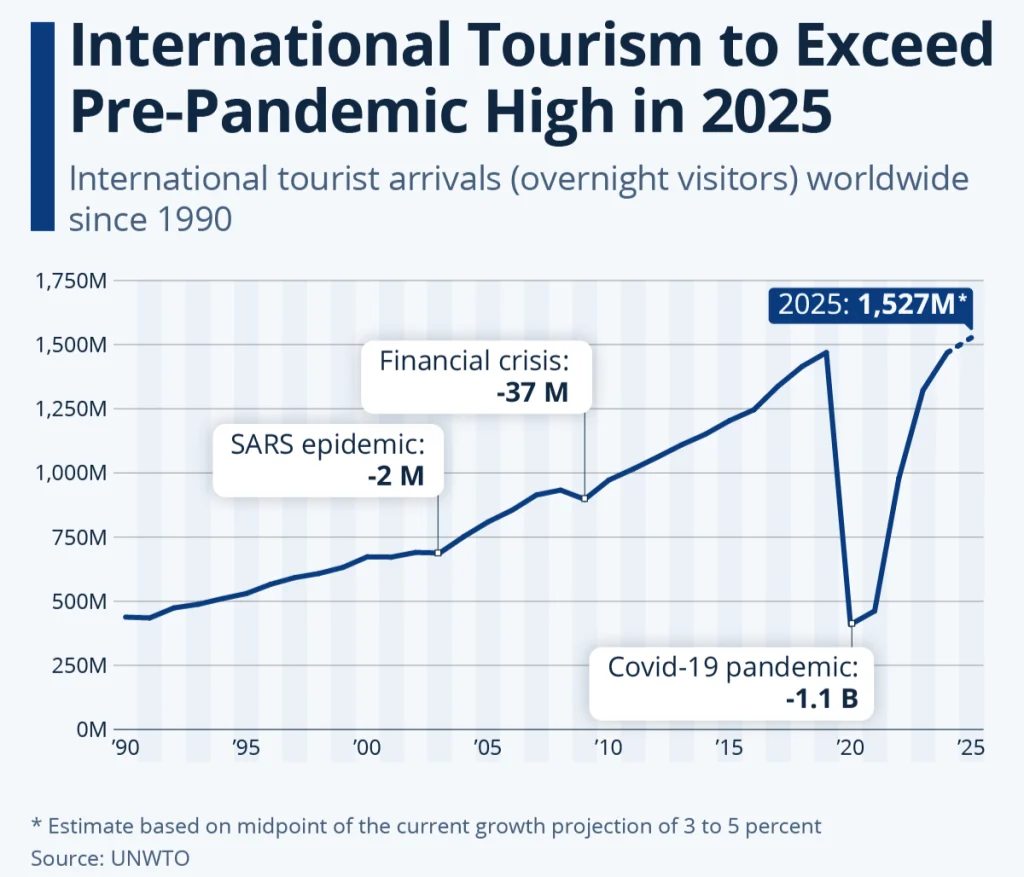
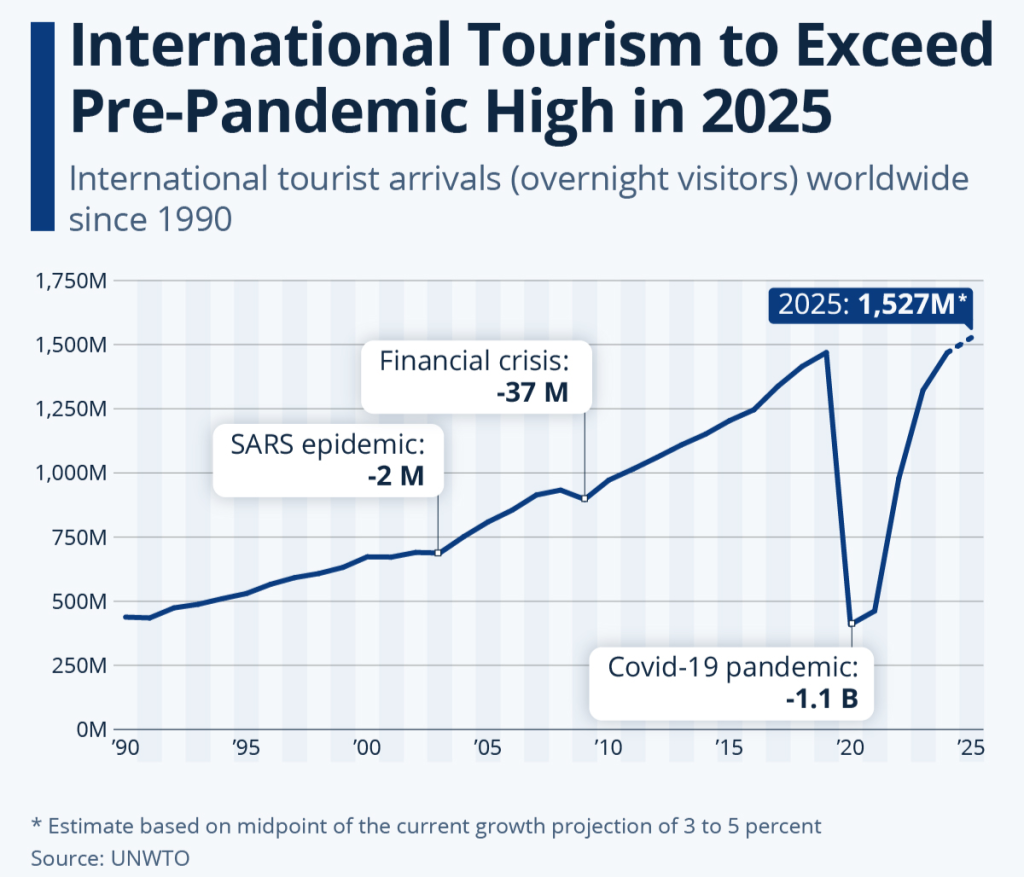
When global lockdowns brought international travel to a sudden halt in 2020, travel bloggers around the world faced an unprecedented crisis. For Hao Chang, creator of the Traditional Chinese-language travel blog Just a Traveler, the pandemic wiped out years of hard-earned web traffic almost overnight. Rather than abandoning his passion to chase fleeting search trends in unrelated niches, Hao chose to weather the storm. Today, his resilience has paid off. Based in Australia, where he works full-time in e-commerce, Hao manages his passion project as a lucrative secondary source of income, recently pulling in $13,619 through Travelpayouts after mastering organic search and modern monetization tools.
A Site Shaped by First-Hand Experience
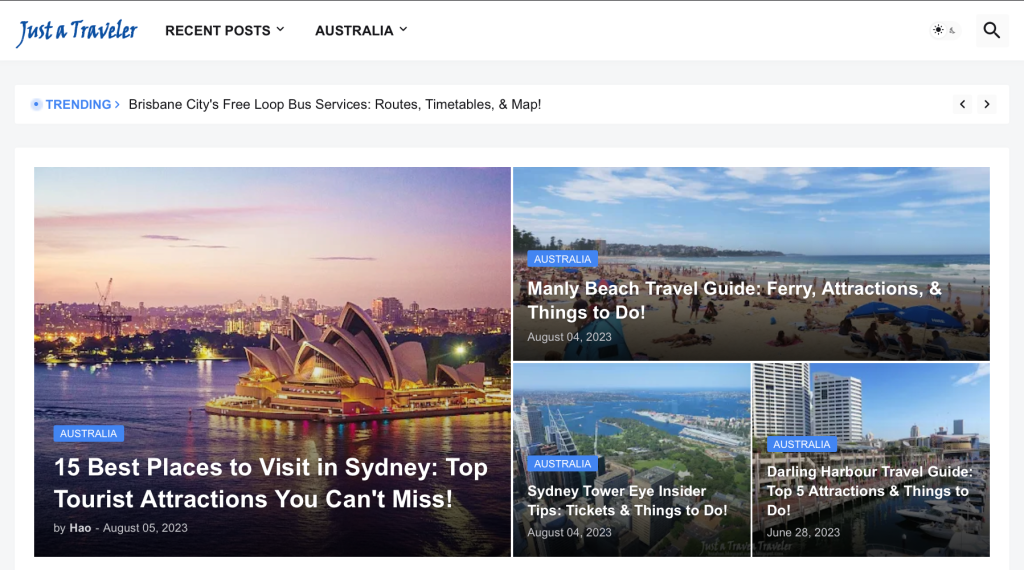
Hao’s digital footprint focuses primarily on destinations he knows intimately through first-hand exploration, including Australia, New Zealand, Taiwan, and Japan. His content specifically targets Traditional Chinese-speaking readers between the ages of 30 and 40, offering practical planning guides, detailed itinerary comparisons, and authentic insights. Rather than relying on stock imagery or aggregated web research, Hao uses his own photography and personal experiences, particularly from locations like Okinawa, to build trust with his audience.
Because his wife is Japanese, Hao also benefits from a rare, localized perspective that pierces beneath the surface of typical tourist itineraries. This cultural connection allows him to uncover viewpoints and practical details that standard travel guides frequently miss. By combining this granular, authentic knowledge with rigorous search engine optimization, Hao has engineered a site where roughly 80 percent of all visitors arrive organically via Google search. However, this heavy reliance on search visibility also made him acutely aware of how vulnerable a digital publishing business can be to external shocks.

When Years of Traffic Disappeared Overnight
Before the COVID-19 pandemic severely disrupted global mobility, Hao had already invested years into building a thriving audience. When international borders closed and tourist arrivals plummeted worldwide, the steady stream of readers his site depended on vanished. Many creators in his position panicked, pivoting rapidly toward whatever topics happened to maintain search volume during lockdown. Hao, however, resisted the temptation to chase algorithmic trends.
Reflecting on that turbulent period, Hao noted that attempting to write about topics he held no genuine interest in would have resulted in subpar content and personal dissatisfaction. By choosing to stay the course, he accepted that recovery would be slow, but he preserved the core authenticity of his brand. This experience fundamentally shaped his publishing philosophy: true dedication to a subject must come first, long before any consideration of how to monetize the traffic.
Nevertheless, surviving the downturn required more than just perseverance; it demanded a sophisticated understanding of digital discoverability.
Learning to Make Traffic Work for You
Mastering SEO proved to be a steep learning curve for Hao. Recognizing how many disparate technical and qualitative factors influence search engine rankings, he dove into intensive research and experimentation. He analyzed site architecture, page speeds, article structures, and user engagement metrics across dozens of successful websites, eventually synthesizing those lessons into his own distinct methodology.
By merging his professional background in marketing with granular data analysis on search volumes, Hao learned to prioritize topics that matched high user intent while remaining within his personal areas of expertise. Today, his articles answer specific consumer questions—such as comparing regional destinations or helping readers choose where to stay, eat, and shop—ensuring a steady influx of high-intent readers searching for actionable advice.
Yet, once his audience returned, Hao encountered a logistical hurdle familiar to many digital publishers: managing a sprawling network of fragmented affiliate programs.
Simplifying Years of Accumulated Affiliate Links
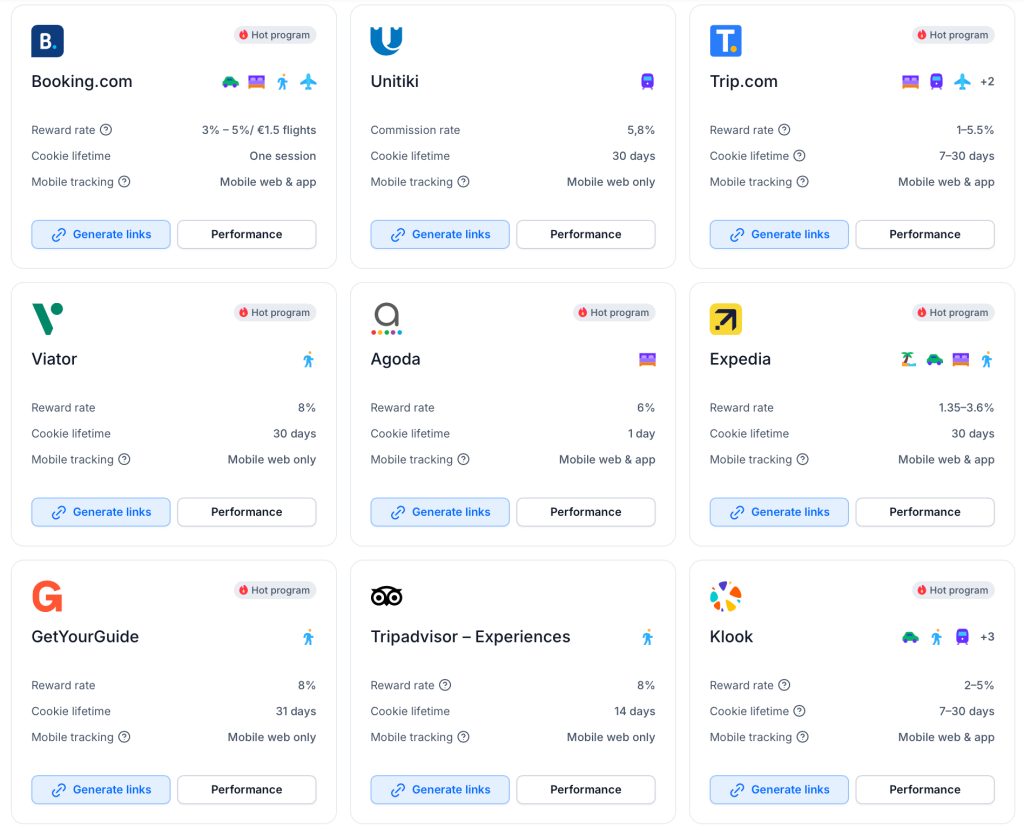
Over several years of operation, Hao had gradually integrated various monetization avenues into Just a Traveler, including Google AdSense, hotel online travel agencies, car rental partnerships, and dedicated promotional code pages. While these tools generated revenue, managing them efficiently became a persistent operational burden. Updating promotional codes, in particular, consumed hours that he could have otherwise spent creating new content.
The administrative friction intensified significantly when Booking.com altered its affiliate strategy, prompting Hao to seek a more centralized, reliable solution. His research led him to Travelpayouts, a comprehensive partnership platform that consolidated his scattered affiliate relationships into a single dashboard. Crucially, the platform offered competitive commission rates that often surpassed the brands’ standalone affiliate programs, streamlining his workflow and immediately boosting his financial returns.
Stable Traffic and Stronger Monetization
Because Just a Traveler relies so heavily on organic search rankings and an unblemished user experience, introducing automated monetization tools required careful consideration. Hao initially worried that adding new scripts or widgets might slow down his pages, degrade the user experience, and send negative ranking signals to Google.
Those concerns were alleviated after he enabled Drive, Travelpayouts’ AI-powered monetization suite. Rather than disrupting his layout, Drive’s features integrated seamlessly, leaving his organic rankings completely stable while driving higher conversion rates from his existing readership. Between late April and late August, Hao’s revenue surged, netting $13,619 through the platform, with a substantial $4,442 generated exclusively through Targeted Offers.
Why Targeted Offers Stood Out
Before implementing Drive, Hao relied on conventional affiliate tools like standard text links, banners, and static widgets. Targeted Offers introduced a dynamic alternative by analyzing individual reader behavior to serve the most contextually relevant deals in a separate window. This mechanism allows visitors to complete bookings without altering the core content or visual layout of the host site.
Because the majority of Hao’s audience arrives via Google while actively researching itineraries, these visitors are primed to book accommodations and services. Targeted Offers captures those conversion opportunities discreetly, matching the exact moment of consumer intent without compromising the editorial integrity of the site. For Hao, this balance of elevated revenue and preserved user experience made it an indispensable addition to his toolkit.
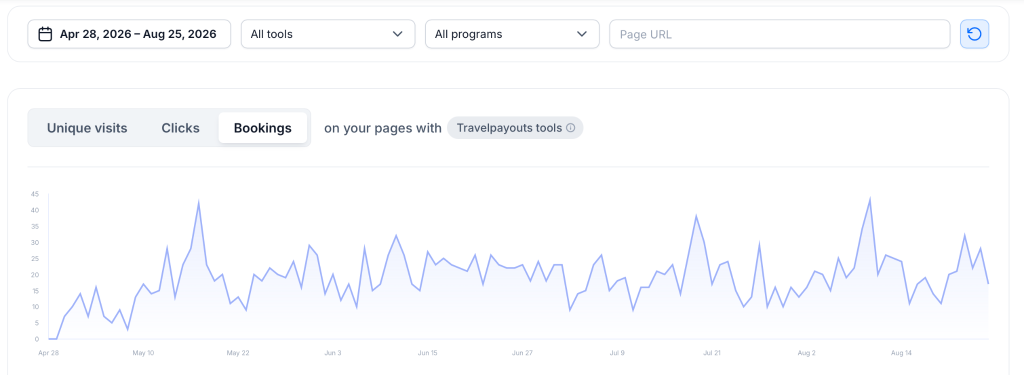
Alongside Targeted Offers, Drive’s Switch Links function eliminated much of the remaining administrative overhead. By automatically converting his legacy affiliate links into Travelpayouts-tracked links, the system protected him against sudden program closures by individual travel brands while freeing up valuable time.
Traffic First, Monetization Second
Reflecting on his journey from the depths of the pandemic to sustained commercial success, Hao maintains that his achievements rest upon a foundation of patience and genuine passion. He advises aspiring creators to prioritize high-quality content and audience trust above all else, noting that sustainable revenue is merely a byproduct of reliable traffic.
By combining meticulous SEO research, first-hand experiential writing, and modern affiliate management tools, Hao has transformed Just a Traveler into a resilient digital enterprise. His experience demonstrates that publishers do not have to sacrifice user trust to achieve financial growth, provided they build their monetization strategies on a foundation of authentic, hard-earned audience engagement.