By Thanh Nga
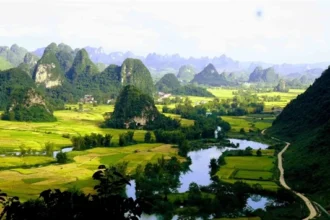
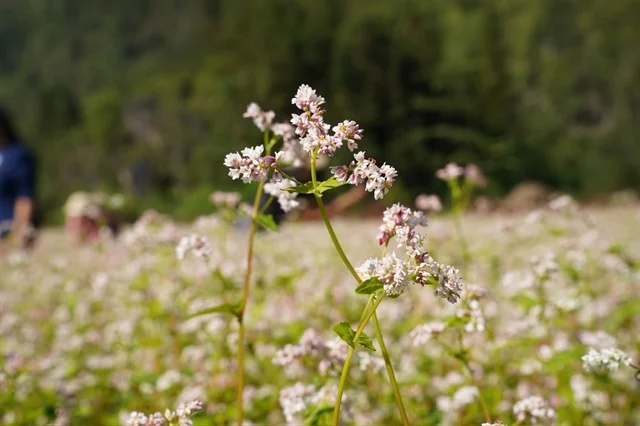
The grey limestone mountains of the Đồng Văn Karst Plateau take on a remarkably softer look each autumn, when delicate buckwheat flowers spread across the hillsides in shifting shades of white, pale pink, and deep purple. For travelers returning to this rugged corner of Tuyên Quang Province year after year, the sight of the blooms against the bare, weathered rock never loses its visual appeal. Stretching along winding mountain roads and settling around quiet, traditional villages, the seasonal flowers offer a gentler counterbalance to a landscape shaped by stone, while inviting visitors from near and far to discover the people, daily life, and cultural traditions that make this highland region truly distinctive.
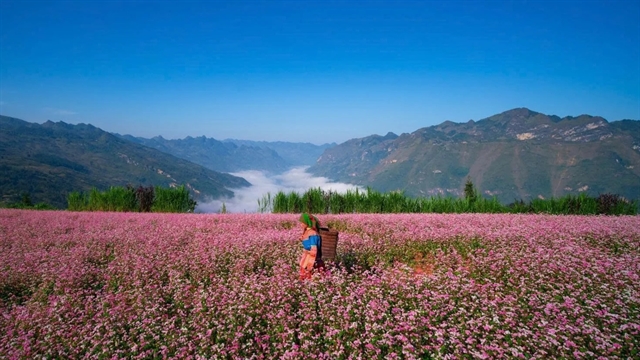
The iconic flowers typically begin to bloom from late October and remain vibrant through early December, gradually transforming from a delicate pale pink to a richer, deeper purple as the season advances. Over generations, these resilient blossoms have become a living symbol of the plateau, where buckwheat has long been deeply integrated into local agrarian life and community survival.
According to local highland legend, during historical periods when maize and rice supplies ran dangerously low before the arrival of the next harvest, residents followed an unfamiliar, pleasant fragrance through deep mountain crevices and stumbled upon a hardy plant featuring triangular leaves and nutrient-rich, edible seeds. This fortuitous discovery successfully sustained communities through exceptionally difficult times. Today, local residents continue to cultivate buckwheat not only for its picturesque seasonal appeal, but also to produce traditional cakes, brew local alcohol, and utilize various parts of the plant in traditional remedies.
Sủng Lá is traditionally the first major stop for visitors exploring the plateau during this vibrant period. When the autumn season arrives, vast expanses of purple blooms cover the surrounding hillsides, transforming the village into more than just a scenic spot for photography. Visitors wandering through the area can observe the historic earthen house that famously served as a primary filming location for the acclaimed movie Chuyện của Pao (Pao’s Story), or experience the bustling local market where members of the Mông ethnic group gather to trade goods, socialize, and showcase their traditional attire.
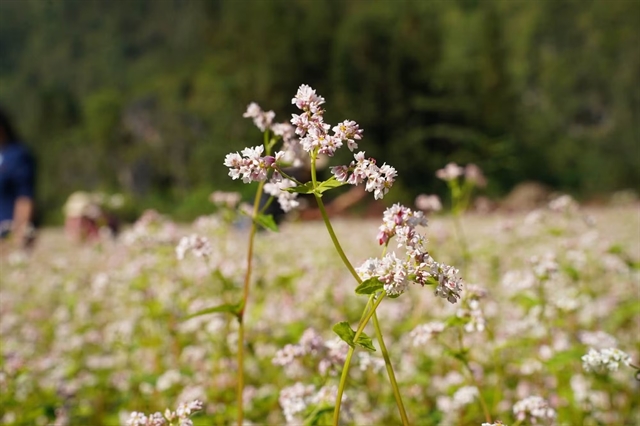
Just a short drive away, Phố Bảng offers a markedly quieter, more contemplative atmosphere for travelers seeking a slower pace. Frequently described as a sleepy town, it rests peacefully among pink flower valleys and continuous buckwheat fields that stretch companionably alongside the roadside. Its traditional houses, characterized by moss-covered walls and weathered, time-worn façades, lend the entire town a deeply subdued and historical character. Travelers often linger here for a while to absorb the tranquil environment before continuing their journey further north.
Lũng Cú, widely recognized as the northernmost point of the country and home to the prominent national flag tower, offers an entirely different perspective on the expansive plateau. During the autumn months, dense buckwheat fields spread across the rolling slopes directly toward the towering structure, creating a striking visual contrast against the grey, jagged limestone peaks in the background. From elevated vantage points, the rugged terrain combined with these expansive patches of pink and purple stretches endlessly into the distance.
In the autumn of 2026, Lũng Cú Commune dedicated approximately 70 hectares of land to the cultivation of buckwheat, successfully spanning 16 local villages. This total includes roughly 18.2 hectares concentrated specifically within key tourism areas such as Thèn Pả, Lô Lô Chải, Sán Trá, Ma Lé, and Má Lé. To ensure a sustained and visually appealing experience for travelers, local residents strategically sow the seeds in multiple distinct stages. This careful agricultural planning creates successive waves of blooming fields, effectively extending the peak viewing season for visitors exploring the northern highlands.
Each of these participating locations maintains its own unique character and cultural charm. In Thèn Pả, vibrant flower fields blend seamlessly with traditional Mông villages and historic residential architecture nestled right at the foot of the looming mountains. In Lô Lô Chải, the blossoms add vibrant splashes of color to ancient earthen-walled houses and traditional stone fences, perfectly framing the authentic, everyday life of the Lô Lô ethnic community. Meanwhile, the expansive fields located in Sán Trá, Ma Lé, and Má Lé open up much wider, sweeping views of the surrounding mountain ranges and deep valleys.
After climbing the historic stone steps that lead up to the Lũng Cú Flag Tower, visitors can easily descend to explore the traditional villages situated below, walk leisurely alongside the blooming flower fields, and sample a variety of authentic regional dishes prepared by local residents.
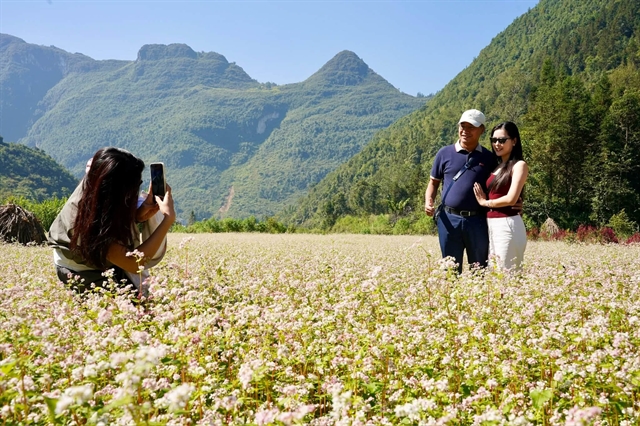
Further along the winding route in Lũng Tá, the sweeping agricultural fields are best appreciated from the heights of Ma Lé Mountain, where the summit provides a panoramic, unobstructed view of the flower-covered mountain slopes contrasting sharply with the stark limestone peaks. Continuing further along National Highway 4C, Phố Cáo consistently attracts travelers with its distinctive yellow earthen houses, local children playing cheerfully in the crisp autumn sunshine, and simple buckwheat fields that integrate naturally into the rustic village landscape.
Mountains and River
Travelers spending extended time exploring the region frequently find themselves drawn to Mã Pí Lèng Pass, widely celebrated as one of Việt Nam’s four great mountain passes. The dramatic road snakes precariously between towering, sheer cliffs and extraordinarily deep valleys, with the striking, emerald-green waters of the Nho Quế River flowing peacefully far below. Grey limestone peaks stretch boundlessly toward the north and northeast, forming a deeply rugged and imposing landscape that visually transforms with every sharp turn of the road.
At several designated viewpoints along the route, visitors regularly pause to catch their breath and absorb the breathtaking scale of the scenery. From these elevated positions, the Nho Quế River winds its way between the ancient mountains like a brilliant green ribbon, while patches of buckwheat flowers scattered across the lower mountain slopes add welcoming splashes of warm color to the otherwise stark, stone-dominated terrain.
The 12th annual Buckwheat Flower Festival, scheduled for 2026 under the evocative theme Âm vang miền đá (Echoes of the Rocky Plateau), is officially set to open on October 25 in Đồng Văn Commune and will run continuously through the end of December.
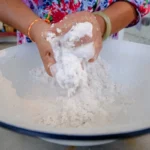
This major annual event is specifically designed to promote the stunning natural landscape and preserve the rich cultural identity of the diverse ethnic communities residing within the Đồng Văn Karst Plateau UNESCO Global Geopark. Throughout the duration of the festival, visitors are given the unique opportunity to observe and learn traditional artisan skills, such as flax weaving, natural indigo dyeing, and intricate brocade embroidery. Additionally, attendees can watch how traditional buckwheat cakes are prepared and explore the ingenious, long-standing local practice of cultivating crops directly within the small, rocky hollows of the plateau.
Flavours of the Highlands
For visitors journeying through the northern peaks, an exploration of the region is considered incomplete without experiencing the distinct local cuisine. Set against the characteristically chilly weather of the autumn flower season, traditional highland dishes offer another deeply immersive way to discover the character and heritage of the region.
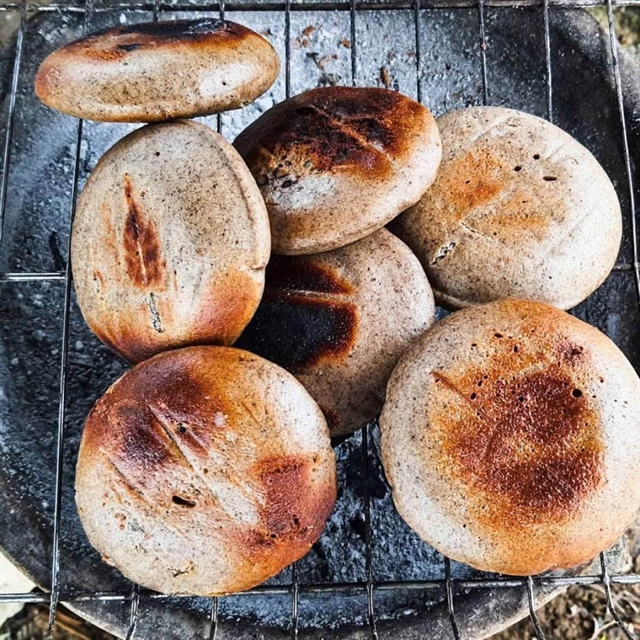
Buckwheat cake, meticulously crafted from ground seeds and shaped by hand into small, dense cakes, is widely available for around VNĐ10,000 per piece. Its mild, nutty flavor is traditionally paired with thắng cố, a hearty and aromatic traditional horse meat stew. The rich, savory taste of the simmering stew serves to beautifully complement the more delicate and subtle flavor of the buckwheat cake.
Cháo ẩu tẩu, a specialized porridge prepared using the aconite tuber, represents another renowned local culinary tradition. Because the raw tuber is highly poisonous unless it is meticulously and properly prepared by experienced hands, the cooking process requires immense care. Slow-cooked for hours with rice, the resulting porridge is served piping hot and finished with a raw egg, freshly cracked pepper, spicy chili, and local herbs. Visitors frequently recall its comforting warmth and exceptionally creamy texture, with the robust spices effectively balancing the tuber’s characteristic bitterness.
Rau rêu, or grilled moss, stands out as perhaps the most unexpected dish encountered by travelers on the plateau. Closely associated with the culinary traditions of the Tày ethnic minority, it functions as a regular part of everyday local cooking rather than being manufactured purely as a novelty for visiting tourists. Sampling this unique ingredient offers an authentic glimpse into the daily food traditions and resourcefulness of highland communities.
Travel Notes
Because autumn temperatures on the high-altitude plateau drop considerably lower than those experienced in the lowlands, packing warm clothing, including a sturdy jacket, a warm hat, and a scarf, is considered essential for all travelers. Furthermore, comfortable walking shoes equipped with good traction are highly useful when navigating steep mountain paths and uneven, winding rural roads.
Official entrance fees charged for accessing private and community-managed buckwheat flower fields generally range from VNĐ10,000 to VNĐ20,000 per visit, depending entirely on the specific location and local management. Visitors are strongly advised to remain respectful of local agriculture by avoiding trampling, damaging, or picking the flowers while taking photographs.
Navigating the narrow and steep mountain roads can prove notably challenging for drivers who are unfamiliar with the unique conditions of driving in the high-altitude terrain. Consequently, traveling as part of an organized group or hiring an experienced local guide can make the overall journey significantly safer while simultaneously providing a deeper, more informed understanding of the region’s geography and culture.