Culinary enthusiasts exploring authentic regional Southeast Asian cuisine are increasingly turning their attention toward the bold, uncompromised flavors of southern Thailand. Among the traditional dishes capturing the interest of home cooks and food lovers worldwide are Nam Prik Goong Sot, a freshly hand-chopped shrimp chili dip, and Pak Boong Rad Ga-ti Sod, a crisp morning glory dish blanketed in fresh coconut cream. While many Thai condiments and dips rely heavily on a mortar and pestle to create smooth, uniform pastes, regional variations from the south embrace texture, robust aromas, and tactile preparation methods that elevate simple ingredients into unforgettable meals.
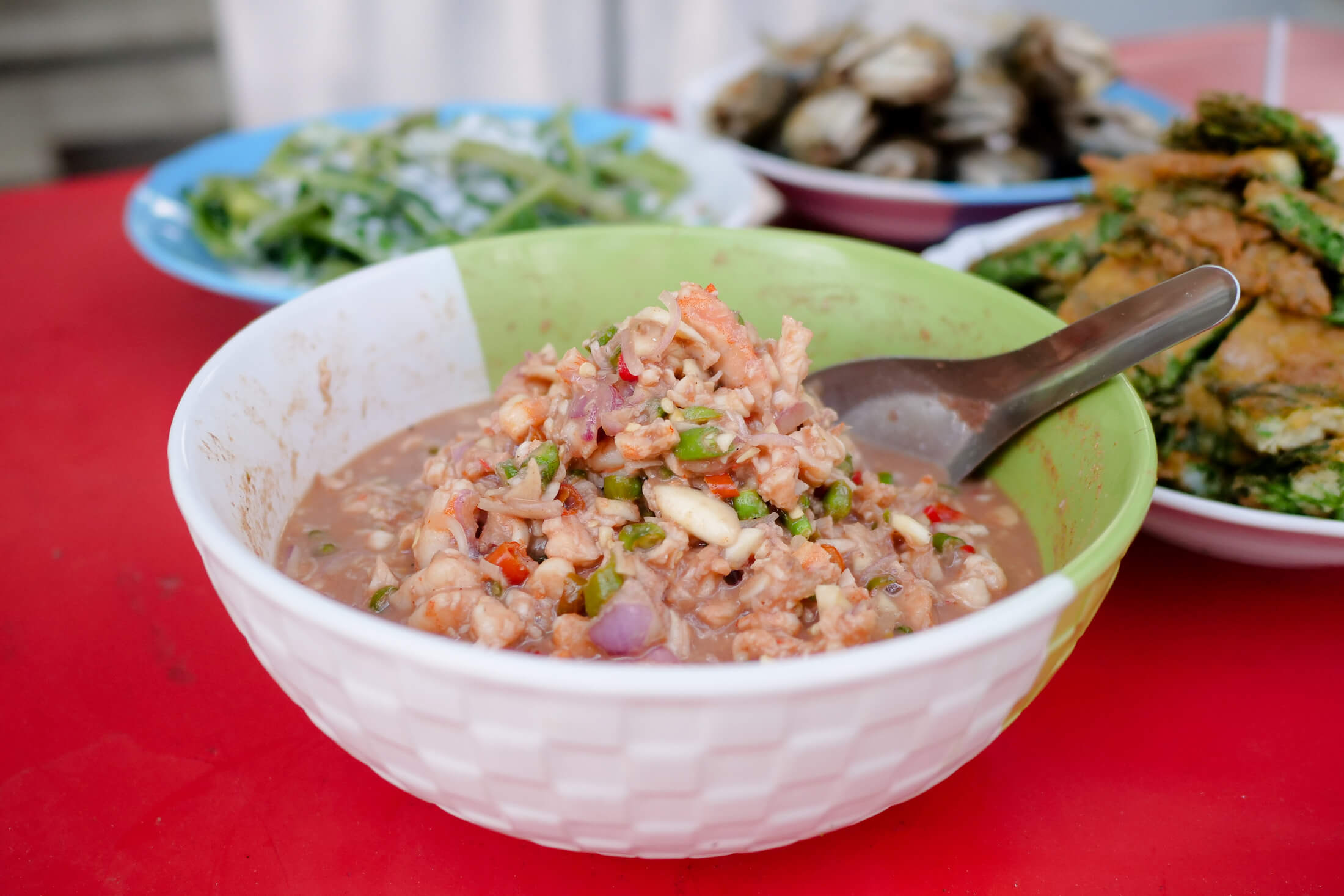
1. Shrimp Chili Dip (Nam Prik Goong Sot)
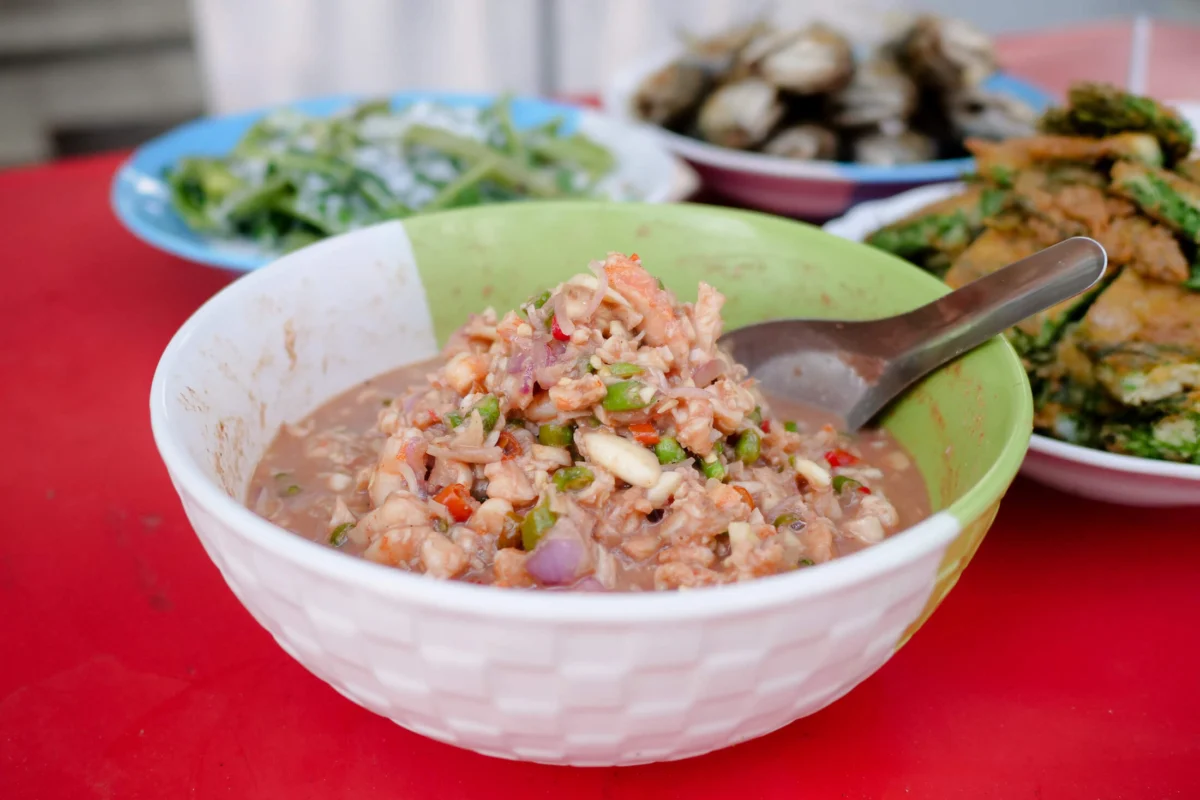
Nam Prik Goong Sot, or Southern-Thai style Shrimp Chili Dip, shares conceptual similarities with the famous Central Thai-style nam prik ga-pi. However, this southern adaptation is uniquely designed to function as an independent dish rather than a mere dipping sauce. A defining characteristic of the southern recipe is the preference for roughly cut ingredients rather than finely mashed components, alongside the distinct technique of dry roasting the fermented shrimp paste (ga-pi) on its own before crumbling it into the mixing bowl.

Unlike many other Thai chili dips that require a mortar and pestle, this recipe relies entirely on hand-chopping. Culinary traditions in southern Thailand frequently utilize manual knife work to preserve the structural integrity and natural textures of fresh produce. When preparing this dish, cooks are advised to use the freshest and highest quality vegetable ingredients available to balance the intense flavor profile.

The preparation process begins with the careful handling of 500 grams of fresh shrimp. Cooks peel the shrimp by removing the legs, back covering shield, and tail while intentionally keeping the flavorful head oil intact and attached to the torso. After a thorough wash in a large basin until the rinse water runs clear, the shrimp are boiled in a medium saucepan filled with just enough water to cover them. As the water reaches a medium-high boil, the shrimp head oil naturally colors the liquid a vibrant orange. Gentle stirring ensures even cooking, which takes approximately five to six minutes to prevent the shrimp from turning rubbery. Once done, the shrimp are transferred to a serving bowl, leaving behind 300 to 400 milliliters of nutrient-rich shrimp water.

The second major component involves the fermented shrimp paste, known locally as ga-pi. Approximately 50 grams—or three rounded tablespoons—of the paste is formed into a single large chunk, flattened into a disc measuring about two inches in diameter and half an inch thick. Traditionally roasted over an open fire, the paste can also be dry-roasted in a pan over the lowest possible heat. Cooked for about three minutes on each side, or until a strong, shrimpy fragrance fills the air, the roasted ga-pi develops a dry exterior while remaining slightly damp and intensely aromatic on the inside.

Flavor assembly proceeds with the manual preparation of aromatics and acids. Fresh garlic cloves, bright purple shallots, and Thai bird’s eye chilies are roughly chopped and added to the serving bowl alongside the cooled, hand-chopped shrimp. The crumbled, roasted shrimp paste is then integrated into the mixture. Cooks measure out 200 milliliters of the reserved shrimp water, pouring half over the ingredients to help dissolve the paste.

The resulting dip achieves a maximalist flavor profile, striking a balance between spicy, salty, sour, and mildly sweet notes. Approximately 100 milliliters of freshly squeezed lime juice, carefully strained to remove bitter seeds, is mixed into the bowl by hand. Because handling massive quantities of chilies can irritate the skin, cooks often wear protective gloves during this stage. An additional 100 milliliters of shrimp water is added to achieve the desired clumpy yet cohesive consistency. While traditional southern recipes often incorporate palm sugar harvested from taan palm fruit, modern variations allow for cane or brown sugar, though many purists omit sweetener entirely in favor of extra lime juice to suit individual preferences.

2. Morning Glory with Fresh Coconut Cream (Pak Boong Rad Ga-ti Sod)
To complement the fiery intensity of the shrimp chili dip, traditional southern Thai meals often feature cooling, vegetable-based dishes. Pak Boong Rad Ga-ti Sod, or Morning Glory with Fresh Coconut Cream, offers a masterclass in textural contrast. While canned coconut milk is widely available, culinary purists stress that achieving authentic regional flavor requires freshly prepared coconut cream, skimmed delicately from the top of freshly pressed coconut milk.

The primary vegetable used in this dish is Thai morning glory, scientifically known as Ipomoea aquatica and locally referred to as pak boong. The variety favored in Thai home cooking features thick, sturdy stalks, distinguishing it from the thinner, more delicate variety commonly associated with street food stir-fries, often called Chinese morning glory or pak boong jeen.

Preparation begins by thoroughly rinsing the hollow stems to remove soil trapped around the base. Using a knife, the cook separates the large leaves and soft upper portions of the stems, discarding the rigid lower sections. This leaves approximately 200 to 220 grams of tender green material.

Cooking morning glory requires precise timing to maintain its signature crispness. A medium saucepan filled with water is brought to a hard, rolling boil, accompanied by a pinch of approximately two grams of salt. Simultaneously, a separate bowl is filled with cool water to halt the cooking process immediately.

The tender shoots and leaves are submerged entirely in the boiling water. Because the vegetable is exceptionally tender, the water instantly turns green, and the morning glory softens within 20 to 30 seconds, preventing it from becoming soggy. Using a large spoon or ladle, the cooked greens are immediately transferred to the bowl of cool water and stirred to drop their temperature rapidly, after which the hot water is discarded.

Once cooled, the morning glory is drained and arranged neatly on a serving plate. The freshly extracted coconut cream, having cooled to room temperature, is gently skimmed from the top using a spoon. Each spoonful is ladled systematically over the bed of greens until all 300 milliliters of the rich, thick cream completely envelops the dish.

In traditional southern Thai dining, dishes are designed to be shared and balanced collectively. A meal featuring Morning Glory with Fresh Coconut Cream pairs exceptionally well with fiery, protein-heavy dishes such as shrimp fried with petai beans (pad sataw goong sod), fried mackerel (pla-tu tod), and a classic plain egg omelette (kai jeow). Through this thoughtful combination of hand-chopped textures, pungent aromatics, and rich coconut elements, the culinary traditions of southern Thailand continue to celebrate the harmony of bold, contrasting flavors.