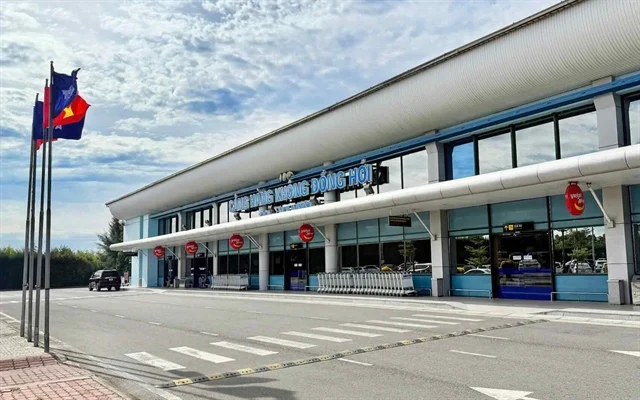
QUẢNG TRỊ — The launch of direct commercial flights linking Cam Ranh and Đồng Hới is officially bridging the geographical divide between Khánh Hòa and Quảng Trị provinces, ushering in an era of enhanced regional connectivity, multi-destination tourism cooperation, and deeper economic integration across central Việt Nam.
By shrinking travel times from a grueling multi-hour road journey to a brief, one-hour-and-fifteen-minute flight, the newly operational route is establishing a vital aerial bridge. This corridor connects Khánh Hòa’s world-renowned coastal resorts and island tourism infrastructure with Quảng Trị’s pristine natural wonders, including the UNESCO World Natural Heritage site of Phong Nha-Kẻ Bàng National Park, breathtaking cave systems like Hùng Thoòng Cave, and deep-rooted historical and revolutionary landmarks.
For the tourism sectors of both provinces, the air link provides a concrete mechanism to develop joint inter-regional tourism products. Officials, travel agencies, and local businesses are now positioned to diversify visitor experiences, attract a broader demographic of domestic and international travelers, and optimize the unique geographical and cultural strengths of each locality.
Shorter Distances, Greater Opportunities
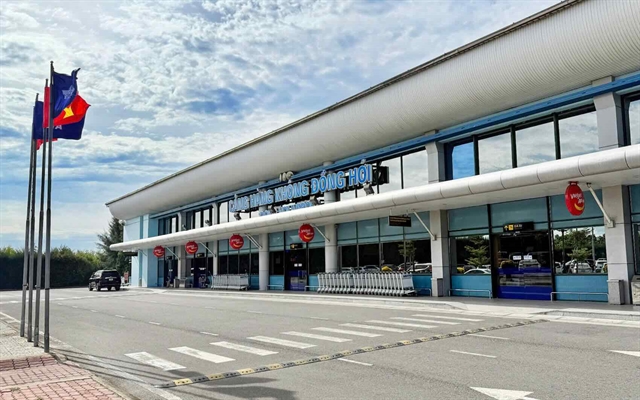
The operational reality of the new route became evident as the first passenger flights successfully landed at Đồng Hới Airport in Quảng Trị Province, having departed shortly beforehand from Cam Ranh International Airport in Khánh Hòa Province. For everyday travelers, business executives, and regional residents, the transformation is profound.
Historically, traveling between Khánh Hòa and Quảng Trị required navigating hundreds of kilometers by road. Passengers frequently relied on long-distance coaches or private vehicles, journeys that routinely spanned 17 to 19 hours depending on traffic and weather conditions. For travelers looking to maximize short holiday windows or combine business with leisure, these logistical barriers often proved prohibitive.
The introduction of direct air services has dismantled these obstacles. Nguyễn Thị Ngọc Tú, a tourist from Khánh Hòa who was among the passengers on the inaugural flight rotation, shared her immediate satisfaction with the drastic reduction in travel time. She noted that the direct connection not only streamlined her itinerary but significantly mitigated the physical fatigue typically associated with long-distance domestic transit.
Echoing this sentiment, Đào Anh Bối, another resident of Khánh Hòa who had previously endured the multi-hour coach ride, emphasized the remarkable efficiency of the flight. Traveling the corridor in just over an hour allows visitors to allocate their time to exploration and relaxation rather than transit.
Beyond satisfying individual travel demands, industry experts project that the Cam Ranh-Đồng Hới route will serve as a catalyst for expanded trade, commerce, and investment. Khánh Hòa has long established itself as a premier coastal and island tourism hub, boasting high-end accommodation networks, sophisticated hospitality services, and robust international flight connections that draw millions of visitors annually.
Conversely, Quảng Trị offers an entirely complementary suite of tourism assets. Beyond Phong Nha-Kẻ Bàng and its spectacular underground rivers and cave networks, the province is defined by its profound historical resonance, revolutionary heritage sites, and tranquil beaches.
By welding these distinct tourism ecosystems together, the new air link establishes the foundational conditions for travel companies to curate dynamic, multi-faceted itineraries. These packages seamlessly blend beachside leisure, nature exploration, historical discovery, and cultural immersion into a single cohesive vacation.
Bùi Thị Thanh Thúy, Deputy Director of the Quảng Trị Province Investment, Trade and Tourism Promotion Centre, highlighted that the route is instrumental in binding together the distinct destinations that comprise Central Việt Nam’s celebrated heritage highway. According to Thúy, improved air connectivity does more than simply move people from point to point; it fosters collaborative tourism programming that yields richer, more engaging experiences for visitors. These collaborative initiatives are expected to encourage longer visitor stays, elevate average tourist spending, and enhance the overall market competitiveness of central Việt Nam’s tourism offerings.
Connecting Destinations, Expanding Tourism
While the launch of the direct air route represents an indispensable first milestone, regional tourism authorities emphasize that realizing its full economic and developmental potential will require sustained coordination, targeted marketing campaigns, and the continuous refinement of localized tourism products.
As a primary coastal tourism engine, Khánh Hòa is uniquely positioned to act as a gateway, channeling international tourists who arrive via Cam Ranh directly into Quảng Trị via the domestic flight network. In return, Quảng Trị’s specialized offerings in adventure caving, heritage exploration, and historical tourism provide an attractive, high-value diversion for vacationers already holidaying along Khánh Hòa’s coastline.
Thái Thị Lệ Hằng, Director of the Khánh Hòa Province Department of Culture, Sports and Tourism, noted that the Cam Ranh-Đồng Hới flight corridor fits perfectly into the provincial tourism strategy centered around the concept of "one journey, multiple experiences." Hằng stressed that while the inauguration of the route is an encouraging development, the ultimate priority lies in securing its long-term financial viability and regular scheduling so it can be firmly embedded within the regional product network.
"We hope that once the route is established, solutions will be found to keep it operating and turn this connectivity advantage into tangible tourism products. Most importantly, the two localities need to develop more tourism products that complement and support each other," Hằng explained.
In practice, the success of inter-regional tourism relies heavily on synchronized collaboration across multiple sectors, encompassing government management agencies, commercial airlines, hotel operators, and tour agencies. Interconnected itineraries must be carefully calibrated to address the varying preferences of distinct traveler segments while upholding rigorous standards of service quality and price competitiveness.
For Quảng Trị, expanding its aviation network arrives at a pivotal juncture as the province intensifies its strategic drive to capitalize on its vast untapped potential, forging distinctive tourism pillars rooted in nature, history, culture, and coastal recreation.
Recent statistical indicators underscore the robust momentum of Quảng Trị’s tourism sector. During the first nine months of the year, the province welcomed more than 9.3 million visitors, marking an 11.67 per cent increase compared to the same period in the previous year. Domestic arrivals accounted for the lion’s share, exceeding 8.97 million visitors, while international arrivals reached 425,500. Total tourism revenue for the nine-month period was estimated at VNĐ10.8 trillion, representing a corresponding year-on-year growth rate of 11.67 per cent.
These performance metrics reflect Quảng Trị’s growing allure as an emerging destination while emphasizing the imperative to continuously upgrade service standards, diversify product portfolios, and penetrate broader visitor markets. Establishing direct air corridors with established domestic tourism epicenters is viewed by provincial planners as a critical mechanism to improve regional accessibility.
Beyond tapping into domestic source markets, the flight connection between Cam Ranh and Đồng Hới provides a strategic conduit to capture international travelers who land in Khánh Hòa. Many long-haul international visitors increasingly seek diverse holiday structures that pair coastal relaxation with immersive eco-tourism and historical discovery.
To translate this latent potential into enduring economic realities, both provinces must harmonize their promotional campaigns, foster direct business-to-business partnerships between local service providers, and construct cohesive inter-regional tour packages. Maintaining stable flight frequencies, ensuring consistent passenger loads, and monitoring service delivery will remain paramount to securing the route’s long-term sustainability.
Ultimately, the flights bridging Cam Ranh and Đồng Hới are carving out a new frontier for inter-provincial cooperation. With geographical distances minimized, both destinations are exceptionally well-positioned to leverage each other’s strengths, curating diverse and compelling itineraries that elevate Quảng Trị’s competitiveness and solidify its standing on the tourism map of central Việt Nam.