On October 1, 1991, the only enlisted airman aboard America’s most enduring strategic bomber stopped flying with it, and he has never come back. He was not a pilot or a navigator. He sat alone, facing backward, peering into a radar scope and gripping a trigger. He was the vital human element behind a 1950s jet bomber that once shot MiG fighters out of the night sky during the heat of the Vietnam War. Then, within the span of a few turbulent months, the United States Air Force erased his job entirely.
The decision to strip the Boeing B-52 Stratofortress of its defensive tail guns and, with them, its sixth crew member, is often chalked up to a simple budget line in a post-Cold War world. However, the fuller story—pieced together from historical archives, military records, and specialized aviation reporting—involves a geopolitical landscape that shifted almost overnight, high-speed missiles that easily outranged traditional machine guns, and a dramatic friendly-fire incident over the Persian Gulf that sheared off the tail end of a bomber. To understand how this iconic era of military aviation ended, one must first look back at the unique and isolated life of the man who sat in the tail.
The B-52’s Sixth Crew Member: The Tail Gunner
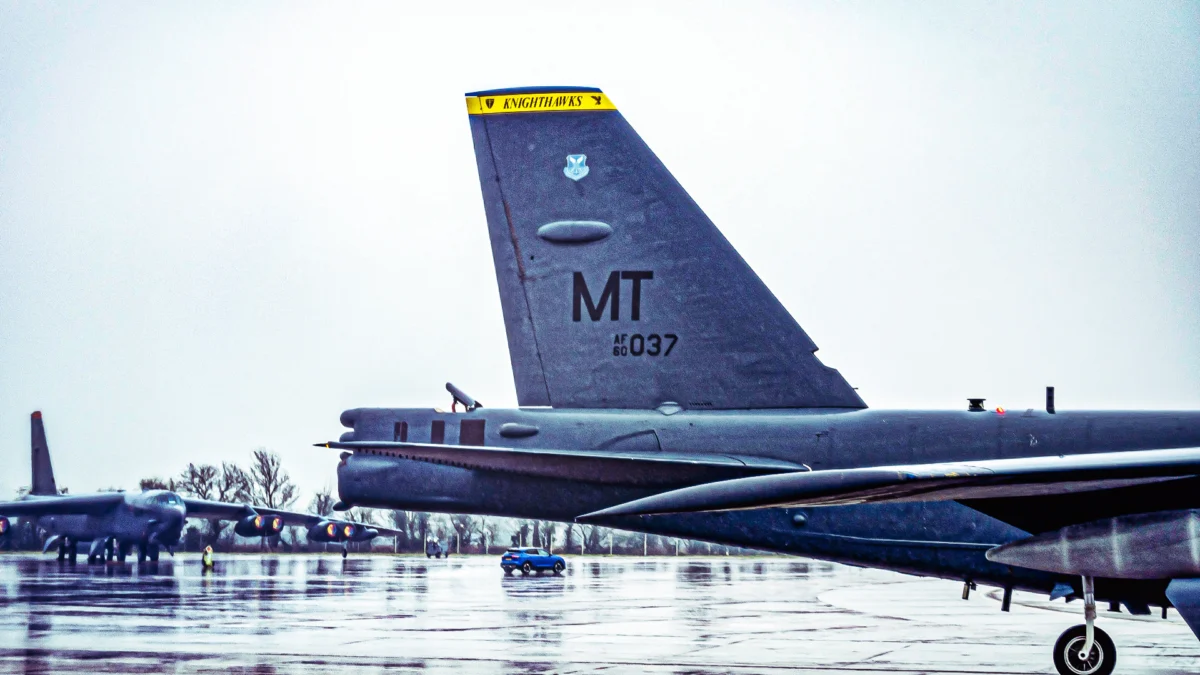
The airman stationed at the very back of the B-52 had a role that set him entirely apart from the rest of the crew. For decades, the standard complement comprised two pilots, a navigator, a radar navigator, an electronic warfare officer, and the gunner. While everyone else on board was a commissioned officer, the tail gunner was uniquely an enlisted airman. When the B-52 officially entered service in 1955, the defensive gun position was baked into its design. The final airframe of the 744 Stratofortresses built—a B-52H delivered on October 26, 1962—retains its legendary status and remains active in the United States Air Force fleet to this day.
The physical hardware of the defensive position varied significantly depending on the aircraft model. Early variants, spanning from the A through the G models, were armed with four .50-caliber machine guns housed in the tail. The B-52H, which stands as the sole version still operational, was upgraded to use an M61 Vulcan—a formidable 20-millimeter six-barrel rotary cannon.
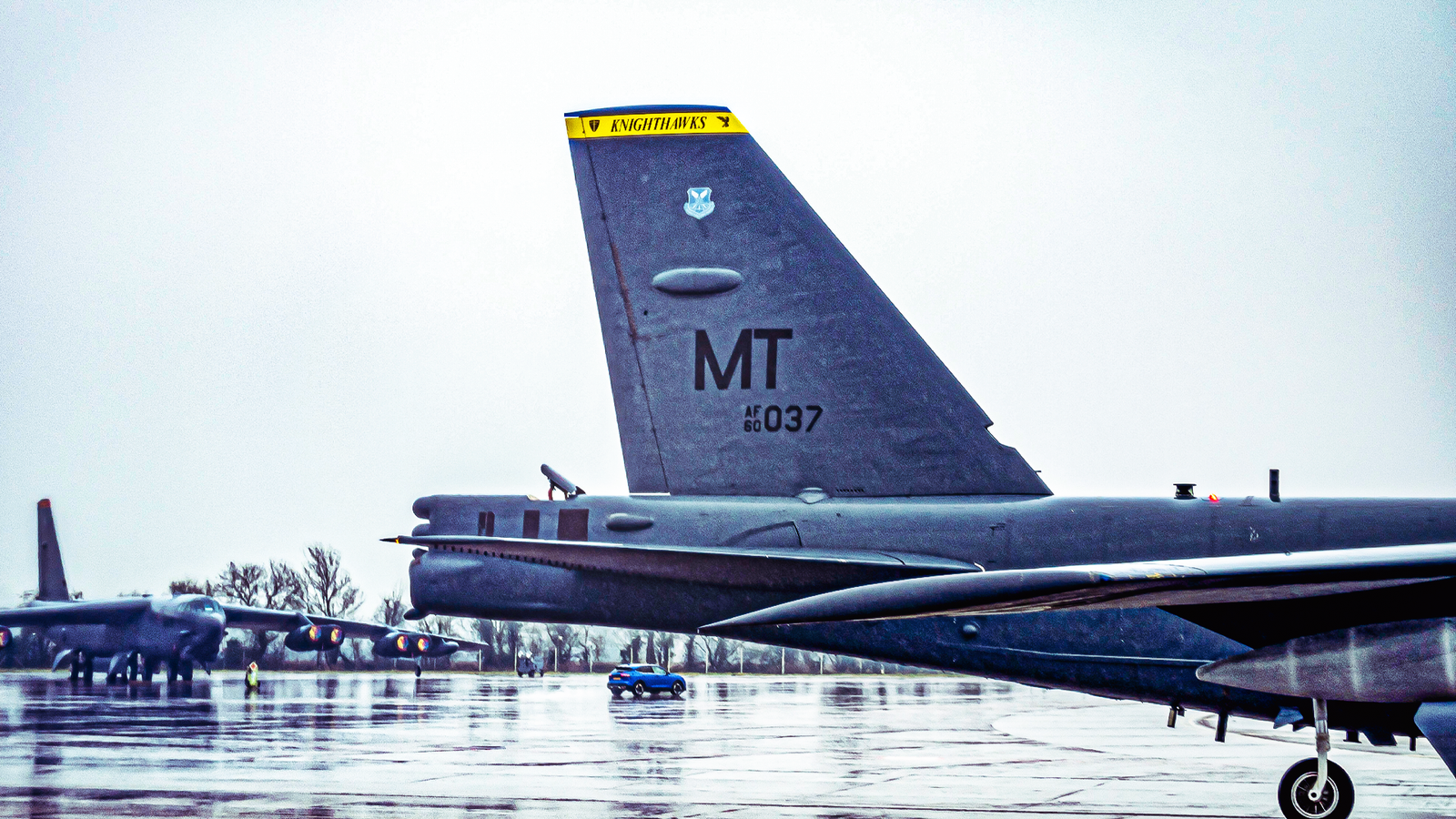
In the earliest models, the gunner sat inside a cramped, transparent bubble canopy at the extreme rear of the aircraft, accessing the seat only by climbing awkwardly over its reclined backrest. Veterans frequently compared the claustrophobic space to a coffin. Severe turbulence made the posting intensely punishing; for every foot the cockpit moved vertically during rough weather, the tail could bounce up to six feet. Beginning with the G model, the Air Force relocated the gunner forward into the main cabin, allowing them to operate the turret remotely via electronic targeting systems.
Despite the isolation and physical discomfort, gunners provided indispensable tactical awareness. Their search radar could sweep up to 12 miles away, enabling them to guide trailing bombers through dense formations and serve as the pilot’s eyes to the rear. Yet, a defensive weapon system is only as good as its utility in actual combat. The lingering question throughout the Cold War was whether a B-52 tail gunner could successfully defend against and shoot down modern enemy fighter jets.
When B-52 Tail Gunners Shot Down MiG Fighters
Working in complete isolation at the back of a massive bomber did not relegate the gunner to a passive observer. Armed with search radar capable of detecting airborne targets miles away, these airmen constantly monitored the airspace behind large bomber formations, alerting their commanders to intercepting threats. On two historic occasions, B-52 tail guns scored confirmed kills against enemy aircraft, both taking place during Operation Linebacker II over North Vietnam in December 1972. These encounters represented extraordinary achievements for bomber crews operating under severe defensive pressure.
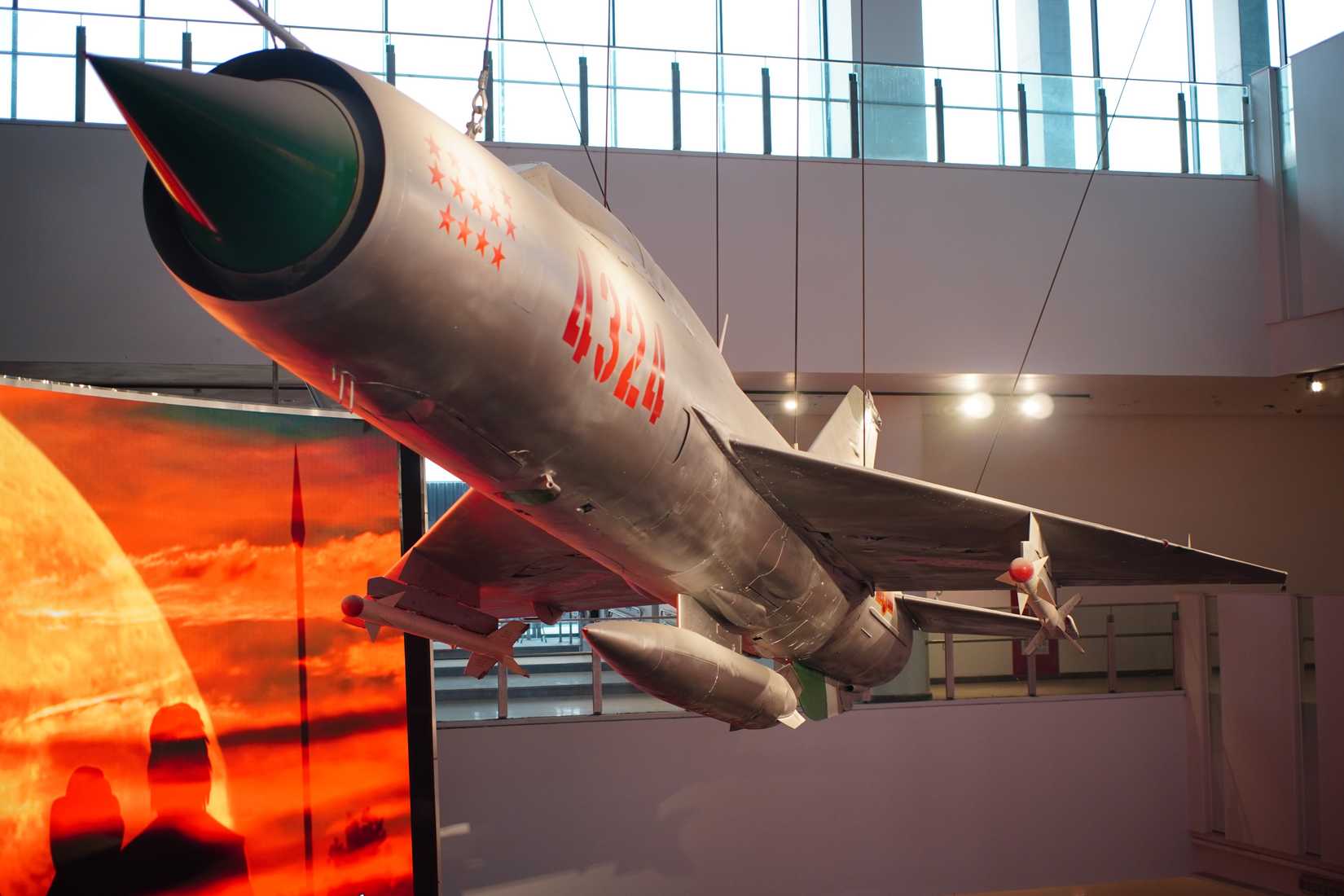
During the massive aerial offensive launched on December 18, 1972, a total of 129 B-52s sortied toward Hanoi from bases in Thailand and Guam. As the bombers completed their runs and turned for home, North Vietnamese Mikoyan-Gurevich MiG-21 "Fishbed" interceptors rose into the night sky. Staff Sergeant Samuel Turner, serving as the tail gunner aboard a B-52D nicknamed "Brown III," spotted a MiG climbing aggressively from below and behind his aircraft while a second fighter loomed in reserve. Turner unleashed a decisive six-second burst of approximately 700 rounds from his .50-caliber machine guns, sending the enemy fighter tumbling down in a ball of fire. Military historians note this as the first confirmed aerial kill by a bomber crew since the Korean War.

Just six days later on Christmas Eve, an 18-year-old airman first class named Albert Moore, flying aboard a B-52 named "Lil Diamond," tracked a hostile radar blip closing rapidly from behind. Following standard combat procedures, Moore called for evasive maneuvers, chaff, and flares before opening fire at a distance of 2,000 yards. He watched the radar return vanish at approximately 1,200 yards, a visual confirmed by a gunner on a nearby aircraft who saw the burning MiG fall from the sky.
While these rare victories secured a permanent place for B-52 gunners in military history, they failed to fundamentally shift the wider balance of the air war. Across the entirety of the Linebacker II campaign, gunners claimed five MiG kills, but only two were officially confirmed. Meanwhile, North Vietnamese surface-to-air missiles proved devastatingly effective, bringing down 15 B-52s during the same period. The tail guns proved they could destroy an agile fighter under specific circumstances, but they could not protect the massive bombers from the high-altitude surface-to-air threats that dominated modern warfare.
Why B-52 Tail Guns Could Not Stop Soviet-Built Missiles
The broader combat record painted a sobering picture that contrasted sharply with the celebrated victories of individual gunners. Historical tallies indicate that all 15 B-52 losses sustained during Linebacker II were caused by surface-to-air missiles rather than enemy fighters. Across the entire span of the Vietnam War, archival records count roughly 31 B-52 losses, split between hostile missile and ground fire and non-combat incidents, with zero confirmed losses attributed to enemy interceptor aircraft in official US tallies.
Rapid advancements in military technology compounded the obsolescence of rear-facing guns. By the later decades of the 20th century, the B-52’s gun fire-control system remained the sole onboard architecture still reliant on aging vacuum tubes, meaning a single component failure could require custom manufacturing from scratch. Simultaneously, the proliferation of advanced air-to-air and surface-to-air missiles meant that enemy aircraft and defense networks could engage bombers from well beyond visual range, rendering close-in machine guns largely irrelevant unless an adversary chose to fly directly into the bomber’s immediate defensive arc.

The defensive armament was increasingly viewed as an aging, expensive legacy system optimized for the wrong threat paradigm. Nevertheless, the tail guns stubbornly survived through changing military doctrines until 1991. The ultimate catalyst for their retirement, however, involved a frightening friendly-fire incident over the Persian Gulf.
The B-52 Friendly-Fire Incident During Desert Storm
The event that thrust the B-52’s tail radar back into intense operational scrutiny occurred during Operation Desert Storm, which commenced in January 1991. Throughout the conflict, B-52 fleets flew more than 1,740 combat sorties and delivered approximately one-third of all conventional ordnance dropped by coalition forces. However, during one particular mission, the bomber’s own defensive electronic systems inadvertently precipitated an attack from an allied aircraft.
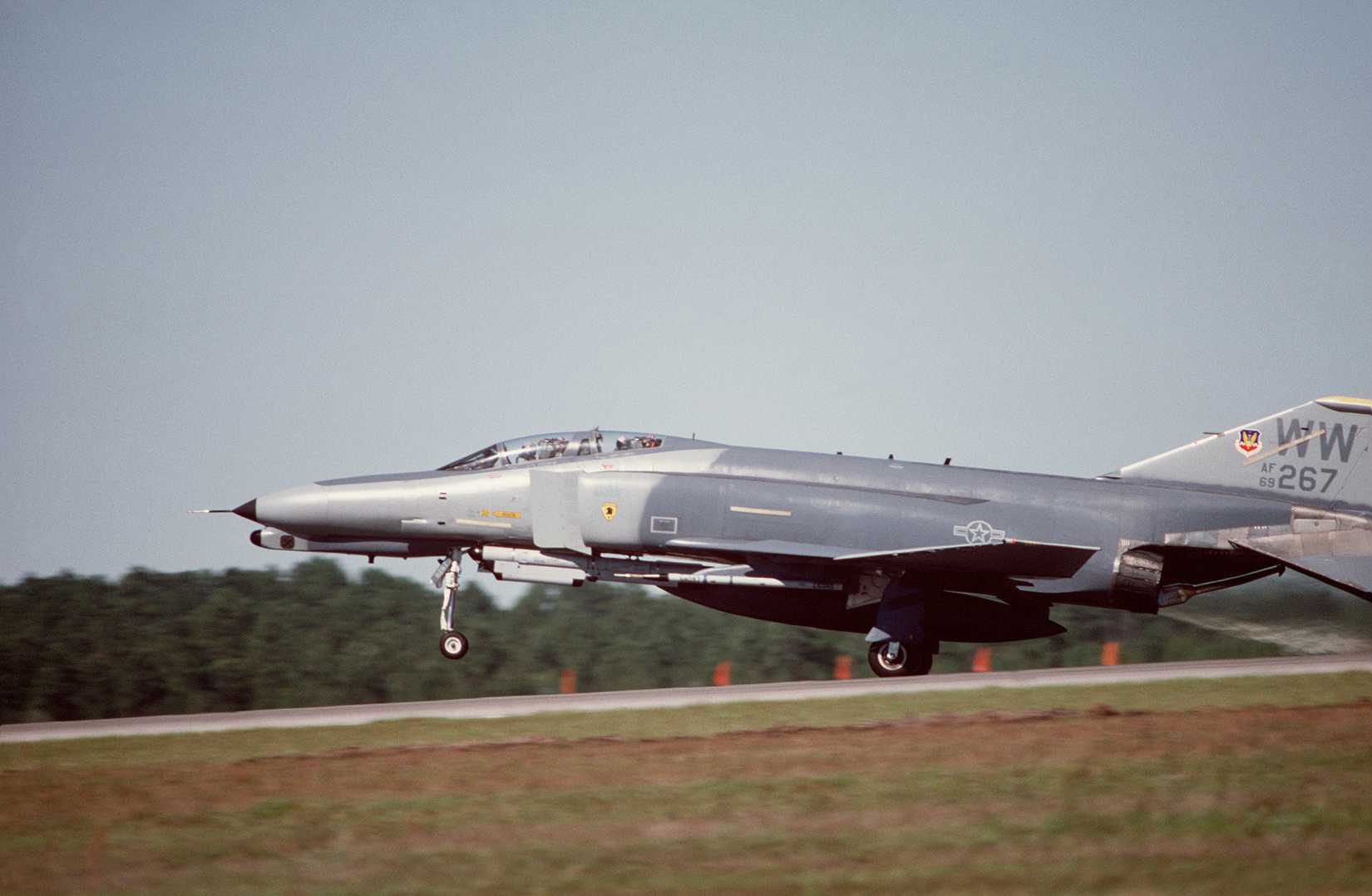
During a night mission, a B-52 activated its defensive fire control system radar at the exact moment a nearby American McDonnell Douglas F-4G Wild Weasel deployed an AGM-88 HARM missile. The high-speed anti-radiation missile was specifically engineered to home in on enemy radar emissions, and it locked onto the Stratofortress’s tail signal. The resulting detonation blew off the rearmost six to eight feet of the bomber’s fuselage.
Miraculously, the severely damaged aircraft managed to limp to a safe landing near Jeddah, Saudi Arabia, before subsequently transferring to Diego Garcia and eventually Andersen Air Force Base in Guam—the only maintenance facility equipped to saw off a ruined B-52 tail and weld on a replacement. Although it sat out the remainder of the conflict, the aircraft earned a proud moniker, "In HARM’s Way," along with distinctive nose art commemorating its survival.
Military historians continue to debate the precise weight this incident carried in the ultimate decision to scrap the tail gun position. Some accounts argue it was the definitive straw that broke the camel’s back, while others emphasize that ongoing budgetary pressures and technological obsolescence were already sealing the weapon’s fate. Regardless of the exact weighting, the timing was unmistakable: the very radar system implicated in a dangerous friendly-fire mishap was the piece of equipment the Air Force was already planning to discard.
Why The US Air Force Removed B-52 Tail Gunners In 1991
On September 16, 1991, Strategic Air Command commander General George L. Butler formally announced that the B-52 gunner position was to be permanently eliminated. In official communications distributed to the affected personnel, leadership noted that the sweeping decision stemmed directly from the sudden collapse of the Soviet strategic threat, arriving alongside severe, sweeping defense budget reductions across the armed forces.
The structural reorganization eliminated 525 active-duty positions, drawing a definitive close to a specialized career field that had awarded gunner wings to roughly 5,000 airmen since the dawn of the jet bomber age. Effective October 1, 1991, B-52 squadrons permanently initiated missions without a gunner aboard.
The human chapter of the gunner era concluded with emotional farewells. Personnel stationed across various command wings marked the transition with traditional squadron send-offs, while the hardware itself was systematically disabled and removed. Functional testing of the turrets ceased by 1992, and maintenance crews physically extracted the gun systems from the active fleet between 1991 and 1994, permanently reshaping the interior architecture of the legendary bomber.
The B-52’s Future: Another Crew Reduction?
Modern updates to the venerable Stratofortress continue to redefine its operational profile. Contemporary strategic planning envisions the upgraded B-52J primarily as a heavy stand-off missile platform rather than a penetration asset designed to survive modern integrated air defense networks. Carrying immense payloads of modern standoff munitions, the aircraft remains a cornerstone of the nation’s long-range strike triad.
Continued multi-billion-dollar investments in re-engining programs, digital avionics upgrades, and next-generation weapons integration aim to keep the airframe flying well into the middle of the 21st century. This extraordinary projected longevity could allow individual airframes to approach nearly a century of continuous operational service since the type’s initial flight in 1952—an unprecedented milestone for a military jet aircraft.
As the Air Force adapts its long-term operational concepts to face modern great-power competition, the scope of bomber missions continues to evolve in unexpected ways. Military leadership has signaled that future strategic planning may explore expanding tactical roles for heavy bombers as tactical fighter procurement faces fiscal and industrial constraints. Whether the future deployment of advanced standoff munitions requires a return to specialized defensive crew members or continues to rely on streamlined, automated avionics remains an open question as the Stratofortress enters its seventh decade of service.