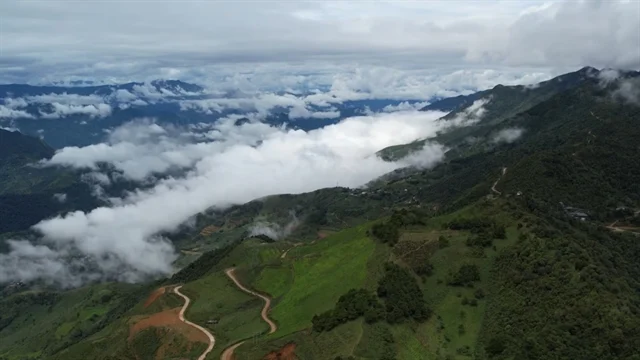
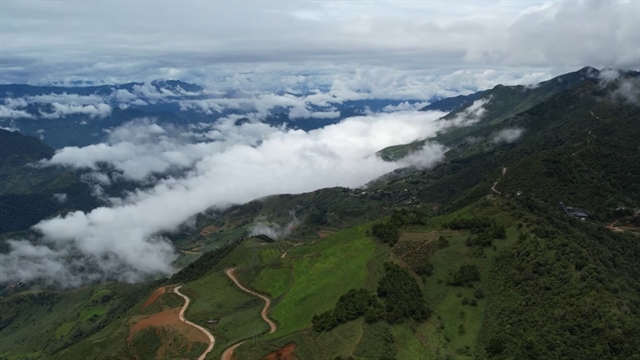
Tà Xùa, a breathtaking mountainous commune nestled in the northern Vietnamese province of Sơn La, is aggressively redefining its identity on the regional and international travel map. Long celebrated by adventure seekers for its ethereal sea of clouds and refreshing alpine climate, this remote highland locality is now steering its economic future toward a more integrated model of sustainable tourism. By weaving its rich Mông cultural heritage and centuries-old agricultural traditions directly into visitor experiences, local authorities and residents hope to transform seasonal sightseeing into a year-round engine for economic prosperity. Yet, as the commune basks in the glow of prestigious international accolades, it faces a complex labyrinth of infrastructure deficits, waste management hurdles, and vocational training gaps that threaten to outpace its rapid growth.
Perched at an average altitude of approximately 1,600 meters above sea level, Tà Xùa is home to a population of nearly 12,000 residents, the vast majority of whom belong to the Mông ethnic minority group. The geography of the region—characterized by rugged, cloud-shrouded mountain slopes, deep valleys, and dramatic terraced rice fields—has historically dictated a challenging rural lifestyle rooted primarily in subsistence farming and local agriculture. However, the cyclical arrival of the cooler months, stretching from October through March, has radically altered the local economic landscape. During these prime months, thick blankets of fog and low-hanging clouds settle over the peaks, creating world-class natural conditions for trekking, camping, and cloud hunting. This meteorological phenomenon has sparked a wave of grassroots entrepreneurialism, inspiring local families to convert their properties into wooden homestays, open rustic mountain-view restaurants, and establish scenic cafes that overlook the majestic valleys.
Recognizing the limitations of relying exclusively on seasonal cloud hunting and passive landscape photography, local government officials and community leaders are actively pursuing a strategy to diversify Tà Xùa’s tourism offerings. All 11 villages scattered across the commune possess distinct cultural and natural assets with untapped potential for community-based tourism development. Traditional Mông attire, indigenous cuisine, native language spoken in daily life, historic festivals, and ancestral farming practices are now viewed as valuable components of an immersive visitor experience. Rather than serving as passive backdrops for tourist snapshots, these cultural elements are being positioned as the core pillars of a sustainable local economy that actively engages visiting travelers with the daily rhythms of highland life.
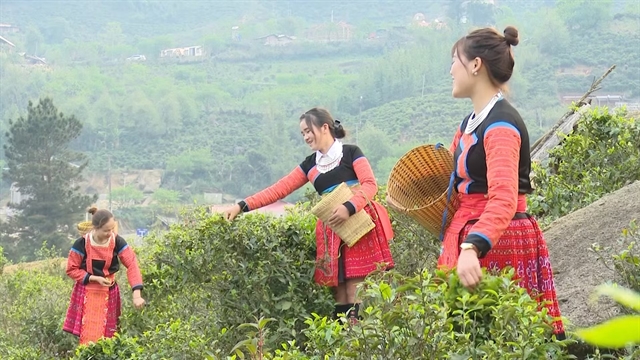
Agricultural tourism is emerging as one of the most promising avenues for this diversification, anchored heavily by the region’s ancient tea trees. Among these, the prized Shan Tuyết tea varieties, which grow deep within the misty mountain forests, provide a natural foundation for specialized agricultural tours. These initiatives allow curious travelers to trek directly into ancient growing areas, study traditional processing techniques handed down through generations, and sample authentic local brews at their source.
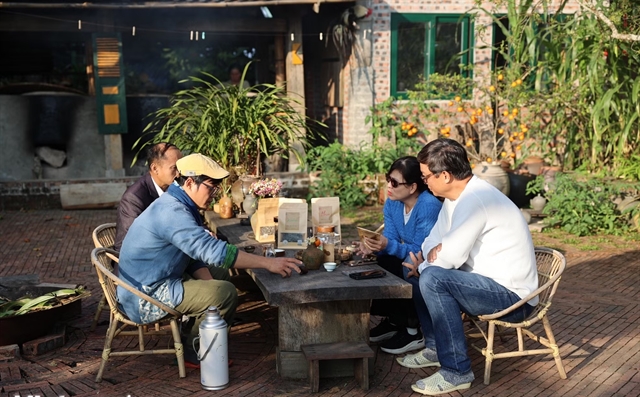
Illustrating this shift toward experiential travel, Nguyễn Thành Kiên, owner of the local "Kiến nông dân" (Farmer Kien) tea shop, noted that his establishment officially introduced interactive tea-making sessions approximately two years ago to satisfy a growing appetite among dedicated tea enthusiasts. Explaining the motivation behind the initiative, Kiên pointed out that they purposefully developed the "Tea roasting among the clouds" tour so that visitors could move beyond simply purchasing a finished product. Instead, travelers are given the opportunity to understand the intricate production process at its very source and try their hand at crafting the tea themselves.
The initiative has resonated strongly with travelers seeking a deeper connection to the destinations they explore. Nguyễn Thành Nhàn, a visitor who traveled all the way from Hồ Chí Minh City, shared that roasting tea leaves by hand in a traditional cast-iron pan provided him with a profoundly different and more memorable way to experience Tà Xùa. He observed that such hands-on activities empower visitors to genuinely understand and appreciate local culture, rather than merely snapping photographs of the landscape and quickly departing without engaging with the community.
Tourism and Livelihoods
The transition toward a diversified tourism economy is already delivering tangible benefits to the residents of Tà Xùa, opening up vital new streams of household income. Beyond operating independent accommodations and food establishments, local community members are finding gainful employment working within homestays, assisting with daily hospitality operations, and helping to organize outdoor visitor activities.
Đầu Văn Xiêm, a local commune official, emphasized that the burgeoning tourism sector holds immense potential to drive effective poverty reduction across the region. By creating viable pathways for residents to transition away from pure agricultural production and into service-oriented roles with significantly higher added value, the local economy stands to become far more resilient.
At Mùa Homestay Tà Xùa, owner Nguyễn Thắng Phúc outlined the careful, structured approach his business takes toward human resource development. Training local workers begins with mastering fundamental, day-to-day responsibilities such as thorough room cleaning and basic guest services. As workers gain confidence and experience, their training progressively expands into more advanced areas of hospitality management, including professional housekeeping, front-desk reception, beverage preparation, and culinary arts.
This deliberate focus on skills development is already transforming individual lives. Đinh Thu Hướng, a Mông employee working at the homestay, explained that her current employment in the tourism sector provides markedly better and more stable earnings than her previous combination of hard farm labor and factory work. Furthermore, the ripple effects of this economic shift are benefiting entire families; Hướng noted that her younger sister has also successfully secured a job within the local tourism industry, securing a reliable financial future.
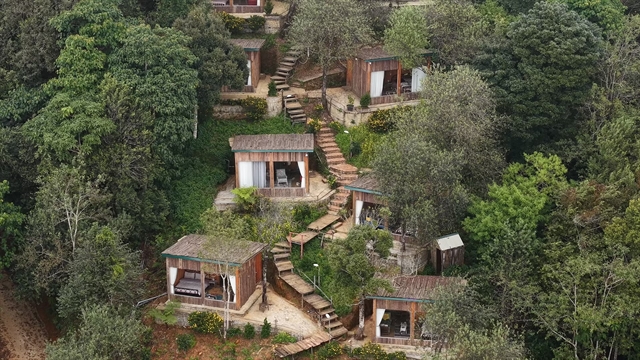
Similarly, Phàng A Lấng, a local Mông resident who has spent the last three months working at a regional accommodation facility, pointed out that his hospitality job is physically less demanding than traditional farming while simultaneously offering superior financial compensation compared to his past employment ventures.
To ensure that these employment gains are sustained and expanded, local authorities are actively organizing targeted vocational training courses. These educational programs cover essential topics such as professional housekeeping, effective communication skills, tourism promotion, beverage preparation, and cooking techniques. Furthermore, comprehensive training sessions are currently planned for local tour guides and specialized workers who support high-risk outdoor pursuits like trekking and mountain exploration. However, local planners recognize that long-term, stable employment will ultimately depend on whether these workers can continuously refine their skills and ascend into higher-paid, supervisory positions as Tà Xùa’s tourism infrastructure matures.
Cultural Heritage and Infrastructure Challenges
In addition to tea, Tà Xùa is strategically working to link its tourism framework with other distinctive local agricultural products, including Tai Nung pears, while also exploring niche cultural activities connected to the area’s historical horse-breeding traditions. A prominent 4.5-hectare Tai Nung pear-growing model is currently being developed in Bản Village. This agricultural initiative is operating in close coordination with a dedicated innovation centre under the provincial Department of Science and Technology. Establishing this concentrated growing zone is designed to facilitate guided orchard visits, allowing tourists to engage in seasonal agricultural harvesting experiences directly connected to the local soil. For regional authorities, such integrated links provide an effective mechanism to elevate the economic value of local agricultural goods through direct retail sales, live product demonstrations, and meaningful visitor engagement.
Simultaneously, the preservation of Mông cultural identity remains a paramount priority. Local customs, traditional knowledge, and indigenous lifestyles are viewed as critical differentiators that will set Tà Xùa apart from other crowded mountain destinations across Southeast Asia, provided that local communities remain actively involved in every stage of tourism product development.
Despite possessing an enviable array of natural beauty and cultural assets, Tà Xùa faces significant, structural constraints in basic infrastructure, including substandard transport networks, limited domestic water supplies, inefficient waste treatment systems, and a lack of comprehensive spatial planning. The commune’s severe topography, characterized by steep mountain terrain and deep valleys, makes large-scale infrastructure investment and seamless connectivity between remote areas exceptionally difficult.
Addressing these critical bottlenecks requires massive financial commitments. According to official Đầu Văn Xiêm, a major infrastructure project aimed at upgrading and widening the vital road connecting Bắc Yên to Tà Xùa—extending further toward the former Háng Đồng area—carries an estimated total investment of VNĐ643 billion, equivalent to roughly US$24.9 million. Preparatory investment work for this crucial transport artery is officially planned for 2026, with heavy implementation scheduled to run between 2027 and 2029.
In tandem with major road improvements, the commune is aggressively working on internal tourism infrastructure enhancements. These local projects encompass the paving of internal village roads, the modernization of the local market, the construction of upgraded cultural facilities, and the implementation of municipal engineering works designed to secure a stable domestic water supply for both residents and visitors.
Waste management has simultaneously emerged as a deeply pressing environmental concern for the highland commune. With a permanent local population of nearly 12,000 residents and an ambitious annual tourist target hovering around 200,000 visitors, the sheer volume of daily waste generation has severely outgrown the capacity of a typical rural area. Transporting accumulated waste to distant treatment facilities places an unsustainable financial and logistical burden on the local administration. To combat this, the commune is carefully reviewing proposals for a more suitable, centralized waste treatment site while concurrently promoting household waste sorting at the source, encouraging the composting of organic waste, and enforcing stricter environmental regulations across all commercial establishments.
Furthermore, local authorities recognize an urgent need to finalize detailed spatial planning for the broader Tà Xùa tourism zone, which encompasses approximately 13,000 hectares. Establishing a comprehensive master plan is considered vital to properly guide future private and public investment while proactively preventing uncoordinated, haphazard development that could permanently scar the natural landscape.
Sustainable Growth
Looking toward the future, Tà Xùa has established ambitious strategic milestones, aiming to officially achieve provincial-level tourist area status by 2030, with formal recognition targeted as early as the third quarter of 2028. Beyond these regional goals, the commune harbors long-term ambitions to develop into a nationally recognized tourist area by the year 2045.
These lofty aspirations received a monumental international boost on September 27, when Tà Xùa was officially named Asia’s Leading Emerging Tourism Destination at the prestigious World Travel Awards. This global accolade presents an unprecedented window of opportunity for the highland locality to dramatically elevate its international profile and attract a broader spectrum of global travelers.
The core challenge confronting Tà Xùa moving forward is translating this sudden global recognition into lasting, equitable benefits for its indigenous communities. Upgrading critical infrastructure, modernizing waste management services, expanding robust vocational training programs, and cultivating authentic tourism products firmly rooted in local Mông culture will be absolute prerequisites if Tà Xùa is to successfully evolve beyond a fleeting destination for seasonal cloud hunters. Protecting the pristine natural landscape and fiercely preserving local traditions will remain the guiding centerpieces of this development effort, as both elements serve as the foundational bedrock of the destination’s unique appeal and the long-term livelihoods that tourism is intended to support.