Shows
October 30, 2026
Nocturnal
David Zwirner
Hong Kong
September 23 – November 14, 2026
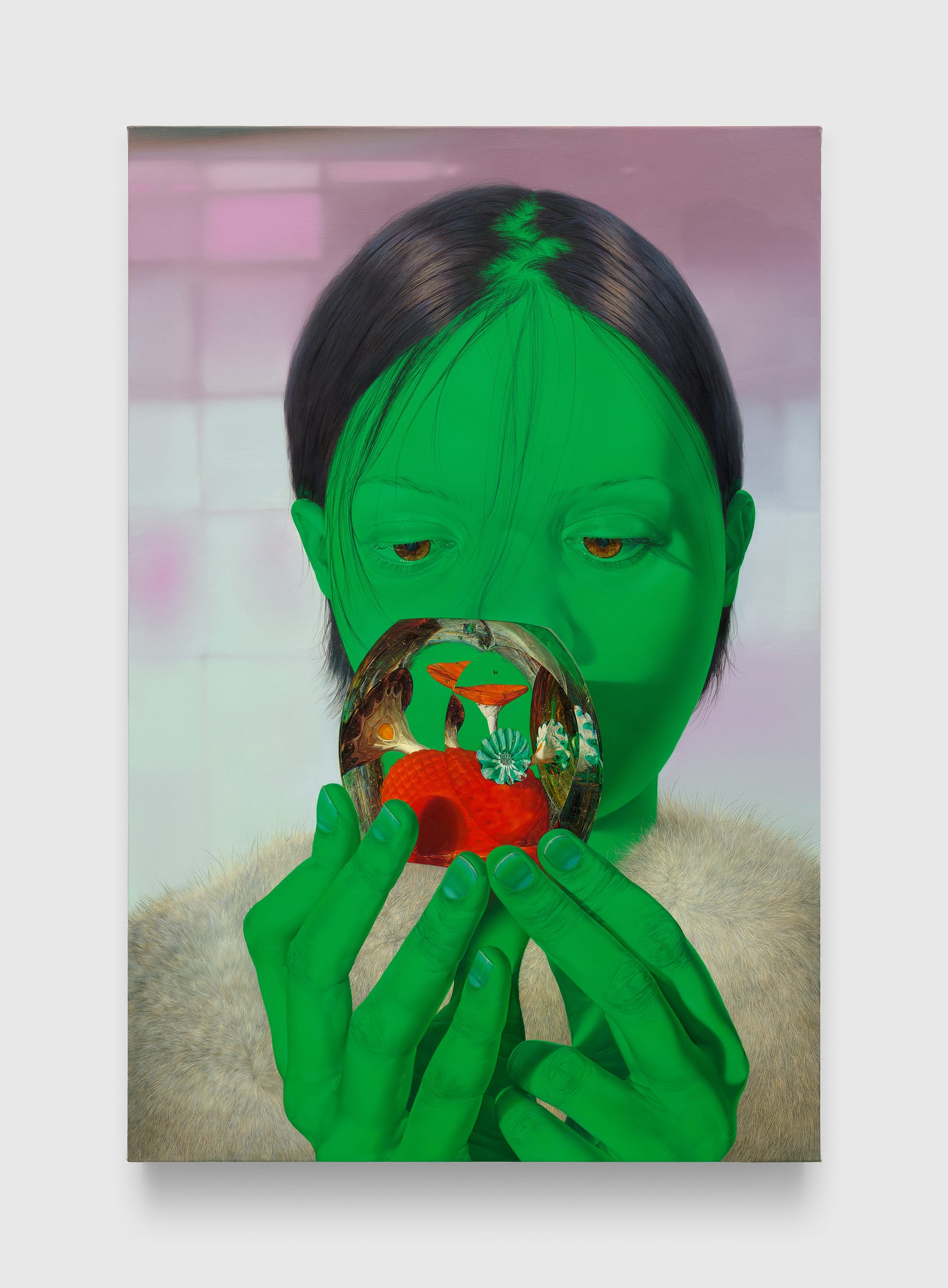
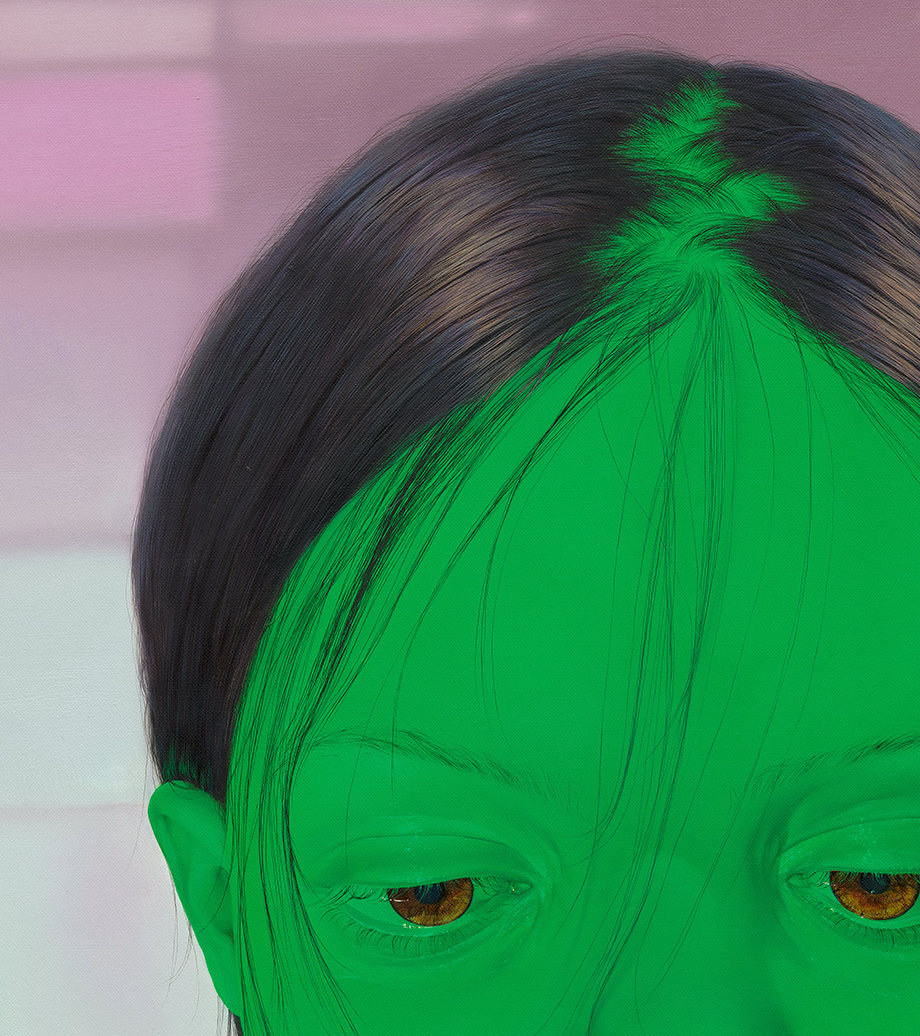
In Sasha Gordon’s latest painting Hard Candies (2026), the sitter’s central parting is notably, even worryingly, wide—a precise detail that draws immediate, almost involuntary scrutiny. The unsettling fissure zigzags down her scalp, styled perhaps to soften the exposed seam that a straighter course would reveal. The delicate strands of hair, delineated with a finesse as cruel as it is heartbreakingly tender, gather into ebony banks that fringe an emerald river of skin.

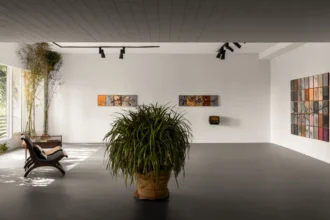
The face depicted, however, is not Gordon’s own. Departing from the proliferating self-portraits that have characterized much of her previous output, the artist turns her lens toward an anonymous friend in this new work, which is included in the group exhibition “Nocturnal,” curated by Matthew Brown at David Zwirner Hong Kong. Situated on the gallery’s prominent regional stage, the exhibition has drawn steady attention, with viewers and critics alike tracing a deliberate visual route across the canvas: first observing the sparse roots, then following the stray wisps that lead downward to vitreous auburn pupils, which are themselves fixed entirely on a glass paperweight poised gingerly in the sitter’s hands.
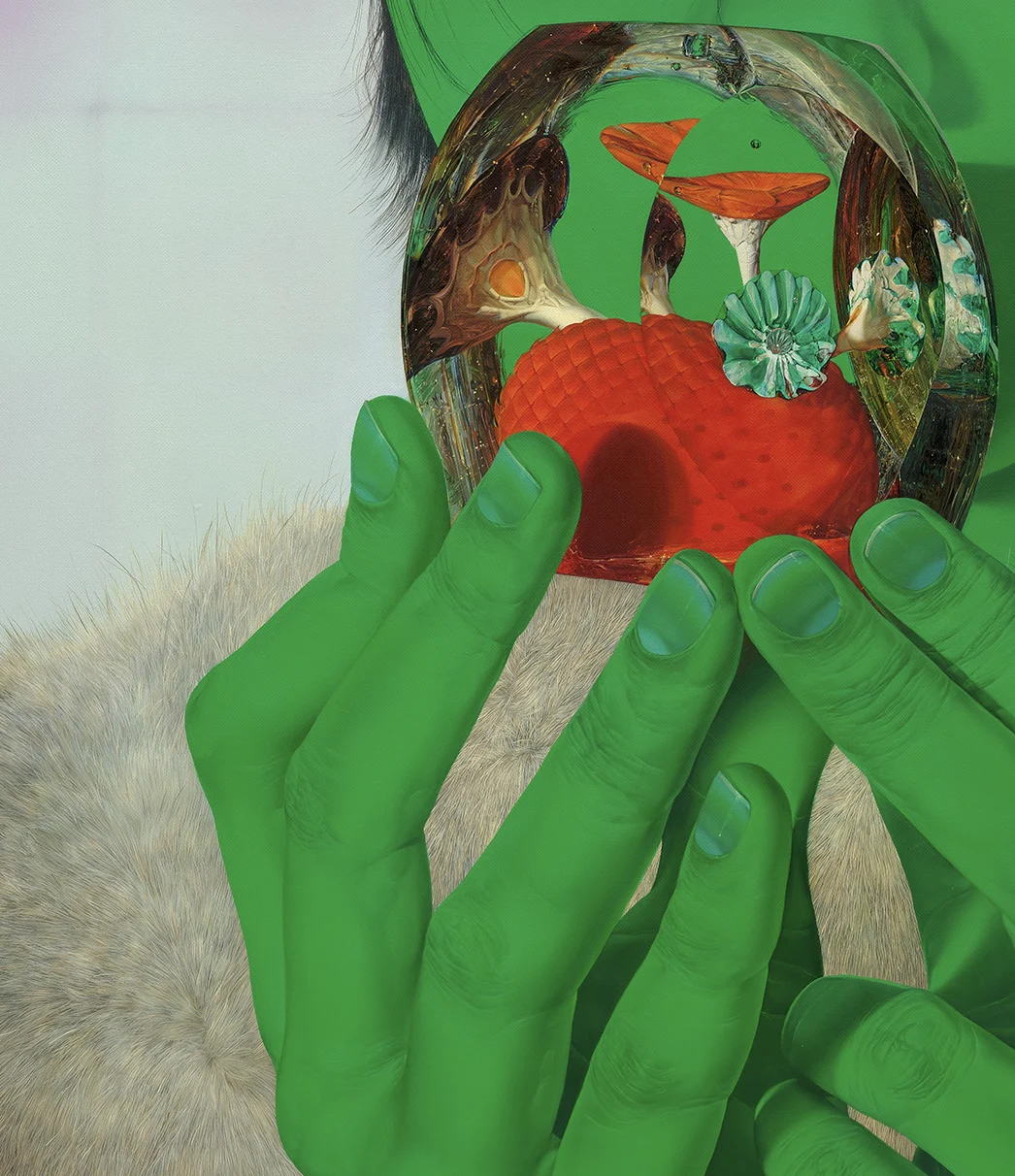
This talisman, held aloft with a reverence that borders on supplication, is actually an heirloom originating from Gordon’s grandmother. Within the painting, the artist’s technical virtuosity verges on ostentation, showcasing fungal growths and botanical forms that swell and flourish inside a miniature terrarium. Their warping contours and kindling colors flare vividly in a glancing, ambient light, creating a dense microcosm of life locked behind transparent walls.
So much visual information is readily available to the eye, yet the composition yields nothing to the touch. A sumptuous white mohair crewneck sweater solicits physical engagement while strictly forbidding it, conveying at once a soft vulnerability and something feral, prickly, and defensive. Behind the figure, misty lavender tiles suggest a bathroom humid with accumulated steam. These diffuse, atmospheric textures successfully hush the edges of the picture space, allowing for a sharp, uncompromising convergence of focus precisely where the sitter’s intense attention and our own viewing gaze meet and lock. Yet, what we obsess over most remains stubbornly out of reach: an enclosed, precarious world entirely sealed against external access.
This deliberate withholding follows a period during which the artist felt she had given perhaps too much of herself to the public eye. Having made her own physical likeness so central to her artistic practice for years, Gordon is currently reconsidering the psychological terms of that intimacy. Reflecting on her recent trajectory, the artist notes that she has historically approached her subjects with intense earnestness. Over the past year, however, she began to feel a distinct sense of vulnerability—the sensation of having been a little too generous with her personal narrative and emotional interior.
The conspicuous hair part in Hard Candies carries a lingering trace of that previous, radical openness. Gordon recalls an earlier painting she created that dealt directly with trichotillomania, a work executed with a level of candor and exposure that she now approaches with hesitation. The hyper-detailed hair part in this new canvas functions almost as a private joke—an intimate homage to that earlier version of herself and a chapter of her artistic life she has largely left behind.
Even though the face belongs to someone else in this composition, the psychological charge of the work has not diminished in the slightest. The artist explains that the figure itself is not necessarily what is most important in the piece, but rather the cumulative textures that build up to the figure. Having a deep-seated interest in exploring psychological spaces and creating environments thick with tension, Gordon was thinking during the creation of this piece about how she might express those complex emotional states not through a human face or a traditional portrait, but entirely through an object.
With her expression entirely inscrutable, the sitter’s deep absorption admits no outside audience. Yet Hard Candies arrests the viewer precisely through this intense spectacle of attention that we are barred from entering. The figure’s gaze remains ambiguous, capable of being interpreted as appreciation, grief, hatred, or even a kind of burning, searching hope. Discussing the work, observers have remarked that the glass object feels akin to a crystal ball, teasing an uncertain future within its shimmering depths. Gordon quickly corrects this notion, pointing out that the object is far more complex than a mere crystal ball or office paperweight—it could represent a loved one, or a cherished memory.
In the very act of portraying obsession, the painting manages to induce it in the viewer, rendering the glass paperweight a stand-in for all those things in life that we cannot bear to relinquish. Yet, as the painting quietly demonstrates, even the fiercest vigilance cannot forestall inevitable loss, nor can careful physical scrutiny keep human hair from thinning. A hard candy invites the individual to hold it gently on the tongue, resisting the immediate impulse to bite down; yet even the tenderest restraint cannot stop it from eventually dissolving away.
Michele Chan is managing editor at ArtAsiaPacific.