Ahmedabad — In a striking departure from the austere white-cube aesthetic that typically defines contemporary art institutions, the Museum of Contemporary Art Ahmedabad (MCAA) has opened its doors with an inaugural exhibition that brings the outside world directly into the gallery space. Titled “I Dwell in Possibility,” the exhibition runs from September 18 through November 1, 2026, serving as a compelling, multifaceted introduction to the city’s newest cultural landmark.
Founded by Indian art collector Aneri D. Patel, MCAA represents a historic milestone for Ahmedabad as the city’s first institution dedicated entirely to contemporary art. While the museum prepares for the eventual opening of its permanent flagship building in the coming years, it is currently welcoming the public at a temporary satellite venue housed within a corporate office space. Rather than masking this corporate environment, the inaugural exhibition leans into its architecture, completely transforming the interior through a deliberate synthesis of ecology, design, and fine art.
Organized in close collaboration with GALLERYSKE—a prominent gallery with locations in New Delhi and Bangalore known for its collaborative ethos—“I Dwell in Possibility” brings together works by a diverse roster of celebrated contemporary artists: Avinash Veeraraghavan, Buddhadev Mukherjee, Dia Mehhta Bhupal, Sudarshan Shetty, and Sunil Padwal.
The exhibition derives its evocative title from the opening line of a 19th-century poem by Emily Dickinson. In the poem, Dickinson famously employs the metaphor of a house to describe the boundless, imaginative potential of poetry. True to this thematic inspiration, the inaugural show at MCAA frames each participating artwork as an open window into an entirely different creative discipline.
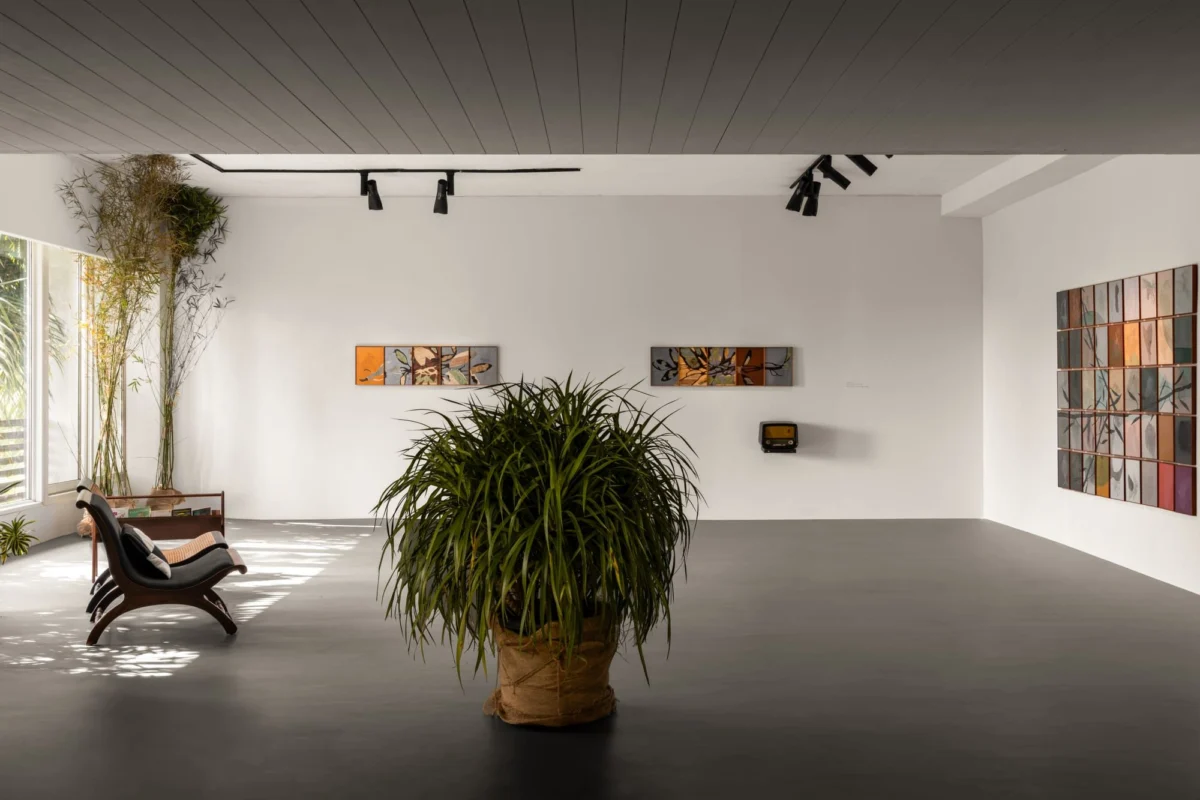
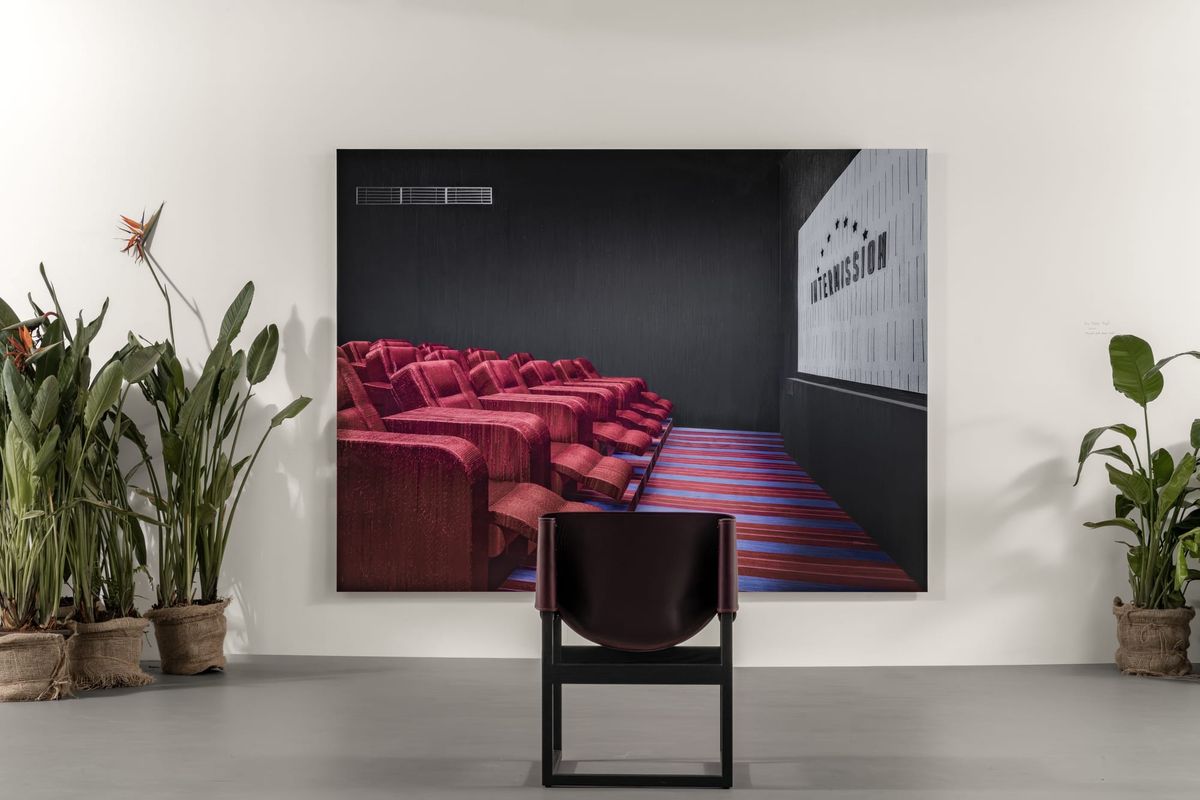
Visitors stepping into the gallery are immediately met with an unconventional sight: living plants thriving indoors alongside the artworks as equal elements of the presentation. Landscape architect Aditya Shah designed these living botanical interventions, incorporating everything from vibrant birds of paradise to densely bundled palm leaves. These organic elements soften the rigid, corporate geometry of the satellite venue, infusing the space with an unexpected sense of life, breath, and warmth.
This emphasis on comfort and sensory engagement extends to every corner of the gallery. Eschewing the traditional, restrictive gallery experience that often keeps viewers at arm’s length from the art, “I Dwell in Possibility” invites the public to linger, settle in, and deeply engage with their surroundings through a series of thoughtful cross-disciplinary collaborations.
Guests are encouraged to sit on carefully curated furniture drawn from Phantom Hands’ renowned Geoffrey Bawa Collection, turning the act of viewing art into a domestic, contemplative experience. Alongside the visual art, visitors can browse through a curated selection of books chosen by economist Arjun Jayadev to accompany each individual artwork, offering intellectual depth and context. Culinary dimensions are introduced through a series of specific recipes supplied by culinary researcher Sheetal Bhatt, while an immersive soundtrack put together by music archivist Nishant Mittal can be listened to via wireless headsets throughout the space, creating a multi-sensory environment that stimulates sight, sound, touch, and intellect.

At the core of the exhibition is a profound exploration of interiority. Each exhibiting artist offers a distinct, deeply personal reading of inner worlds and the lived environments that shape them.
Avinash Veeraraghavan’s Blind Visionary (2024) presents intricate, surreal mindscapes executed through a complex interplay of embroidery and video, bridging traditional craft with contemporary digital media. Buddhadev Mukherjee’s delicate watercolors on silk, titled Living Together in Fragments (2026), anchor the self within the framework of daily rituals, using subtle humor as a structural hinge to navigate the complexities of human existence.
Dia Mehhta Bhupal’s large-scale photographic prints capture life-size physical sets of both public and private spaces—ranging from familiar movie theaters to anonymous locker rooms. Notably, these spaces are not real environments, but are painstakingly constructed by the artist herself using hand-rolled magazine paper, blurring the lines between illusion and reality, the ephemeral and the permanent.
Sudarshan Shetty’s sculptural work No Title (2013) utilizes a simple wooden frame embedded with acrylic letters that spell out the poignant phrase, “sometimes when we travel we forget who we are.” Through this text-based piece, Shetty meditates on how everyday objects carry deep reservoirs of memory, displacement, and impermanence.
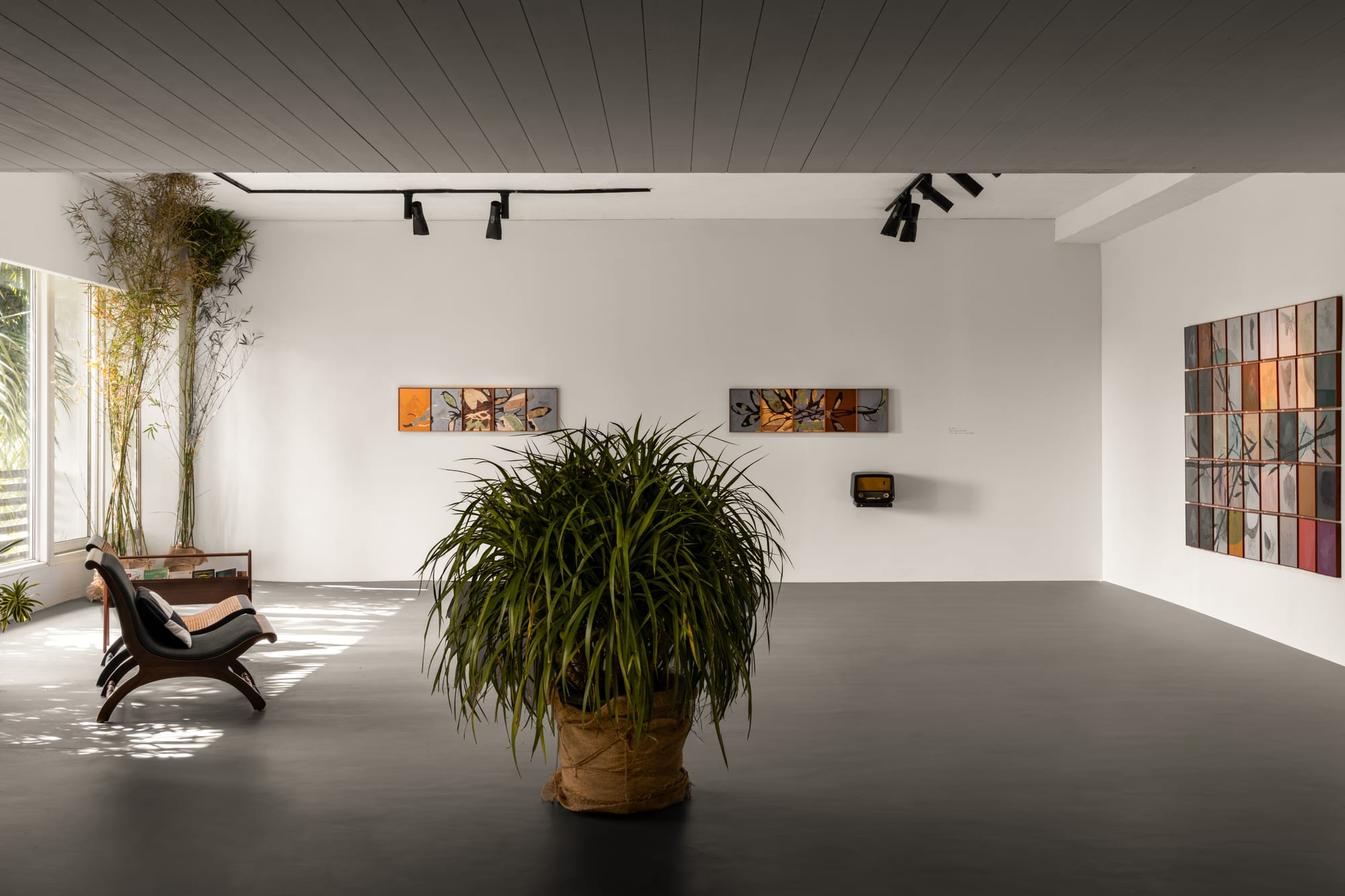
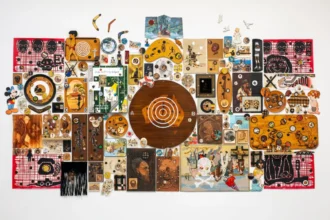
Sunil Padwal’s Overlooked Mangroves on Found Paper (2020) perhaps most vividly embodies the foundational premise of the exhibition. For this series, Padwal sources historical ephemera—including old documents, vintage banknotes, posters, and archival papers—from Mumbai’s famous Chor Bazaar. He then transforms these fragments into intricate cartographic portraits of the city, seamlessly blending past and present. Each piece arrives bearing the physical and historical weight of its previous life, richly rewarding viewers who slow down to observe the layered details.
As MCAA’s inaugural project, “I Dwell in Possibility” functions as an intimate, contemporary cultural ode to Ahmedabad, deeply attuned to the city’s historic and enduring culture of hospitality. The partnership with GALLERYSKE further amplifies this communal spirit, reflecting a shared belief in the power of institutional and commercial cooperation within the arts.
While exhibitions celebrating a city’s identity naturally tend to affirm existing cultural narratives rather than radically challenge them, this inaugural presentation speaks a fluent, welcoming language that resonates immediately with local audiences. As “I Dwell in Possibility” completes its run, the broader arts community looks forward to seeing how MCAA translates this thoughtful, interdisciplinary vision into its permanent home once it establishes walls of its own.
Shreya Ajmani is a writer and art professional focusing on art from Asia and its diasporas.