In the realm of Southeast Asian cuisine, few elements are as fundamental to authentic flavor as coconut milk. While modern convenience has largely shifted culinary practices toward commercially packaged cartons and cans, a growing movement among passionate cooks emphasizes that pressing coconut milk by hand remains the gold standard for achieving the true depth of traditional Thai dishes. For those dedicated to mastering the complexities of Thai cooking, transitioning away from processed alternatives and embracing the traditional extraction method offers a transformative upgrade to the dining table.
Culinary experts point out that while canned and boxed varieties offer undeniable convenience for busy weeknight cooking—with specific brands like Aroy-D frequently recommended as reliable supermarket standbys—they fundamentally alter the profile of the final dish. Freshly squeezed coconut milk introduces a rich, aromatic dimension that processed variants simply cannot replicate. This artisanal approach forms the backbone of countless iconic recipes, from vibrant green curries to delicately balanced soups, acting as a crucial pillar alongside hand-pounded curry pastes.
Understanding the Distinction: Coconut Cream Versus Coconut Milk
A common point of confusion for those new to traditional preparation methods involves the fundamental difference between coconut milk and coconut cream. In authentic Thai culinary practice, these are not interchangeable ingredients, nor are they derived from entirely different sources. Instead, they represent different stages of the extraction process utilizing the exact same raw material: mature coconut meat.
Coconut cream represents the initial extraction—often referred to as the first squeeze. This fraction of the liquid is exceptionally rich, dense, and velvety, packed with the natural oils and fats of the coconut. Coconut milk, conversely, is typically the result of a secondary extraction using additional water, or it can be achieved by blending the heavier cream with precise amounts of water. Traditional recipes often require these components to be kept separate during the cooking process, allowing the chef to control the exact texture and fat content at various stages of preparation.

Sourcing Mature Coconuts
Achieving authentic results begins long before the kitchen counter; it relies entirely on selecting the correct variety of coconut. Cooks must bypass the young green coconuts marketed primarily for their refreshing drinking water. These immature fruits lack the necessary dense, fatty meat required for rich culinary liquids.
Instead, authentic preparation demands mature coconuts, characterized by their rough, brown, fibrous husks on the outside and thick, white flesh lining the interior. While once difficult to source outside of specialized markets, these mature specimens have become increasingly accessible in North America and Europe, frequently appearing in Asian grocery stores and select Latin American supermarkets. This thick white meat is what imparts the characteristic depth of flavor that distinguishes homemade preparations from commercial products.

Preparation and Extraction Techniques
Working with a whole mature coconut requires specific techniques to unlock the inner meat without compromising safety or efficiency. The process begins by removing the tough exterior fibers. Because the shells are remarkably dense, culinary practitioners advise utilizing the heavy, flat backside of a sturdy knife or a Chinese cleaver rather than relying on blunt instruments like hammers or attempting to saw through the husk. Short, controlled, horizontal strikes along the middle circumference of the nut create a clean fracture, splitting the shell evenly into two workable halves while releasing the internal water—which, while excellent for drinking, is set aside since the recipe relies solely on the mature meat.
Once the coconut is divided, the extraction process transitions to harvesting the meat. Traditional Thai kitchens frequently employ a specialized scraping tool often referred to colloquially as a "rabbit scraper," which features an integrated seat for safety and leverage. This allows the cook to press the inner shell against a textured blade, producing light, airy, snow-white flakes of coconut meat while avoiding the bitter brown exterior layer.

For those utilizing hand tools, maintaining a steady rhythm is essential to protect the hands while efficiently gathering approximately 300 grams of shavings from a single medium coconut. Culinary experts caution against the use of standard kitchen knives or electric blenders for this specific stage; knives are exceptionally time-consuming and hazardous, while blenders fail to properly yield true coconut cream, often leaving behind unwanted fibrous strands that require tedious straining.
The Extraction Process
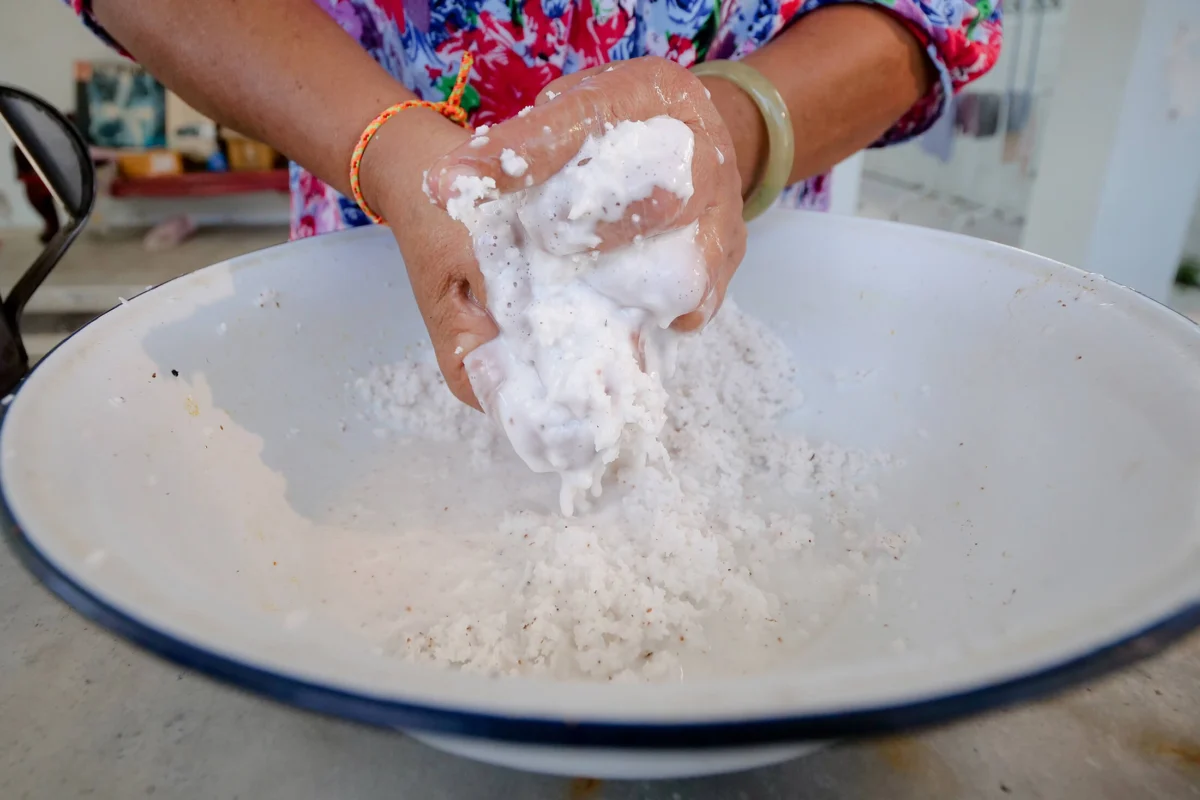
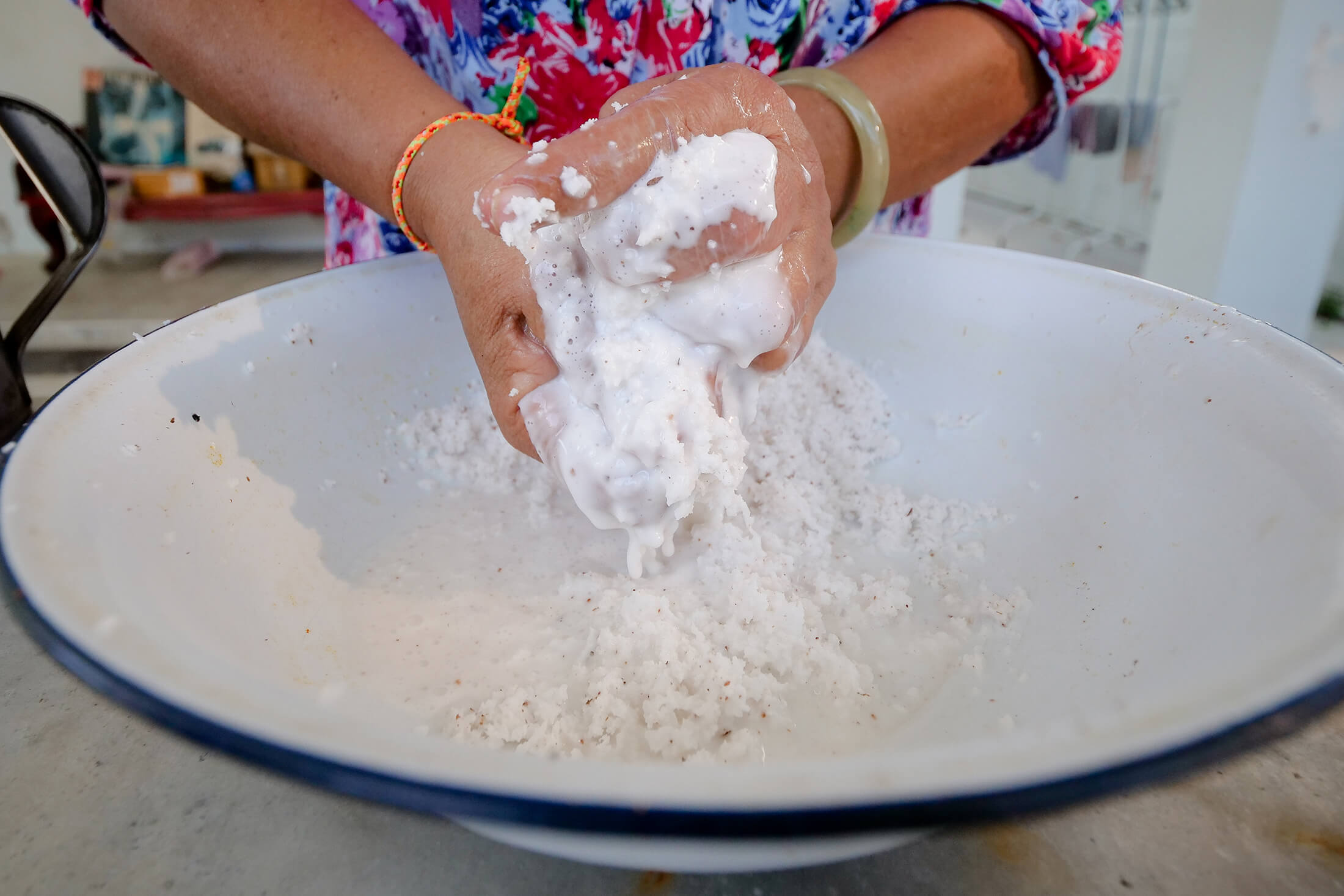
The transformation from solid flakes to liquid gold involves a tactile, hands-on methodology. By combining the 300 grams of freshly harvested coconut shavings with an equal measure of room-temperature water in a mixing bowl, the cook begins the manual extraction. Thoroughly massaging and squeezing the mixture forces the natural fats and oils to emulsify with the water, rapidly turning the liquid an opaque, milky white.

This initial mixture is then pressed through a fine screen or cheesecloth into a secondary vessel, yielding the rich, dense coconut cream. To complete the process and produce the secondary coconut milk, a subsequent measure of water is added to the remaining coconut shreds, massaged thoroughly, and strained once more. A single mature coconut typically yields a combined total of 500 to 600 milliliters of high-grade coconut cream and milk, providing the precise building blocks necessary for complex Thai regional dishes.
While the convenience of modern packaging ensures that processed alternatives will always retain a place in fast-paced modern kitchens, the time-honored practice of manual extraction remains an unmatched art form. For those seeking the pinnacle of authenticity in their culinary pursuits, the effort invested in freshly squeezed coconut milk yields a reward that resonates in every bite.