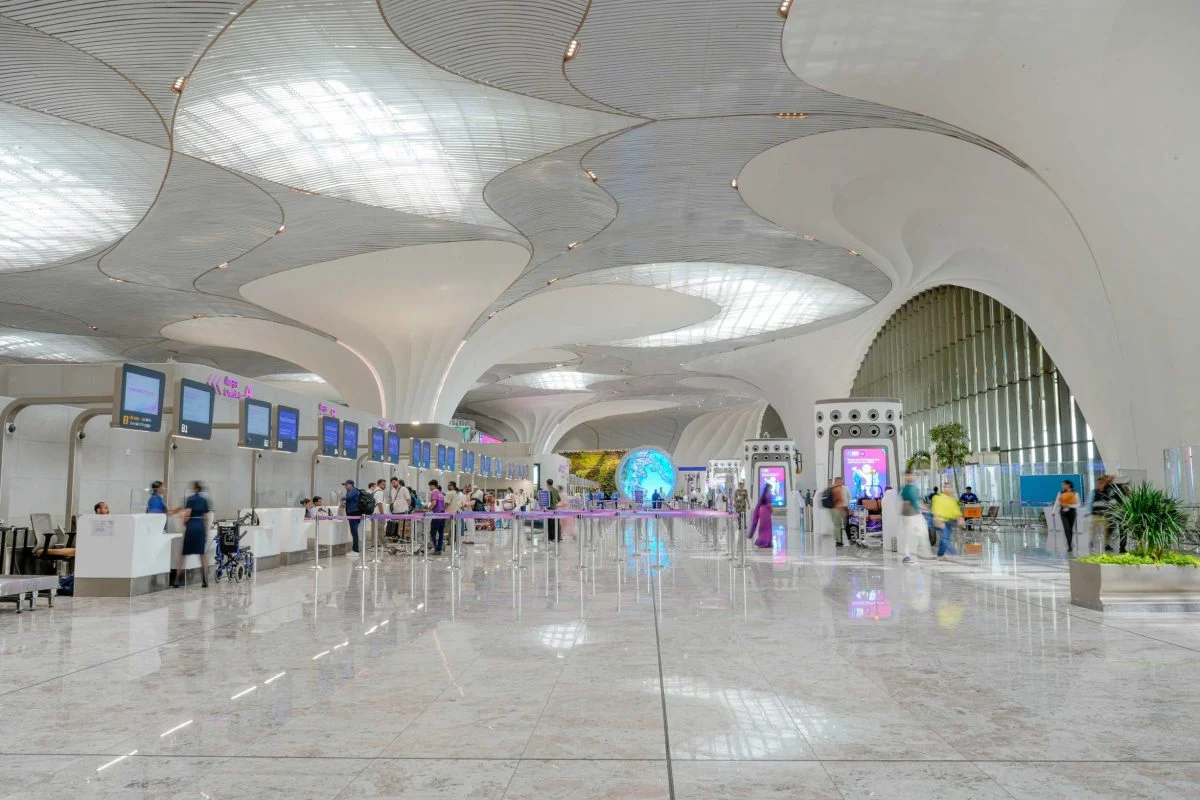
The aviation landscape in India’s financial capital is poised for a significant transformation as the upcoming Navi Mumbai International Airport (NMIA) approaches its operational phase. As the industry prepares for this shift, Arun Bansal, the CEO of Adani Airport Holdings, has signaled that while the transition is a major milestone for the region’s infrastructure, it may come with temporary turbulence. Specifically, some international carriers could opt to suspend their Mumbai services entirely for a brief period rather than immediately relocate their operations to the new facility.
This development surfaced during Adani Enterprises’ second-quarter earnings call held last week, where leadership discussed the strategic integration of the new airport into the existing network. Adani Airport Holdings, a subsidiary of the Adani Group, is uniquely positioned in this transition as the operator of both the existing Chhatrapati Shivaji Maharaj International Airport (CSMIA) in Mumbai and the developing Navi Mumbai International Airport. This dual role gives the company a comprehensive view of the logistical and commercial challenges inherent in moving flight operations between two major hubs within the same metropolitan area.
During the earnings discussion, Bansal addressed concerns regarding the potential disruption that a dual-airport model might cause for international airlines. While he acknowledged the possibility of a temporary exit by some carriers, he downplayed the long-term significance of such a move. “There might be one or two airlines that decide not to operate from Mumbai for a couple of years, but that will have almost no impact on the overall passenger count,” Bansal stated. By characterizing the potential service suspensions as isolated incidents rather than a systemic trend, the CEO sought to reassure stakeholders that the broader economic and operational health of the Mumbai aviation market remains secure.
The transition is rooted in the necessity to alleviate the severe capacity constraints currently faced by CSMIA. As one of the world’s busiest single-runway airports, CSMIA has long struggled with extreme congestion, limited slot availability, and the physical limitations of its urban location. The Navi Mumbai project is designed to provide the much-needed relief that the city’s aviation sector requires to accommodate growing domestic and international traffic. However, moving established international routes from an existing, well-connected airport to a brand-new facility involves complex negotiations, technical integration, and alignment of carrier schedules.
Bansal noted that the process of transitioning these carriers is currently in an advanced stage. Adani Airport Holdings is actively engaged in dialogue with global airline partners to finalize the logistics of the move. According to the CEO, the company is nearing the conclusion of these discussions with the vast majority of international airlines, with only a small number of lingering dialogues left to be resolved. This suggests that the transition plan is largely settled, and the operator is working through the final administrative and operational details required to shift capacity to the new site.

The operational strategy involves a delicate balance. For international airlines, the decision to move involves evaluating ground handling capabilities, passenger connectivity, and the overall commercial viability of the new location. While the Navi Mumbai airport is being built with state-of-the-art infrastructure intended to surpass existing standards, the disruption caused by moving hubs can be costly for airlines. Some carriers may find that suspending operations for a period of time is a more viable business strategy than navigating the initial teething period of a new airport, or they may choose to wait until the new facility has fully established its operational rhythm and passenger flow.
Despite the potential for these brief service pauses, the broader vision for the Adani Group is to create a robust, multi-airport ecosystem for the Mumbai Metropolitan Region. The integration of CSMIA and NMIA is expected to create a synergistic effect, allowing the city to manage higher traffic volumes more efficiently. By acting as the common operator for both, Adani intends to streamline the shift, ensuring that passengers and airlines have a clear roadmap for the transition. The goal is to avoid a fragmented aviation market and instead foster a complementary relationship where both airports contribute to the region’s status as a major global travel and commercial hub.
The dialogue surrounding the shift also highlights the broader challenges of infrastructure development in rapidly growing economies. As India’s aviation sector expands at a record pace, the pressure on existing metropolitan airports has reached a breaking point. The Navi Mumbai project represents one of the most ambitious infrastructure endeavors in the country, aimed at addressing a multi-decade backlog of capacity needs. The decision by some airlines to pause operations, while inconvenient for some travelers in the short term, is viewed by industry experts as a minor footnote in the long-term growth trajectory of Mumbai’s aviation infrastructure.
As the industry moves closer to the operational launch of the Navi Mumbai facility, all eyes remain on how the remaining negotiations with international carriers conclude. The ability of Adani Airport Holdings to successfully navigate these conversations will be a key determinant of how seamless the transition period proves to be. For now, the messaging from the company’s leadership remains one of confidence, focusing on the ultimate goal of expanding capacity and modernizing the aviation experience for millions of travelers.
The upcoming transition will be closely monitored by regulators, travel industry stakeholders, and the flying public. As the timeline for the airport’s full operational integration firms up, more specific details regarding airline schedules and potential service adjustments are expected to be announced. For the time being, the focus remains on finalizing the transition framework, with the Adani leadership emphasizing that the temporary absence of one or two carriers will not detract from the overall success of the project or the projected growth in passenger numbers across the Mumbai region. The integration of these two massive hubs is a testament to the scale of India’s aviation ambitions, and the coming months will reveal the effectiveness of the strategy currently being implemented to ensure that the city remains well-connected to the rest of the world.