In the quiet, weightless silence of the underwater world, divers often find themselves in a unique position of witness. They are among the few who regularly traverse the threshold between the terrestrial world and the vast, mysterious depths of our oceans. It is in this space, suspended in the blue, that the true meaning of being "AWARE" takes root. For many, it begins with the simple, yet profound, act of paying attention. As divers return to familiar reefs, coastlines, and underwater sanctuaries, they begin to notice the subtle rhythms and shifts in the marine environment. They see the return of a shark to a familiar hunting ground, the slow, fragile recovery of a coral colony, or, more jarringly, the intrusion of human activity—a tangle of discarded fishing line draped over a reef or a piece of plastic resting on a seafloor that few human eyes will ever see.
This heightened sense of awareness is the cornerstone of the PADI AWARE Foundation. For those who explore beneath the surface, observation is not merely a passive experience; it is an invitation to engagement. When we truly pay attention, we move beyond seeing the ocean’s inherent beauty and begin to understand its vulnerabilities. We witness the tangible impacts of environmental change, and in doing so, we are presented with a pivotal choice: to remain a bystander in the face of these challenges, or to step forward and become an active component of the solution.
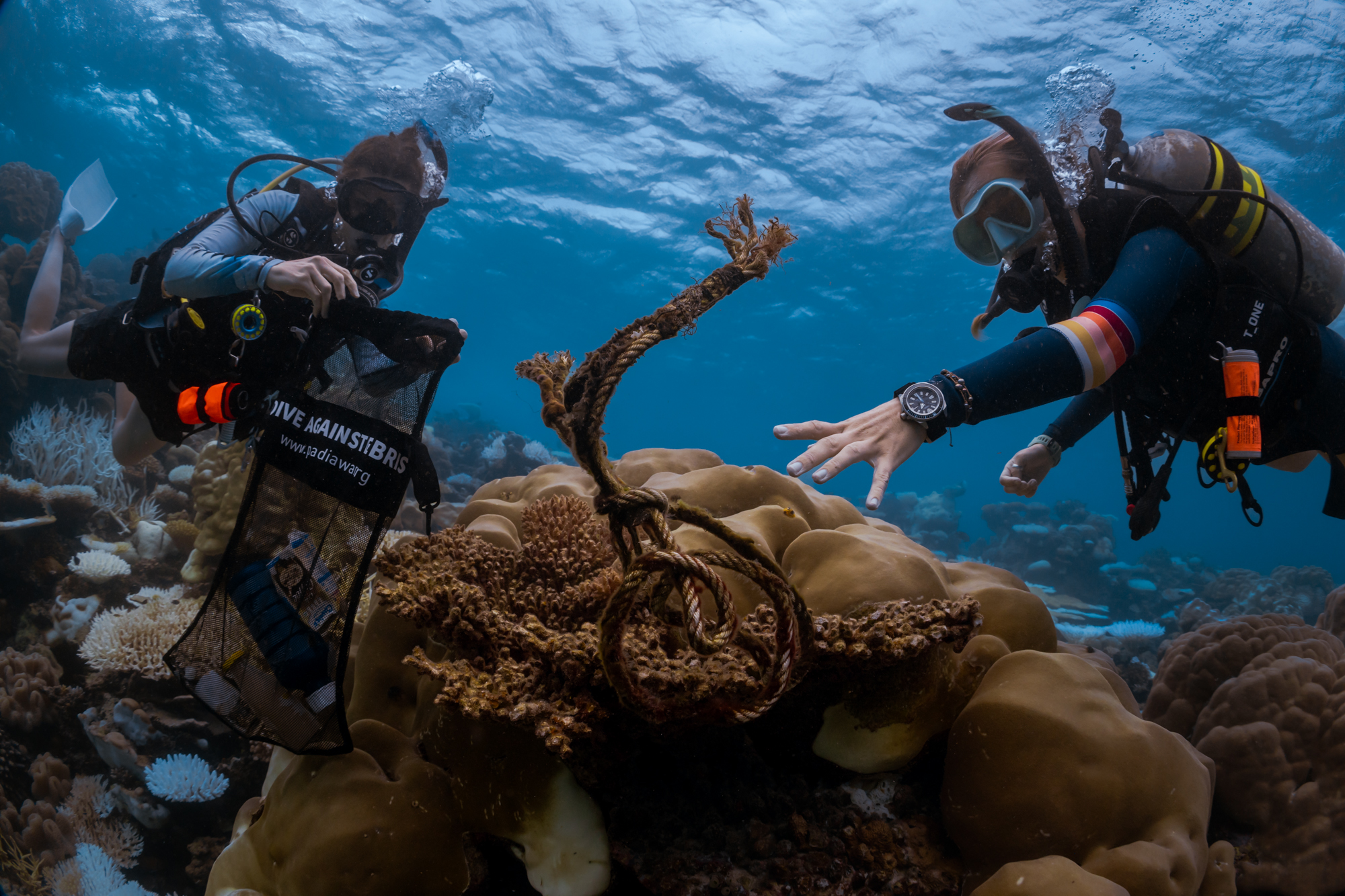
This philosophy has been the guiding force behind PADI AWARE since its inception more than three decades ago. In the early days of the organization, the global diving community began to recognize a growing, silent crisis: the accumulation of marine debris. Divers were the first to see the scale of the problem, observing it in places where the rest of the world remained blissfully unaware. This realization sparked a fundamental shift in how the community viewed its responsibility. The organization began to pose a critical, transformative question: What if divers could do more than simply remove what they found? What if the debris they encountered could be transformed into a valuable dataset to help the world better understand the nature, scope, and source of ocean pollution?
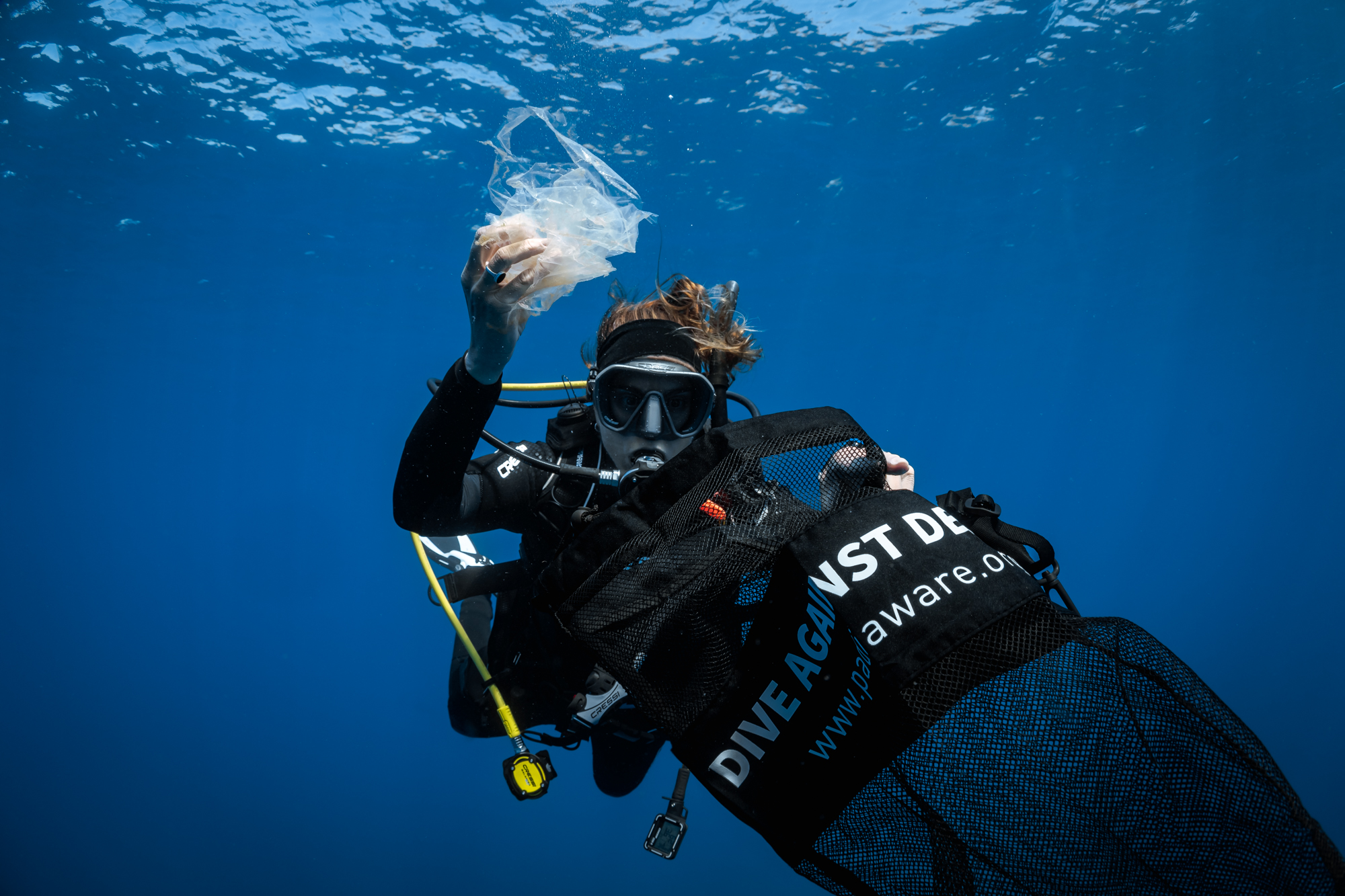
This inquiry led to the creation of Dive Against Debris, the flagship citizen-science program that has since become a global movement. Under this initiative, the act of cleaning the ocean is elevated from a local cleanup to a scientific endeavor. Divers do not just remove plastic and trash from the seafloor; they are trained to identify, record, and report their findings. By turning individual acts of stewardship into structured data, the program provides researchers and conservationists with a clear, localized view of marine health. When these observations are aggregated from thousands of dives across the globe, they reveal trends and patterns in areas that are otherwise incredibly difficult and expensive to monitor. It is a powerful example of how a decentralized, global community can function as a collective scientific instrument.
Today, this vision is evolving to meet the scale of the modern environmental crisis. The PADI AWARE Foundation is now working to ensure that the citizen-science methodologies pioneered by divers are integrated into broader, high-level policy frameworks. As international bodies and governments move toward the development of a Global Plastics Treaty, the organization is advocating for the recognition of data gathered by citizen scientists. By demonstrating that the contributions of everyday divers are a legitimate and meaningful way to track the accumulation of plastics, PADI AWARE is helping to bridge the gap between local action and international environmental governance. A single diver spending a morning clearing a reef is no longer just performing a cleanup; they are contributing to a longitudinal study that informs global policy.
This shift in perspective is essential, as the challenges facing our oceans are complex and often feel overwhelming. However, the potential impact of a massive, mobilized community of divers is profound. Katie Thompson, Executive Director of the PADI AWARE Foundation, notes that we are only just beginning to grasp what is possible when the global diving community is viewed through this lens of active stewardship.
Consider the hypothetical impact if every diver committed just one day of a week-long vacation to a conservation project. This could involve restoring a damaged reef, participating in a survey of shark and ray populations, removing debris, or supporting the local organizations that work tirelessly to protect the coastline. The cumulative effect of these millions of individual acts of stewardship—multiplied across one of the largest communities of ocean enthusiasts on the planet—would be transformative.
Importantly, this sense of responsibility is not confined to the saltwater realm. Stewardship, as defined by the AWARE philosophy, does not need to begin only when one puts on a mask and fins. Everything on Earth is eventually connected to the ocean; rivers, lakes, and watersheds all act as conduits for the waste that eventually settles in our marine environments. There are countless opportunities for conservation closer to home, whether it is cleaning a local stream, participating in a habitat restoration project, or advocating for the protection of a species or a place that lacks a voice. The goal is to cultivate a mindset where individuals recognize that their actions, regardless of location, have a ripple effect on the health of the global ocean.

This ethos is the driving force behind AWARE Week, an annual event that serves as more than just a calendar marker for environmental activity. It is an invitation to heighten our awareness of the roles we play in protecting the places we love. It is an opportunity to pay closer attention to our surroundings, to acknowledge that our personal choices matter, and to consciously choose to participate in the restoration and protection of the natural world.
It is vital to acknowledge that conservation has never been the work of a single week, nor a single initiative. The environmental issues we face today—from climate change to plastic pollution—were not created overnight, and they certainly will not be solved with a short-term burst of activity. True protection requires a sustained, long-term commitment from individuals who are willing to "keep showing up." This means remaining engaged through the inevitable ebbs and flows of progress, navigating through shifting political priorities, and persisting even when the sheer scale of the environmental challenge feels daunting.
For nearly 35 years, the PADI AWARE Foundation has remained committed to this long-term view. The organization is constantly evolving, refining its approaches to ensure it remains effective in a changing world. This includes not only the ongoing fight against marine debris but also new, targeted approaches to coral conservation and enhanced efforts to protect vulnerable shark and ray populations. Yet, beneath these diverse initiatives, the core philosophy remains refreshingly simple: people are driven to protect what they love, and for the diving community, there is an unparalleled opportunity to translate that love into meaningful, measurable action.
This is the essence of what Thompson describes as "hope-driven action." Hope is not a passive state of optimism or the belief that everything will inevitably work out. Rather, it is a deliberate decision that the future is worth working for. It is the understanding that while one person’s efforts may seem small, they are the building blocks of a larger movement. Sometimes, that work leads to significant international policy shifts. At other times, it manifests as the restoration of a specific reef, or perhaps just one individual deciding to dedicate a few hours to caring for the environment in front of them.

Every one of these choices, when made with intention and consistency, carries weight. When these choices are repeated, again and again, by a growing network of dedicated individuals, they coalesce into something far greater than the sum of their parts. They build a resilient, global community capable of enduring and responding to the most pressing environmental challenges of our time.
As AWARE Week approaches, the call to action is clear and accessible. It begins with the simple, quiet act of paying attention. It asks individuals to look closely at the places they cherish—whether that is a pristine reef on the other side of the world, the local dive site that has become a second home, the river that runs through their city, or the beach where they spend their weekends—and ask one fundamental, probing question: "What can I do to leave this place better than I found it?"
The answer to that question is the starting point. From there, the path forward is a matter of action and persistence. By choosing to act, and by committing to keep showing up, we move from being observers of the ocean’s decline to being active participants in its recovery. To truly be "AWARE" is to accept this responsibility, to recognize our connection to the deep, and to act with the knowledge that the future of our oceans is, in no small part, in our hands.