The early 2000s represented a golden age for consumer photography, characterized by the meteoric rise of the point-and-shoot camera. For millions of people, these devices were the perfect synthesis of digital innovation and physical convenience. They were small enough to slip into a pocket, intuitive enough for a novice, and sophisticated enough to capture memories with a clarity that film cameras of the past simply could not match. By 2010, the global market was insatiable, with more than 100 million compact cameras sold annually.
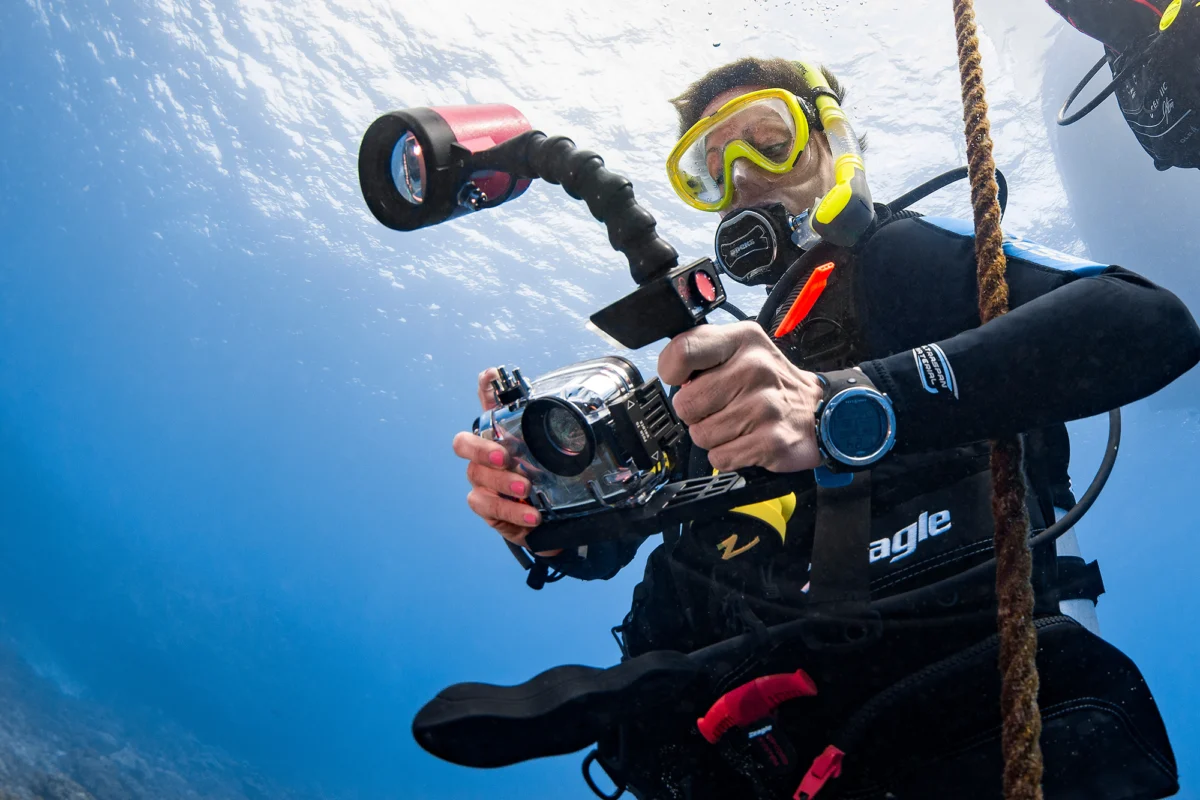
Within this surge, the underwater photography community found a newfound freedom. Divers, who were previously limited by the sheer bulk and immense cost of professional film rigs, suddenly had a plethora of accessible options. Manufacturers such as Ikelite, Aquatica, Seacam, Light & Motion, and Sea & Sea stepped up to meet the demand, engineering robust housings that allowed recreational divers to bring these compact cameras into the blue. This era also saw the professionalization of the hobby, with the introduction of the PADI Digital Underwater Photographer course, which positioned the compact digital camera as a central tool for documenting the marine environment.
However, the industry’s trajectory shifted abruptly in 2007 with the release of the Apple iPhone. Initially, the giants of the camera industry were dismissive. To the established manufacturers, the iPhone’s camera was a novelty, suffering from low resolution and a lack of optical versatility compared to the dedicated compact cameras of the time. History had already shown that earlier generations of camera-equipped phones were little more than toys. Consequently, the industry failed to anticipate the paradigm shift occurring in consumer behavior—the convenience of having a high-connectivity, all-in-one device in one’s pocket was beginning to outweigh the marginal benefits of a dedicated point-and-shoot.
Within three years, the landscape had been irrevocably altered. The camera quality of the iPhone and the rapidly improving Android ecosystem reached a threshold where, for the average user, they were effectively on par with traditional compact cameras. The result was a dramatic contraction of the market. By 2020, sales of compact cameras had plummeted, representing only about 5% of the volume seen at their 2010 peak. Many industry analysts, observing the swift adoption of smartphones, predicted the total extinction of the compact camera, suggesting it was destined to become a relic of a bygone era.
The Predictions Were Wrong: A Market Refined
The narrative that smartphones "killed" the compact camera is, in retrospect, a simplification of a much more complex economic evolution. While smartphones effectively wiped out the low-end, budget-tier compact camera market, they did not destroy the category entirely; rather, they forced it to evolve. By 2012, as the decline became impossible to ignore, major camera manufacturers began a strategic pivot. Recognizing that the "snap-shooter" demographic had migrated to smartphones, brands shifted their R&D focus toward high-end DSLR systems and eventually mirrorless cameras, targeting professional and serious amateur photographers who required performance that a phone could not replicate.
In the world of underwater photography, this evolution was mirrored by housing manufacturers. While they continued to support the casual diver by innovating, they also began developing dedicated underwater housings for smartphones, acknowledging that the phone had become the primary camera for the masses. Yet, in the years that followed, a fascinating trend emerged. For those who found themselves wanting more than what a smartphone could offer, but who were not prepared to invest in the weight and complexity of a professional-grade interchangeable lens system, the compact camera found a new, specialized lease on life.
Today, we are witnessing a genuine resurgence of the high-end compact camera. While total sales figures remain a fraction of what they were during the peak of the mid-2000s, these devices have carved out a resilient niche. In many markets, they are now outperforming entry-level DSLRs, bolstered by the technological trickle-down effect from the professional mirrorless sector. These modern compacts are fundamentally different from their ancestors. While low-end models still exist, the popular compacts of the current era are precision-engineered tools, often ranging from $500 to $1,500, with some specialty models commanding prices upwards of $7,000.
The key to their survival is simple: they provide exactly what smartphone sensors and fixed lenses cannot. By leveraging the advanced research and development poured into flagship mirrorless systems, today’s compacts offer significantly larger image sensors, resulting in superior resolution for both stills and video. Furthermore, they provide genuine optical zoom and high-quality glass, which offer a level of clarity and creative control that digital software-based "zooming" on a phone cannot emulate.
Beyond the technical specifications, there is a psychological shift at play. There is a growing appreciation for the "intentional" shooting experience. A dedicated camera is a single-purpose tool, free from the constant distractions of notifications, emails, text messages, and phone calls. It allows the photographer to focus entirely on the subject matter, whether that is a macro shot of a nudibranch or a wide-angle capture of a reef. As many industry analysts have noted, the smartphone did not kill the standalone camera; instead, it forced the camera to become a better, more specialized instrument, ultimately making the category stronger by stripping away the mediocrity.
A New Opportunity for Divers
For the community of Ocean Torchbearers—those dedicated to the protection and documentation of our seas—the survival of the high-end compact camera is a significant development. It provides an accessible bridge for divers who want to contribute to citizen science and marine documentation without the steep learning curve and heavy logistical burden of professional interchangeable-lens systems. While housing solutions for smartphones remain a viable entry point, a dedicated high-end compact camera offers a superior level of performance that is particularly useful for specific scientific and conservation tasks.
When documenting species for initiatives like the Global Shark & Ray Census, or performing meticulous surveys for PADI AWARE’s "Dive Against Debris" program, image quality is paramount. The ability to capture high-resolution imagery in varying light conditions, combined with optical magnification, can be the difference between a usable record and a blurred, unidentifiable image. These cameras empower divers to contribute high-quality data to global databases, turning an underwater excursion into a meaningful contribution to marine science.
For those considering the transition from smartphone photography to a dedicated underwater system, the landscape is more welcoming than it has been in years. The first step for any aspiring underwater photographer is to consult with a local PADI Dive Center or Resort. These hubs of expertise are essential for navigating the complex compatibility requirements of underwater housings. It is a golden rule in the industry that the camera and its housing must be selected in tandem; because housing engineering is so precise, not every camera model will have a compatible, high-quality underwater enclosure.
Furthermore, engaging with professional training is critical. The PADI Digital Underwater Photographer course remains the gold standard for learning how to master buoyancy, lighting, and composition while working in a fluid environment. By combining the right hardware with professional instruction, divers can turn their underwater photography from a casual hobby into a purposeful endeavor that supports global conservation. As technology continues to advance, the compact camera stands as a testament to the fact that when a tool is refined to meet the specific needs of its user, it remains indispensable, regardless of how much the surrounding world changes.
In the modern era of exploration, the marriage of high-end compact technology and the passion of the diving community ensures that our oceans can be documented with greater clarity and purpose than ever before. Whether one is participating in a local conservation project or simply capturing the majesty of the deep, the "real" camera remains an essential companion for the underwater adventurer.
Seek adventure. Save the ocean.
Dr. Drew Richardson
PADI President & CEO