When it comes to Southeast Asian cuisine, few dishes capture the complex interplay of spice, fragrance, and creamy texture quite like authentic Thai green curry. Often misunderstood and frequently compromised by commercial shortcuts or watered-down street food interpretations, true green curry is a culinary labor of love. Passed down through family traditions and perfected over generations, an authentic preparation requires returning to fundamental techniques, most notably pounding a vibrant curry paste completely by hand.

Food enthusiasts looking to recreate this iconic dish can turn to a traditional method shared by a Thai mother-in-law, offering an uncompromised look into how gaeng keow wan—which literally translates to "sweet green curry"—is genuinely made in a home kitchen. Rather than relying on store-bought shortcuts or pre-packaged pastes, this comprehensive approach breaks down the entire process from raw ingredients to a rich, simmering pot of chicken curry served alongside freshly steamed rice.

At the heart of the dish is the distinctive paste, which gives the curry its signature hue. A common misconception among diners is that the vibrant green color stems from the generous handfuls of Thai sweet basil tossed in at the final stage of cooking. In reality, the brilliant green shade originates entirely from fresh green chilies—specifically, bird’s eye chilies—which form the backbone of the paste.

In Thailand, green curry is traditionally categorized as a sweeter style of curry, contrasting sharply with the fiery and sour notes found in dishes like southern Thai yellow curry or gaeng som. While many modern recipes introduce refined white sugar or palm sugar to achieve this characteristic sweetness, traditionalists often rely solely on the natural, buttery richness of fresh coconut cream to balance the heat.

Creating the foundation of the dish begins with the laborious task of pounding the green curry paste. The preparation requires meticulously peeling garlic and shallots, slicing galangal and cilantro roots into manageable pieces, and harvesting only the fragrant outer peel of kaffir limes while discarding the bitter fruit. Lemongrass stalks are trimmed, retaining only the finely sliced tender bottoms for pounding, while cumin and coriander seeds are lightly dry-fried in a hot skillet for roughly thirty seconds to unlock their aromatic essential oils.

Using a heavy stone mortar and pestle, all the prepared ingredients are systematically ground together until the cellular walls break down, releasing the flavor oils and forming a cohesive, aromatic paste. The only component withheld until the very end of the process is the shrimp paste, which is gently integrated during the final stages of pounding. While food processors offer a quicker alternative, purists note that mechanical blades fail to extract the full spectrum of essential oils that manual friction achieves through a traditional mortar and pestle.

Once the paste is complete, the attention shifts to preparing the protein. While modern adaptations often use convenient pre-cut poultry portions like breasts or thighs, traditional home preparation frequently involves chopping a whole free-range chicken into bite-sized pieces using a traditional Chinese or Thai cleaver. Although this method introduces small bone fragments, it contributes significantly to the depth of flavor and rustic character of the finished curry.

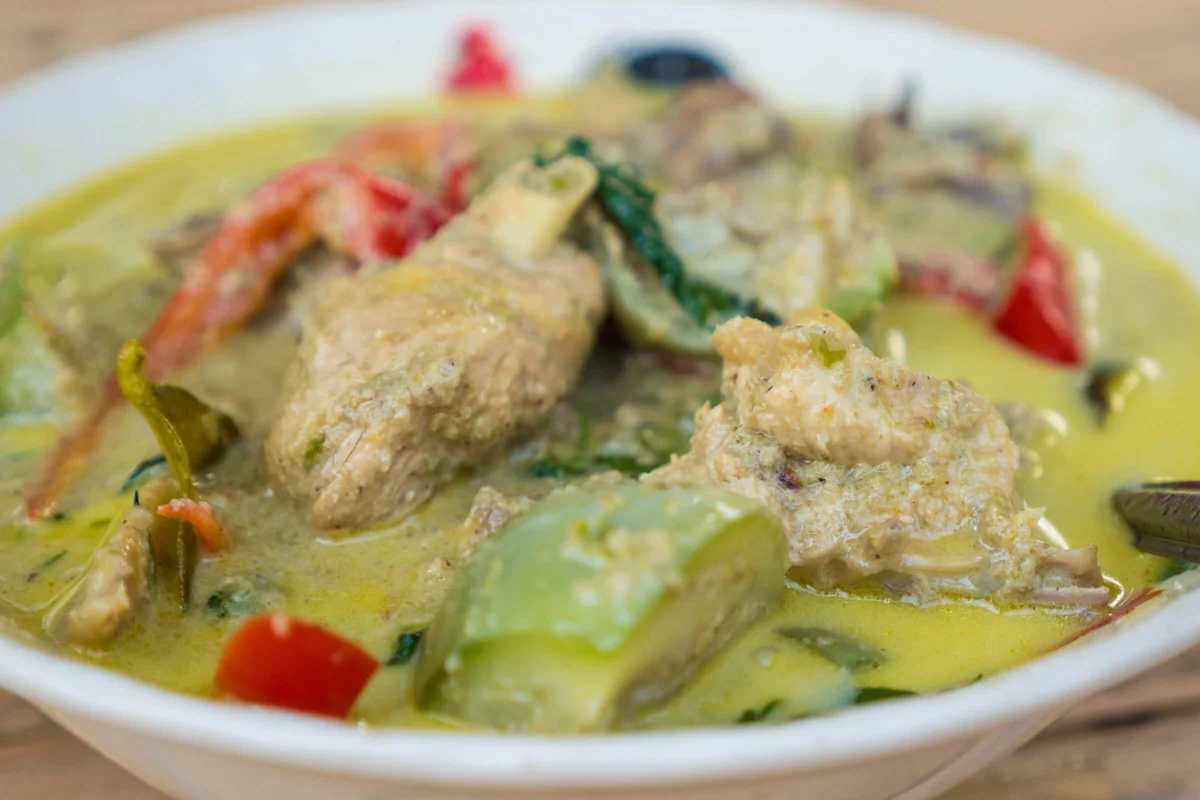
The cooking process itself moves swiftly, capitalizing on the intense flavor development already established within the paste. The method begins by combining the freshly pounded green curry paste, the chopped chicken, and roughly two cups of water in a cooking pot, accompanied by torn kaffir lime leaves to infuse the liquid with fragrance. The mixture is allowed to boil for roughly ten to fifteen minutes, ensuring the poultry becomes thoroughly tender while a significant portion of the water evaporates, leaving behind a concentrated base of chicken and condensed curry spices.

With the protein softened, thick and rich coconut cream—known locally as hua kati—is introduced to the pot. Culinary experts emphasize avoiding thin coconut milk, which can cause undesirable oil separation during the cooking process. Fresh coconut cream from a local market is ideal, though boxed alternatives serve as a reliable substitute when fresh ingredients are unavailable.

As the coconut cream reaches a gentle simmer, quartered Thai eggplant and sliced red spur chilies are added, providing both textural contrast and a splash of contrasting color. The cooking time at this stage is brief, lasting only a few minutes to keep the vegetables tender-crisp. Just before removing the pot from the heat, a generous handful of fresh Thai sweet basil is folded into the bubbling mixture.

Seasoning is approached with restraint; because the curry paste already incorporates salt and fermented shrimp paste, minimal additional salt is required, with traditional cooks preferring salt over fish sauce for final adjustments.

Comparing home-cooked preparations to commercial street food reveals why many travelers develop mixed impressions of the dish. Street vendors often reduce coconut cream volume and dilute curry paste concentrations to manage operational costs, resulting in a thinner, sweeter, or occasionally bland product. In contrast, preparing the dish at home allows the ingredients to shine at their full strength, yielding a velvety texture and a multi-layered flavor profile where the individual notes of green chili, cumin, coriander, and kaffir lime remain distinctly perceptible.

While the entire process demands considerable time—primarily dedicated to the physical exertion of pounding the paste—the resulting dish offers a deeply rewarding culinary experience that redefines the standard for authentic Thai green curry in a home setting.