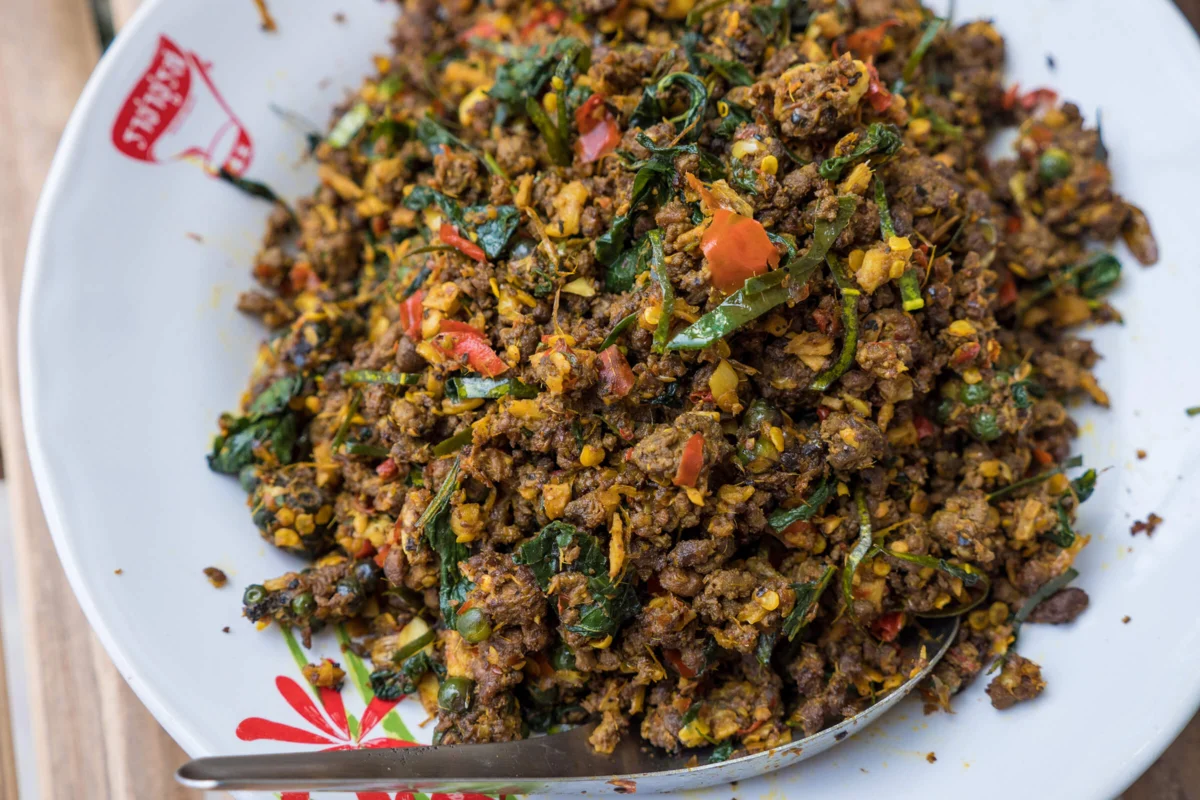
When it comes to the bold, fiery, and deeply aromatic world of Thai cuisine, few dishes capture the intensity of flavor quite like pad ped. Literally translating to stir-fried and spicy, this traditional preparation relies heavily on aromatic curry pastes, fresh bird’s eye chilies, and an array of wild herbs to deliver an unforgettable culinary punch. Food enthusiasts eager to explore authentic regional cooking can now look to a cherished family recipe brought to light by food writer Mark Wiens, who recently shared a detailed look into how his mother-in-law prepares this classic southern delicacy.

Originating from the southern Thai province of Songkhla, the dish traditionally features wild water duck—known locally as nok bet nam—sourced straight from jungle-ingredient stalls at local markets. While game meat gives the dish its rustic, authentic character, the recipe is remarkably adaptable, allowing home cooks to substitute wild duck with minced chicken, beef, or lamb without losing the essence of the dish. Designed specifically for lovers of robust, heat-packed food, pad ped stands out as one of the most flavor-dense creations in Southeast Asian cooking.

The preparation process is a masterclass in traditional technique, emphasizing the importance of fresh ingredients and methodical flavor building. Rather than dumping all ingredients into a pan at once, the recipe requires careful, separate preparation of the meat, spices, and aromatics before bringing everything together in a blazing-hot wok.

Preparing the Wild Duck

When working with whole wild water ducks sourced from a traditional market, the culinary process begins long before the meat hits the heat. Because the birds are sold largely intact with only their primary feathers removed, the initial step requires singeing away any remaining feather stubs. To achieve this, the skin is briefly roasted directly over an open flame for mere seconds, effectively cleaning the surface without cooking the meat underneath.

Once cleaned, the meat is carefully excised from the bones. While larger bones are discarded, smaller structural elements like the rib cage are delicate enough to remain, chopped finely alongside the flesh to add texture and depth. Mincing the meat by hand using a traditional heavy-duty cleaver takes only a few minutes and yields a coarse, medium grind far superior in texture to pre-packaged factory grinds. Once thoroughly minced, the duck undergoes a dry stir-fry over medium heat without any oil until fully cooked, after which excess moisture and rendered fats are drained away to leave behind pure, dry-cooked protein.

Crafting the Aromatics and Spices

The soul of pad ped lies in its complex matrix of spices and herbs. While pre-ground spices offer convenience, achieving the highest level of fragrance requires starting with whole seeds. Whole cumin and coriander seeds are dry-roasted together in a medium-hot pan for approximately thirty seconds until their essential oils release, after which they are pounded into a fine powder using a mortar and pestle.

Heat and pungency are layered into the dish through a generous quantity of fresh Thai bird’s eye chilies—often numbering around twenty—combined with an entire head of garlic. Pounded together into a coarse paste, these ingredients provide a sharp, fresh heat that complements the deeper, earthier spice profile of the curry paste. When available, young galangal is finely minced and added to the mix, offering a tender texture and a citrusy, pine-like sharpness that distinguishes high-end regional preparations from standard restaurant fare.

Another critical component is tree basil, known in Thai as bai yeera. Possessing a unique flavor profile that marries the warmth of cloves with a distinct peppery sweetness, this robust herb elevates the dish significantly, though cooks unable to source it can substitute other strong, peppery basil varieties. Coarsely chopped green peppercorns are also introduced when available, adding yet another dimension of botanical heat.

Bringing It All Together in the Wok

The final stage of cooking transforms these individual components into a cohesive, aromatic masterpiece. Heating a wok over medium heat with a small amount of oil, the pounded chili and garlic mixture is stir-fried briefly before the curry paste is incorporated. Whether using authentic southern Thai yellow curry paste, fiery red curry paste, or standard commercial varieties, this base is cooked down for several minutes, with occasional splashes of water added to prevent scorching.

Once the paste has bloomed and integrated with the aromatics, the pre-cooked minced duck is introduced. The mixture is kept moving over medium-high heat for about three minutes to allow remaining moisture to evaporate. The freshly prepared galangal, cumin, and coriander powder follow closely behind, allowing the dry spices to coat the meat evenly before the chopped tree basil and green peppercorns are folded in.

Seasoning adjustments are made at this crucial juncture, with fish sauce added if additional saltiness is required, though the curry paste often provides ample sodium on its own. The grand finale involves finely shaving a stack of fresh kaffir lime leaves, sprinkling them over the sizzling mixture, and folding them in for just thirty seconds before killing the heat. The resulting dish is exceptionally vibrant, intensely spicy, and designed to be served piping hot alongside freshly steamed white or brown rice.