The International Ecotourism Society (TIES) has released the findings of its latest global survey, capturing the perspectives of nearly a thousand tourism professionals spread across the globe. Following a call to action in their previous newsletter, TIES asked members and friends within the broader tourism sector to share their insights on the current state and future trajectory of ecotourism. The resulting data offers a sweeping look at how professionals view the industry today, highlighting remarkable international participation, a near-universal consensus on market growth, and pressing concerns regarding sustainability, education, and accessibility.
The survey successfully gathered 971 viable responses from 91 countries, establishing a presence across every continent. While the United States contributed the largest share of individual responses, the geographical diversity of the participation proved to be a notable highlight for the organization. Submissions poured in from nations as varied as Sudan, the Palestinian territories, Israel, Venezuela, Bhutan, Montenegro, Bosnia and Herzegovina, Nepal, Côte d’Ivoire, and Iran, alongside eighty other countries. This broad international representation underscores the truly global nature of the modern ecotourism conversation, proving that sustainable travel initiatives are being actively evaluated, implemented, and debated in nearly every corner of the world.
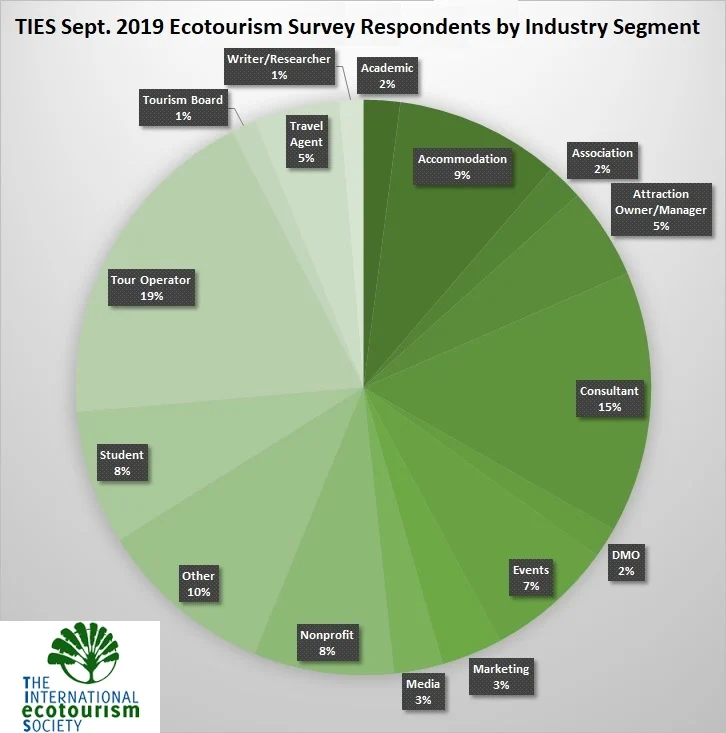
When analyzing the professional backgrounds of the participants, TIES found that ninety percent of respondents were able to cleanly classify their specific industry segments using the predetermined categories provided in the survey tool. However, the data collection process also generated constructive feedback, with several participants suggesting that future surveys allow professionals to select multiple industry segments to better reflect modern, multifaceted tourism roles. While the survey captured robust participation from tour operators and consultants, organizers noted a lower-than-expected turnout from academic professionals. Given that academics historically make up a larger percentage of the core TIES membership, their representation in the survey was comparatively modest. Nevertheless, the organizing team emphasized that the respondents formed an exceptional group, providing invaluable data that will help shape the society’s future initiatives.
Industry Growth and Global Momentum
Perhaps the most striking finding of the survey is the near-uniform agreement among respondents regarding the rapid expansion of the ecotourism sector. Out of the 971 total participants, a mere four responses—representing less than half of one percent of the total sample—indicated that they saw ecotourism slowing down. The overwhelming remainder of the respondents reported that ecotourism is not only growing, but growing at a rapid pace.

This overwhelming optimism regarding market growth aligns closely with other recent industry assessments conducted by major global organizations. Notably, broader studies—such as extensive market research recently published by Booking.com, which utilized much larger sample sizes—have similarly pointed to a powerful, sustained surge in consumer and corporate demand for sustainable travel alternatives. The convergence of TIES’ specialized professional survey with broader consumer-facing data indicates that the shift toward sustainable tourism is neither a temporary niche nor a passing trend, but a fundamental restructuring of the global travel landscape.
Language Demographics and Expanding Accessibility
Beyond market trends, the survey also yielded critical insights regarding communication, accessibility, and the linguistic needs of the global tourism community. A clear preference emerged among respondents calling for TIES to expand its support for Spanish-language content alongside its traditional English publications. Furthermore, a majority of participants stressed that ecotourism development within Spanish-speaking countries is both robust and vital to the global movement.
Interestingly, respondents also highlighted French and Mandarin as critical languages for future outreach. The strong recommendation for Mandarin is particularly remarkable given that the survey only received four responses from mainland China, suggesting that professionals globally recognize the long-term strategic importance of Chinese travelers and destinations in the sustainable tourism sector. In total, participants proposed thirty-nine other languages for future consideration. In response to this clear mandate, TIES has established a strong institutional goal to meet these requests by rolling out comprehensive Spanish-language support across its official website and published articles. Leadership at TIES believes that successfully implementing Spanish support will serve as a foundational step toward introducing broader multilingual capabilities for other requested languages in the future.
Navigating the Challenges of Sustainable Travel
While the outlook for market growth remains exceptionally bright, respondents did not shy away from detailing the severe and multifaceted challenges currently confronting the ecotourism industry. When asked about the obstacles standing in the way of true sustainability, participants raised numerous red flags. Many pointed to corporate greed, rampant overdevelopment, a widespread lack of knowledge among travelers and operators, and a general deficiency in public awareness regarding what constitutes authentic ecotourism.
Additional barriers cited by professionals included the intensifying impacts of climate change, overly restrictive or poorly designed regulations, difficulties in securing necessary operational permits, and complex financial hurdles. Overtourism was also highlighted as a major threat to fragile ecosystems and local communities. Crucially, a significant number of respondents emphasized the ongoing difficulty that everyday travelers face when attempting to book genuinely fair and sustainable ecotourism experiences. TIES announced that it will soon release detailed reports outlining the work that the organization and its partners are currently undertaking to combat these serious challenges.
Strategic Priorities for the Future
Perhaps the most surprising and actionable insights gathered from the survey centered on the question of where TIES should direct its future support and initiatives. When asked to prioritize organizational focus, forty-eight percent of respondents requested that the society concentrate its efforts on education. Following closely behind, eighteen percent called for a primary focus on conservation, climate change mitigation, and conservation partnerships. Fourteen percent urged the organization to prioritize ecodestinations, a program area focused on detailing national ecotourism offerings organized by country. Eleven percent recommended a focus on publications, while nine percent suggested dedicating more resources to social media engagement.
In stark contrast to traditional institutional priorities, very few respondents requested that TIES focus its limited resources on political policy, United Nations partnerships, or direct campaigns targeting ecotourists themselves. Even more notably, only six individual respondents suggested that the organization should prioritize increasing its own membership numbers. Taking these clear directives to heart, TIES has already initiated outreach to several key partners within the global education space and plans to release comprehensive operational plans in the coming months.
Despite the heavy challenges of climate change, overdevelopment, and systemic barriers within the travel industry, participants maintained a deeply optimistic view of the future. The overwhelming consensus from the 2019 survey is that ecotourism possesses the resilience, adaptability, and momentum required to overcome current hurdles, ultimately continuing to provide a better, more responsible way to travel and experience the world.