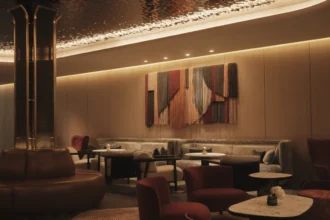
In contemporary hospitality design, the conversation surrounding inclusivity has shifted profoundly. No longer treated as an afterthought or a last-minute compliance hurdle, accessibility has emerged as a central pillar of thoughtful architectural and interior planning. Leading this transformation is Fitzroy of London, a brand that has long championed the intersection of aesthetic sophistication and rigorous utility.
To gain deeper insight into this evolving design philosophy, Hotel Designs sat down with Bradley Culmer of Fitzroy of London to discuss the launch of the brand’s new Oxford Doc M Pack and a complementary digital configurator. Together, these two strategic rollouts aim to streamline the specification process while proving that high-end hospitality interiors and fully compliant accessible washrooms are no longer competing priorities.
Meeting a New Standard in Commercial Design
The dual launch of the Oxford Doc M Pack and the digital configurator arrives at a time when the hospitality sector is rethinking how public and guest washrooms are conceptualized. According to Culmer, the impetus behind these products stems from a fundamental industry-wide shift in project execution.
Accessible facilities can no longer exist as isolated, utilitarian boxes added separately to satisfy minimum building regulations. Instead, they require seamless integration into the wider design vision from the very inception of a project. The Oxford Doc M Pack was developed to give designers a high-quality, pre-considered solution that successfully bridges the gap between regulatory compliance and luxury aesthetics. Meanwhile, the newly introduced digital configurator tackles the friction inherent in the specification process itself, equipping design teams with an intuitive tool to craft fully compliant layouts with greater ease and confidence.
For Fitzroy of London, the initiative is ultimately about removing unnecessary complexity from accessible washroom design while empowering designers with the freedom to maintain a cohesive visual standard throughout an entire property.
Balancing Heavy-Duty Durability with High-End Aesthetics
Hospitality environments are notoriously demanding spaces. Public areas and guest washrooms experience heavy daily use, placing extreme mechanical and physical stress on fixtures, fittings, and hardware. When developing the Oxford Doc M Pack, durability was treated as a foundational requirement.
Culmer emphasizes that hospitality washrooms must perform reliably day after day under considerably higher pressure than typical residential installations. However, he stresses that this operational resilience should never come at the expense of visual elegance. The design team sought to deliver a robust, practical solution that retains the refined finish expected in upscale hotels, fine-dining restaurants, and exclusive leisure environments.
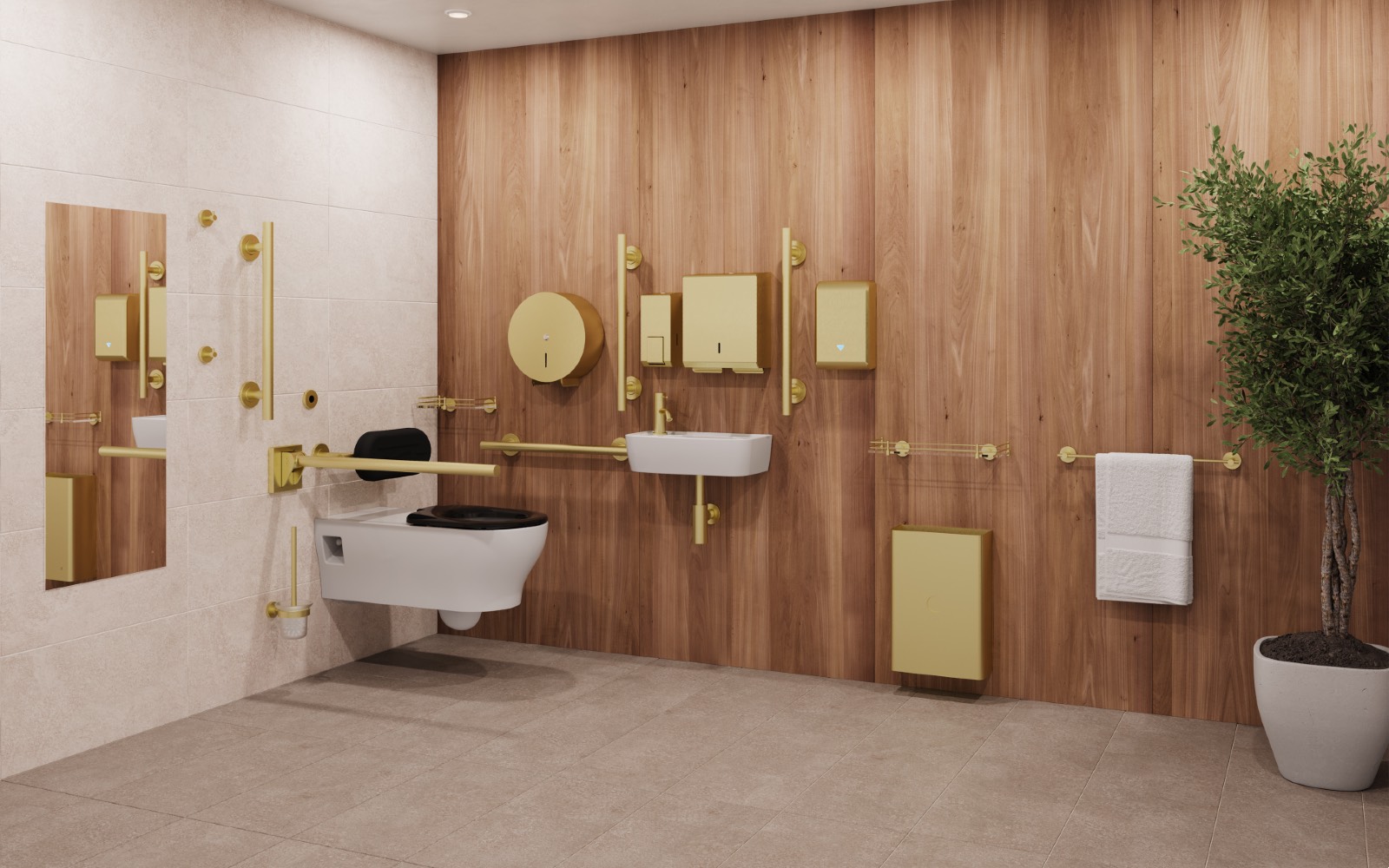
To achieve this balance, the Oxford Pack incorporates reinforced mounting points and non-porous surfaces designed to withstand rigorous cleaning protocols and constant public traffic. Crucially, these structural enhancements are paired with a sophisticated selection of architectural finishes, allowing the fixtures to harmonize effortlessly with diverse interior design schemes. The overarching objective is to demonstrate unequivocally that functional accessibility does not need to look clinical or detached from the surrounding decor.
Shifting the Industry Mindset Toward Holistic Design
Historically, the specification of accessible washrooms has been driven by a tick-box mentality centered purely on legal compliance. While compliance remains an indispensable baseline, Culmer observes a noticeable broadening of the industry dialogue. Accessibility is increasingly recognized as a vital component of the overall guest experience and a hallmark of superior design.
In the hospitality sector, every individual touchpoint shapes how a guest perceives a property. An accessible washroom should feel like an intentional, beautifully executed extension of that environment rather than a segregated space defined solely by its utility. This points toward a more holistic methodology among designers—one that simultaneously weighs accessibility, ergonomics, materiality, color harmony, surface finishes, and ambient atmosphere.
By treating these elements collectively, designers can craft spaces that accommodate a wider demographic of users while eliminating the stark visual divide between standard and accessible facilities.

The Growing Significance of Materiality and Finishes
Material and finish selection has taken on heightened importance as hospitality designers pay meticulous attention to the micro-details of interior architecture. The era of accessible products being restricted to a narrow, clinical visual language is rapidly drawing to a close.
Available in five distinct finishes—including Dark Bronze, Matt Black, and Satin Brass—the Oxford Doc M Pack reflects this appetite for coordinated design. Offering a considered palette allows design teams to match grab rails, backrests, and ancillary accessories with the overarching aesthetic of the venue. In a high-end hotel, for instance, this might involve integrating compliant fittings into a scheme characterized by warm metallics, moody architectural darks, or understated satin accents. Such flexibility ensures that the property maintains a consistent, uninterrupted design narrative from the lobby to the most private facilities.
Streamlining the Specification Process Through Technology
Alongside the physical hardware, Fitzroy of London’s new digital configurator addresses the operational realities of modern architectural specification. Commercial hospitality projects typically involve a complex web of stakeholders—including architects, interior designers, main contractors, operators, and procurement managers. In such multi-layered environments, streamlined communication and clear technical data are paramount.
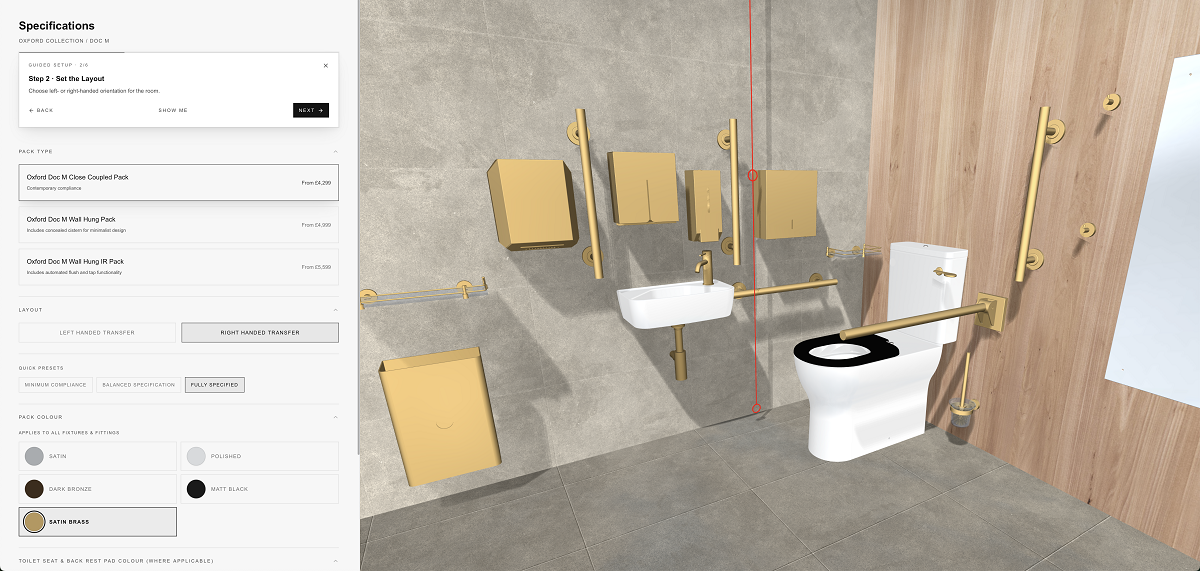
The digital configurator enables users to construct a fully compliant Doc M layout digitally, choose their preferred components and finishes, and instantly retrieve relevant technical specifications and project-ready documentation. This technological shift aims to give designers greater autonomy while minimizing the margin for error. Rather than spending valuable hours cross-referencing disparate product catalogues and regulatory requirements, specifiers can navigate the process through an intuitive, highly visual interface.
Pushing Beyond Minimum Regulations
When asked whether the hospitality industry has a responsibility to surpass minimum regulatory thresholds, Culmer is unequivocal. Building regulations provide an essential safety net, but the hospitality sector possesses a unique opportunity to excel because its core mission is centered on hospitality, welcoming guests, and generating positive emotional responses.
When inclusive design is woven into a project from its earliest conceptual phases, it naturally aligns with the broader aesthetic and operational strategy. Furthermore, Culmer highlights the critical conversation surrounding human dignity. The most successful accessible spaces avoid drawing undue attention to the individual using them; instead, they function flawlessly, exhibit thoughtful craftsmanship, and integrate smoothly into the wider built environment.
Navigating Current Washroom Design Trends
Current trends across hotel and hospitality washroom design point decisively toward spaces that are more immersive and design-led. There is an intensifying focus on delivering an experiential environment rather than merely checking off functional requirements, manifested through bolder uses of texture, sophisticated lighting, rich color palettes, and refined detailing.
Simultaneously, these elevated design ambitions must coexist with uncompromising standards of hygiene, ease of maintenance, durability, and accessibility. For manufacturers, this confluence of demands presents an exciting challenge: rethinking how products are engineered and specified to satisfy conflicting design criteria without compromise.
Looking Ahead: Partnership and Evolution
As Fitzroy of London looks to the future, the company remains dedicated to refining its product offerings and digital infrastructure in direct response to evolving market demands. By maintaining an active dialogue with architects, designers, contractors, and operators, the brand continues to identify friction points within the specification workflow and engineer practical solutions.
Ultimately, Fitzroy of London aims to be recognized not merely as a product supplier, but as a trusted partner to the wider design and hospitality community. By continuing to develop innovations that resolve genuine industry challenges and championing tools that simplify inclusive design, the company is helping to build an industry where accessibility and premium aesthetics are seamlessly intertwined.