HÀ NỘI — Stepping away from the bustling urban sprawl of Việt Nam’s capital, travelers seeking a deeper connection to local heritage can find an immersive escape just 60 kilometers from the centre of Hà Nội. In Mường Cốc Village, nestled within Mỹ Đức Commune, visitors are offered a rare chance to temporarily shed their modern routines and step directly into the shoes of a local farmer belonging to the Mường ethnic minority community.
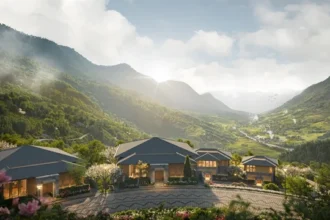
Rather than arriving merely as passive observers, participants in a unique local tourism initiative are invited to experience an entire day of traditional living, agricultural labor, and cultural exchange. Known for its striking landscape that locals and travelers affectionately describe as a "miniature Northwest," Mường Cốc boasts a picturesque terrain defined by lush green valleys, rolling mountains, and peaceful rural settlements. Most importantly, the area remains distinguished by its steadfast preservation of the Mường people’s traditional way of life, ancient gong culture, and deep indigenous knowledge passed down through generations.
The immersive journey is spearheaded by Gió Núi Farmstay, which offers a specialized program titled "Một Ngày Làm Người Mường" (A Day as a Mường Person). Designed to introduce outsiders to traditional practices they may never have encountered before, the tour bridges the gap between urban curiosity and rural reality. After a scenic drive lasting a little over an hour from downtown Hà Nội, participants arrive at the farm to find a warm, community-style reception. Hosts and neighboring villagers greet arriving guests with cups of steaming herbal tea, kept naturally warm inside rustic bamboo tubes, accompanied by a spread of fresh local fruits.
As visitors sip their tea, they receive an introduction to the traditional ingredients and brewing methods utilized in the highlands, while simultaneously gaining rich insights into daily life, the Mường language, and the broader historical context of one of Việt Nam’s most enduring ethnic traditions. This foundation sets the stage for a hands-on exploration of rural livelihoods that occupies the rest of the morning.
Depending on individual preference and seasonal availability, the day’s labor begins in either the farm’s fruit gardens or the nearby lotus ponds. For those heading to the water, the activity offers an immediate immersion into agricultural work. After a brief orientation regarding their new responsibilities, participants wade directly into the lotus pond, embracing the mud and water while taking in the rich fragrance of the blossoms. Working alongside local farmers, visitors cut and harvest the flowers before bringing them back to the farm headquarters. There, the work continues as participants help shell and dry the lotus seeds, carefully remove the bitter germs, and eventually prepare a traditional sweet lotus seed soup. Meanwhile, another group of visitors spends the morning in the orchards, returning laden with freshly picked fruits harvested straight from the garden.
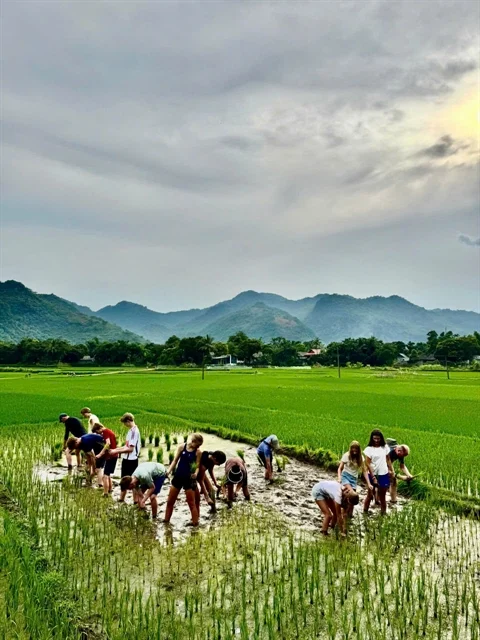
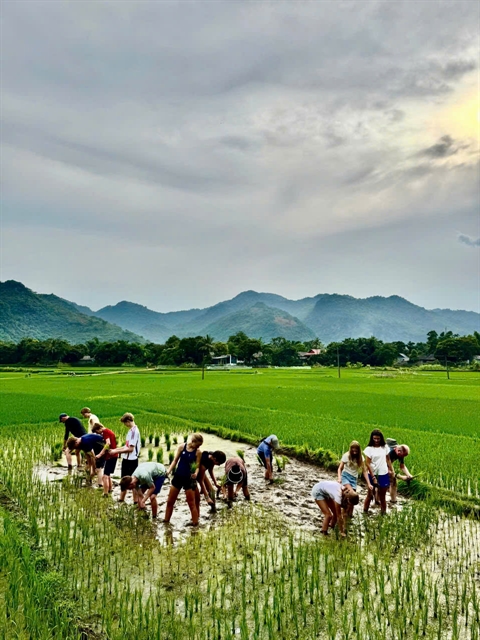
According to Lã Hải Yến, the owner of the farm, these agricultural tasks shift with the agricultural calendar; when the lotus season comes to an end, these amateur farmers trade the ponds for the fields to assist with planting or harvesting seasonal crops.
Following the morning’s physical labor, the itinerary transitions into culinary arts through a comprehensive cookery class. Under the guidance of an experienced local chef, visitors are taught how to prepare authentic Mường dishes, starting with pickled wild bamboo shoots with chili. The instructor details every stage of the process, from identifying how and where to properly collect the bamboo in the wild to selecting the necessary ingredients and measuring the precise ratio of seasonings required for the sweet-and-sour pickle brine, ensuring guests can recreate the dish for their families back home.
The culinary session extends to other traditional cooking techniques, including the art of steaming black glutinous rice and bamboo-tube rice, as well as mastering the method of clamping fish or chicken securely between bamboo sticks for slow-grilling over hot coals until the exterior turns golden and crispy. Other visitors find themselves gathering clams and snails from local ponds to learn the preparation of signature dipping sauces traditionally served alongside rustic porridges. The morning cooking session culminates with the art of wrapping Mường Cốc banana cakes, rustic treats prized for their natural sweetness and traditional presentation.
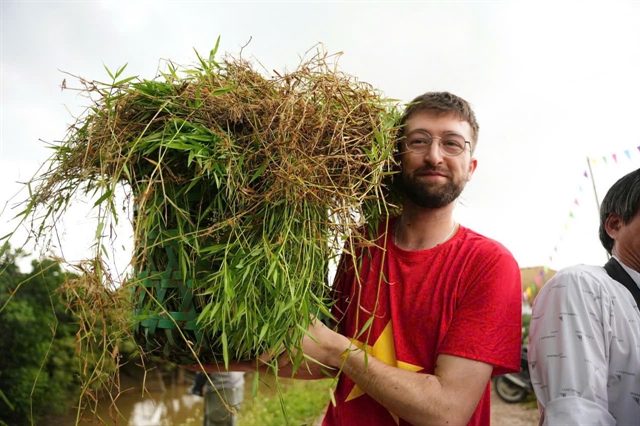
The hard work and careful cooking ultimately culminate in a shared feast. Alongside the dishes prepared by their own hands, the farm treats visitors to an expansive traditional local meal. This dining experience serves as a vital cultural touchstone rather than just a simple lunch, featuring dishes crafted exclusively from local produce in accordance with domestic traditions and recipes preserved through oral history for generations.
After a satisfying meal, the afternoon begins with a focus on traditional wellness. Participants return to the garden to learn about and harvest fresh medicinal herbs utilized in traditional Mường remedies. Under local guidance, guests discover how to prepare, dry, and boil these herbs to produce traditional teas and medicines. The herbal session concludes with a restorative herbal foot soak, allowing visitors to recover their energy while relaxing in wooden tubs filled with warm herbal waters positioned right next to the peaceful lotus pond.
The latter half of the day shifts toward cultural immersion and artistic expression. Guests participate in an introductory Mường language session, picking up basic vocabulary and customary greetings. Traditional attire of the Mường people is also made available, featuring skirts equipped with intricately woven waistbands and distinctive short blouses that allow visitors to experience the culture firsthand.
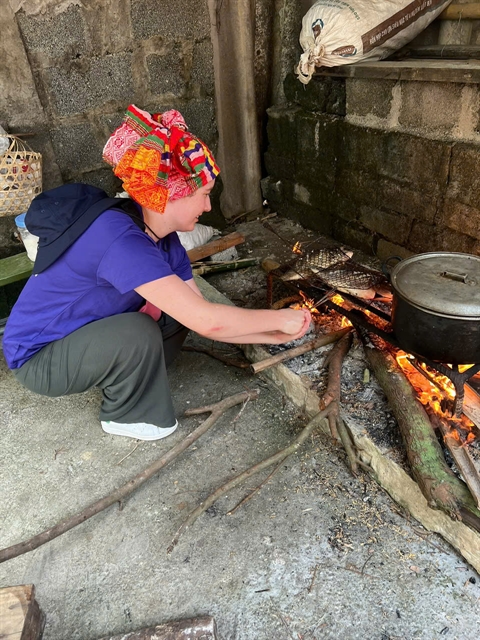
The afternoon session reaches its visual and auditory peak with a traditional music performance staged by local artisans residing near the farm. Guests are actively invited to join the performance, trying their hand at playing traditional gongs and participating in circle dances alongside the troupe. The festivities are accompanied by traditional rượu cần (gong-style jar wine), a potent local symbol of community connection, hospitality, and shared celebration.
As evening approaches, a communal bonfire is lit, and the hosts serve an afternoon tea. The gathering offers participants a moment to reflect on their day of agricultural labor and the memories forged throughout the village. As a parting gesture, every guest is presented with the wild bamboo tube they crafted earlier in the day—a tangible keepsake designed to send visitors home with warm hearts and lasting impressions.
Reflecting on the experience, farm owner Lã Hải Yến notes that even a full day of participation only scratches the surface of the diverse activities and traditions maintained within the village, providing ample reason for travelers to return. For those planning future visits, the agenda promises to expand further into the surrounding landscape through mountain trekking, cycling along nature-immersed routes, participating in folk games, and witnessing sacred traditional rituals performed during community celebrations such as prayers for good health and new rice festivals, offering yet another avenue to deepen their appreciation of Mường heritage.