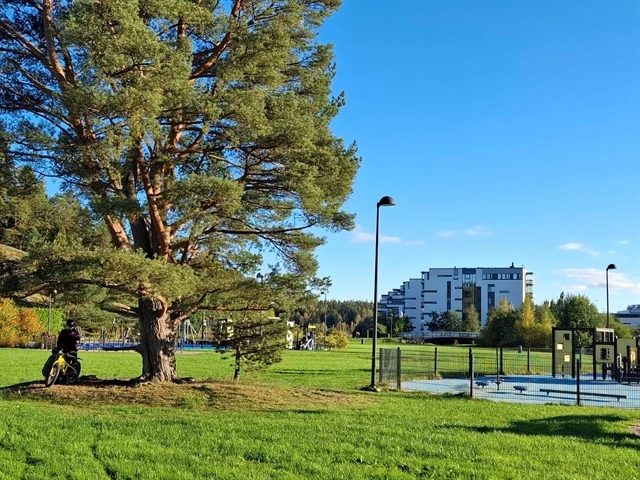
Less than an hour’s drive from the bustling streets of Helsinki, the municipality of Kirkkonummi offers something increasingly precious in modern life: room to breathe, exceptional schools, deep access to nature, and public services designed around the rhythms of everyday life. For families, including a growing population of immigrants, the municipality is evolving from a mere commuter suburb into a place to truly call home.
When people around the world imagine Finland, their minds typically wander to Helsinki’s elegant neoclassical architecture, snowy winter forests, traditional lakeside saunas, or the dazzling spectacle of the Northern Lights. However, few individuals outside of the Nordic region are familiar with Kirkkonummi.
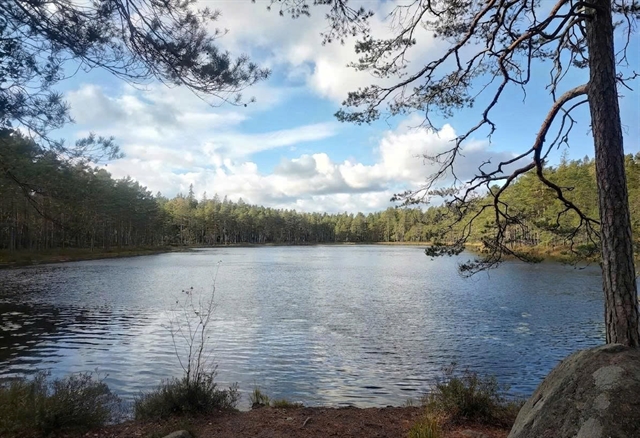
Situated immediately west of the capital, the municipality occupies a strategic geographical sweet spot. It is close enough to Helsinki to allow for a manageable daily commute, yet far enough removed to offer an entirely different rhythm of existence. Expansive forests, tranquil lakes, and the sweeping coastline of the Baltic Sea form an integral part of the everyday landscape. Children here grow up surrounded by untamed nature, while their parents remain within easy reach of the robust employment markets, academic institutions, and rich cultural opportunities of the greater Helsinki metropolitan area.
Yet, the true appeal of Kirkkonummi extends far beyond its picturesque surroundings and postcard-worthy landscapes. For families trying to decide where to plant their roots, the most critical questions revolve around the reality of an ordinary Tuesday morning. Can children safely walk or cycle to their local school independently? Are there welcoming places to play after the final bell rings? Can parents easily secure reliable childcare? Are libraries, modern sports facilities, and cultural activities located close at hand? And perhaps most profoundly for those who have traveled across the globe from another country, can this unfamiliar place eventually feel like a true home?
Kirkkonummi is actively attempting to answer those fundamental questions through deliberate, thoughtful planning in how it develops its municipal services and nurtures its local communities.
A Place Where Everyday Life Has Room to Breathe
For Minna Mattila, a Finnish resident who has called Kirkkonummi home for a decade, the municipality’s greatest strength does not lie in any single flashy attraction or tourist landmark. Instead, it is found in the high overall quality of everyday life.
Mattila deeply values the harmonious combination of pristine nature, high levels of personal safety, reliable public services, and a relatively calm, unhurried pace of life. In Kirkkonummi, a demanding working day does not necessarily have to end with a stressful rush from one crowded urban environment to another. There remains ample time in the evening to accompany children to their various hobbies, go for a refreshing swim, take a quiet walk through the nearby forest, or simply enjoy a peaceful evening at home.
"I don’t own a car. Kirkkonummi has everything we need close to home. Nature is everywhere—the forest starts 15 meters from our front door," Mattila said. "The best thing is that everyday life is easy. It’s a place where neighbours can become friends and people can ask one another for help."
While that sentiment might sound deceptively ordinary, it represents one of the most valuable and elusive commodities a modern municipality can offer its constituents. Official figures underscore this steady evolution. Kirkkonummi’s population reached 41,766 residents at the close of 2025, and more than 5,700 of those inhabitants speak a language other than Finnish or Swedish as their mother tongue. The municipality is becoming increasingly international in its demographic makeup, now playing host to residents from 142 distinct language groups, including a notable and growing Vietnamese community.
These statistics help place Kirkkonummi’s unique character into proper perspective. This is no longer an isolated, homogeneous Finnish village where every neighbor knows every detail of their peers’ lives. Rather, it is a dynamic, growing municipality within the broader Helsinki region, drawing people from all walks of life who arrive for employment, academic study, family reunification, and various other personal pursuits.
Among those newcomers are families who have journeyed across continents to begin an entirely new chapter of their lives in the Nordic region.
A Vietnamese Family Finds a Home Far From Home
Ngô Vân Khánh arrived in Finland from Việt Nam eight years ago as an ambitious master’s student. Like many international students who make the journey northward, she arrived with a relatively straightforward plan: focus on her studies, gain valuable professional experience, and see where life and career opportunities might take her. Several years later, after successfully building a stable and promising career at technology giant Nokia, she made a much more profound life decision: she brought her entire family to Finland and chose Kirkkonummi as the ideal place to establish their permanent home.
Adjusting to a completely new society, however, has not always been a smooth or easy process for the family. The Finnish language remains one of the most formidable obstacles to seamless integration. Even for international newcomers who are already fluent in English, possessing a working knowledge of Finnish makes countless daily tasks significantly easier—ranging from handling official administrative letters and understanding local bureaucratic services to building deeper, more authentic social connections within the community.
Another significant challenge is the region’s notoriously long, dark winter season. The drastically short daylight hours during the winter months and the biting cold can feel utterly alien to someone who has grown up in the tropical climate of Việt Nam. It takes a considerable amount of time for newcomers to settle into a functional daily routine, maintain robust social relationships, and adapt psychologically and physically to the harsh weather.
"My children were 15 and 8 years old when they first arrived. The early days were really difficult, as they didn’t speak Finnish yet and had no friends," Khánh recalled, reflecting on the arduous transition period. "Starting school in a new country also means adjusting to a different learning environment and social culture. Children need to develop a sense of belonging. Luckily, they adapted well after two years."
The family’s financial security and stability improved significantly when Khánh’s husband successfully secured employment at ABB, a major engineering firm operating in the region. With both parents gainfully employed, the household now enjoys a reasonable standard of living and has successfully navigated the local banking system to take out a mortgage and purchase their own home.
Yet, achieving financial stability does not automatically erase the lingering, subtle psychological feeling of being an outsider. Khánh and her husband occasionally acknowledge that they still feel somewhat on the margins of mainstream Finnish society because they are not yet fully fluent in the Finnish language. Casual social conversations can move at a rapid pace, and it requires a concerted, ongoing effort to follow the nuances and join in with confidence.
Through structured integration programs established for immigrants, the family has found valuable opportunities to meet fellow residents and actively practice the language. Both adults participate in local community groups and activities, including free weekly Finnish language lessons hosted at the modern Kirkkonummi Library.
Kirkkonummi’s dedicated municipal integration program explicitly recognizes that immigrants arrive in the area for a wide variety of reasons, including professional employment, higher education, and family ties. To support them, the municipality provides comprehensive integration services, individual guidance, and counseling. This includes targeted support for learning either Finnish or Swedish, alongside essential information regarding local services such as early childhood education and recreational leisure activities.
Integration also possesses a less tangible, deeply human side that cannot be solved by bureaucracy alone. Throughout 2025 and 2026, the municipality has organized "At Home in Kirkkonummi" discussion forums tailored specifically for foreign-language residents, which include dedicated events for English speakers. These community meetings openly address critical themes such as social integration, civic inclusion, personal safety, and positive relations between different population groups.
The deliberate name of the series conveys a vital message. The ultimate overarching goal is not merely to help newcomers physically live within the borders of Kirkkonummi, but to genuinely help them feel at home.
Creating Connections Through Everyday Activities
While formal language classes are undeniably important, true social integration often happens in much less formal, organic settings: while walking along a forested trail, visiting a local museum, sharing a meal, or simply chatting over a warm cup of coffee.
In Kirkkonummi, Ani Blomqvist works closely with Luckan, a prominent Finland-Swedish information and cultural center. She leads weekly gatherings specifically designed for immigrant women, helping participants connect meaningfully with one another while simultaneously becoming more familiar with the intricacies of local life.
The program incorporates a diverse variety of shared activities. Participants frequently venture out for seasonal mushroom picking in the local woods, visit regional museums, take part in wellness-focused yoga sessions designed to support mental health and help prevent depression, or introduce one another to the unique culinary and cultural traditions of their respective home countries. Khánh has even hosted a dedicated session introducing her international peers to the art of making Việt Nam’s famous, delicate spring rolls.
"Our goal is to help international women integrate into society by finding meaningful groups and organisations where they can take up new hobbies or continue familiar ones alongside Finns. We also want people from different cultures to make friends with one another and with Finnish people," Blomqvist explained. "I get a lot out of it. I meet wonderful people from so many countries and cultures, who teach me a lot about how things work in their cultures."
Building a Future, Not Just Adding Buildings
What can a modern municipality truly offer a developing child? In the case of Kirkkonummi, the local administration provides robust schools, comprehensive early childhood education, accessible public libraries, modern sports facilities, and a wide array of structured leisure opportunities. Children and young people are encouraged to participate in diverse hobbies, holiday activities, and special municipal programs designed to ensure that leisure and self-improvement remain accessible to families from varying socioeconomic circumstances.
The public library system serves as another vital pillar of this social ecosystem. Throughout Finland, public libraries function as much more than quiet places to simply borrow books; they operate as vibrant public spaces dedicated to lifelong learning, community meetings, and constructive social interaction. Complementing these spaces are localized cultural services, music education programs, visual arts training, and adult education courses, which collectively form the backbone of the municipality’s wider network of opportunities.
This expansive vision is becoming increasingly visible through a major new infrastructural project underway in the heart of Kirkkonummi. The Lyyra education and culture centre, officially known as Sivistyksen talo Lyyra and scheduled to open its doors in January 2027, will bring together two upper secondary schools, the regional music institute, the visual arts school, and the adult education center under one unified roof.
This bilingual campus is projected to serve approximately 800 upper secondary students while being purposefully designed to function as a bustling meeting place for the broader community as well. A large multi-purpose hall within the complex will host musical concerts and theatrical performances, while the neighboring Fyyri library seamlessly integrates into the exact same cultural environment.
For a local family, this interconnected design means that education does not have to abruptly stop at the traditional school gate. A child who harbors a passion for music can study it intensively. Another youngster might discover a hidden talent for the visual arts. Meanwhile, a parent can enroll in an evening adult education course, or the entire family can spend an evening attending a live concert or community cultural event.
Meanwhile, in the growing district of Masala, the new Nissniku multi-purpose building is currently under construction and is anticipated for completion in 2028. This ambitious project is intended to bring brand-new educational and community facilities directly to one of Kirkkonummi’s most rapidly expanding residential areas. While these represent substantial financial investments for the local government, their ultimate importance is perhaps best understood through something much smaller and more immediate: the daily lived experience of a child.
As Kirkkonummi continues to expand, growth inevitably brings its own set of distinct challenges. A rising population naturally translates to a greater demand for classroom seats, childcare slots, public transport infrastructure, affordable housing, and well-maintained public spaces. Consequently, the municipality faces the delicate and difficult task of developing new physical infrastructure without losing the pristine natural environment and close-knit sense of community that initially made the area so attractive to residents. The municipality’s current capital investment program clearly indicates an ambition to successfully achieve both goals simultaneously.
Finland as a whole continues to draw international students, skilled foreign workers, and families who are actively seeking a different kind of future. The nation’s global reputation for personal safety, its publicly funded and highly regarded comprehensive education system, abundant opportunities for higher education and professional advancement, and the promise of a stable career path hold a powerful appeal for people worldwide, including Vietnamese citizens considering a major relocation.
For parents navigating their options, the quality and accessibility of education often serve as the decisive factor. Across Finland, children from wildly diverse socioeconomic backgrounds attend the same publicly funded comprehensive schools, ensuring a high baseline of learning. Growing up within a remarkably safe social environment characterized by easy access to nature and outdoor physical activities remains an exceptionally strong draw for families looking to establish long-term stability.
At the same time, it remains essential to recognize that individuals and families arrive in Finland through many different pathways. Some Vietnamese nationals arrive directly with pre-arranged employment contracts, some join close family members who are already legally established in the country, and others first arrive as international students before transitioning into the local job market. Each distinct migration route carries its own specific administrative requirements, financial costs, and personal expectations. Higher education in Finland, for instance, is not universally free for all; students hailing from outside the European Union and the European Economic Area are typically required to pay tuition fees for English-taught degree programs.
Despite these hurdles, municipalities like Kirkkonummi demonstrate how local governance, community engagement, and a commitment to inclusivity can transform a foreign destination into a true home.