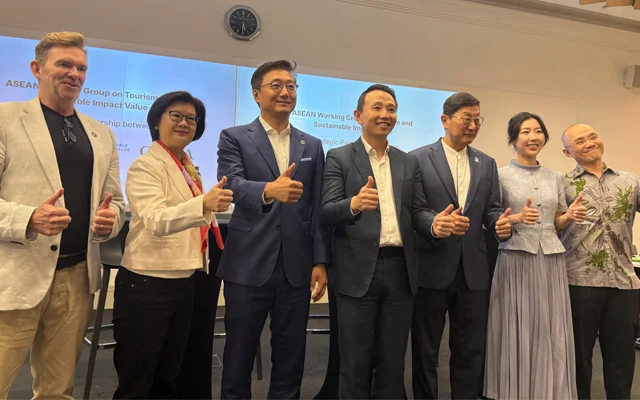
The Sustainable Impact Value Pioneer (SIVP) initiative officially launched in Singapore on October 23, 2026, creating a collaborative platform designed to unite organizations across diverse industries. The timely rollout is strategically positioned to support the widespread adoption of robust sustainability practices ahead of several major regional and international initiatives scheduled for 2027.
Unveiled under the guiding theme Creating Value Across Industries: Shape What’s Next for ASEAN, the launch event drew key stakeholders, industry partners, and thought leaders from the tourism sector and beyond. The initiative seeks to break down traditional corporate silos, fostering cross-sector cooperation to address pressing environmental, social, and governance (ESG) challenges while driving commercial viability.
GUAVA, a prominent specialist in hospitality guest amenities and comprehensive environmental, social, and governance solutions, has stepped forward as SIVP’s core implementation partner. The organization brings significant expertise in helping businesses navigate the complexities of sustainable transformation without compromising operational efficiency or financial performance.
Gabriel Tan, CEO of GUAVA and recognized globally for his leadership—having been named the UN Global Compact’s 2022 SDG Pioneer for Circular Economy—detailed the structural framework of the initiative during the launch event. He explained that SIVP operates on a unique non-fee, participatory contribution model. This inclusive framework is designed to be highly adaptable, allowing it to be seamlessly applied across a wide variety of industries well beyond traditional hospitality and tourism.
“The SIVP philosophy is start with what you have, and create value together,” Tan told the gathered audience, emphasizing that sustainability should not be viewed as an expensive compliance burden or a secondary corporate add-on, but rather as an intrinsic driver of operational value and community resilience.
The newly formed SIVP ecosystem is built to act as a powerful connector, bridging governments, multilateral organizations, destination management bodies, and core industry stakeholders with critical knowledge organizations and enablers. This expansive network encompasses academia, specialized subject-matter experts, industry associations, media organizations, event organizers, financial services providers, and multinational corporations. By fostering these multi-lateral linkages, the initiative aims to ensure that sustainability strategies are backed by credible research, financial backing, and broad public-private alignment.
The urgency of the SIVP launch is underscored by a convergence of major international and regional milestones in the coming year. “2027 is where global and regional paths converge,” noted Tan, drawing attention to the significance of the United Nations International Year of Sustainable and Resilient Tourism. This global observance will unfold alongside Singapore’s influential upcoming tenure holding the ASEAN chairmanship and Vietnam’s high-profile hosting of the Asia-Pacific Economic Cooperation (APEC) forum. These simultaneous events provide a rare window of opportunity for Southeast Asian nations to showcase leadership in green transition and resilient economic development.
Addressing industry leaders and practitioners, Tan challenged conventional corporate thinking by asking organizations to fundamentally reconsider how their sustainability initiatives are conceived and executed. Specifically, he urged stakeholders to explore innovative ways to increase revenue streams within existing operating budgets, introduce meaningful well-being concepts into everyday environments without necessarily relying on dedicated spa facilities, and engage employees deeply and continuously beyond occasional corporate social responsibility events. Furthermore, he emphasized the importance of supporting local communities in ways that do not increase the daily workloads of existing staff, while simultaneously improving the overall transparency and visibility of sustainability practices in day-to-day operations.
To help businesses meet these rigorous challenges, the SIVP framework is built upon three foundational pillars: well-being, community impact, and carbon reduction. Proposed measures within this framework are practical and scalable, focusing on the seamless integration of well-being activities into customer and guest journeys before, during, and after a stay. In terms of community impact, the framework encourages organizations to support local populations through their routine daily operations. Meanwhile, carbon reduction efforts target the systematic minimization of emissions and waste associated with everyday consumables, such as guest amenities, stationery, room slippers, and other disposable items used across operations.
In tandem with the broader rollout of the SIVP framework, significant institutional developments are already taking shape at the regional level. An ASEAN Working Group on Tourism and Sustainable Impact Value is currently being established through a strategic partnership involving the ASEAN Business Advisory Council, SIVP, and GUAVA.
This collaborative regional body aims to build decisively upon existing commitments to sustainable and resilient tourism, laying strong groundwork ahead of the high-level 2027 ASEAN Tourism Ministers’ Meeting. By aligning policy with practical industry action, the working group will support ongoing efforts to protect fragile local environments, address mounting climate impacts, and ensure that future tourism development directly benefits micro, small, and medium enterprises across the region.