Azerbaijan’s tourism industry is advancing with improved air connectivity, extensive infrastructure development, and targeted talent investments, all of which are working in tandem to create a better quality of life and broader economic opportunities for its people.
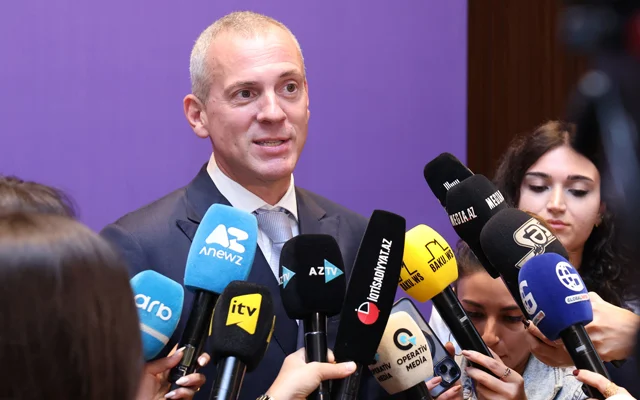
According to Florian Sengstschmid, CEO of the Azerbaijan Tourism Board (ATB), the government has prioritized enhancing access throughout the country. A major addition to this national transport infrastructure is the ongoing construction of the Murovdagh Tunnel, located in the country’s north-west.
As part of the new 81-kilometer Toganali-Kalbajar-Istisu highway connecting the Goygol and Kalbajar regions, the Murovdagh Tunnel will span more than 11 kilometers. Once fully operational at the end of this year, it will be recognized as the longest car tunnel in the entire Commonwealth of Independent States (CIS) region.
“Accessibility is a big topic for Azerbaijan, as there is a need to connect villages and locals across the country’s mountainous regions,” Sengstschmid explained, noting that improved accessibility and connectivity unlock the ability to sustainably grow tourism opportunities while simultaneously elevating the daily livelihoods of local residents.
This strategic focus on infrastructure is already yielding tangible results in remote and historically significant areas. The ancient Silk Road village of Basgal serves as a prime example of the socioeconomic transformation driven by tourism development. In 2018, the village had been largely deserted by locals seeking opportunities elsewhere. Following targeted government intervention to modernize public utilities while rigorously safeguarding its ancient architectural roots, the village underwent a profound revival.
Today, Basgal stands as a prosperous hub featuring thriving micro-businesses, traditional tea houses, and silk-printing workshops operated by local women. Approximately 200 families have returned to Basgal, where they have successfully rebuilt their homes and integrated themselves directly into the community’s ongoing development.
The revival of Basgal is prominently featured on the National Tourism Organization’s website, which notes that the location stands at the heart of Azerbaijan’s sustainable tourism development, designed to benefit locals, tourists, and the environment alike. Residents now enjoy access to steady employment opportunities created to support a growing tourism and hospitality industry, while the careful conservation of traditional architecture and cultural heritage has fostered a renewed and powerful sense of pride within the community.
The remote mountain village of Khinaliq is yet another beneficiary of this responsible approach to development, Sengstschmid told TTG Asia.
“Its people speak a unique multi-ethnic language that is thousands of years old. The community is also unique for its housing architecture and migration to the lower lands with their sheep during the cold winter,” Sengstschmid said.
A significant milestone was achieved when Azerbaijan successfully inscribed the Cultural Landscape of the Khinalig People and Köç Yolu Transhumance Route into the UNESCO World Heritage list in 2023. This recognition ensured the legal and practical protection of their ancient traditions and the vast 100-kilometer stretch of land utilized by the shepherds both now and into the future.
“It also resulted in people investing in their houses to welcome tourists. Livelihoods have improved,” Sengstschmid detailed, emphasizing that the Azerbaijan Tourism Board remains firmly focused on bringing remote sites into the mainstream tourism economy while creating sustainable self-employment opportunities for local populations.
When asked about the financial scale and sources of these investments, Sengstschmid noted that investment interest is originating from both domestic and international stakeholders. Mountain destinations such as Shahdag and Gabala have notably drawn substantial infrastructure investments, with modern facilities being constructed specifically to support the robust development of ski tourism in the Caucasus nation.
Alongside these physical tourism developments come critical investments in human capital and talent, Sengstschmid noted.
“Tourism is taught at 14 universities across Azerbaijan and there are many vocational schools offering frontline jobs in the tourism hotspots,” he told TTG Asia.
With the steady rise in professional tourism career prospects throughout Azerbaijan, the country stands a significantly higher chance of welcoming back local hospitality professionals who had previously left their homeland in search of employment opportunities elsewhere.
To support Azerbaijan’s extensive tourism developments now and into the future, the ATB is actively engaged in high-level talks with various international airlines to bring the country closer to more parts of the world. Sengstschmid reported that particularly productive conversations took place at the recent Routes World 2026 conference held in Frankfurt.
“I am very optimistic that in the near future, hopefully by the end of 2027, we will have more news about increased connectivity with Asia,” he shared.
Azerbaijan is already connected via direct flights from China’s Beijing, operated by Azerbaijan Airlines, and Urumqi, operated by China Southern Airlines. Furthermore, direct aviation services connecting Azerbaijan with Shanghai, China, and Bangkok, Thailand, have been officially announced for launch in 2027.
Bolstered by these proactive measures, official data from the ATB indicates that Azerbaijan has already welcomed more than 52,000 Chinese travellers, surpassing the total volume recorded for the entirety of 2024, a positive trend heavily supported by favorable visa-free entry policies and continuously improving air connectivity.