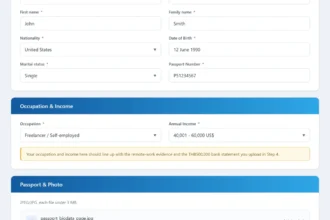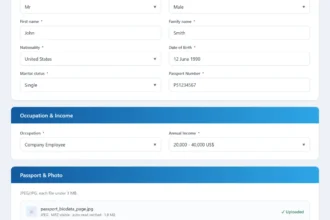
Thailand’s Immigration Bureau has officially launched its new mobile application, the Thailand Immigration Management System, or THIM. Developed in a strategic partnership with Amazon Web Services and Digital Identity Co., the application is designed to streamline immigration procedures for the roughly 30 million international visitors who arrive in the kingdom every year. However, within days of its rollout on app stores, the platform triggered a wave of confusion across online expat forums and travel groups, primarily centered on whether the new tool replaces existing entry requirements like the Thailand Digital Arrival Card, commonly known as the TDAC.
Immigration officials have clarified that THIM does not replace the TDAC. The digital arrival card remains a mandatory requirement for every foreign national entering Thailand, regardless of their nationality or the specific visa category they hold. Downloading the new application does not exempt any traveler from completing the TDAC process prior to their arrival. Instead, the application is being positioned as an alternative interface and a forward-looking digital ecosystem rather than a replacement for current regulatory mandates.

Currently operating in a pilot phase following its launch in May 2026, the THIM platform is slated for a full official rollout on October 1, 2026. The Immigration Bureau has ambitious visions for the software, describing it as a potential super app for foreigners residing in or visiting Thailand. The ultimate objective is to establish a single, unified digital platform capable of managing a wide array of bureaucratic necessities, ranging from arrival registrations and visa extensions to the mandatory 90-day reporting obligations for long-term residents.
Under the hood, the application’s core infrastructure is hosted on Amazon Web Services utilizing a sovereign framework. This technical architecture ensures that all sensitive personal data and passport information are stored and processed strictly within Thailand under local data protection laws. For frequent visitors and long-term residents concerned about the security and jurisdiction of their biometric and travel data, this localized data storage framework represents a crucial consideration.
The application’s underlying design focuses heavily on efficiency at border checkpoints. According to the Immigration Bureau, first-time users are expected to complete their initial identity verification process within two to three minutes. For returning visitors whose profiles are already established in the system, that setup time drops to under a minute. The ultimate benchmark for immigration counters is to process each individual traveler in under forty seconds. Furthermore, the application incorporates a group and family submission feature, allowing a single user to handle arrival information for multiple travelers simultaneously. This capability is intended to eliminate repetitive form-filling for families and tour groups arriving together.

Despite these promising logistical goals, the pilot launch has encountered technical hurdles. Early reviews on both the Apple App Store and Google Play Store indicate significant user friction, with the application holding a low rating as users report persistent freezing during the loading phase and failures to advance past the initial launch screen. Consequently, seasoned travelers and community administrators are advising visitors to rely on the official web portal for their TDAC submissions and to keep physical or digital copies of their accommodation and travel details readily accessible when arriving at Thai airports, ensuring they are not stranded by temporary software malfunctions.
For long-term expats and foreign residents, the most anticipated aspect of the THIM platform is its planned Phase 2, which is scheduled to coincide with the full rollout in October 2026. The upcoming phase is expected to introduce digital visa extensions and mobile-based 90-day reporting. For long-term expatriates, successfully shifting the recurring obligation of 90-day notifications from physical visits to immigration offices or clunky legacy web portals into a reliable mobile application would represent a major enhancement to daily life in the country.
However, long-term observers of Thai bureaucratic procedures remain cautious. The history of digital modernization initiatives in Thailand often reveals a timeline where official enthusiasm significantly outpaces technical execution. Past digital rollouts, such as early online reporting portals that required obsolete web browsers to function, have left many residents skeptical of projected timelines. Until Phase

2 is formally released and proven stable, all existing regulatory requirements, physical documentation standards, and reporting protocols remain strictly in effect.
At present, casual tourists and incoming visitors may find limited immediate utility in downloading the application while it remains in its unstable pilot phase. However, once the software achieves operational stability, it is expected to serve as a convenient tool for frequent flyers, digital nomads, and long-term expatriates managing their legal status in the kingdom. The platform currently supports English, Russian, Japanese, and Chinese languages, with plans underway to expand language support to fifteen options ahead of the nationwide October rollout. While the long-term vision for the THIM application points toward a deeply integrated digital future for Thai immigration, the current reality requires travelers to maintain traditional compliance methods while monitoring the progress of the pilot program.