Thailand continues to refine its immigration landscape, bringing changes to tourist visa rules, entry requirements, and application procedures that impact international visitors planning short- or long-term stays in the country. Because Thai visa policies frequently evolve, officials strongly recommend that travelers always verify the most current steps, fees, and documentation on the official Thai e-Visa portal prior to making travel arrangements. Visitors are also advised to book flexible or refundable flights and avoid tight return schedules, as electronic visa approvals arrive by email and processing timelines can be unpredictable.
The country offers a diverse array of tourist entry options, ranging from a standard 30-day visa exemption to single-entry and multiple-entry tourist visas, alongside specialized pathways like the Destination Thailand Visa and the Thailand Privilege Visa. Understanding which option fits a specific trip helps travelers navigate costs, documentation, and potential extensions at local immigration offices.
A Thailand tourist visa permits non-Thai nationals to enter the country for tourism, visiting friends and family, receiving medical treatment, or attending meetings, conferences, and seminars. Depending on the specific visa category, permitted stays typically span 30, 60, or 90 days before any formal extensions are requested.
In general, travelers can choose among four primary categories: the visa-exempt stamp, the visa on arrival, the single-entry tourist visa, and the multiple-entry tourist visa. Visa-exempt stamps and visas on arrival remain limited to passport holders of specific nationalities. The visa-exempt stamp, or tourist visa waiver, allows eligible visitors to stay in Thailand for 15 to 90 days without obtaining a visa in advance, with the exact duration determined by nationality.
Meanwhile, the visa on arrival caters specifically to nationals of designated countries, offering a 15-day stay for a cash fee of THB 2,000 upon arrival by air. Travelers using this route must present confirmed proof of onward travel dated no later than 15 days from entry, while bus, train, or van tickets lacking fixed return dates are not accepted as valid proof.
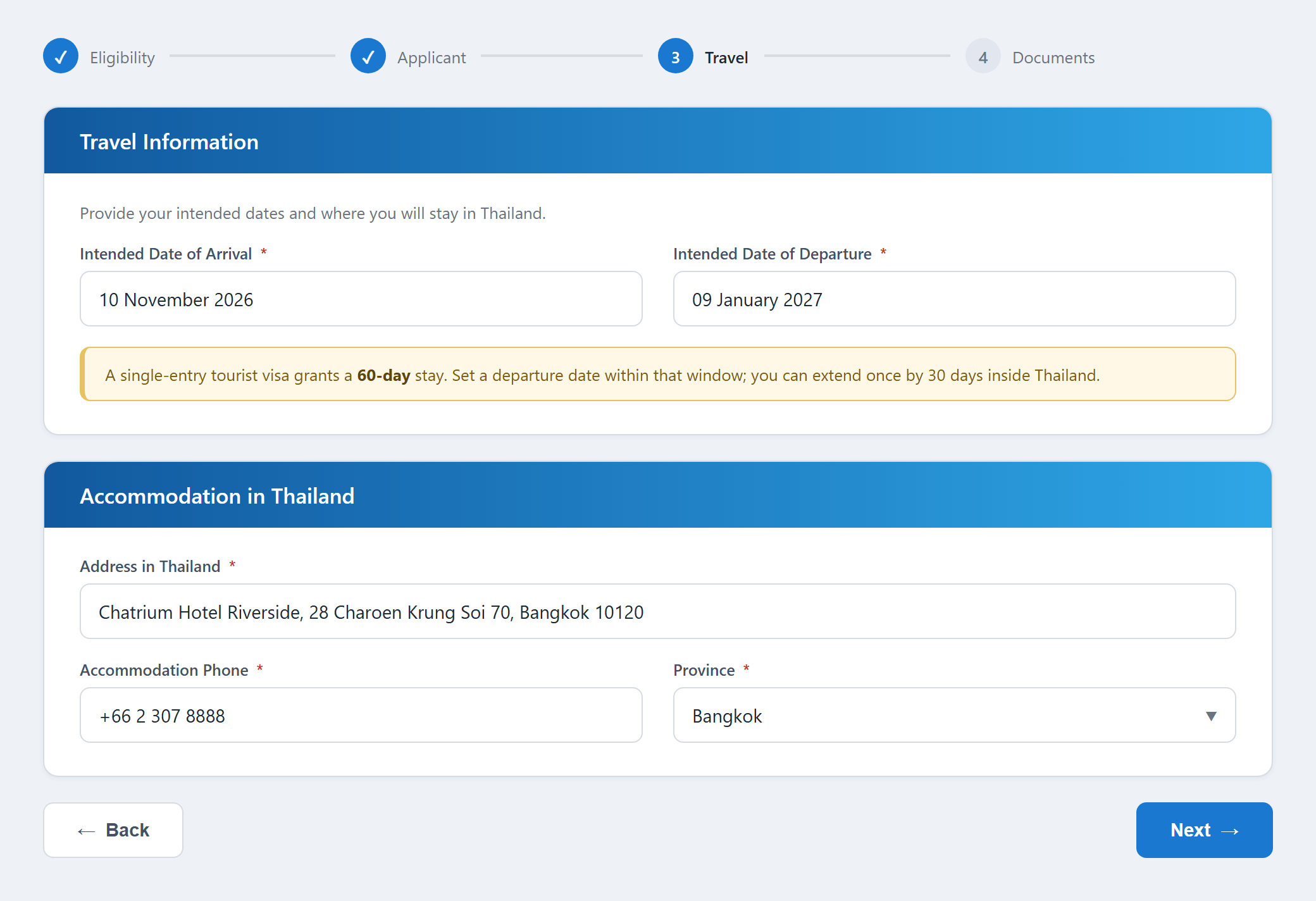
For those planning an extended stay of up to 90 days, the single-entry tourist visa provides an initial 60 days starting from the date of arrival, which can later be extended by an additional 30 days at an immigration office. These visas generally remain valid for entry for 90 days after approval, requiring travelers to enter before the specified expiration date. Leaving Thailand while on a single-entry tourist visa automatically invalidates it unless a re-entry permit is secured beforehand.
Travelers seeking to remain in the country for more than 90 days often utilize the multiple-entry tourist visa. This option permits unlimited exits and entries during its six-month validity period, with each entry granting up to 60 days that can be extended once by 30 days. By timing entries strategically near the visa’s expiration, visitors can stretch their cumulative stay to roughly nine months. Unlike single-entry visas, multiple-entry holders do not need separate re-entry permits when departing the country, though applications must typically be submitted at a Royal Thai Embassy or Consulate in the applicant’s home country.
Beyond traditional tourist visas, specialized long-term options include the Destination Thailand Visa, which targets digital nomads and remote workers seeking to live in the country for up to five years, and the Thailand Privilege Visa, a long-term privilege program granting stays ranging from five to 20 years for applicants who meet financial and background criteria. Both are officially categorized under tourist visa frameworks.
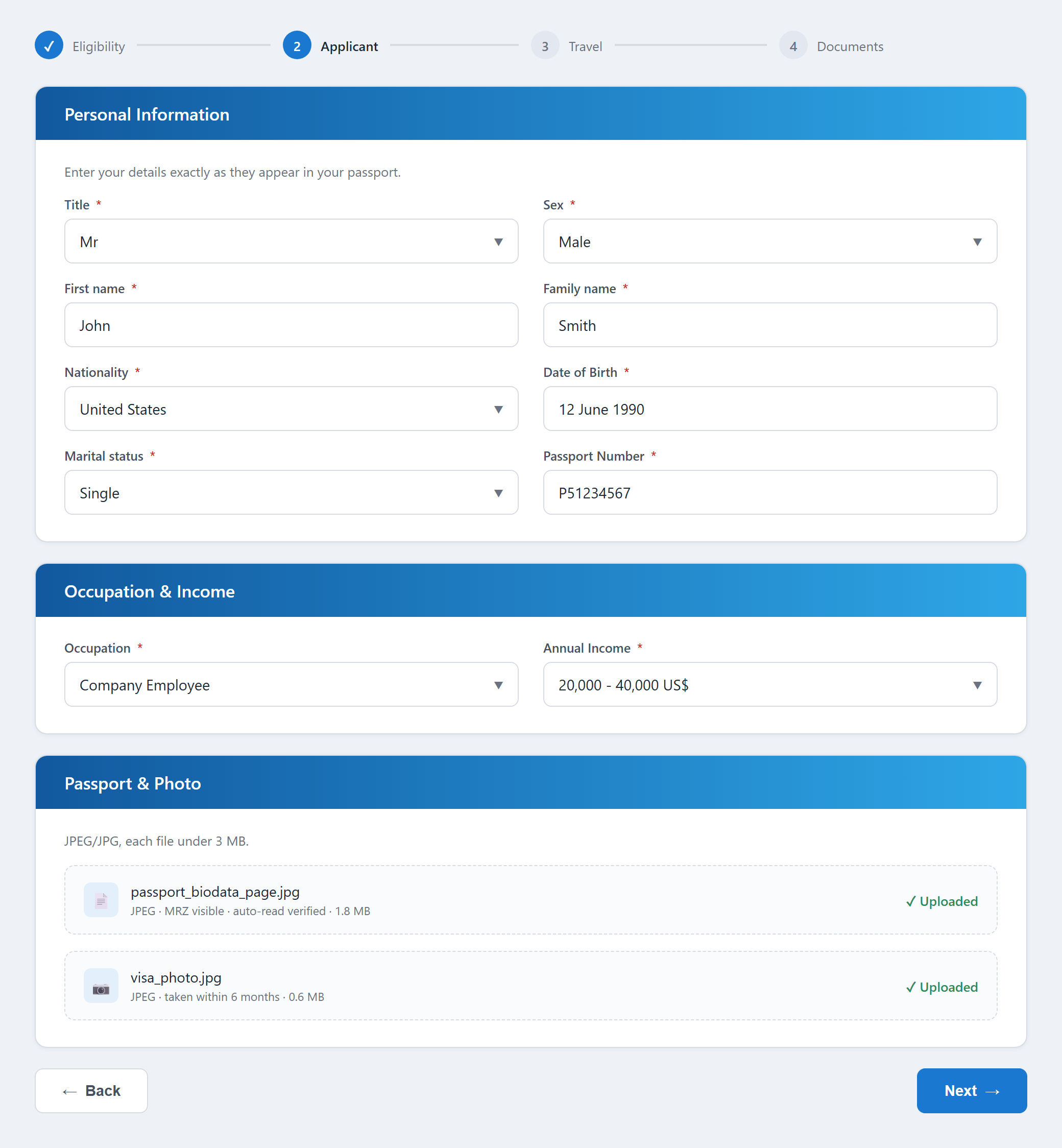
When preparing for travel, visitors must meet standard entry requirements, which typically include a valid passport, proof of onward travel, and adequate proof of financial funds. Embassies generally require official bank statements during the e-visa application process, while arriving immigration officers may occasionally request proof of cash or financial support. Authorities also recommend obtaining comprehensive travel insurance to cover unexpected medical expenses or injuries during the trip.
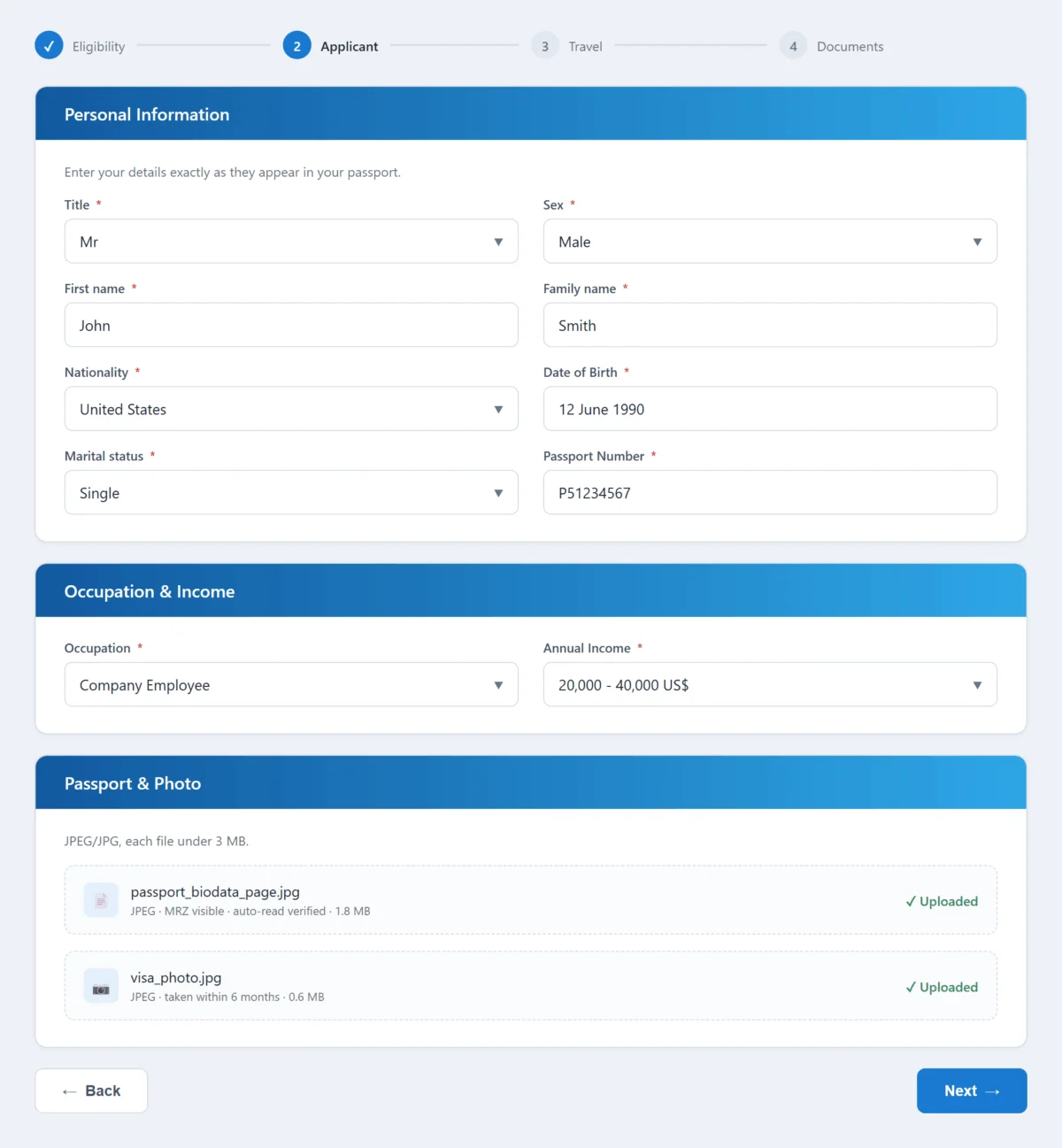
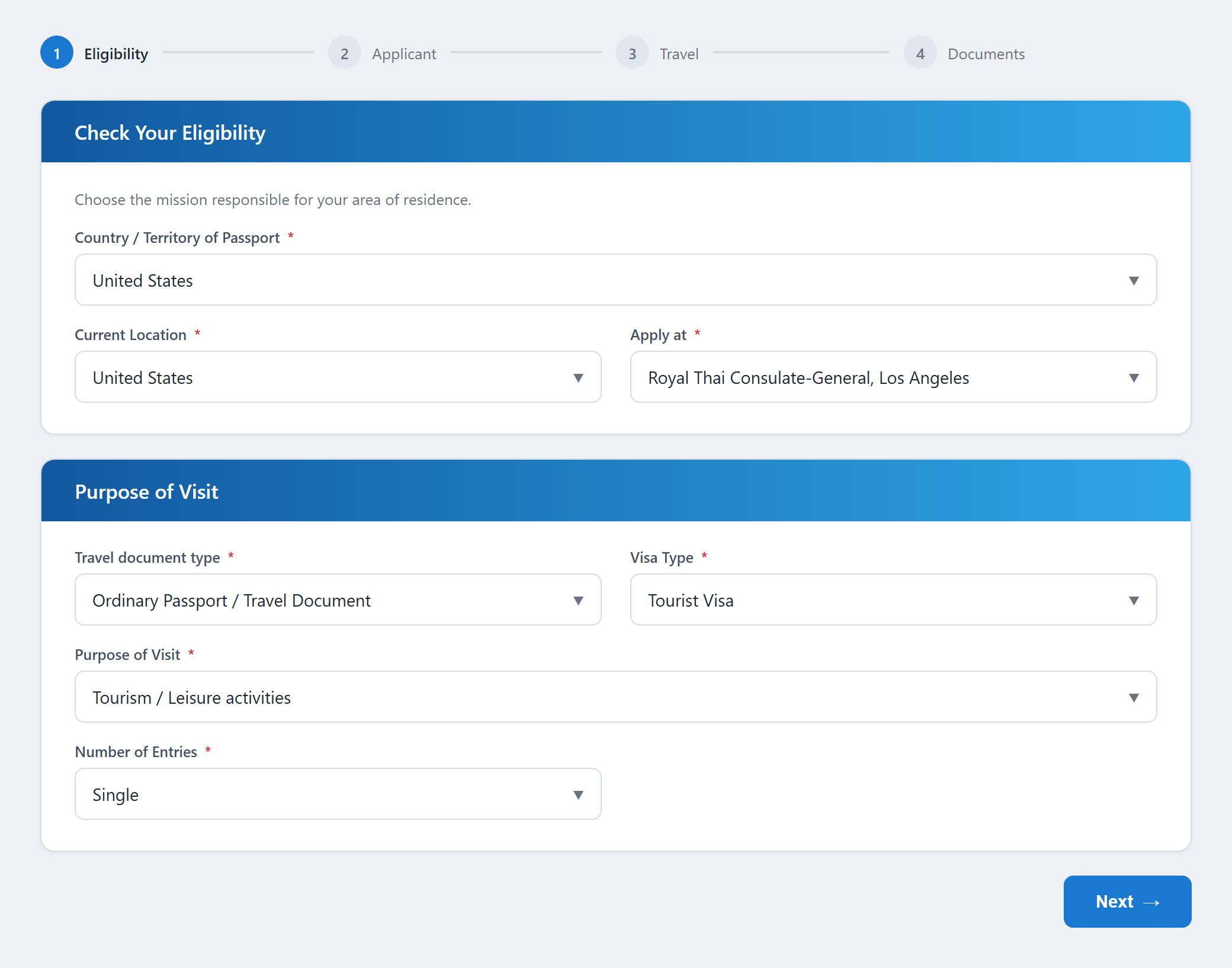
The application process for a Thai tourist visa is primarily conducted online through the official e-Visa system. Applicants create an account, select their eligibility parameters, fill out personal and travel details, upload supporting documents such as a passport data page, photo, flight itinerary, accommodation booking, and proof of funds, and complete the online fee payment. Fees vary depending on the embassy or consulate processing the application, with single-entry visas typically costing around US$40 or equivalent local currencies, while multiple-entry visas generally cost US$200.
In addition to securing a visa, all international travelers must complete the free Thailand Digital Arrival Card online prior to arrival, replacing older paper arrival cards and providing a digital QR code for presentation at immigration.
Once inside the country, travelers wishing to extend their stay can apply for a 30-day extension at a local immigration office. The process involves submitting required documents alongside a THB 1,900 extension fee. While many travelers receive the full 30-day extension, final decisions rest entirely at the discretion of the immigration officer, who may occasionally grant a shorter duration, such as seven days. Applicants are strongly advised to bring all mandatory paperwork, including proof of registered address such as a TM30 receipt, to avoid being turned away.
Immigration authorities continue to monitor travel patterns closely to prevent the abuse of visa-exempt stamps and tourist visas for long-term residency or unauthorized work. Frequent border bounces or back-to-back tourist visas can prompt closer questioning by immigration officials at land borders and airports. Furthermore, overstaying a visa carries strict financial penalties of THB 500 per day, capped at THB 20,000, alongside severe risks of detention, legal complications, or future travel bans. Travelers needing to transition from a tourist visa to another visa category, such as a work visa, are generally required to exit Thailand and re-enter with the appropriate documentation.