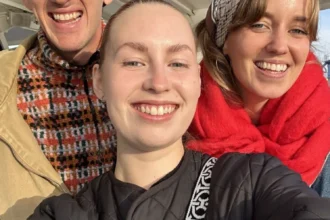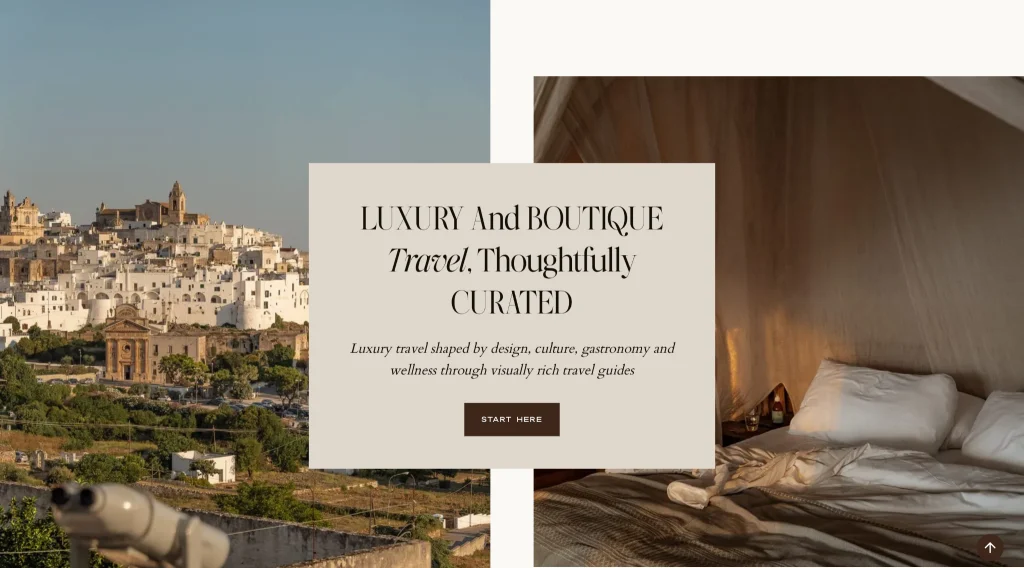
For more than 12 years, Alex Wieteska-Gasior has lived out of a suitcase, traversing more than 50 countries and calling cultural capitals and coastal havens like the United States, the United Kingdom, China, Mexico, and Italy home at various points in her life. Today, she divides her time between the sun-drenched region of Puglia in southern Italy and the vibrant landscapes of Mexico. But her nomadic lifestyle is more than just personal exploration; it serves as the foundation for a thriving digital enterprise. Wieteska-Gasior is the founder and driving force behind Roam & Thrive, a luxury, design, and wellness travel blog that attracts well over a million readers annually.
What sets Roam & Thrive apart in the crowded travel publishing landscape is its uncompromising adherence to a strict niche. Over the course of eight years, Wieteska-Gasior has never recommended a hostel, published a budget-friendly alternative simply to capture broader search traffic, or endorsed anything she would not genuinely choose for herself. By maintaining this rigorous standard, she has firmly carved out and defended a lucrative space in the luxury travel market.
This selectiveness has proven to be more than just a matter of editorial integrity; it is a successful business model. Over a recent six-month period, Wieteska-Gasior earned $9,500 through Travelpayouts by aligning her monetization strategy directly with her high-end content. Her approach offers valuable insights into how digital creators can monetize specialized audiences without sacrificing authenticity.
Not for Everyone, and That Is the Point
When asked why readers will never find a mention of a hostel or a budget backpacker lodge on Roam & Thrive, Wieteska-Gasior does not hesitate to explain her reasoning. She notes that she could not convincingly recommend accommodations that she never uses herself. Because she has very little personal interest in hostels or executing trips on a strict budget, she refuses to pretend otherwise for the sake of clicks.
The broader travel blogging ecosystem allows creators to build successful platforms around nearly any travel style, from ultra-budget backpacking to family-friendly road trips. Wieteska-Gasior’s style is defined by its deep personalization. She only publishes recommendations that she would genuinely offer to a close friend, an editorial philosophy that naturally results in covering fewer properties and destinations overall.
Her professional background in art history provides an additional layer of authenticity to her work. Rather than focusing solely on standard luxury markers, she pays meticulous attention to architecture, interior design, and local craftsmanship. These nuanced details heavily influence which locations, hotels, and experiences she chooses to feature on Roam & Thrive.
For Wieteska-Gasior, the definition of luxury has evolved significantly over the past decade. She emphasizes that luxury is now less about traditional indicators like marble bathrooms or high thread-count linens and much more about thoughtful design, exceptional hospitality, stunning geographic locations, and immersive experiences that meaningfully enhance a traveler’s journey.
Swapping Traffic Volume for High-Intent Readers
Refusing to write about mass-market budget options or generalized travel topics inherently limits the potential overall audience for Roam & Thrive. However, for Wieteska-Gasior, this is a calculated and worthwhile trade-off.

While the blog’s audience is considerably more targeted and smaller than those of mainstream budget travel giants, it possesses a distinct advantage. Creators operating in niche luxury markets cannot rely solely on massive traffic volume to drive revenue. Instead, they must cultivate high levels of quality, trust, and authority.
What the publication sacrifices in raw traffic volume, it gains in audience intent. Visitors arrive at Roam & Thrive already actively planning high-end itineraries and prepared to spend money. This high level of user intent makes a smaller, highly focused readership exceptionally valuable to travel brands and affiliate partners alike. When readers know they can implicitly trust every recommendation on a site, that trust translates into far more meaningful engagement than mere page views.
Every Platform Has Its Purpose
Because Roam & Thrive is a visually driven publication, Instagram quickly emerged as a natural complementary channel. Wieteska-Gasior has cultivated an audience of nearly 14,000 followers on the platform, concentrating her efforts on high-quality photography and digestible travel content.
However, Instagram fulfills a very different business function compared to her core website. While the blog functions as her primary traffic driver, her Instagram presence acts as her brand’s public face. Wieteska-Gasior notes that very few direct bookings or website visits originate from her social media channels. Instead, Instagram allows her to maintain a direct connection with her audience, share timely updates from the road more immediately than a long-form destination guide permits, and serve as a professional portfolio for hotels and tourism boards interested in her photography and content creation services.
Maintaining an active social media presence alongside a major blog requires significant time and energy. Producing professional photography, video content, and long-form articles simultaneously is a demanding balancing act. Because Wieteska-Gasior views social media as non-essential to the core functioning of her website, she has consciously chosen to invest the vast majority of her working hours into building an asset she directly owns: her domain.
Pinterest occupies a much more direct role in her traffic acquisition strategy. Because users frequently treat Pinterest as a dedicated search engine when planning future vacations, her visual content performs exceptionally well on the platform. By tailoring her approach to each platform, Wieteska-Gasior ensures a streamlined operation where the website remains the core business, Pinterest handles discovery, and Instagram builds brand equity.
Even the Commission Has to Earn Its Place
Monetization on Roam & Thrive is subject to the same strict editorial standards as the site’s editorial content. When Wieteska-Gasior recommends a tour or an activity, it must pass the exact same "would I tell a friend" test applied to every hotel featured on the blog.
Even within the luxury sector, she selectively focuses on private or small-group experiences, such as exclusive boat charters and curated culinary food tours, rather than large-scale commercial excursions. Protecting the trust of her readership remains her paramount concern, easily superseding the immediate desire to earn an affiliate commission.
This focused, selective approach has yielded strong conversion rates. For instance, her curated recommendations for Viator generated $3,870 in affiliate commissions over a recent six-month window. Yet, managing every aspect of a growing digital business as a solo operator presents inherent limitations. Between running Roam & Thrive and managing a parallel photography studio, manually tracking and updating affiliate links across hundreds of legacy destination guides and hotel reviews became practically impossible.
Finding the Right Kind of Help
The logistical challenge of scaling a content business alone prompted Wieteska-Gasior to seek out automated solutions. Keeping track of hundreds of affiliate opportunities embedded in years of published content was simply not realistic for a solo creator who needed to reserve her time for writing and photography. She needed a background solution that could generate revenue without demanding additional working hours.
To solve this, she integrated Drive from Travelpayouts. The setup process was fast and straightforward, and the resulting revenue quickly became a reliable component of her business. Over a six-month period, Travelpayouts generated $9,500 for Roam & Thrive, with $4,500 of that total coming specifically from Targeted Offers.
Targeted Offers operates by analyzing individual pages from a reader’s perspective, interpreting what the user is planning based on the surrounding context of the article, and subtly displaying the most relevant booking option in a separate window. Operating continuously across the entire site in the background, the tool allows older content—such as a destination guide published three years ago—to capture relevant booking intent and generate revenue without requiring manual updates from the author.
The financial impact was not an overnight spike, but rather a gradual, sustained accumulation. Over subsequent months, Wieteska-Gasior observed a steady increase in attributed bookings and reliable affiliate revenue originating from her existing content archive, representing a major efficiency gain for her operations.
If There Is One Takeaway
While Wieteska-Gasior acknowledges that no single content strategy applies universally to every digital publisher, her foundational advice for aspiring travel bloggers is straightforward: treat the venture like a serious business from day one.
For her, this professional mindset means maintaining the structure of a traditional workday, even while traveling across different time zones. It also means refusing to compromise on selectivity. By eschewing hostels, budget group tours, and platform-driven compromises in favor of genuine personal recommendations, she has built a sustainable brand anchored in trust. That core question—whether she would genuinely recommend a place or experience to someone she knows—remains the guiding principle behind Roam & Thrive.