For mountaineers and adventure seekers setting their sights on the roof of Africa, the Lemosho route continues to stand out as a premier choice. Renowned for its low traffic, breathtaking scenery, and exceptionally high summit success rate, this trail offers an immersive journey through diverse ecological zones. Travelers looking to experience the rich biodiversity and stunning ecotourism features of Mount Kilimanjaro frequently find that starting their expedition from Moshi and driving through West Kilimanjaro via Sanya Juu sets the stage for an unforgettable wilderness experience. Upon arrival at the designated registration area, climbers officially begin their ascent through the historic Londorosi Gate.
While a seven-day trekking itinerary is widely available and recommended for many climbers, travel specialists increasingly advocate for an eight-day Lemosho route adventure. This extended duration provides superior acclimatization opportunities, which directly correlates with a higher likelihood of standing triumphant at Uhuru Peak. Beyond the physical benefits of a gradual climb, the Lemosho trail is celebrated as one of the finest options for ecotourism enthusiasts and photographic safaris. Those seeking similar nature-focused expeditions on the mountain also frequently consider alternatives such as the nine-day Northern Circuit or the Rongai route via the Mawenzi Saddle, while comprehensive photographic trips extending into renowned national parks like the Serengeti are coordinated locally through experienced destination management companies.
The journey along the seven-day Lemosho trail unfolds across a series of carefully planned daily stages that showcase the mountain’s dramatic shift in landscapes. The adventure typically begins with a two-hour drive from Moshi or Arusha to the Londorosi Park Gate at an elevation of 2,250 meters. From this checkpoint, a rugged forest track accessible only by four-wheel-drive vehicles leads to the Lemosho Glades at 2,100 meters. After a brief forty-five-minute drive, climbers set out on foot along lush forest trails leading to the Mti Mkubwa, or big tree, campsite, which sits peacefully at 2,750 meters after roughly three hours of walking.
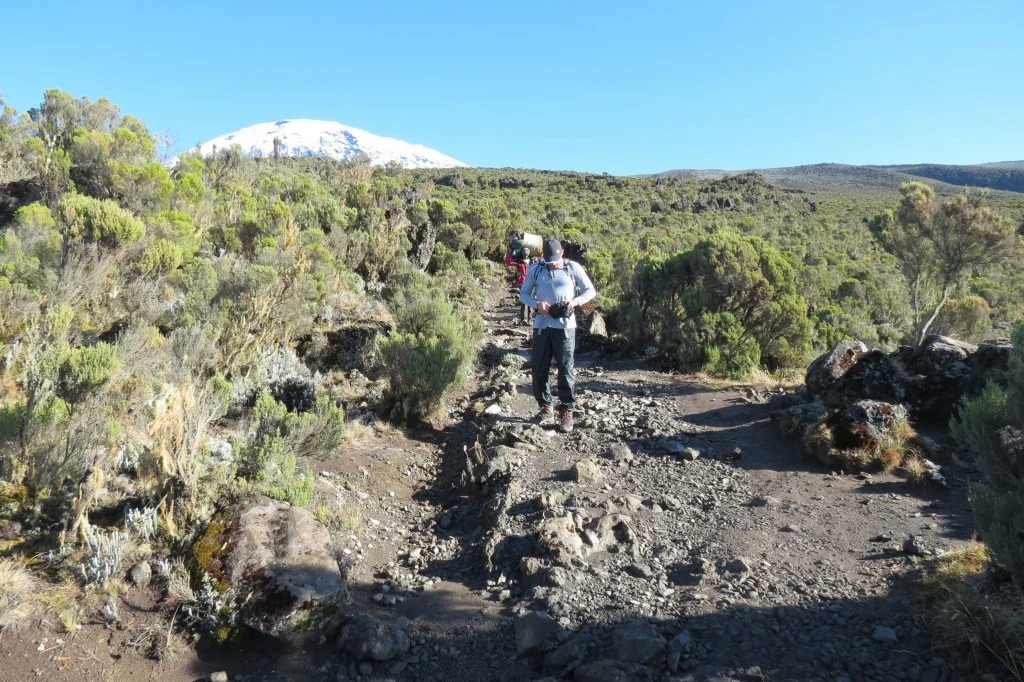
As the trek progresses into the second day, the trail gradually steepens, guiding hikers out of the dense forest and into the giant heather moorland zone. Trekkers navigate several clear mountain streams before gaining the Shira Ridge at approximately 3,600 meters. The path then descends gently toward Shira One Camp, situated beside a stream on the expansive Shira Plateau at an elevation of 3,500 meters, a leg that spans about five hours. Continuing into the third day, a gentle walk across the plateau leads directly to Shira Two Camp, nestled among moorland meadows near a running stream at 3,850 meters. Because this segment takes only an hour and a half, it serves as an ideal acclimatization day, offering a variety of optional exploratory walks across the plateau to help the body adjust to the rising altitude.
The fourth day brings a noticeable shift in terrain as the route heads eastward toward Kibo, passing a prominent junction before pushing onward to the imposing Lava Tower. Shortly after navigating this landmark, the trail descends toward the shelter of Barranco Hut at 3,940 meters, marking a four-hour day of hiking. For those who opt for the comprehensive eight-day Lemosho itinerary, an additional night is spent at Karanga Camp. This strategic layover provides critical extra time for physiological acclimatization, significantly enhancing the climber’s preparedness for the final push to the summit.
On the fifth day of the standard schedule, adventurers face a short, exhilarating scramble up the face of the Great Barranco Wall. This is followed by a traverse over loose scree and rocky ridges leading directly into the Karanga Valley at 4,000 meters, situated dramatically beneath the massive icefalls of the Heim, Kersten, and Decken Glaciers. After climbing out of the valley, the trail ascends a steep ridge toward Barafu Hut. Perched at 4,600 meters, this bleak and vegetation-scarce location serves as the primary base camp. Climbers spend the afternoon resting, eating, and sleeping early to conserve essential energy for the grueling summit attempt ahead.
The sixth day demands a very early start for the midnight ascent toward the rim of the Kibo Crater, wedged between the Rebmann and Ratzel Glaciers. This arduous four-hour climb often features a final snow-covered stretch where an ice axe or ski pole proves invaluable for maintaining balance. From the crater rim, a final hour of trekking leads directly to Uhuru Peak, the highest point in Africa. Successful climbers are rewarded with sweeping panoramic views, often catching sight of Mount Meru to the west and the jagged, dramatic peak of Mawenzi to the east. After celebrating at the summit, trekkers retrace their steps down to Barafu Hut for a well-deserved rest and lunch before continuing their descent to Mweka Hut, nestled within the giant heather zone near the forest edge. Energetic climbers who reach the summit early may occasionally choose to detour toward the Reutsh Crater to inspect the striking ice pinnacles of the Eastern Icefields.
The final seventh day involves a pleasant three-to-four-hour descent through lush, beautiful forest trails that ultimately lead back to the park gate, where waiting vehicles transport the tired but triumphant climbers back to their accommodations.
Pricing structures for these expeditions typically vary based on the specific purpose of the trip and the size of the group. Educational programs, ecotourism associations, travel agents, destination management companies, and student groups frequently qualify for discounted tour offers. Naturally, the overall cost for an eight-day Lemosho package runs slightly higher than a standard seven-day trip due to the extra day of park fees, guiding support, and operational logistics.
Comprehensive travel packages generally include a wide array of essential services to ensure a safe and seamless experience. These provisions cover airport transfers to and from Kilimanjaro International Airport, all required national park fees, fair daily wages for professional mountain guides, porters, and cooks, three nutritious meals a day on the mountain, clean and safe drinking water, necessary camping and accommodation equipment, and government taxes. Successful climbers also receive an official summit certificate upon completion. To prioritize climber health and safety, operators provide a comprehensive first aid kit, emergency oxygen bottles, pulse oximeters, and mandatory AMREF Flying Doctor air rescue insurance, alongside park ranger rescue coverage and land transfers to and from Arusha or Moshi.
However, certain expenses remain the responsibility of the traveler. Excluded items typically include international flights to Tanzania, entry visas, accommodations in Moshi prior to the climb, and personal climbing gear, though equipment is readily available for rent locally. Gratuities for the hardworking guides, porters, and coordinators, as well as purchases of a personal nature, are also left to the discretion of the traveler.
Notably, pre-climb hotel stays in Moshi are intentionally excluded from standard packages to give visitors the flexibility to select lodging that best suits their personal preferences and budget. Travel organizers frequently recommend local eco-resorts and ecotourism lodges in Moshi, which offer exceptional value and comfortable amenities while aligning with sustainable tourism principles.
Kilimanjaro Tanzanite Safaris Ltd operates as a reputable, locally based tour operator in Tanzania, drawing consistently strong reviews from past visitors across prominent travel marketplaces and independent review platforms like TripAdvisor. Functioning as a full-service destination management company, the organization coordinates a diverse array of travel experiences throughout the region. These offerings range from classic wildlife safaris across Tanzania and Kilimanjaro trekking expeditions to budget adventures, ecotourism initiatives, guided walking safaris, nature treks, Mount Meru climbs, horseback riding excursions, camel safaris, and coastal getaways in Zanzibar including diving, outdoor camping, hot-air balloon safaris, local flight bookings, photographic expeditions, beach holidays, and specialized honeymoon tours.