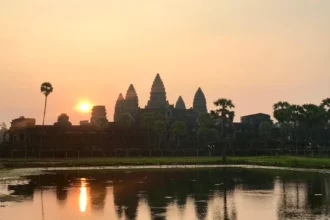
When travelers begin planning an itinerary for Siem Reap, Cambodia, the same iconic landmarks inevitably dominate the conversation. Standard guidebooks and travel packages point visitors toward the majestic spires of Angkor Wat, the mine-detection achievements of APOPO, and the bustling neon lights of Pub Street. Yet, beneath the well-worn surface of Southeast Asia’s premier tourist destination lies a surprisingly rugged and expansive landscape. Far from the crowded temple courtyards and tourist hubs, travelers can find an array of outdoor adventures that require neither an inflated budget nor an organized tour group.
While Siem Reap has long held its reputation as a haven for history buffs and cultural explorers, outdoor enthusiasts are often surprised to discover a thriving scene for nature and adrenaline sports. From mountain biking through dense jungle tracks and trekking up sacred mountain ranges to ziplining over canopies and wakeboarding on freshwater lakes, a distinct side of the region awaits those willing to venture away from the standard tourist path.
Angkor Temple Trails
Most international visitors are well-acquainted with the primary silhouette of Angkor Wat, but few realize that a vast network of jungle trails weaves through the surrounding archaeological park. These paths connect travelers to remote, forgotten temple ruins that most tourists never encounter. For those who favor discovering hidden structures, mountain biking through thick tropical foliage, or hiking a quiet trail entirely alone, the lesser-known temple routes offer an immersive alternative to the main complexes.

While numerous local tour operators lead cycling excursions along these paths, the routes are equally accessible to independent explorers. Visitors utilizing the trails do not technically need a temple pass unless they intend to step inside the ticketed monuments, making it a flexible option for budget-conscious travelers. Explorers can spend several days navigating the overgrown ruins and secluded forest tracks, or simply head toward the vicinity of Angkor Wat, select an unpaved path, and begin exploring on foot or two wheels.
Angkor Zipline
For travelers seeking a higher-intensity rush within the historical zone, commercial eco-adventures operate directly inside the park boundaries. Ziplining through the jungle canopy offers a perspective of the ancient forest that is entirely distinct from ground-level exploration. Operations in this sector often bundle their canopy tours with broader backcountry excursions, allowing visitors to combine aerial courses with quad-biking through rural terrain or guided cycling along the outer temple paths. Because these installations are situated within the designated Angkor Archaeological Park, participants must hold a valid temple pass alongside their booked adventure package.
Kbal Spean
Situated roughly an hour outside of Siem Reap town, Kbal Spean provides a genuine nature hike far removed from the urban bustle. The excursion begins with a 45-minute ascent up a forested mountain trail, culminating in a forest clearing split by a shallow river. This sacred archaeological site is renowned for its intricate Hindu mythology carvings chiseled directly into the stone riverbed beneath the flowing water. Continuing further along the trail leads visitors to a secluded mountain waterfall.

Travelers frequently expand this excursion into a full-day itinerary by pairing the hike with a visit to the nearby Angkor Centre for Conservation of Biodiversity. Alternatively, visitors can incorporate a stop at Banteay Srei, one of the region’s most architecturally celebrated temple structures. Because the Kbal Spean site falls under the regional heritage administration, visitors coordinate their park entry permissions accordingly, making it straightforward to combine the hike with regional sightseeing.
Kulen Mountain
As one of the most prominent natural elevations in the area, Kulen Mountain delivers some of the most expansive panoramic views in the province. Located approximately a 90-minute drive from Siem Reap town, a trek up the mountain rewards visitors with sweeping valley vistas and a powerful waterfall well-suited for cooling off after the climb.
Logistical considerations shape the ascent, as local regulations and terrain restrictions prevent standard scooters or tuk-tuks from driving directly to the summit. Consequently, visitors must either commit to a strenuous two-hour hike up the slopes or secure transport via an organized tour. For dedicated hikers with sufficient time, the foot journey offers a deeper immersion into the native flora and terrain. Park entry tickets are available on-site, though advance booking is standard for structured tours given the mountain’s enduring popularity.

Phnom Kraom
A short climb up the slopes of Phnom Kraom leads to an ancient hilltop temple that looks down over the vast agricultural expanse of the Siem Reap countryside. Because tourist traffic here is minimal, the summit functions as a tranquil observation point away from the crowds.
Physically fit travelers can complete the bike ride from the town center to the base of the hill in roughly an hour. Alternatively, visitors can rent a motor scooter or hire a private driver. The journey itself serves as one of the most scenic drives in the region, winding past ten kilometers of vibrant rice paddies, grazing water buffalo, and small rural communities. While a standard temple pass is required to enter the specific ruins at the summit, the surrounding mountain paths and foothills remain open for broader exploration.
Wake Park
Offering a sharp contrast to the ancient ruins, Siem Reap’s dedicated wake park provides a recreational hub centered around water sports. Alongside core wakeboarding facilities, the venue features an inflatable floating obstacle course and a sandy shoreline designed for relaxation. Professional instructors are available on-site to assist novices, ensuring the facility accommodates both first-time visitors and experienced boarders. Full-day access passes offer an alternative pace for travelers looking to spend a day on the water without navigating historical monuments.

West Baray
Another viable destination for cyclists in strong physical condition is the West Baray, a massive ancient man-made reservoir located a 30 to 40-minute ride from the town center. The expansive body of water serves as a quiet setting for a day of outdoor leisure, typically free of heavy tourist congestion.
The surrounding area supports standard lake activities, including swimming, kayaking, boating, and shore-side hiking and biking. A trail encircling the perimeter guides travelers past small local settlements and occasional unexcavated ruins, capturing a slice of everyday rural life alongside historical context.
Where to Go Next
For travelers eager to continue exploring Cambodia’s rugged interior beyond the immediate vicinity of Siem Reap, further wilderness opportunities await in Koh Kong Province. There, visitors can undertake extended treks through the Cardamom Mountains or connect with community-based ecotourism initiatives in remote settlements like Chi Phat, continuing an off-grid journey through the country’s natural landscapes.